
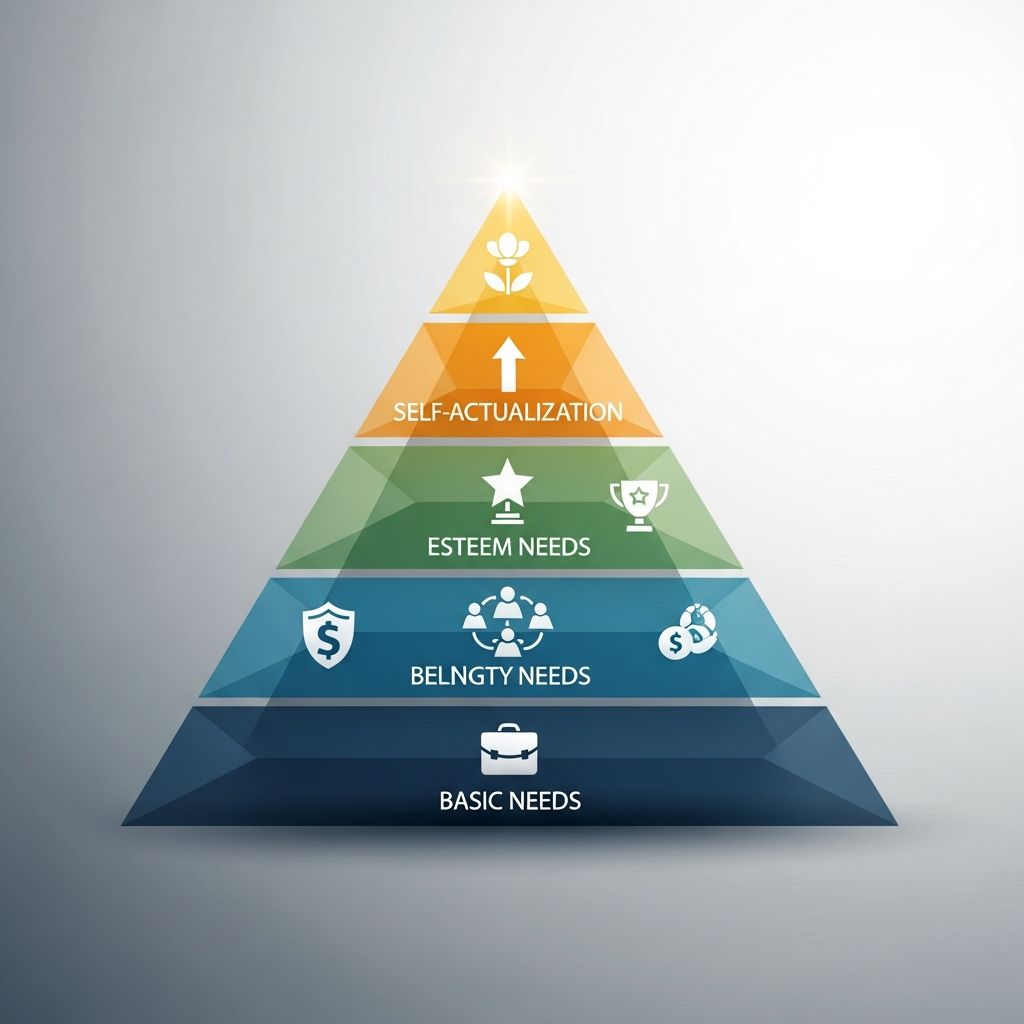
Finding a role that genuinely fits you is about far more than a paycheck or a trendy job title. Research in vocational psychology shows that when your work aligns with your personality and values, you experience more meaning, engagement, and well-being at work. To make those ideas practical, you can build your own career hierarchy of needs and use it to evaluate both your current job and future opportunities.
This article walks you through a structured, step-by-step model inspired by Maslow’s classic hierarchy of needs, adapted specifically for modern careers. You will learn how to distinguish between what you need to survive at work and what you need to thrive, and how to turn that awareness into concrete actions.
Why a Hierarchy of Career Needs Matters
Before jumping into the framework, it helps to understand why needs-based thinking is so powerful in career decisions.
- Work and well-being are tightly linked: Studies on job-person fit show that when your work environment matches your interests and values, you report higher job satisfaction, commitment, and mental health.
- Needs build on one another: Maslow’s theory proposes that basic needs (like security) must be sufficiently met for higher needs (like self-actualization) to become primary motivators. Your career follows a similar pattern.
- Clarity prevents impulsive choices: When you’re stressed or burned out, it’s easy to jump at any offer. A clear hierarchy helps you avoid trading away crucial needs for short-term relief.
Instead of asking only, “Is this a good job?”, you begin asking, “Which of my needs does this job meet, and which does it ignore?”
The Five Layers of a Career Hierarchy of Needs
The framework below adapts Maslow’s insights into five practical layers tailored to work life. Each level does not need to be perfect before you pay attention to the next, but chronic deficits at a lower level usually undermine your ability to grow at higher ones.
| Career Level | Core Question | Main Focus |
|---|---|---|
| 1. Survival Needs | Can I sustain my life and health? | Income, schedule, basic working conditions |
| 2. Safety & Stability | Do I feel secure at and about work? | Job security, policies, boundaries, predictability |
| 3. Connection & Belonging | Do I feel that I’m part of a healthy community? | Team dynamics, inclusion, support |
| 4. Growth & Recognition | Am I growing and being valued? | Learning, feedback, advancement, respect |
| 5. Meaning & Self-Expression | Does this work reflect who I want to become? | Purpose, values alignment, impact |
Level 1: Survival Needs — The Non-Negotiable Foundation
At the base of your hierarchy are your survival needs: the conditions that must be in place for you to function physically and mentally. These mirror Maslow’s physiological needs, such as food, rest, and health. In a job context, this translates into concrete factors that keep you stable.
Key Survival Factors
- Pay that covers essentials: Your salary must at least allow you to meet basic living costs—housing, food, healthcare, transportation. Chronic financial stress is associated with higher levels of anxiety and depression.
- Workload and hours: Excessive hours or unrealistic expectations can erode sleep, relationships, and health over time.
- Physical work environment: Things like ergonomics, access to breaks, and reasonable noise levels affect focus and well-being, especially in the long run.
- Commute and location: Long or unpredictable commutes reduce time for recovery, family, and exercise.
Questions to Assess Your Survival Needs
- Can I pay for my essential living expenses without constant fear of running out of money?
- Do my working hours and workload allow me enough sleep and recovery time most weeks?
- Is my workspace reasonably comfortable and safe for my body and mind?
- Does my commute or schedule regularly undermine my health or relationships?
If you answer “no” to several of these, your priority is to stabilize this level—either by renegotiating aspects of your current role or exploring positions that better cover these basics.
Level 2: Safety & Stability — Feeling Secure at Work
Once you can reliably meet your survival needs, your attention naturally shifts to safety and stability. In Maslow’s model, safety includes security of body, employment, and resources. In your career, this is about how predictable and psychologically safe your work feels.
What Safety & Stability Look Like in a Job
- Reasonable job security: No job is perfectly secure, but constant fear of layoffs, unclear funding, or chaotic leadership can create chronic stress.
- Clear expectations and policies: You know what success looks like, how decisions are made, and which rules guide your work.
- Respect for boundaries: You can take vacations, decline unreasonable requests, and log off without fear of retaliation.
- Basic psychological safety: You can admit mistakes or raise concerns without being shamed or punished.
Safety & Stability Check-In
- Do I understand what my role requires and how my performance is evaluated?
- Can I take time off or set limits around my availability without serious backlash?
- Is the company relatively transparent about changes and risks?
- Do I feel I could speak up about a problem without endangering my job?
When this level is weak, even a well-paid job can feel unstable or threatening, which often leads to burnout and disengagement.
Level 3: Connection & Belonging — The Social Side of Fit
Humans are social animals. After basic and safety needs, Maslow highlights the importance of love and belonging—friendship, intimacy, and community. In career terms, this translates into the quality of your relationships and culture at work.
Elements of Connection & Belonging
- Healthy team relationships: You experience collaboration rather than constant conflict or isolation.
- Inclusive culture: You feel respected for who you are, including your background and identity. Research links inclusive climates with higher performance and well-being.
- Supportive manager: Your manager provides guidance, feedback, and advocacy rather than only criticism.
- Everyday civility: People say thank you, share credit, and generally treat one another with courtesy.
Questions to Gauge Belonging
- Do I have at least a few colleagues I trust and can go to for help?
- Do I feel my identity and perspective are welcomed, not just tolerated?
- When I make a mistake, am I coached instead of humiliated?
- Do I feel proud to say I work with these people?
If your survival and safety needs are met but you feel lonely, excluded, or undermined, your hierarchy is stuck here. That often shows up as a nagging sense of dread on Sunday nights or a constant wish to work anywhere else.
Level 4: Growth & Recognition — Being Challenged and Valued
The next layer is about developing your potential and being recognized for it. In Maslow’s terms, this connects to esteem needs: respect, accomplishment, and confidence. Many professionals only start paying attention here when considering promotions, but growth and recognition are just as relevant earlier in your career.
What Growth & Recognition Include
- Skill development opportunities: Access to projects, training, or responsibilities that expand your abilities over time.
- Constructive feedback: You receive specific, actionable input that helps you improve.
- Visible career pathways: You can see realistic ways to progress—whether upward, laterally, or into specialized roles.
- Recognition and respect: Your contributions are noticed, credited, and fairly rewarded, not taken for granted.
Growth & Recognition Reflection
- Am I learning new things regularly, or mostly repeating the same tasks?
- Do I receive clear feedback about what I’m doing well and where I can improve?
- Can I see at least one or two realistic next roles from here?
- Do I feel that my work is acknowledged and appreciated?
When this level is undernourished, people often say they feel “stuck” or “invisible.” Even a friendly, well-paid environment loses its appeal if you cannot grow or be recognized.
Level 5: Meaning & Self-Expression — Work That Reflects Who You Are
At the top of your career hierarchy are meaning and self-expression. This is closely related to Maslow’s concept of self-actualization—the desire to realize one’s full potential and live in alignment with one’s values.
Dimensions of Meaningful Work
- Values alignment: Your organization’s mission and practices are broadly compatible with what you believe is important.
- Using your strengths: Your role allows you to spend a significant portion of time on tasks that draw on your natural talents.
- Sense of contribution: You can see how your work benefits others—customers, colleagues, communities, or causes.
- Identity coherence: Your job supports the story you want to tell about who you are and who you are becoming.
Questions for the Meaning Layer
- Does this work feel connected to something I care about, even indirectly?
- Can I use my favorite skills and strengths regularly in this role?
- When I imagine myself five years from now, am I proud of having done this work?
- If money were no object, would some part of this job still appeal to me?
This level is deeply personal. For some, meaning comes from working directly on social or environmental impact; for others, it comes from craftsmanship, innovation, or enabling a good life for family. What matters is that you can clearly name the meaning you draw from your work.
How to Use the Career Hierarchy in Your Job Search
Once you understand your hierarchy, you can use it as a decision-making tool whenever you evaluate a new opportunity.
Step 1: Rank Your Current Priorities
Different seasons of life elevate different layers. For example:
- Early career: Survival and growth may dominate.
- Mid-career with family responsibilities: Stability and belonging might move to the top.
- Later career or after financial milestones: Meaning and self-expression often become central.
Write down your top three layers for the next two to three years. This keeps your decisions grounded in your current reality, not an idealized future.
Step 2: Turn Layers into Interview Questions
Use each level to craft targeted questions for interviews and networking conversations, such as:
- Survival: “How does the team handle overtime and urgent deadlines?”
- Safety: “What systems are in place for performance reviews and feedback?”
- Belonging: “Can you describe how new team members are integrated?”
- Growth: “What kinds of projects do high performers graduate to over time?”
- Meaning: “How does this role contribute to the organization’s mission in a tangible way?”
Listen not only to the content of the answer, but also to the tone and level of detail. Vague or defensive responses are data.
Step 3: Score Each Opportunity by Layer
After each interview process, rate the role from 1–5 on each level:
- 1–2: Serious concerns or major unknowns
- 3: Adequate but not ideal
- 4–5: Strong alignment or clear strengths
Compare offers not only on salary but on their overall “needs profile.” An offer that pays slightly less but is much stronger on safety, belonging, and growth may be the better long-term choice.
Using the Hierarchy to Redesign Your Current Job
You do not always need to quit to improve your fit. Sometimes you can redesign your current role using principles similar to “job crafting,” where employees proactively adjust tasks and relationships to make work more meaningful.
1. Identify Your Weakest Layer
Take a blank page and draw your own pyramid with the five levels. For each one, write a short sentence summarizing how well your job currently meets that need, then circle the layer that feels most depleted.
2. Brainstorm Small, Specific Changes
For the layer you chose, create a list of small experiments you could try in the next month. For example:
- Survival: Request to shift one meeting-heavy day to a focus day, or negotiate a slight schedule adjustment.
- Safety: Ask your manager to clarify priorities and success metrics for the next quarter.
- Belonging: Schedule regular check-ins with a colleague you like working with.
- Growth: Volunteer for a project that uses a skill you want to deepen.
- Meaning: Spend an hour mapping how your tasks connect to customer outcomes.
3. Involve Your Manager Where Appropriate
Many changes, especially around workload, growth, and recognition, benefit from a conversation with your manager. Framing the discussion around your desire to contribute more effectively and stay engaged often makes it easier to collaborate on solutions.
Common Trade-Offs and How to Think About Them
No job will perfectly satisfy every layer. The key is to be deliberate about which trade-offs you are making and for how long.
- High pay, low belonging: Can you tolerate a colder culture for a defined period if it accelerates debt repayment or savings? Set a time boundary and check in with your mental health regularly.
- Meaningful work, low stability: If you choose a mission-driven but volatile environment, have a financial buffer and a clear backup plan.
- Strong growth, weak work-life balance: Early in your career, short, intense sprints may be worthwhile—but chronically sacrificing sleep and health carries long-term risks.
Your hierarchy does not dictate a single correct answer; it provides a structured way to understand what you are gaining and what you are giving up.
Frequently Asked Questions (FAQs)
How often should I revisit my career hierarchy of needs?
Revisit it whenever something major changes in your life or work—such as a move, family change, promotion, or health event—and at least once a year. Needs and priorities shift over time, and your framework should evolve with them.
What if I can’t satisfy all levels in my current situation?
Very few people can optimize every level simultaneously. Focus first on reducing severe deficits at the survival and safety levels, then look for small wins in belonging and growth. Even modest improvements—like one supportive relationship or one learning project—can significantly improve your experience.
Is it unrealistic to look for meaning at work?
Not necessarily, but the form meaning takes can vary. For some, meaning lies in the mission; for others, it comes from craftsmanship, mentoring, or providing for loved ones. Aim for work that supports your definition of a meaningful life, rather than a one-size-fits-all ideal.
How does personality factor into job fit?
Personality traits influence the environments in which you’re most comfortable and effective—for example, whether you enjoy high social interaction or prefer analytical, solitary work. Research on person–environment fit suggests that alignment between personality, interests, and job characteristics predicts higher satisfaction and lower turnover.
Can a lower-level need become a priority again later?
Yes. Maslow’s theory and later refinements highlight that needs do not disappear once met; they can reassert themselves when threatened. A health issue, financial shock, or organizational crisis can push survival or safety back to the forefront, even if you previously focused on growth or meaning.
References
- Kristof-Brown, A. L., Zimmerman, R. D., & Johnson, E. C. — Consequences of individuals’ fit at work: A meta-analysis of person–job, person–organization, person–group, and person–supervisor fit. — Personnel Psychology. 2005-09-01. https://doi.org/10.1111/j.1744-6570.2005.00672.x
- Maslow, A. H. — A theory of human motivation. — Psychological Review. 1943-07-01. https://psychclassics.yorku.ca/Maslow/motivation.htm
- American Psychological Association — Stress in America: Paying With Our Health. — APA. 2015-02-01. https://www.apa.org/topics/stress/stress-america
- Downey, S. N., van der Werff, L., Thomas, K. M., & Plaut, V. C. — The role of diversity practices and inclusion in promoting trust and employee engagement. — Journal of Applied Social Psychology. 2015-03-01. https://doi.org/10.1111/jasp.12273
- Wrzesniewski, A., & Dutton, J. E. — Crafting a job: Revisioning employees as active crafters of their work. — Academy of Management Review. 2001-04-01. https://doi.org/10.5465/amr.2001.4378011

Medha Deb is an editor with a master's degree in Applied Linguistics from the University of Hyderabad. She believes that her qualification has helped her develop a deep understanding of language and its application in various contexts. Medha specializes in the areas of beauty, health, sports, and wellness and is committed to ensuring that the content on the website is…