
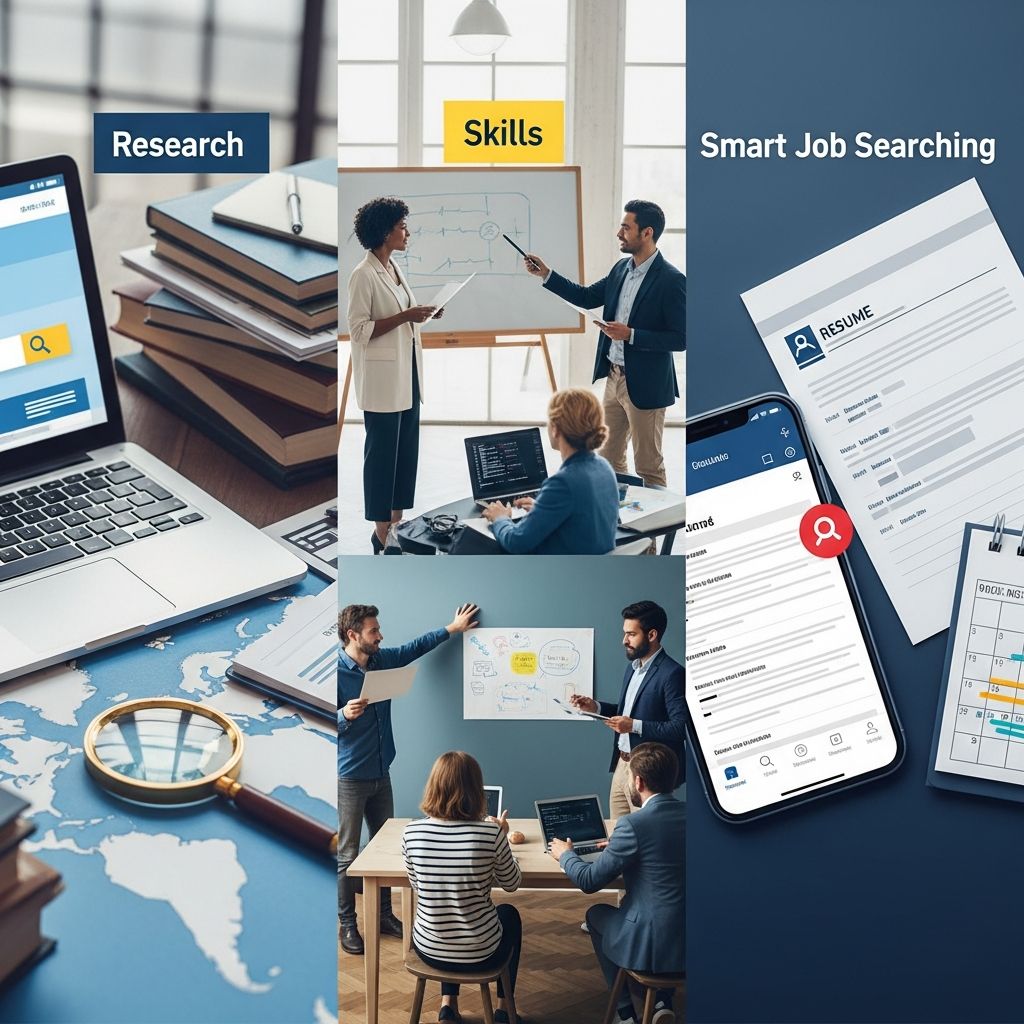
The world of work is changing quickly, and career decisions now require more research, planning and continuous learning than ever before. This guide brings together up-to-date insights on how to understand the labor market, choose promising paths, and run a focused job search that reflects both your strengths and emerging opportunities.
Understanding Today’s Job Market
Before making career moves, it helps to grasp the bigger picture of how the labor market is evolving. Over the past decade, hiring has become more skills-focused, technology-driven and transparent, with workers expecting flexibility and employers emphasizing both technical and interpersonal capabilities.
- Skills-first hiring: Many employers now prioritize demonstrated skills and experience over specific degrees, especially in fields like technology, operations and customer-facing roles.
- Hybrid and remote work: Surveys in the U.S. and Europe show that remote-capable workers often prefer at least part-time remote work, and many employers now support hybrid arrangements.
- Demographic shifts: Aging populations in many advanced economies are boosting demand in healthcare, social services and other people-focused roles, while also increasing the need for upskilling and mid-career transitions.
These shifts influence where opportunity is growing and which skills are likely to stay valuable over the next decade.
Where the Opportunities Are: High-Growth Career Areas
Labor market projections from government and research agencies consistently highlight a set of fields with strong long-term demand. While details vary by region, several broad areas show notable growth:
| Career Area | Why It’s Growing | Typical Education Level |
|---|---|---|
| Healthcare & Nursing | Aging populations, chronic disease management, and expanded access to care are driving sustained demand for nurses and allied health roles. | Certificates to bachelor’s degrees, depending on role |
| Technology & Data | Digital transformation, cloud computing and AI adoption require developers, data professionals and cybersecurity specialists. | Associate to advanced degrees; skills-based hiring common |
| Skilled Trades & Infrastructure | Construction, energy and public works projects boost demand for electricians, technicians and project managers. | Apprenticeships, trade school or associate degrees |
| Business & Professional Services | Growing small businesses and complex regulations support demand for analysts, compliance roles, paralegals and advisors. | Varies; from certificates to bachelor’s degrees |
| Education & Training | Reskilling and lifelong learning create opportunities for instructors, trainers and learning designers. | Often bachelor’s and specialized training |
Government employment projections and reputable labor studies are helpful tools for confirming which roles are expanding in your region and how quickly.
Choosing a Direction: Aligning Strengths, Interests and Market Needs
A promising career sits at the intersection of what the market needs and what you are motivated to do. A structured self-assessment can help.
Clarify what you want from work
Start by reflecting on your values and priorities. Ask yourself:
- Which tasks make me feel energized rather than drained?
- How important are income, stability and advancement compared to autonomy or creativity?
- Do I thrive in fast-paced environments, or do I prefer predictability?
- How much in-person collaboration do I want compared with independent work?
Writing down your answers turns vague preferences into concrete criteria you can use to compare roles.
Map your skills and experiences
Next, list the skills you use in your current role, education or volunteer work. Consider:
- Technical skills: Software tools, industry procedures, data analysis, equipment operation.
- Transferable skills: Communication, organization, problem-solving, leadership, teamwork.
- Domain knowledge: Familiarity with specific industries such as healthcare, finance, logistics or education.
Once you know what you bring, compare your profile with job descriptions in fields that interest you. Identify gaps that show up repeatedly; these become targets for training or on-the-job learning.
How to Research Roles and Employers Effectively
Thorough research helps you narrow your options and avoid mismatches. Instead of relying on job titles alone, look at day-to-day tasks, required skills and work environments.
Researching roles
Use multiple sources to understand specific occupations:
- Government occupational databases: Many countries maintain occupation handbooks that list typical duties, required education, workplace settings and projected growth for hundreds of roles.
- Professional associations: Industry bodies often publish competency frameworks, career ladders and codes of ethics.
- Labor market reports: Policy institutes and economic agencies release reports on sectors experiencing high demand or transformation.
Compare what you find against your skills and preferences. Focus on roles that align reasonably well with both, even if you need additional training.
Researching potential employers
Once you have a shortlist of roles, research employers to understand culture, expectations and growth prospects. Consider:
- Mission and values statements
- Locations, remote policies and schedule expectations
- Types of clients, projects or services they focus on
- Training programs, mentorship and internal mobility
Professional networking sites, company pages and annual reports can all reveal how organizations operate and where they are investing.
Building Skills Employers Are Actively Seeking
Recent employer surveys show a strong desire for candidates who combine technical skills with robust problem-solving and teamwork capabilities. Many of these abilities are transferable across industries and can significantly increase your mobility.
Core skills in demand
- Problem-solving: The ability to analyze situations, identify options and implement solutions is ranked among the top attributes employers seek in new hires.
- Teamwork and collaboration: Even in highly technical fields, projects often require cross-functional collaboration, making interpersonal skills critical.
- Communication: Clear writing, active listening and concise presentations influence hiring and promotion decisions in most sectors.
- Digital literacy: Comfort with productivity software, collaboration tools and basic data handling is now a baseline expectation.
Practical ways to build skills
You can strengthen in-demand skills through multiple channels:
- Online courses and certifications: Universities and recognized providers offer short programs in topics like data analysis, project management or cloud tools.
- Workplace projects: Volunteering for cross-team initiatives or process improvements helps you build experience while demonstrating initiative.
- Volunteer work: Nonprofit or community projects often need help with planning, communications or technology, offering opportunities to practice new skills.
- Mentoring relationships: A mentor can point you toward meaningful development opportunities and provide feedback as you grow.
Document your progress by keeping a record of projects, outcomes and specific tools or methods used. This log becomes valuable material for your resume and interviews.
Running a Strategic Job Search
Applying for roles without a plan can be time-consuming and discouraging. A strategic job search focuses your effort on the best-fitting opportunities and tracks your progress carefully.
Set clear job search objectives
Define what you are targeting before sending applications:
- Preferred job titles or functional areas
- Geographic preferences or remote-only criteria
- Minimum acceptable compensation range
- Must-have vs. nice-to-have benefits (for example, flexible hours, learning budget)
These parameters help you evaluate postings quickly and avoid spending time on roles that are unlikely to fit.
Organize your search activity
Create a simple tracking system in a spreadsheet or notebook. Include:
- Company and role title
- Date you applied and which version of your resume you used
- Networking contacts or referrals linked to the opportunity
- Follow-up actions and interview dates
- Outcome and key lessons
Regularly reviewing this log allows you to see which approaches are leading to interviews and where you may need to adjust your strategy.
Tailor your applications
Rather than sending the same materials everywhere, tailor each application:
- Mirror the language of the job posting where it accurately describes your skills.
- Emphasize outcomes you’ve achieved that resemble the employer’s stated goals.
- Customize your summary or profile section to reflect the specific role type.
This level of targeting typically leads to a higher response rate than generic applications.
Using Networking and Information Interviews Effectively
Many openings are filled through networks or are shaped by internal referrals before being widely posted. Building genuine professional relationships can reveal roles you might otherwise miss and give you better context for evaluating offers.
Growing your network
- Reconnect with former colleagues, classmates and supervisors.
- Attend industry events, conferences or local meetups where practitioners in your field gather.
- Participate thoughtfully in online professional groups by sharing resources or insights.
Focus on being helpful and curious rather than immediately asking for referrals. Over time, people are more likely to think ofุณុwhen they hear about relevant openings.
Conducting information interviews
Information interviews involve short, structured conversations with people in roles or industries you are considering. They help you:
- Understand day-to-day responsibilities more accurately than from job postings alone.
- Learn which skills or experiences are most valued in practice.
- Gain insight into hiring processes and organizational culture.
Prepare a few open-ended questions, such as:
- “What surprised you most when you started this role?”
- “Which skills do you rely on most that aren’t obvious from the job description?”
- “If someone were entering this field today, what would you suggest they learn first?”
Respect time limits, thank your contact and follow up occasionally with relevant updates or resources.
Adapting to Change and Planning for the Long Term
Careers rarely follow a straight line. Economic shifts, personal priorities and new technologies may all steer you in unexpected directions. Building adaptability into your plans reduces stress and opens options.
Review your path regularly
Set aside time at least once a year to review:
- Your current satisfaction with responsibilities and work environment
- New skills acquired and how they change your options
- Emerging trends in your sector, such as automation, regulation or new business models
- Compensation benchmarks compared with your current pay
If you notice a growing gap between your goals and your current role, use that insight to plan targeted changes in skills, responsibilities or employers.
Balancing ambition and well-being
Ambitious plans often require short-term trade-offs, such as intensive study, longer hours or lateral moves for experience. At the same time, research on burnout shows that chronic overwork without recovery can harm both health and long-term performance. Aim to balance effort and rest by:
- Building realistic timelines for major transitions
- Scheduling regular breaks and time away from work communications
- Seeking support from peers, mentors or professional counselors during high-stress periods
Protecting your well-being is not a distraction from career success; it is a foundation for sustainable performance.
Frequently Asked Questions (FAQs)
Q1: How many applications should I send each week?
The ideal number depends on your field and schedule, but many job seekers find that 5–15 well-targeted applications per week, combined with networking and research, is more effective than sending dozens of generic applications.
Q2: Is it worth changing careers if I’m already mid-career?
Yes, many people transition successfully in mid-career, especially into fields where their existing skills are transferable and demand is strong, such as project management, operations, education, technology support or healthcare administration. Careful planning and incremental upskilling can reduce risk.
Q3: How can I show transferable skills to employers?
Translate your past experience into language that matches the new role. Highlight achievements that demonstrate problem-solving, communication, leadership or technical abilities, and use specific metrics or examples where possible to show impact.
Q4: What if I lack the exact experience listed in a job posting?
Job descriptions often describe an ideal candidate. If you meet most of the core requirements and can demonstrate the ability to learn quickly, it’s usually worth applying. Use your cover letter and interviews to connect your existing skills to the role’s needs.
Q5: How often should I update my resume and online profiles?
Review them at least a few times per year, and always after finishing significant projects, gaining new responsibilities or completing training. Up-to-date materials make it easier to respond quickly when attractive opportunities arise.
References
- How Getting a Job Has Changed and What It Means for You — Indeed Editorial Team. 2024-10-03. https://www.indeed.com/career-advice/news/indeed-20-years
- Burn-out an “occupational phenomenon”: International Classification of Diseases — World Health Organization. 2019-05-28. https://www.who.int/news/item/28-05-2019-burn-out-an-occupational-phenomenon-in-the-international-classification-of-diseases
- These are the Best Jobs for 2025, According to Indeed — Indeed Editorial Team. 2025-01-09. https://www.indeed.com/career-advice/news/best-jobs-2025
- Best Careers for the Next 10 Years — Indeed Editorial Team. 2024-06-14. https://www.indeed.com/career-advice/career-development/best-careers-for-the-next-ten-years
- Hiring Challenges in 2025: The Growing Disconnect Between Employer and Job Seeker Expectations — Indeed Hiring Lab. 2025-02-05. https://www.indeed.com/career-advice/news/employer-job-seeker-disconnect
- Occupational Outlook Handbook — U.S. Bureau of Labor Statistics. Accessed 2025. https://www.bls.gov/ooh/
- How To Develop a Strategic Plan for Your Job Search — Indeed Editorial Team. 2024-03-19. https://www.indeed.com/career-advice/finding-a-job/strategic-job-search

Medha Deb is an editor with a master's degree in Applied Linguistics from the University of Hyderabad. She believes that her qualification has helped her develop a deep understanding of language and its application in various contexts. Medha specializes in the areas of beauty, health, sports, and wellness and is committed to ensuring that the content on the website is…