
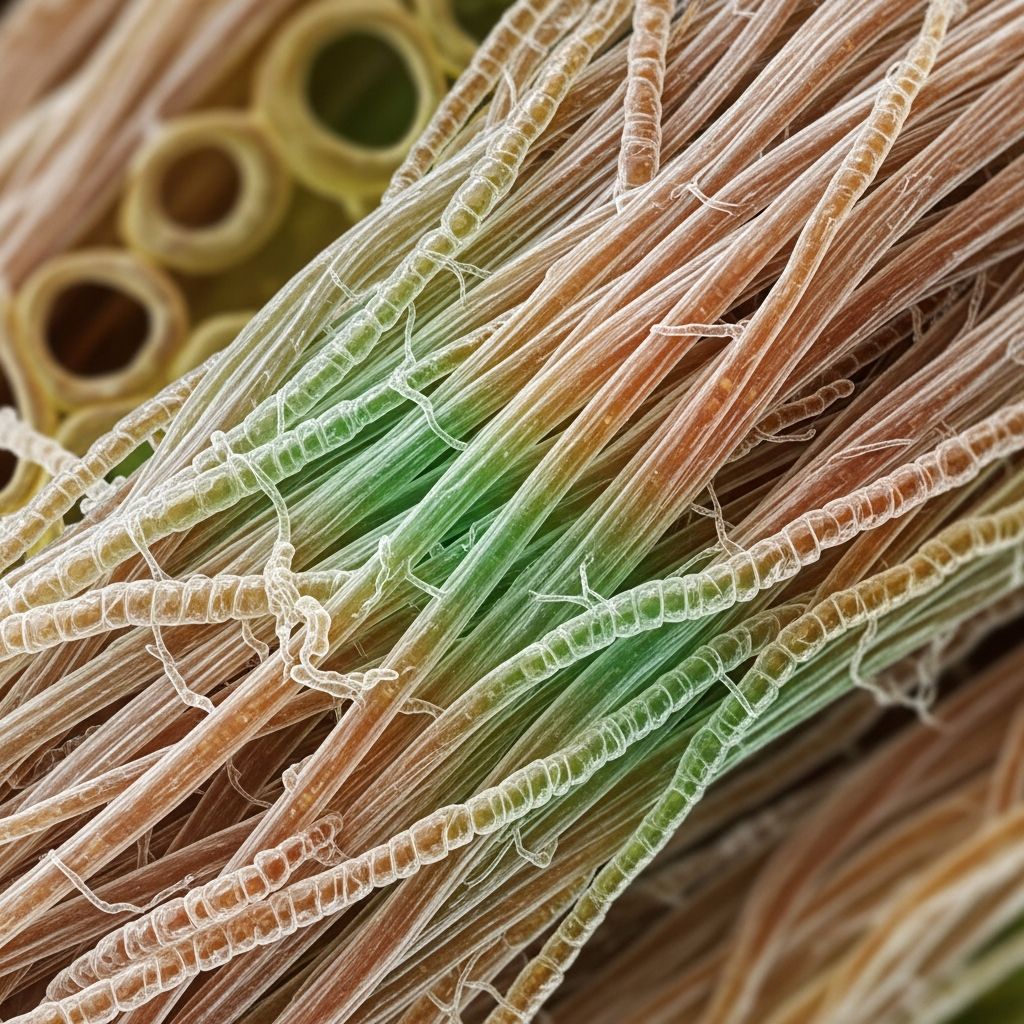
Understanding Cellulose: A Fundamental Biomolecule
Cellulose stands as one of the most abundant organic compounds on Earth, serving as a critical building block in the natural world. This complex carbohydrate, scientifically represented as (C₆H₁₀O₅)ₙ, forms the foundational structural material in plant cell walls and represents a crucial intersection between basic chemistry and practical industrial applications. While humans cannot digest this polymer, our species has developed countless ways to harness its remarkable properties for everything from clothing to construction materials. Understanding cellulose requires examining both its molecular architecture and its far-reaching role in modern society.
The Molecular Architecture of Cellulose
Cellulose belongs to the polysaccharide family, consisting of a linear chain of glucose molecules linked together through β(1→4) glycosidic bonds. These chains can be extraordinarily long, containing hundreds to thousands of glucose units arranged in a highly organized structure. The arrangement of these glucose units creates a polymer with distinctive chemical and physical characteristics that distinguish it from other carbohydrates like starch or glycogen.
The structural integrity of cellulose derives from strong intramolecular and intermolecular hydrogen bonding between individual polymer chains. These hydrogen bonds create a densely packed, crystalline structure that renders cellulose insoluble in water, despite its hydrophilic nature and capacity for significant water interaction. This paradoxical property—being water-loving yet water-insoluble—gives cellulose its remarkable stability and makes it suitable for diverse applications requiring durability and resilience.
Cellulose molecules organize themselves into microfibrils, which are microscopic fibers composed of multiple cellulose chains held together by hydrogen bonding. These microfibrils bundle together to form larger fibers, creating a hierarchical structure that provides both strength and flexibility to plant tissues.
Biological Functions in Living Systems
Within plant cells, cellulose performs multiple essential functions beyond simple structural support. The primary role involves providing rigidity to plant tissues by forming robust cell walls that give plants their characteristic shape and prevent cellular collapse under pressure or environmental stress.
Structural Support and Cellular Architecture
Plant cell walls, composed primarily of cellulose, create a protective outer layer that maintains cell integrity. As plants grow and develop, new cellulose microfibrils continuously form, increasing cell wall size and enabling cell elongation and expansion. This dynamic process allows plants to develop their varied forms while maintaining structural integrity throughout their lifecycle.
Water Management and Osmotic Balance
Cellulose plays a vital regulatory role in water uptake and transport within plants. By contributing to cell wall structure, cellulose indirectly influences osmotic pressure maintenance in plant cells, ensuring proper water balance and cellular turgidity—the firmness that keeps plant tissues crisp and prevents wilting.
Protective Barriers Against External Threats
The cellulose cell wall functions as a physical barrier protecting plant cells from external threats, including pathogens and herbivores. This defensive characteristic has enabled plants to thrive in challenging environments and defend themselves against biological and environmental stressors.
Microbial Applications
Beyond plants, certain bacteria utilize cellulose strategically, secreting it to form biofilms that facilitate microbial attachment and enable microorganisms to organize into complex colonies. This bacterial use of cellulose demonstrates the polymer’s fundamental importance across biological kingdoms.
Industrial Production and Source Materials
For industrial applications, cellulose is primarily extracted from two major sources: wood pulp and cotton. Wood pulp, obtained from processed timber, contains exceptionally high concentrations of cellulose fibers that can be efficiently extracted through mechanical and chemical processing. Cotton represents a pure, naturally processed cellulose source, offering fibers already refined by the plant itself.
Modern production techniques involve processing these raw materials to isolate and purify cellulose fibers, which are then converted into pulp—an intermediate material suitable for manufacturing diverse end products. Advances in extraction technology have made cellulose production increasingly efficient, supporting growing industrial demand while maintaining cost-effectiveness.
Paper and Packaging Applications
The most significant commercial application of cellulose involves paper and paperboard production, which accounts for the majority of global cellulose consumption. Cellulose fibers are converted into pulp and subsequently manufactured into numerous paper products including newspapers, books, packaging materials, and cardboard. The strength, durability, and printability of cellulose-based papers make them ideal for these applications, with environmental advantages over synthetic alternatives.
Cellulose also provides electrical insulation properties, making it valuable for transformers, cables, and other electrical equipment that require reliable insulation in diverse conditions. Its thermal stability and electrical resistance make cellulose-based materials superior to many synthetic substitutes in these specialized applications.
Textile and Fiber Industries
Cellulose-based fibers represent a cornerstone of the global textile industry. Rayon, modal, and lyocell are all manufactured from cellulose derived from renewable plant sources including wood, bamboo, and cotton. These regenerated cellulose fibers offer properties combining the comfort of natural materials with the consistency of manufactured products, making them increasingly popular in fashion and functional textiles.
The textile industry benefits from cellulose’s versatility, as these fibers can be engineered to exhibit varying characteristics depending on processing methods and source materials. This adaptability has enabled cellulose-based textiles to capture approximately 40% of the synthetic fiber market by volume, alongside traditional cotton, while plant fibers like jute, sisal, and hemp represent additional market segments.
Pharmaceutical and Food Applications
Cellulose derivatives have become indispensable in pharmaceutical manufacturing. Microcrystalline cellulose serves as a bulking agent in tablets and capsules, providing texture and volume without contributing active pharmaceutical effects. These cellulose derivatives, designated as E460i and E460ii food additives, meet strict safety and efficacy standards for pharmaceutical applications.
In food processing, various cellulose derivatives function as emulsifiers, thickeners, and stabilizers, enabling manufacturers to achieve desired textures while preventing ingredient separation. Cellulose powder prevents caking in processed cheese and contributes indigestible bulk in various products, potentially supporting digestive health. These applications represent safe, long-established uses of cellulose in food manufacturing regulated by international food safety authorities.
Emerging Technologies and Advanced Materials
Contemporary research has unveiled new cellulose applications through nanotechnology. Cellulose pulp can be treated with strong acids to hydrolyze amorphous regions, producing cellulose nanocrystals measuring only a few hundred nanometers in length. These nanocellulose materials exhibit remarkable properties, self-assembling into cholesteric liquid crystals and producing advanced hydrogels and aerogels with exceptional thermal and mechanical characteristics.
Nanocellulose finds application in nanocomposites exhibiting superior performance compared to conventional materials, and as Pickering stabilizers for emulsions in pharmaceutical and cosmetic formulations. These emerging technologies represent the frontier of cellulose applications, offering sustainable alternatives to petroleum-based materials.
Renewable Energy and Biofuels
Cellulose represents significant potential as a feedstock for biofuel production, particularly cellulosic ethanol manufactured from energy crops, agricultural residues, and wood chips. Unlike corn ethanol, cellulosic biofuels utilize plant materials that do not compete with food production, offering genuine sustainability advantages. Conversion technologies continue advancing, making cellulosic ethanol increasingly cost-competitive as a renewable fuel source.
Specialty Cellulose Products
Beyond primary applications, cellulose manufacturing yields diverse specialty products serving niche markets. Cellophane, a transparent film produced from regenerated cellulose, revolutionized food packaging and remains widely used for transparent wrapping applications. Cellulose acetate, derived through chemical modification, served as the base material for photographic and movie films until the mid-1930s, demonstrating cellulose’s historical importance in technological development.
Water-soluble cellulose derivatives like methyl cellulose and carboxymethyl cellulose function as adhesives and binders in wallpaper paste and construction applications. The hydroxyl bonding of cellulose in water produces sprayable, moldable materials offering alternatives to plastics and resins in building applications, with potential treatment for water and fire resistance.
Environmental and Sustainability Considerations
Cellulose represents one of Earth’s most abundant renewable biomaterials, with unique properties including biodegradability, strength, and chemical reactivity that make it attractive for sustainable and eco-friendly product development. Cellulose insulation manufactured from recycled paper increasingly replaces synthetic alternatives in building construction, offering environmentally preferable performance when treated with boric acid as a fire retardant.
The renewable nature of cellulose, combined with established recycling infrastructure for paper products, positions cellulose-based materials as environmentally responsible alternatives to petroleum-derived synthetics across numerous applications.
Comparing Cellulose with Other Polysaccharides
| Characteristic | Cellulose | Starch | Glycogen |
|---|---|---|---|
| Primary Function | Structural support in plant cell walls | Energy storage in plants | Energy storage in animals |
| Main Function Detail | Critical component of plant cell walls, providing structural support and rigidity | Plant’s primary energy storage form, broken down into glucose when needed | Short-term energy storage polysaccharide in animals |
| Digestibility | Indigestible by most animals due to absence of enzymes breaking β-1,4-glycosidic bonds | Easily digestible by humans and many animals | Highly digestible by animals, including humans |
| Occurrence | Predominantly found in plant cell walls | Found throughout plants | Mainly found in animals, certain fungi and bacteria |
| Solubility | Insoluble in water | Partially soluble in water | Varies by structure |
Frequently Asked Questions
Q: Why cannot humans digest cellulose?
A: Humans lack enzymes capable of breaking the β-1,4-glycosidic bonds that link cellulose glucose units together. While our digestive systems contain enzymes that break different glycosidic bonds in starch, cellulose remains resistant to these enzymes, making it indigestible but valuable as dietary fiber.
Q: What makes cellulose water-insoluble despite its hydrophilic nature?
A: Cellulose’s strong intramolecular and intermolecular hydrogen bonding creates an extremely dense, crystalline structure that prevents water from penetrating and dissolving the polymer chains, despite individual cellulose molecules being hydrophilic.
Q: How do cellulose nanocrystals differ from conventional cellulose?
A: Cellulose nanocrystals are extremely short rigid structures (a few hundred nanometers) produced by acid treatment of cellulose pulp. These nanosized particles exhibit unique self-assembly properties and enhanced mechanical and thermal characteristics compared to bulk cellulose.
Q: Can cellulose replace petroleum-based plastics in packaging?
A: Cellulose derivatives like cellophane and cellulose acetate already replace petroleum-based plastics in many packaging applications. Ongoing research into cellulose-based films and coatings continues expanding possibilities for sustainable packaging alternatives.
Q: What role does cellulose play in sustainable energy production?
A: Cellulosic ethanol production converts cellulose from agricultural residues and non-food crops into biofuels, offering renewable energy without competing with food production, providing genuine sustainability advantages over corn-based ethanol.
References
- Properties of Cellulose – (C₆H₁₀O₅)ₙ — BYJU’S. Accessed April 2026. https://byjus.com/chemistry/cellulose/
- Cellulose – Definition, Formula, Structure, Functions, and Diagram — Science Facts. Last updated September 13, 2023. https://www.sciencefacts.net/cellulose.html
- Sources of cellulose and their applications- A review — Published research. 2011. https://truthinadvertising.org/wp-content/uploads/2021/05/Sources-of-cellulose-and-their-applications-2011-article.pdf
- Cellulose — Wikipedia. Accessed April 2026. https://en.wikipedia.org/wiki/Cellulose
- Cellulose | Definition, Uses, & Facts — Britannica. Revised and updated by Kara Rogers. https://www.britannica.com/science/cellulose
- Cellulose: A Review of Water Interactions, Applications in Multiple Fields — PMC/NCBI. Published 2023. https://pmc.ncbi.nlm.nih.gov/articles/PMC9999429/

- Integrated M.A. in Applied Linguistics, University of Hyderabad
- 5+ years in editorial, instructional, SEO, and research-based writing
Sneha is a relationships and lifestyle writer with a strong foundation in applied linguistics and certified training in relationship coaching. She brings over five years of writing experience to theskillvault, crafting thoughtful, research-driven content that empowers readers to build healthier relationships, boost emotional well-being, and embrace holistic living. Her writing and insights reflect the belief that beauty, happiness, and wellness…