
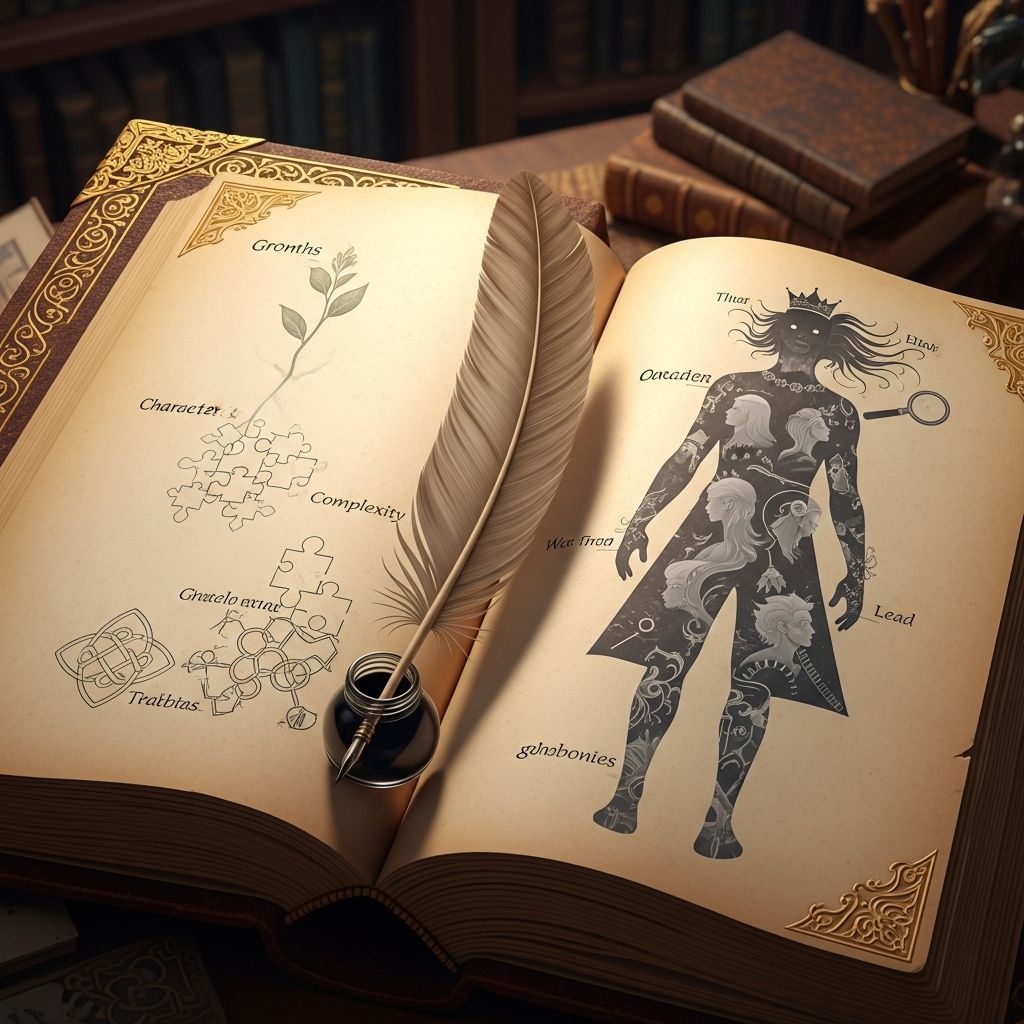
Characters form the heartbeat of any narrative, driving plots forward and evoking emotional connections with readers. Without compelling figures to root for or against, stories lack depth and resonance. This article examines the core concepts of literary characters, their classifications, development strategies, and enduring impact on storytelling across genres.
The Foundation: Defining Characters in Stories
In literature, a character represents any person, animal, entity, or object portrayed with human-like qualities within a narrative framework. These elements populate novels, plays, poems, and short stories, performing actions, engaging in dialogue, and navigating conflicts that propel the plot. Essential to every tale, characters provide the ‘who’ behind the ‘what’—the individuals or beings through whose eyes readers experience events.
Stories require at least one character to function, though most feature ensembles that interact dynamically. Protagonists often anchor the narrative, but supporting roles enrich the world-building. Authors imbue characters with moral, intellectual, and emotional traits, making them vehicles for themes and social commentary.
Primary Classifications of Literary Figures
Characters fall into broad categories based on their roles, complexity, and evolution. Understanding these distinctions helps analyze how authors construct believable worlds.
Main Players: Protagonists and Antagonists
The protagonist is the central figure whose journey captivates the audience, generating empathy and interest. This hero or lead character faces challenges, pursues goals, and undergoes transformations that mirror universal human struggles. Examples include Elizabeth Bennet in Pride and Prejudice, whose wit and growth challenge societal norms.
Opposing the protagonist is the antagonist, the force creating obstacles—be it a villain, society, or internal flaw. Antagonists aren’t always evil; they embody conflict essential for drama. Think of Iago in Othello, whose manipulations drive tragedy.
Depth and Change: Static vs. Dynamic
Static characters remain unchanged throughout the story, defined by consistent traits that provide stability or comic relief. Their predictability contrasts with evolving plots, as seen in Sherlock Holmes’ unwavering logic.
Conversely, dynamic characters evolve through experiences, revealing layers of complexity. Jay Gatsby in The Great Gatsby shifts from idealistic dreamer to tragic figure, highlighting themes of illusion.
Complexity Spectrum: Flat, Round, and Stock
- Flat characters: Simple, one-dimensional figures embodying single traits, like the loyal sidekick. They support without overshadowing the main action.
- Round characters: Multi-faceted and realistic, with nuanced motivations and contradictions, akin to real people. Anna Karenina exemplifies this with her passionate yet tormented psyche.
- Stock characters: Archetypal stereotypes like the wise mentor or damsel in distress, efficiently filling roles in genres like fairy tales.
Techniques for Bringing Characters to Life
Authors employ varied methods to reveal character essence, blending direct and indirect approaches for immersive portraits.
Direct Characterization
The narrator explicitly states traits, such as ‘He was a tall, brooding man with a scar across his cheek.’ This straightforward method quickly orients readers but risks feeling tell-over-show.
Indirect Characterization: The STEAL Method
More subtle, indirect methods engage readers actively:
- Speech: Dialogue exposes personality, values, and relationships.
- Thoughts: Inner monologues uncover private motivations.
- Effects on others: Reactions from peers highlight influence.
- Actions: Deeds under pressure reveal true nature—courage in crisis or cowardice in calm.
- Looks: Physical descriptions symbolize inner states.
These tools create three-dimensionality, fostering reader investment.
Archetypes and Their Timeless Appeal
Beyond basic types, archetypes—universal patterns like the hero’s journey or trickster—recurring across cultures, tap into collective unconscious. Joseph Campbell’s monomyth features the call to adventure, trials, and return, seen in Odysseus or modern heroes like Harry Potter.
| Archetype | Description | Literary Example |
|---|---|---|
| The Hero | Courageous quester facing trials | Frodo Baggins (Lord of the Rings) |
| The Mentor | Wise guide providing aid | Dumbledore (Harry Potter) |
| The Shadow | Dark counterpart to hero | Voldemort (Harry Potter) |
| The Trickster | Clever disruptor of norms | Puck (A Midsummer Night’s Dream) |
These patterns endure because they resonate emotionally.
The Art of Character Development
Effective development transforms sketches into relatable beings. Start with backstory, motivations, flaws, and arcs. Conflicts—external (vs. antagonists) or internal (doubts, ethics)—catalyze growth.
Dynamic arcs peak in climactic choices, resolving tensions. Flat arcs, where the world changes around an unchanging character, still deliver impact, as in Atticus Finch’s moral steadfastness in To Kill a Mockingbird.
Characters in Diverse Genres and Media
While rooted in literature, character principles extend to film, theater, and games. In poetry, figures like the speaker in The Raven embody torment. Modern adaptations, like TV’s Walter White in Breaking Bad, showcase anti-heroes blurring protagonist-antagonist lines.
Why Characters Matter: Impact on Readers
Characters humanize abstract themes, provoke empathy, and mirror society. They challenge prejudices, inspire change, and offer escapism. Studies show strong characters boost reader retention and emotional processing.
Frequently Asked Questions (FAQs)
What is the most important type of character in a story?
The protagonist drives the narrative and evokes primary reader investment, though antagonists provide essential conflict.
Can a character be both static and round?
Yes, a round character can remain static if their complexity doesn’t lead to change, maintaining depth without evolution.
How do authors show character growth?
Through evolving actions, dialogue shifts, internal reflections, and transformative conflicts that alter perspectives.
What’s the difference between flat and stock characters?
Flat characters are simply underdeveloped; stock are stereotypical tropes fulfilling predictable roles.
Do all stories need multiple characters?
No, single-character stories exist, focusing on internal or environmental conflicts.
References
- Character in Literature | Definition, Types & Examples – Lesson — Study.com. 2023. https://study.com/learn/lesson/character-literature-types-development.html
- Character – Del Mar College — Del Mar College. Accessed 2026. https://www.delmar.edu/offices/swc/elements-of-literature/character.html
- What is a Character — Types, Examples & Functions — StudioBinder. 2023. https://www.studiobinder.com/blog/what-is-a-character-definition/
- Character: Definitions and Examples — LiteraryTerms.net. Accessed 2026. https://literaryterms.net/character/
- Character (arts) – Wikipedia — Wikipedia. 2026-04-01. https://en.wikipedia.org/wiki/Character_(arts)
- Character (arts) | Literature and Writing | Research Starters — EBSCO. Accessed 2026. https://www.ebsco.com/research-starters/literature-and-writing/character-arts

- Integrated M.A. in Applied Linguistics, University of Hyderabad
- 5+ years in editorial, instructional, SEO, and research-based writing
Sneha is a relationships and lifestyle writer with a strong foundation in applied linguistics and certified training in relationship coaching. She brings over five years of writing experience to theskillvault, crafting thoughtful, research-driven content that empowers readers to build healthier relationships, boost emotional well-being, and embrace holistic living. Her writing and insights reflect the belief that beauty, happiness, and wellness…