
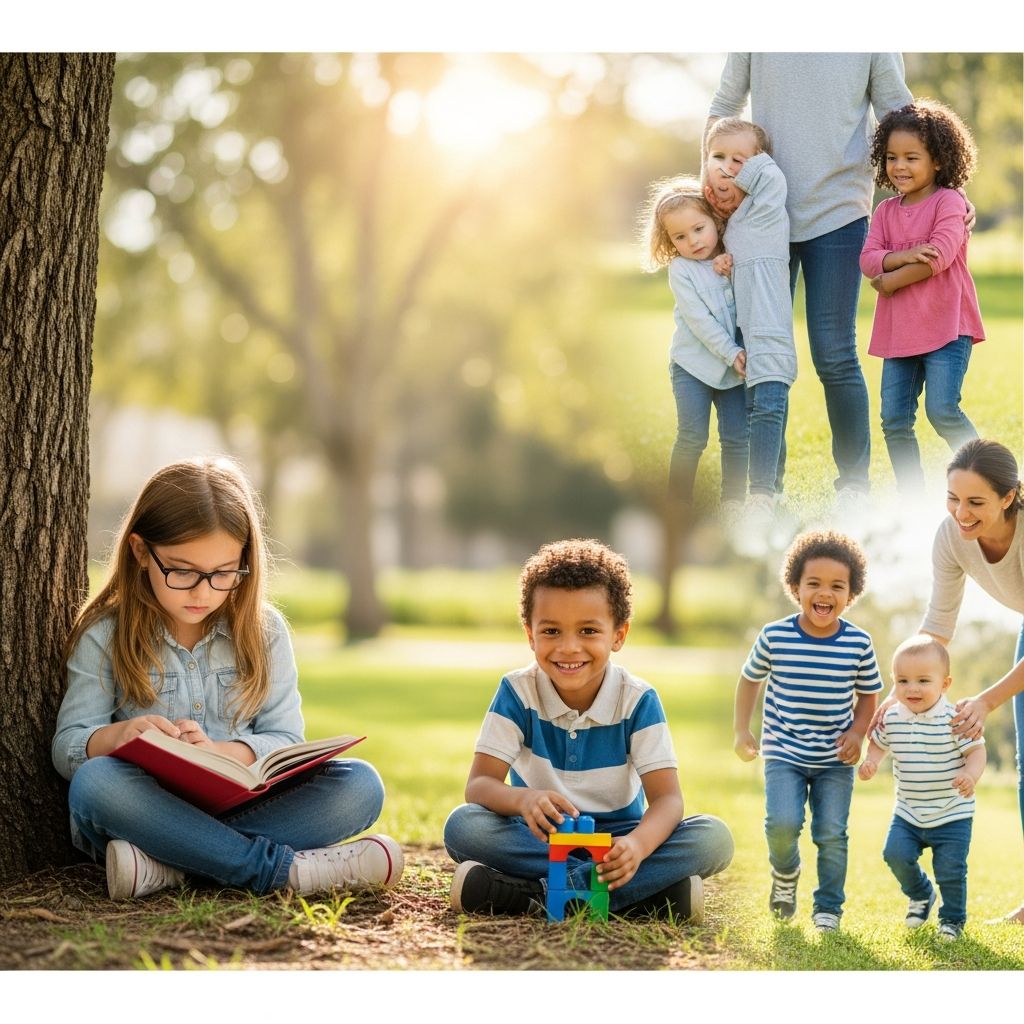
Every child arrives with a distinctive way of seeing and responding to the world. Some leap into new experiences; others hang back and watch. Some chatter nonstop; others think deeply before speaking. Understanding these differences as aspects of personality, rather than as problems to fix, can help parents respond more calmly, kindly, and effectively.
This guide explains what researchers mean by child personality, how it typically develops, and how you can use that knowledge to better support your child at home, at school, and in friendships.
What Do We Mean by a Child’s Personality?
Personality in children refers to relatively consistent patterns in how they feel, think, and behave across time and situations. Researchers often describe these patterns using broad, measurable traits rather than strict “types.”
Three important ideas help make sense of child personality:
- Temperament: Early-appearing, biologically influenced differences in activity level, emotional reactivity, and self-regulation.
- Personality traits: More stable patterns that include traits like extraversion (outgoing vs. reserved) or conscientiousness (organized vs. easygoing) that become clearer through middle childhood.
- Social and emotional skills: How children manage emotions, build relationships, and act in line with their values and goals.
Together, these layers form a child’s unique pattern of strengths, vulnerabilities, and preferences. Personality is not destiny, but it does shape what feels easy or hard for a child and where they may need extra support.
Key Personality Dimensions Commonly Seen in Children
Scientists often use trait models such as the Big Five to describe personality. These dimensions have been adapted for children and validated in multiple studies.
| Trait | High Levels Might Look Like… | Lower Levels Might Look Like… |
|---|---|---|
| Extraversion | Talkative, energetic, seeks company, enjoys group activities. | Quiet, prefers one-on-one or solo play, needs warm-up time in groups. |
| Agreeableness | Cooperative, empathetic, eager to help and please others. | More competitive, blunt, focused on own goals, may argue or resist. |
| Conscientiousness | Organized, careful, follows rules, finishes tasks. | Flexible, spontaneous, may be messy or forgetful, dislikes rigid rules. |
| Emotional sensitivity (often the opposite of adult “emotional stability”) | Feels emotions intensely, worries easily, reacts strongly to stress. | Stays calm under pressure, less prone to worry, slow to react emotionally. |
| Openness to experience | Curious, imaginative, enjoys creativity and new ideas. | Prefers routine and familiarity, practical, grounded in concrete facts. |
Most children show a mix of levels across these traits. No profile is inherently good or bad; each has potential benefits and challenges depending on the situation.
How Personality Develops from Early Childhood to Adolescence
Personality in childhood is both continuing and changing. Research suggests that early temperament predicts later traits to a degree, but children also adapt as they grow, encounter new environments, and learn new skills.
Early childhood (roughly ages 3–6)
During these years, parents often notice strong temperamental signals:
- Activity level (always moving vs. content to sit and play quietly).
- Approach or withdrawal (running toward new situations vs. hanging back).
- Intensity of reaction (big laughs and big tears vs. more muted responses).
- Ease of soothing and adapting to changes.
Self-control skills are still developing, so behavior may swing dramatically even in an otherwise easygoing child.
Middle childhood (roughly ages 7–12)
This period is especially important for personality assessment because children can reflect more on their own thoughts and behaviors and give reasonably consistent self-reports.
- Traits such as conscientiousness, extraversion, and agreeableness become more recognizable.
- Children start comparing themselves with peers (“I’m more shy than my classmates”).
- School, friendships, and extracurriculars provide multiple contexts where traits show up.
Adolescence (roughly ages 13–18)
Adolescents begin to form a more complex sense of identity that includes:
- Personal values and long-term goals.
- Interests and talents they care about.
- A narrative about who they are and who they want to become.
Personality traits are still changing, but patterns of how teens relate to others, handle stress, and pursue goals start to stabilize and carry into adulthood.
How Professionals Assess Child Personality
Parents sometimes encounter personality assessments through schools, clinics, or research studies. Modern child-focused tools are designed to match a child’s developmental level and often combine information from multiple sources.
Common approaches used in research and practice
- Child self-report questionnaires: Age-appropriate surveys where children rate how often they behave or feel in certain ways (for example, Big Five questionnaires for children).
- Parent and teacher reports: Adults who know the child well rate behavioral patterns across home and school.
- Behavioral observation: Trained observers or clinicians watch how a child behaves in structured tasks or natural settings.
- Pictorial tools: For younger children, some assessments use pictures instead of long verbal statements to represent personality-relevant behaviors.
In clinical settings, personality-related information is often gathered alongside measures of emotional and behavioral adjustment, such as parent-rated inventories that map a child’s social, cognitive, and behavioral functioning.
Recognizing Personality Patterns at Home
You do not need formal tests to get a working sense of your child’s personality. Careful day-to-day observation can reveal stable patterns.
Questions to guide your observations
- How does my child respond to new people and situations? Do they jump in, watch first, or avoid?
- What seems to energize them most: group activities, quiet projects, physical play, or imaginative worlds?
- How do they typically handle frustration? Do they explode, shut down, ask for help, or try again?
- Are they naturally organized and careful, or more spontaneous and flexible about details?
- How strongly do they react emotionally? How long does it take them to recover?
Look for patterns over weeks and across settings rather than focusing on one bad afternoon. Involve other caregivers and teachers; different people may see different sides of your child.
Personality Traits and Everyday Parenting
Seeing your child’s behavior through the lens of personality can shift your response from “What is wrong with them?” to “What does their style need right now?” The table below offers examples of how traits can guide practical adjustments.
| Trait Tendency | Common Strengths | Typical Challenges | Helpful Parenting Responses |
|---|---|---|---|
| Highly outgoing (high extraversion) | Social, enthusiastic, quick to join in. | May interrupt, take risks, or struggle with quiet tasks. | Teach turn-taking, build safe outlets for energy, praise listening. |
| Reserved (lower extraversion) | Thoughtful, observant, good one-on-one. | May be overlooked in groups or feel anxious in new settings. | Allow warm-up time, avoid forcing instant social engagement, support small steps. |
| Highly conscientious | Responsible, reliable, motivated at school. | Perfectionism, fear of mistakes, difficulty relaxing. | Normalize errors, model balance, praise effort not only outcomes. |
| More easygoing about rules (lower conscientiousness) | Flexible, creative, able to change plans. | Forgetfulness, messy spaces, unfinished tasks. | Use visual routines, break tasks into small steps, keep expectations realistic and consistent. |
| Emotionally sensitive | Empathetic, aware of others’ feelings, passionate. | Prone to worry, intense reactions, difficulty with transitions. | Stay calm, name emotions, practice coping skills, prepare for changes ahead of time. |
Using Personality Insights to Support Learning and Friendships
Personality differences can influence how children approach schoolwork, hobbies, and friendships. Research has linked some traits, such as conscientiousness and openness to experience, with better academic outcomes in children and adolescents.
In learning and school
- Highly organized children may thrive with planners, checklists, and clear schedules—but benefit from reassurance that it is okay if things are not perfect.
- More spontaneous children may need extra support with routines and study habits, and may learn best when tasks are active, varied, and hands-on.
- Curious, imaginative children often engage deeply with open-ended projects, stories, and creative assignments.
- Practical, concrete children may prefer step-by-step instructions and clear, real-world examples.
In friendships and social life
- Outgoing children usually find friends easily but may need help recognizing social boundaries and noticing quieter peers.
- Reserved children may do best with one or two close friends and can benefit from gentle coaching on starting conversations and joining group play.
- Highly agreeable children are often kind and cooperative but may struggle to say no; practicing assertive language can help.
- More assertive or competitive children may shine in leadership roles and team activities but need guidance on empathy and compromise.
When Personality Overlaps with Emotional or Behavioral Concerns
Strong personality traits can sometimes resemble mental health difficulties. For example, a very sensitive child might look anxious, or a highly active child might be mistaken for simply “difficult” when they actually need help managing attention and impulses.
Consider seeking professional guidance if:
- Emotional reactions or behavior are very intense and occur across many settings.
- Your child’s patterns are causing significant problems in school, friendships, or family life.
- Strategies that usually help children with similar traits are not making a difference.
Clinicians use structured interviews, questionnaires, and observations to distinguish between typical personality-related differences and concerns that may require targeted interventions. Early support can reduce distress and help children use their personality strengths more effectively.
Guiding Principles for Parents
Research on child personality assessment highlights several principles that are useful for families as well as professionals.
- Look for patterns, not episodes. One meltdown does not define a personality. Pay attention to recurring themes over time.
- Use multiple perspectives. Combine your observations with those of the child, teachers, and other caregivers.
- Avoid fixed labels. Describe behaviors (“often cautious in new situations”) rather than global identities (“a shy kid”).
- Build on strengths. Ask, “How can we use this trait as an advantage?” rather than only trying to reduce challenges.
- Match expectations to the child. What is easy for one child (for example, jumping into group games) may be a major stretch for another.
Frequently Asked Questions (FAQs)
Q: At what age does a child’s personality become clear?
A: Elements of temperament are visible in infancy, but more recognizable personality traits typically emerge in middle childhood, as children gain language, self-awareness, and experience in multiple settings. Even then, personality continues to mature into adolescence and adulthood.
Q: Can a child’s personality change over time?
A: Yes. Research indicates that while there is continuity from early temperament to later traits, personality is also shaped by experiences, relationships, and learning. Children can develop new skills that help them manage less comfortable aspects of their temperament.
Q: Are personality tests for children reliable?
A: Many research-based tools show acceptable validity and reliability when they are carefully adapted for children’s developmental level, such as using simple language or pictures and combining multiple informants. However, results should always be interpreted in context and never used as the sole basis for major decisions.
Q: Should I use an online personality test to label my child?
A: Online questionnaires can sometimes raise useful questions, but they vary widely in quality and are not a substitute for professional assessment. It is safer to treat results as conversation starters—ideas to observe and explore—rather than fixed labels that define your child.
Q: How can I best support a child whose personality is very different from mine?
A: Start with curiosity. Notice when your expectations are based on what would feel right for you instead of what fits your child’s style. Learn about their traits, experiment with small adjustments to routines and communication, and consider asking another adult whose personality is more similar to your child’s for practical tips.
References
- Pictorial Personality Traits Questionnaire for Children (PPTQ-C): A New Measure of the Big Five in Childhood — Cieciuch, K., Davidov, E., Vecchione, M., Beierlein, C., & Januszek, M. 2016-04-06. https://www.frontiersin.org/articles/10.3389/fpsyg.2016.00498
- Child Psychological Assessment: Tools and Techniques — Psychology.town. 2023-05-01 (approx. last updated). https://psychology.town/mental-disorders/child-psychological-assessment-tools/
- Personality Assessment of Children and Adolescents — Tackett, J. L., & Lahey, B. B. Annual Review of Developmental Psychology. 2021-12-01. https://www.annualreviews.org/doi/10.1146/annurev-devpsych-050620-114343
- Personality Inventory for Children, Second Edition (PIC-2) — Western Psychological Services (WPS). 2019-01-01 (test manual). https://www.wpspublish.com/pic-2-personality-inventory-for-children-second-edition
- 10 Most Popular Personality Tests and Inventories — Ackerman, C. E., PositivePsychology.com. 2021-02-22. https://positivepsychology.com/personality-assessment/

Medha Deb is an editor with a master's degree in Applied Linguistics from the University of Hyderabad. She believes that her qualification has helped her develop a deep understanding of language and its application in various contexts. Medha specializes in the areas of beauty, health, sports, and wellness and is committed to ensuring that the content on the website is…