
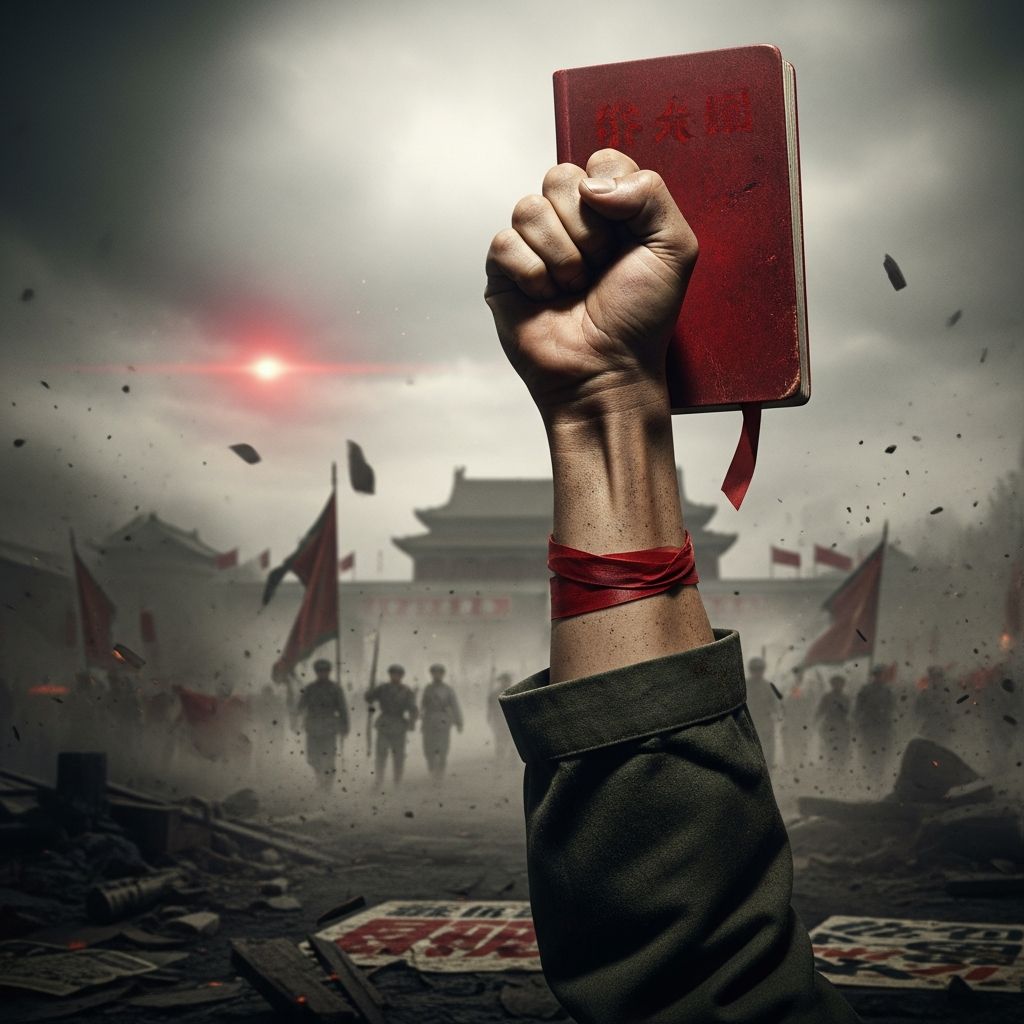
Understanding China’s Cultural Revolution: A Historical Overview
Between 1966 and 1976, China experienced one of the most turbulent periods in its modern history. The Cultural Revolution, formally known as the Great Proletarian Cultural Revolution, was a decade-long political and social upheaval initiated by Communist Party Chairman Mao Zedong. This movement fundamentally reshaped Chinese society, disrupted economic development, and resulted in widespread persecution and loss of life. Rather than a traditional revolution aimed at overthrowing the government, it functioned as an internal power struggle that spiraled into massive social chaos affecting millions of ordinary citizens.
Mao launched this campaign with the stated intention of preserving Chinese communism by eliminating what he perceived as capitalist and traditional elements that had infiltrated society and the Communist Party itself. However, the movement quickly evolved into something far more destructive, characterized by violent purges, destruction of cultural artifacts, and systematic persecution of intellectuals, party officials, and ordinary citizens deemed insufficiently revolutionary.
The Political Context: Power Struggles Within the Communist Party
The origins of the Cultural Revolution lay in deep ideological and political divisions within China’s leadership. By the mid-1960s, Mao had grown increasingly concerned about the direction of Chinese communism and his own political influence. He feared that the nation was developing along the lines of the Soviet model, which he viewed as a betrayal of true revolutionary principles. Additionally, Mao worried about his place in history and his ability to maintain control over the party and nation he had helped to establish.
At the heart of the conflict was Mao’s struggle with other senior party leaders who favored more pragmatic and moderate approaches to economic development and governance. Liu Shaoqi, who served as President of China, and Deng Xiaoping, the Communist Party’s General Secretary, represented the moderate faction within the party leadership. These individuals advocated for policies that differed from Mao’s vision of perpetual revolution, leading to escalating tensions between competing factions.
Mao perceived these policy disagreements as evidence that capitalist and revisionist elements had infiltrated the highest levels of the Communist Party and government. Frustrated by what he saw as obstruction and sabotage of his initiatives, Mao decided to bypass traditional party mechanisms and appeal directly to the Chinese masses to support his vision.
The Launch: May 1966 and the Mobilization of Youth
The formal beginning of the Cultural Revolution is typically dated to May 16, 1966, when the Central Committee of the Communist Party issued a directive outlining Mao’s concerns about bourgeois infiltration. This document, known as the May Sixteenth Notification, called for a purge of capitalist influences and bourgeois thinking from government, education, media, and the arts. In August 1966, Mao formally launched the movement at the Eleventh Plenum of the Eighth Central Committee.
A critical element of Mao’s strategy was the mobilization of China’s youth. He called on young people to “bombard the headquarters” and proclaimed that “to rebel is justified,” effectively giving permission for mass action against established authorities. This appeal resonated powerfully with students and young workers who formed organizations known as the Red Guards. These youth-dominated groups, composed primarily of high school and college students, became the primary instruments through which Mao’s vision would be implemented across the nation.
The movement gained rapid momentum following “Red August” in 1966, when massive gatherings of Red Guards assembled in Beijing, particularly on Tiananmen Square. These human waves of young activists, armed with ideological fervor and Mao’s blessing, set out to transform Chinese society according to revolutionary principles.
The Campaign Against the “Four Olds” and Cultural Destruction
A central objective of the Cultural Revolution was the elimination of what Mao termed the “Four Olds”: old ideas, old culture, old customs, and old habits. Red Guard organizations interpreted this mandate broadly, embarking on campaigns of destruction that targeted the physical and cultural heritage of China. Historical artifacts, temples, shrines, and other cultural and religious sites were systematically destroyed.
This destruction represented an unprecedented assault on China’s cultural continuity. Priceless manuscripts, artwork, and archaeological treasures were lost. Religious institutions faced desecration, and traditional practices that had survived centuries of Chinese history were forcibly suppressed. The movement created what historians describe as one of the most significant losses of cultural and historical relics since the era of Confucianism.
Beyond physical destruction, the revolution targeted cultural expression itself. Writers, artists, musicians, and intellectuals faced censorship, persecution, and public humiliation. Traditional forms of literature, music, and theater were replaced with revolutionary art forms deemed politically acceptable. This cultural transformation extended into educational institutions, where curricula were fundamentally restructured to emphasize Maoist ideology over traditional academic disciplines.
Persecution and the Categorization of Political Enemies
As the Cultural Revolution intensified, millions of individuals faced persecution based on their perceived ideological positions or social background. The campaign employed systematic classification schemes to identify political enemies. Tens of millions were targeted for persecution, including high-ranking party officials. Liu Shaoqi and Deng Xiaoping were singled out as the most prominent “persons in authority taking the capitalist road” and became primary targets of public criticism and denunciation campaigns.
Beyond top officials, the revolution categorized ordinary citizens into what were called the “Five Black Categories,” a classification system that identified individuals deemed enemies of the revolution. Intellectuals and scientists were particularly targeted, labeled derogatorily as the “Stinking Old Ninth.” These individuals, who had been valued under earlier Communist regimes for their contributions to national development, suddenly found themselves objects of mass criticism and struggle sessions.
Struggle sessions became a prominent feature of the Cultural Revolution. During these public gatherings, accused individuals were subjected to intense criticism, forced confession, and physical abuse. Party cadres at all levels were thrown out of office between 1966 and 1969. Teachers, professors, engineers, and other educated professionals were sent to the countryside for “re-education through labor,” a form of political punishment that separated them from their families and professions.
Economic and Social Disruption
The chaos unleashed by the Cultural Revolution extended far beyond political persecution, severely disrupting China’s economy and social systems. Educational institutions were effectively shut down as schools became centers of revolutionary activity rather than learning. Industrial production declined significantly as workers engaged in political activities and struggle sessions rather than productive labor.
Families were torn apart as children were encouraged to report on parents deemed insufficiently revolutionary, and spouses were forced to publicly denounce one another. Traditional social hierarchies were inverted, with young people given authority over elders and teachers. The normal functioning of government bureaucracies was compromised as officials were purged and replaced with revolutionary committees lacking administrative experience.
Commercial activities were disrupted, and traditional market mechanisms were severely restricted. The transportation system faced disruptions as Red Guards traveled across the country conducting their revolutionary campaigns. Agricultural production suffered as rural areas were thrown into turmoil, and peasants were diverted from farming to participate in political activities and struggle sessions.
The Radical Phase and Military Intervention
By 1968, the initial revolutionary fervor had evolved into increasingly violent chaos. Different Red Guard factions, which had originally acted in concert to pursue Mao’s agenda, began fighting among themselves. Armed conflicts broke out between competing groups claiming to represent true revolutionary ideology. Mao’s vision of controlled rebellion had transformed into widespread societal breakdown.
Recognizing that the situation had spiraled beyond his ability to control through mass mobilization, Mao authorized military intervention to restore order. In September 1966, he issued directives calling on the People’s Liberation Army (PLA) to restore order and instructing the masses to submit to military authority. This marked a significant shift in the Cultural Revolution’s trajectory, as the military began dismantling some of the Red Guard organizations and imposing greater centralized control.
The later phases of the Cultural Revolution witnessed a turning against the “ultra-left” movements that had become too radical even for Mao. Leaders associated with radical factions were purged, and revolutionary committees were increasingly staffed with military personnel rather than youthful activists.
The Human Toll and Long-Term Consequences
The human cost of the Cultural Revolution was staggering. Estimates suggest between 500,000 and 2 million deaths, though exact figures remain uncertain due to the lack of official records and the chaos of the period. Millions more were persecuted, imprisoned, or sent to labor camps. Countless individuals suffered psychological trauma from denunciation by family members and neighbors. The social fabric of communities was torn apart by the requirement that people publicly attack those closest to them.
Beyond immediate casualties, the Cultural Revolution had profound long-term consequences for Chinese society and politics. It demonstrated the dangers of unchecked personality cults and political extremism. The movement discredited many revolutionary ideals that had motivated the early Communist movement, contributing to widespread cynicism about political ideology in later decades.
The Cultural Revolution officially ended in August 1977 when the Eleventh Party Congress convened after Mao’s death in September 1976. Under the leadership of Deng Xiaoping, who had been purged during the revolution but later rehabilitated, China began a process of reform and gradual opening to the outside world. This transition from revolutionary chaos to pragmatic modernization fundamentally reshaped China’s development trajectory.
Reassessment and Historical Significance
In the decades following the Cultural Revolution, Chinese leadership conducted formal reassessments of the period. Official Communist Party evaluations acknowledged the movement’s destructive impact while attempting to maintain some credit for Mao’s earlier revolutionary accomplishments. The Cultural Revolution became a cautionary chapter in Chinese history, illustrating the costs of ideological extremism and unchecked political power.
The movement profoundly impacted China’s political landscape and economic strategies. The chaos and suffering of the Cultural Revolution years contributed to the Chinese leadership’s subsequent emphasis on economic development, pragmatism, and modernization. Deng Xiaoping’s “reform and opening-up” policies, which transformed China into a major economic power, were partly shaped as deliberate reactions against the Cultural Revolution’s revolutionary radicalism.
Survivors of the Cultural Revolution faced long-term psychological and social consequences. Many lost opportunities for education during the years when schools were closed, affecting their career prospects. Families remained broken by the divisions created during struggle sessions and forced relocations. The scars of this period continued to influence Chinese society decades later.
Comparing the Cultural Revolution to Other Revolutionary Movements
| Aspect | Cultural Revolution (1966-1976) | French Revolution (1789-1799) | Soviet Revolution (1917) |
|---|---|---|---|
| Primary Goal | Purge capitalist elements and reassert Mao’s authority | Overturn feudal monarchy and establish republic | Overthrow capitalist system and establish communist state |
| Main Participants | Youth (Red Guards), party officials, masses | Urban workers, intellectuals, peasants | Workers, soldiers, peasants |
| Duration and Intensity | 10 years of continuous upheaval | 10 years with varying intensity | Ongoing revolutionary period |
| Estimated Deaths | 500,000 to 2 million | 30,000 to 40,000 (direct violence) | Millions (including civil war and purges) |
| Cultural Impact | Massive destruction of historical artifacts and traditional culture | Radical restructuring of social hierarchy | Rejection of pre-revolutionary cultural forms |
Frequently Asked Questions About the Cultural Revolution
Q: Why did Mao launch the Cultural Revolution?
A: Mao feared that capitalist and revisionist elements had infiltrated the Communist Party and government. He was concerned about China developing along Soviet lines and wanted to maintain his political influence and revolutionary vision. The movement also served as a tool to eliminate political rivals like Liu Shaoqi and Deng Xiaoping who favored more moderate policies.
Q: Who were the Red Guards?
A: The Red Guards were primarily organizations of high school and college students mobilized by Mao to carry out the Cultural Revolution. They were given authority to criticize party officials, destroy cultural artifacts, and conduct struggle sessions. They became the principal enforcers of the revolution’s goals at the grassroots level.
Q: What were the “Four Olds” that the Cultural Revolution targeted?
A: The Four Olds were old ideas, old culture, old customs, and old habits. The Cultural Revolution aimed to eliminate these elements from Chinese society, which in practice meant destroying historical and cultural sites, suppressing traditional practices, and censoring traditional forms of art and literature.
Q: How many people died during the Cultural Revolution?
A: Estimates range from 500,000 to 2 million deaths, though exact figures are difficult to determine because complete records were not maintained during the chaotic period. Millions more were persecuted, imprisoned, or sent to labor camps.
Q: When did the Cultural Revolution end?
A: The Cultural Revolution officially ended in August 1977 when the Eleventh Party Congress convened, following Mao Zedong’s death in September 1976. However, the movement had already begun to lose momentum in the early 1970s as military authorities restored greater order.
Q: How did the Cultural Revolution affect China’s development?
A: The Cultural Revolution severely disrupted China’s economic and educational development. It destroyed cultural heritage, disrupted industrial production, closed schools, and created widespread social chaos. The subsequent leadership under Deng Xiaoping implemented reform and modernization policies partly as reactions against the revolution’s destructive radicalism.
References
- Cultural Revolution — Wikipedia. Accessed 2026. https://en.wikipedia.org/wiki/Cultural_Revolution
- Cultural Revolution Begins in China — EBSCO Research Starters. Accessed 2026. https://www.ebsco.com/research-starters/history/cultural-revolution-begins-china
- Cultural Revolution — Britannica. Accessed 2026. https://www.britannica.com/event/Cultural-Revolution
- From Red Guards to Thinking Individuals: China’s Youth in the Cultural Revolution — Association for Asian Studies. Accessed 2026. https://www.asianstudies.org/publications/eaa/archives/from-red-guards-to-thinking-individuals-chinas-youth-in-the-cultural-revolution/
- The Cultural Revolution — The National Archives. Accessed 2026. https://www.nationalarchives.gov.uk/education/resources/the-cultural-revolution/
- What was China’s Cultural Revolution? — BBC News. Accessed 2026. https://www.youtube.com/watch?v=LqJ9IpWOYQA
- Introduction to the Cultural Revolution — Stanford FSI-SPICE. Accessed 2026. https://spice.fsi.stanford.edu/docs/introduction_to_the_cultural_revolution
- Rise of China – Cultural Revolution — YouTube. Accessed 2026. https://www.youtube.com/watch?v=QQePj1Fu3qE

Medha Deb is an editor with a master's degree in Applied Linguistics from the University of Hyderabad. She believes that her qualification has helped her develop a deep understanding of language and its application in various contexts. Medha specializes in the areas of beauty, health, sports, and wellness and is committed to ensuring that the content on the website is…