
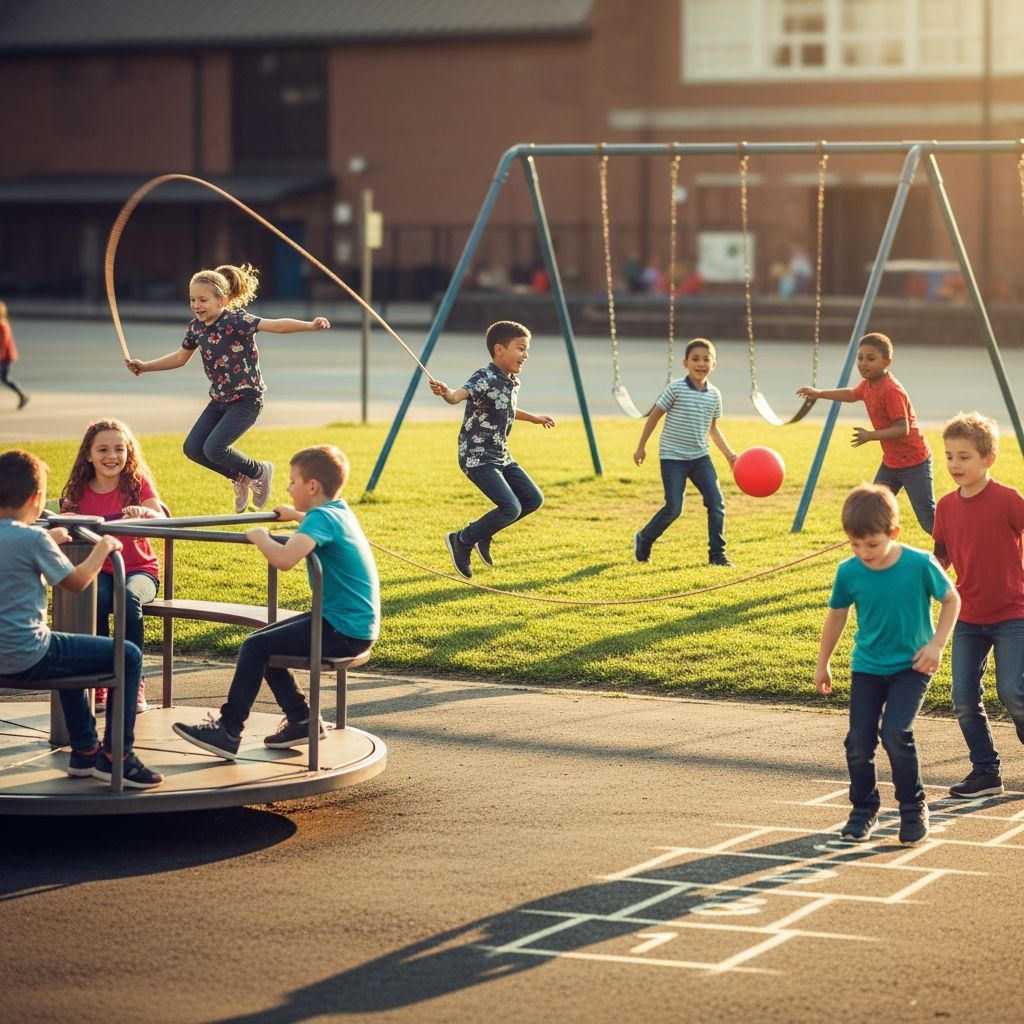
The Enduring Appeal of Traditional Recess Games
For generations, recess has served as a cherished break in the school day—a time when children step outside the classroom to run, play, and connect with their peers. While technology and modern entertainment compete for attention, traditional recess games continue to captivate young minds through their simplicity, accessibility, and timeless appeal. These games require minimal equipment, adapt to various age groups, and deliver genuine enjoyment without elaborate rules or expensive materials. The games that have persisted across decades offer more than mere entertainment; they build physical fitness, develop social skills, encourage creative problem-solving, and create memories that often last a lifetime. Understanding and reviving these classic activities can enrich the recess experience for contemporary students.
Understanding the Value of Movement-Based Play
Physical activity during recess provides children with essential opportunities to burn energy, develop motor skills, and improve cardiovascular health. Games that emphasize movement help students maintain focus when they return to the classroom, reducing restlessness and promoting better concentration during academic instruction. Beyond the physical benefits, these active games create an egalitarian environment where success depends on effort, strategy, and cooperation rather than academic achievement. Students who may struggle with traditional subjects often find confidence and belonging through athletic pursuits and team-based competitions. The democratic nature of recess games—where any student can participate regardless of economic background—makes them particularly valuable in fostering inclusive school communities.
Quick-Reflex Games: Speed and Agility Challenges
Some of the most captivating recess experiences involve games that test quick reflexes and rapid decision-making. These activities push children to react swiftly to changing circumstances, developing their physical responsiveness and mental sharpness simultaneously.
Four Corners: Strategic Positioning and Quick Choices
Four Corners stands out as a remarkably adaptable game that works equally well for younger elementary students and older children. The game involves designating four corners of a space, with one player stationed in the center while others position themselves in the corners. The center player calls out a corner number, and all players must quickly move to a different corner before the center player tags them. This deceptively simple structure teaches children to make split-second decisions, anticipate others’ movements, and maintain spatial awareness. Teachers appreciate this game because it requires no equipment preparation, accommodates large or small groups, and can be played indoors or outdoors. The psychological element—where players try to predict which corner will be called—adds strategic depth that keeps the game engaging across repeated plays.
Red Light, Green Light: Impulse Control Through Play
Red Light, Green Light transforms the concept of stopping and starting into an engaging chase game that develops both physical control and attentiveness. One child designates themselves as “it” and faces away from a line of players. When they shout “green light,” everyone advances toward them, but immediately upon hearing “red light” followed by the “it” player turning around, all advancing players must freeze completely. Any player caught in motion must return to the starting line. This game builds remarkable self-regulation skills as children practice inhibiting their forward momentum despite the momentum they have generated. The psychological tension between the desire to advance and the need to stop instantly creates engaging challenge that children find highly motivating.
Team-Based Competition: Building Collaborative Skills
Games that emphasize teamwork over individual achievement create opportunities for children to learn leadership, communication, and collective problem-solving. These structured competitions teach students how to work toward shared goals and support teammates in achieving victory.
Dodgeball: Coordination and Strategic Thinking
Dodgeball divides players into two teams tasked with eliminating opposing players by striking them with a soft ball while avoiding being struck themselves. The game requires players to coordinate throws with teammates, anticipate opponent movements, and develop defensive positioning strategies. Modern variations have made the game safer through foam balls and adjusted rules, yet the fundamental appeal remains: the thrilling combination of physical movement, team strategy, and the satisfying moment of executing a successful elimination. Dodgeball teaches children to think several moves ahead, communicate without elaborate discussion, and maintain composure under pressure.
Red Rover: Strength, Determination, and Chain Unity
Red Rover creates two teams that line up opposite each other with linked arms forming unbreakable chains. Players take turns being called across to charge the opposing line, attempting to break through the linked arms. Successful breach allows the runner to bring one opponent back to their team, while failure means joining the other team. This game uniquely combines individual effort with team solidarity—each player must believe their teammates’ linked arms provide adequate resistance while simultaneously trusting in their own strength and determination. The game teaches children about physical limits, the power of collective action, and gracious acceptance of both success and defeat.
Kickball: The Playground’s Baseball Alternative
Kickball modifies traditional baseball by replacing batting with kicking a rubber ball, making participation more accessible to children of varying athletic abilities. Players proceed around bases and must reach home before defensive players retrieve the ball. The game accommodates multiple players simultaneously, ensuring extensive participation rather than long periods of inactive waiting. Kickball’s accessibility and rapid action create an ideal environment where less coordinated students can experience athletic success.
Individual Challenge Games: Personal Achievement and Perseverance
Some recess classics focus on individual performance rather than team competition, allowing children to set personal goals and experience the satisfaction of improving through practice and determination.
Hopscotch: Balance, Coordination, and Focus
Hopscotch ranks among the most iconic recess games, requiring only chalk and a small tossing object. Players toss an object into sequentially numbered squares, then hop through the grid without stepping on the marked square, finally retrieving their object on the return journey. The game develops balance, single-leg strength, and the ability to maintain focus despite minor physical challenges. Hopscotch’s profound simplicity belies its developmental benefits—children unconsciously build lower-body strength and proprioceptive awareness while enjoying a familiar, accessible activity.
Jump Rope: Rhythmic Movement and Coordination
Jump rope encompasses multiple variations, from individual jumping to elaborate cooperative forms like Double Dutch, where two players simultaneously swing ropes in opposite directions while others jump between them. Double Dutch particularly emphasizes coordination and rhythm, as jumpers must synchronize their movements with dual rope rotations while often chanting rhymes to maintain timing. These rope-based activities build cardiovascular endurance, lower-body strength, and the ability to coordinate movement with external rhythms or music.
Jacks: Dexterity and Hand-Eye Coordination
Jacks develops fine motor skills and hand-eye coordination through a deceptively complex progression. Players toss a small ball while simultaneously manipulating small metal pieces, retrieving specific quantities before catching the bouncing ball. Success requires careful attention, precise hand movements, and strategic planning. Unlike more physically demanding games, jacks accommodates children with limited mobility while offering sophisticated cognitive challenges.
Imagination and Social Connection: Games Built on Creativity
Beyond structured rules and physical competition, some cherished recess games emphasize imagination, role-play, and the social dynamics that emerge when children collaborate to create shared fictional worlds.
Duck, Duck, Goose: Chase Dynamics and Circle Play
Duck, Duck, Goose positions players in a circle while one designated player walks around tapping heads, designating each as a “duck” until suddenly shouting “Goose!” at which point the tapped player must chase the designated “it” player around the circle. The game combines physical activity with the psychological tension of uncertainty—players never know when their moment of action will arrive. The circular format ensures all participants remain actively engaged rather than standing idle.
Charades and Performance-Based Games
Charades invites players to act out concepts, animals, characters, or book figures without speaking while teammates guess the represented item. This game develops communication skills, creative thinking, and the confidence to perform before peers. Teachers often create custom charade cards featuring classroom-specific content, deepening engagement and reinforcing academic material through playful performance.
Low-Energy Options: Games for Indoor Recess and Quiet Play
Inclement weather and indoor recess requirements demand games that maintain engagement within confined spaces while accommodating noise-sensitive environments. Several classics adapt beautifully to indoor settings.
Heads Up, Seven Up: Anticipation and Deduction
Heads Up, Seven Up features seven designated “choosers” who silently navigate a room where remaining players sit with heads down and one thumb extended. Choosers gently tap one thumb each, then return to the front as tapped players guess which classmate touched them. Correct guesses allow players to switch roles with their chooser. This game works perfectly during indoor recess, requiring minimal space and generating minimal noise despite creating genuine excitement and engagement.
Hot and Cold: Search and Discovery
The Hot and Cold game requires minimal preparation while offering extended engagement. One student leaves the room while others hide an object, then the searching student returns and moves about the space while classmates provide feedback—calling “hot” when approaching the object and “cold” when moving away. This game teaches spatial reasoning and encourages careful observation as students interpret verbal cues to locate hidden items.
Comparison of Classic Recess Games
| Game Name | Primary Skills Developed | Equipment Needed | Best For |
|---|---|---|---|
| Hopscotch | Balance, coordination, focus | Chalk, small object | Individual challenge, fine motor development |
| Dodgeball | Team strategy, reflexes, spatial awareness | Foam ball | Group competition, physical activity |
| Red Light, Green Light | Impulse control, listening, speed | None | All ages, mixed abilities, outdoor play |
| Red Rover | Teamwork, strength, determination | None | Large groups, team building |
| Kickball | Coordination, running, strategic thinking | Rubber ball, bases | Extended play, skill development across abilities |
| Double Dutch | Rhythm, coordination, endurance | Jump ropes | Cardiovascular fitness, rhythm development |
| Heads Up, Seven Up | Deduction, anticipation, listening | None | Indoor recess, classroom integration |
| Duck, Duck, Goose | Chase dynamics, following directions, engagement | None | Mixed ages, high-energy groups |
Modernizing Classic Games While Preserving Their Essence
Contemporary educators recognize that traditional games sometimes require thoughtful modifications to address safety concerns, accommodate diverse abilities, and maintain relevance for modern students. These adaptations preserve the core appeal while removing potentially problematic elements. Dodgeball variations now emphasize foam balls and elimination rules focused on cooperation rather than individual aggression. Red Rover modifications may reduce physical contact intensity for younger players. Educators creating inclusive recess environments ensure games accommodate students with mobility challenges, sensory sensitivities, or social anxiety. Technology sometimes enhances traditional games—using apps to randomly select players or time activities—without replacing the fundamental human interaction that makes these games valuable.
The Educational Impact Beyond the Playground
Research demonstrates that recess games contribute meaningfully to academic performance and social-emotional development. Students who engage in regular physical activity during recess show improved concentration, better behavior in classrooms, and stronger peer relationships. The unstructured social interaction that occurs during game play builds friendship skills, conflict resolution abilities, and emotional resilience. Children learn to handle disappointment when eliminated from games, celebrate teammates’ successes, and navigate the social hierarchies that emerge within peer groups. These life lessons transfer into classroom relationships and prepare students for interpersonal challenges they will encounter throughout their lives.
Frequently Asked Questions
Q: Are traditional recess games safe for modern students?
A: Yes, when supervised appropriately and modified for safety. Schools should use foam or soft balls for throwing games, establish clear rules about physical contact, and provide proper equipment. Educators can adapt games to eliminate unnecessary risks while preserving engagement and enjoyment.
Q: How can teachers encourage participation from reluctant players?
A: Begin with games featuring low social stakes and individual achievement, gradually introducing team games as confidence builds. Pair hesitant students with supportive peers, offer multiple game options, and celebrate effort rather than winning. Creating emotionally safe environments where mistakes are expected and normalized significantly increases participation rates.
Q: What games work best for students with limited mobility?
A: Games emphasizing strategy, coordination, or cognitive challenge work well, including Heads Up Seven Up, Charades, Hot and Cold, and seated jumping games. Teachers can modify physical games by adjusting movement requirements, allowing alternative participation methods, or creating adapted versions that accommodate various abilities.
Q: How long should recess periods be to maximize benefits?
A: Research suggests 20-30 minutes allows sufficient time for vigorous play, social interaction, and the physiological benefits of exercise. Adequate recess duration ensures students achieve meaningful physical activity levels and complete social exchanges before returning to academic work.
Q: Can these games be played indoors during bad weather?
A: Absolutely. Games like Heads Up Seven Up, Hot and Cold, Four Corners, Charades, and modified chase games work perfectly indoors. Teachers can create designated play spaces and establish volume expectations while maintaining the essential elements that make these games engaging and developmentally valuable.
Q: What makes these traditional games better than video game play?
A: Traditional recess games provide direct social interaction, physical activity, and unstructured creative play that video games cannot replicate. These games build genuine peer relationships, develop real-world social skills, and provide the cardiovascular and strength-building benefits that contribute to overall health and wellbeing.
References
- 20 Nostalgic Schoolyard Games That Defined Your Childhood — Good Housekeeping. Retrieved from https://www.goodhousekeeping.com/travel/hobbies-and-activities/g68014466/nostalgic-schoolyard-games/
- Popular School Playground Games for Kids — Miracle Recreation. Retrieved from https://www.miracle-recreation.com/blog/the-most-popular-school-playground-games/
- 15 Fun Indoor Recess Games and Activities — Truth For Teachers. Retrieved from https://truthforteachers.com/15-fun-indoor-recess-games-and-activities/
- Recess Games Archives — Playworks. Retrieved from https://www.playworks.org/game-tags/recess-games/

Medha Deb is an editor with a master's degree in Applied Linguistics from the University of Hyderabad. She believes that her qualification has helped her develop a deep understanding of language and its application in various contexts. Medha specializes in the areas of beauty, health, sports, and wellness and is committed to ensuring that the content on the website is…