
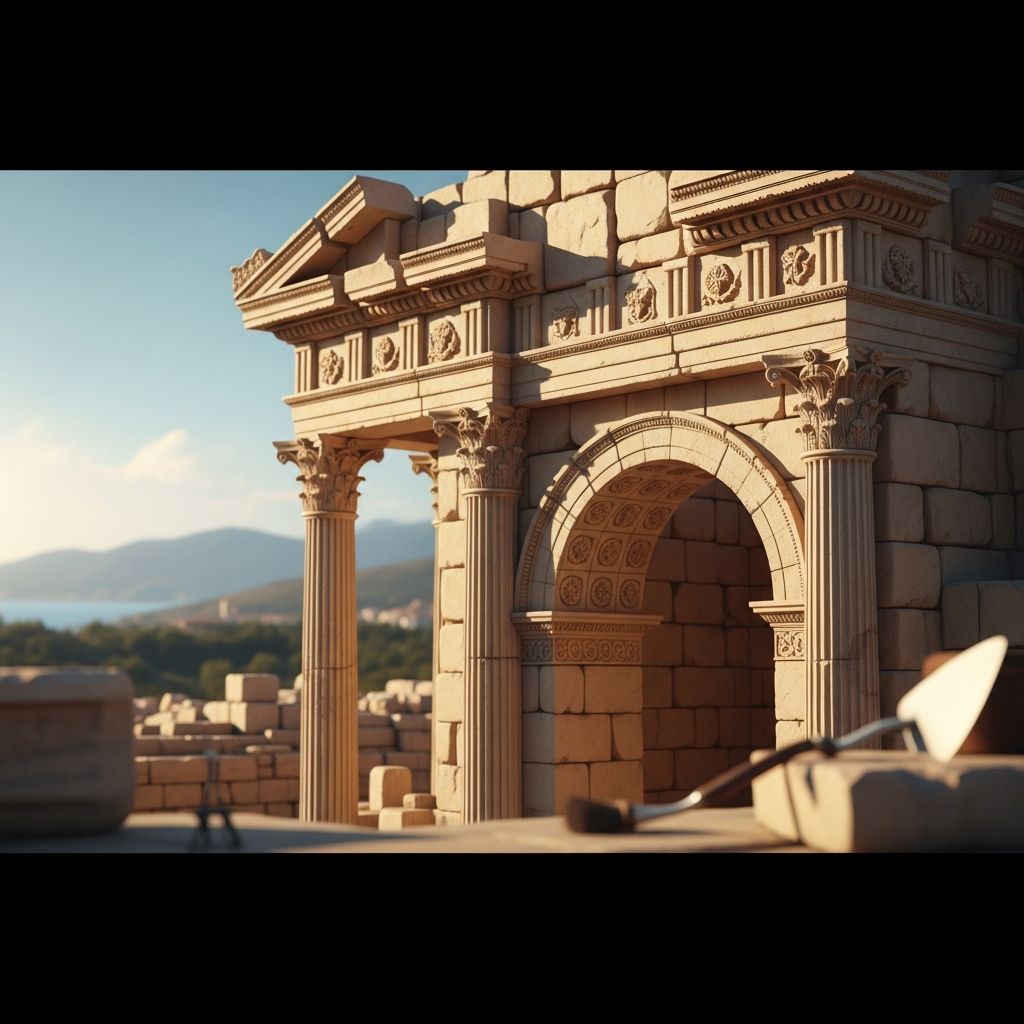
The era known as **classical antiquity** spans from roughly the 8th century BCE to the 5th century CE, encompassing the rise and peak of ancient Greek and Roman civilizations. These societies laid the groundwork for much of Western thought, governance, and culture.
Defining the Timeline of Classical Antiquity
Classical antiquity begins with the earliest recorded works of Greek poetry, such as those attributed to Homer around the 8th century BCE, marking the end of the Greek Dark Ages. It extends through the flourishing of Greek city-states, the conquests of Alexander the Great, the expansion of the Roman Republic and Empire, and concludes with the fall of the Western Roman Empire in 476 CE.
This period is divided into key phases for Greek history: the Archaic (c. 750–510 BCE), Classical (510–323 BCE), and Hellenistic (323–31 BCE) eras. Roman history overlaps, starting from its legendary founding in 753 BCE, through the Republic (509–27 BCE), and into the Empire (27 BCE–476 CE).
- Archaic Greece: Population growth, establishment of poleis (city-states) like Athens and Sparta, and foundational reforms such as those by Solon.
- Classical Greece: Peak of democracy in Athens, Persian Wars, and cultural explosion under leaders like Pericles.
- Hellenistic Age: Spread of Greek culture post-Alexander.
- Roman Phases: From monarchy to republic, imperial expansion, and eventual decline.
Core Civilizations: Greece and Rome
At the heart of classical antiquity lie the intertwined worlds of **ancient Greece** and **Rome**, often termed the Greco-Roman world. Greek innovations in philosophy, drama, and democracy profoundly influenced Rome, which then disseminated these ideas across Europe, North Africa, and the Near East.
| Aspect | Ancient Greece | Ancient Rome |
|---|---|---|
| Political Structure | City-states (poleis) with democracies like Athens; oligarchies like Sparta | Republic evolving into Empire; Senate and emperors |
| Cultural Peak | 5th-4th centuries BCE (Pericles era) | 1st century BCE to 2nd century CE (Augustus to Trajan) |
| Geographic Influence | Mediterranean basin, colonies | Europe, North Africa, Middle East |
| Key Legacy | Philosophy, arts, science | Law, engineering, governance |
Greece’s city-states fostered competition and innovation, while Rome’s expansive empire unified diverse regions under a single administrative system.
Major Historical Milestones
Transformative events defined this era. The overthrow of Athenian tyrant Hippias in 510 BCE ushered in the Classical period, with Cleisthenes establishing democratic institutions like ostracism. The Persian Wars (499–479 BCE), culminating in victories at Marathon, Salamis, and Plataea, preserved Greek independence and boosted Athenian power, leading to the Delian League.
The Peloponnesian War (431–404 BCE) pitted Athens against Sparta, weakening Greece and paving the way for Macedonian dominance under Philip II and Alexander the Great. Alexander’s conquests (336–323 BCE) spread Hellenism from Greece to India.
Rome’s trajectory included the Punic Wars (264–146 BCE) against Carthage, securing Mediterranean supremacy, and the transition from Republic to Empire under Augustus in 27 BCE. The empire’s peak under the Five Good Emperors (96–180 CE) contrasted with later crises, ending in the West with the deposition of Romulus Augustulus in 476 CE.
Cultural and Intellectual Achievements
Classical antiquity produced unparalleled advancements. In Greece, philosophers like Socrates, Plato, and Aristotle explored ethics, politics, and metaphysics, influencing education worldwide. Theater thrived with tragedians Aeschylus, Sophocles, and Euripides, while historians Herodotus and Thucydides pioneered objective inquiry.
Athens under Pericles saw monumental architecture on the Acropolis, including the Parthenon (447–432 BCE), symbolizing democratic ideals and artistic perfection. Roman contributions included engineering marvels like aqueducts, roads, and the Colosseum, alongside legal codes that underpin modern jurisprudence.
Literature bridged both: Homer’s epics Iliad and Odyssey set narrative standards, echoed in Virgil’s Aeneid. Rhetoric and oratory, vital in assemblies and courts, shaped persuasive discourse.
Social Structures and Daily Life
Society varied widely. Greek poleis emphasized citizen participation, though limited to free males; slavery and women’s exclusion were norms. Sparta’s militaristic regimen contrasted Athens’ intellectual pursuits.
Rome’s hierarchical structure included patricians, plebeians, and slaves, with the paterfamilias holding family authority. Urban life in Rome featured forums, baths, and amphitheaters, supported by vast trade networks.
- Economy: Agriculture dominant, supplemented by trade, mining, and craftsmanship.
- Religion: Polytheistic, with Greek gods Romanized (Zeus to Jupiter); mystery cults and emperor worship emerged.
- Education: Elite boys studied grammar, rhetoric, philosophy; girls prepared for household roles.
The Lasting Impact on Modernity
The Greco-Roman legacy permeates contemporary life. Democratic principles from Athens inform representative governments. Roman law influences civil codes globally. Architectural orders (Doric, Ionic, Corinthian) adorn buildings, while Latin roots much of English vocabulary.
Scientific method traces to Greek inquiries by Euclid and Archimedes. Ethical frameworks from Stoicism and Epicureanism guide philosophy. Even calendars and numbering systems bear their mark.
The Renaissance revived classical ideals, fueling humanism and exploration. Today, classics departments preserve these texts, ensuring their relevance.
Studying Classical Antiquity Today
Modern ancient history examines origins through primary sources like Thucydides, Tacitus, and inscriptions. Archaeology supplements texts, revealing daily life via pottery, frescoes, and ruins. Debates persist on periodization and cultural interactions.
Digital tools and interdisciplinary approaches—genetics, climate data—refine understandings, challenging Eurocentric views by integrating Near Eastern influences.
Frequently Asked Questions (FAQs)
What defines the start of classical antiquity?
The period typically begins with Homer’s epics in the 8th century BCE, post-Greek Dark Ages.
How did Greek democracy influence Rome?
Rome adopted republican elements like elected magistrates and assemblies, blending them with monarchical traditions.
Why is the fall of Rome significant?
The 476 CE deposition of the last Western emperor marks the transition to the Middle Ages, though Eastern Rome endured.
What are key sources for ancient history?
Historians like Herodotus, Thucydides, Livy, and Tacitus provide narratives; archaeology offers material evidence.
Did women have roles in classical society?
Limited; some like Aspasia influenced intellectually, but legal rights were minimal compared to men.
This exploration of classical antiquity reveals a dynamic era whose innovations continue to shape global culture, politics, and knowledge systems. (Word count: 1678)
References
- Classical antiquity – Wikipedia — Wikipedia contributors. 2023-10-01. https://en.wikipedia.org/wiki/Classical_antiquity
- Classical antiquity | Dates, Art, Literature, & Map — Encyclopædia Britannica. 2024-01-15. https://www.britannica.com/event/Classical-antiquity
- What is Ancient History? — MIT Press (Daedalus). 2016-05-01. https://direct.mit.edu/daed/article/145/2/113/27333/What-is-Ancient-History
- Classical Period — National Archaeological Museum, Greece (.gr domain). 2023-05-20. https://www.namuseum.gr/en/collection/klasiki-periodos/
- Ancient History and Society — University of Pittsburgh Department of Classics (.edu). 2024-03-10. https://www.classics.pitt.edu/research/ancient-history-and-society

- Integrated M.A. in Applied Linguistics, University of Hyderabad
- 5+ years in editorial, instructional, SEO, and research-based writing
Sneha is a relationships and lifestyle writer with a strong foundation in applied linguistics and certified training in relationship coaching. She brings over five years of writing experience to theskillvault, crafting thoughtful, research-driven content that empowers readers to build healthier relationships, boost emotional well-being, and embrace holistic living. Her writing and insights reflect the belief that beauty, happiness, and wellness…