
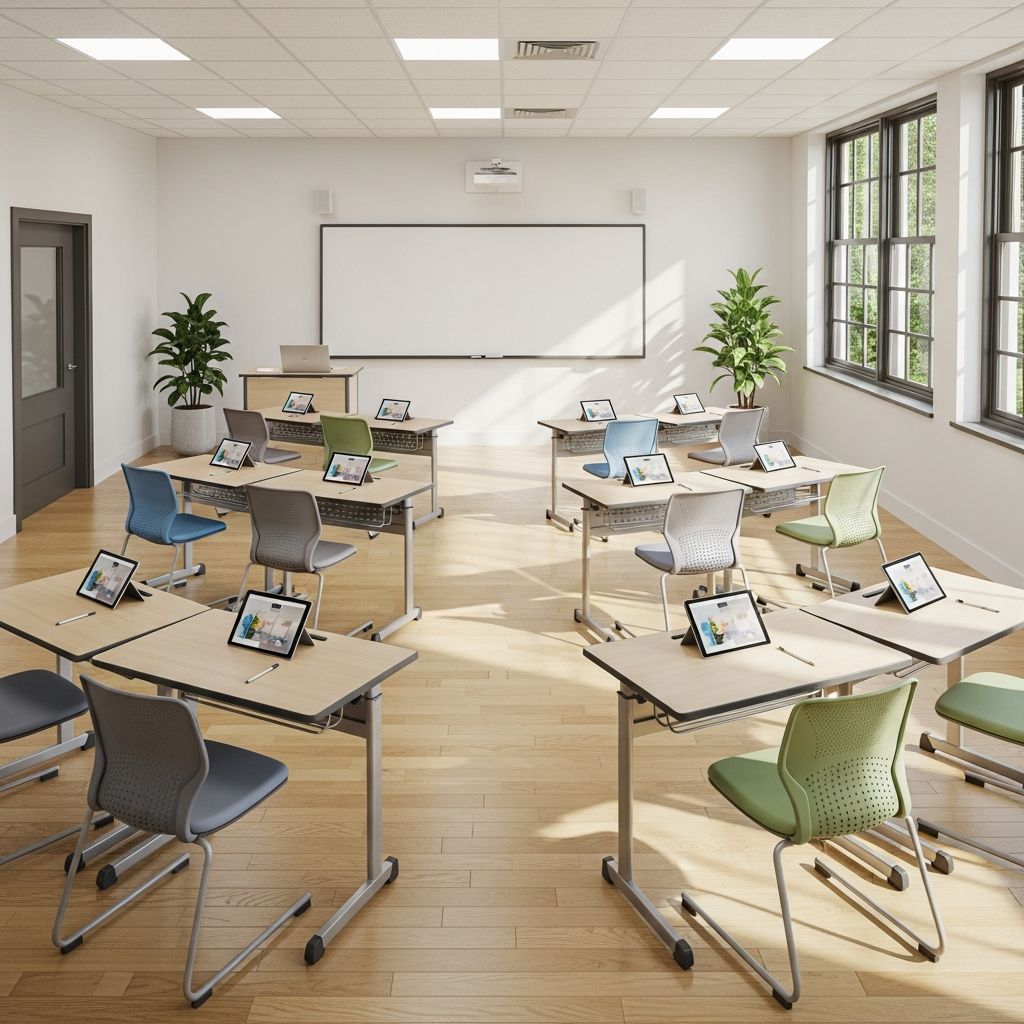
Effective classroom design goes beyond aesthetics; it directly influences student engagement, teacher efficiency, and overall academic success. By thoughtfully arranging furniture, incorporating natural elements, and creating purposeful zones, educators can turn constrained spaces into hubs of productivity. This guide draws on evidence-based principles to help you maximize every square foot.
Strategic Furniture Placement Principles
The foundation of an optimized classroom lies in furniture arrangement that aligns with instructional objectives. Arrange desks to facilitate clear lines of sight for the teacher to monitor all students, while ensuring pupils can view presentations without obstruction. High-traffic pathways should remain unobstructed to prevent congestion during transitions.
Minimize the teacher’s personal area to under 15% of the room, prioritizing student collaboration zones. Position the teacher’s desk in a peripheral location, away from main student desks, to reduce visual clutter and encourage independence.
- Angle desks away from doors to curb distractions from hallway traffic.
- Form clusters of 4-8 desks for collaborative work, with isolated options for students needing focused time.
- Test visibility by sitting in student seats to confirm unobstructed board views.
Leveraging Natural Light and Airflow
Natural light significantly boosts cognitive performance. Studies show students in daylight-exposed classrooms score higher in reading and math, with one analysis linking it to improved exam results. Maximize this by opening blinds and minimizing artificial lighting during the day.
Ventilation is equally critical; elevated carbon dioxide levels impair higher-order thinking. Crack windows or doors for airflow, using curtains to block distractions without stifling circulation. In warmer climates, position fans strategically to circulate air without creating drafts on workspaces.
| Element | Benefits | Implementation Tips |
|---|---|---|
| Natural Light | Higher test scores, calmer atmosphere | Open blinds fully; position desks near windows |
| Ventilation | Sharper focus, reduced fatigue | Open windows periodically; use door curtains |
| Desk Angling | Fewer distractions, easy entry | Face away from doors; test from student POV |
Creating Flexible Activity Zones
Delineate specific areas for distinct tasks to streamline transitions and sustain focus. Designate zones for reading, group discussions, hands-on experiments, and tech integration, each with tailored storage. Room dividers enable privacy for quiet work or separation for collaborative bursts.
Flexible furniture empowers adaptation: movable desks support small groups, team-building, or individual needs, accommodating diverse learning styles and testing requirements.
- Reading nook: Cozy seating like bean bags or thrifted chairs with nearby bookshelves for brain breaks.
- Collaboration area: Circular or semi-circular setups to foster discussion and visibility.
- Tech zone: Proximity to outlets and monitors for hybrid learning.
Student-chosen layouts, such as amphitheater styles, enhance ownership and flexibility for group shifts.
Maximizing Vertical and Storage Space
Vertical surfaces transform walls into interactive learning tools. Install whiteboards, pocket charts, and displays at student height for collaborative problem-solving, like math gallery walks where groups visualize thinking.
Efficient storage prevents clutter: labeled bins, rolling carts, and over-door organizers keep supplies accessible yet contained. Limit ‘just in case’ hoarding to essential items, dedicating shelves for frequent materials.
- Wall-mounted organizers for pencils, calculators, and handouts near entry/exit points.
- Overhead bins for seasonal items to free floor space.
- Personalized teacher touches, like plants, in non-intrusive spots for a welcoming vibe.
Prioritizing Safety and Mobility
Safety underpins every design. Maintain a ‘triangle of safety’—clear sightlines from potential entry points—and unobstructed evacuation routes. Space furniture to avoid collisions, especially in dynamic setups.
Mobility supports varied activities: lightweight, stackable pieces allow quick reconfiguration. This flexibility aids differentiated instruction, remote integration, and student-led arrangements.
| Safety Feature | Rationale | Practical Step |
|---|---|---|
| Clear Pathways | Prevents trips, eases evacuations | 2-3 ft wide aisles minimum |
| Furniture Spacing | Reduces injury risk | No tight clusters; test movement |
| Sightlines | Quick monitoring | Teacher central or roaming path |
Enhancing Engagement Through Visible Thinking
Make cognition tangible with distributed dry-erase surfaces. Students solve problems on wall boards, enabling peer review via gallery walks, which deepens understanding.
Entry/exit protocols reduce chaos: Mark material pickup/drop-off spots with colored tape, defining boundaries around teacher areas to promote self-reliance.
Personalization and Decluttering for Well-Being
A decluttered space lowers stress for teachers and students alike. Clear surfaces daily and zone for work versus relaxation. Subtle personalizations—photos or plants—infuse warmth without overwhelming.
Entryways set the tone: Open paths with explicit rules minimize stress during high-traffic times.
Frequently Asked Questions (FAQs)
What is the ideal teacher desk placement?
Place it in a corner away from student traffic, using tape to define boundaries, preserving 85%+ of space for learners.
How does natural light impact learning?
It correlates with better reading/math scores and calmer moods, outperforming artificial light per multiple studies.
Why use activity zones?
They manage flow, support focus across tasks, and organize materials efficiently for smooth transitions.
Can students choose seating arrangements?
Yes, options like semi-circles boost involvement and adaptability, fostering ownership.
How to ensure safety in flexible setups?
Prioritize clear paths, spaced furniture, and emergency access while enabling easy reconfiguration.
Implementing Changes Step-by-Step
Start small: Sketch your layout, befriend custodians for support, and pilot one zone. Gather student feedback to refine, adapting for class dynamics. Over time, these tweaks yield profound gains in engagement and efficiency.
References
- Organize the Classroom – IRIS Center — Vanderbilt University Peabody College. Accessed 2026. https://iris.peabody.vanderbilt.edu/module/di/cresource/q3/p10/
- Optimizing the Classroom Environment — Novak Education. Accessed 2026. https://www.novakeducation.com/blog/optimizing-the-classroom-environment
- 27 Ways to Optimize Your Classroom Design for Better Learning — Edutopia. 2023-10-12. https://www.edutopia.org/article/optimize-classroom-design-better-learning/
- 11 Classroom Setup Ideas for Creative Learning Spaces — Erin Condren. Accessed 2026. https://www.erincondren.com/inspiration-center-classroom-setup-ideas
- Classrooms That Care: How to Design Spaces To Support Teachers — Heinemann Blog. Accessed 2026. https://blog.heinemann.com/classrooms-that-care-how-to-design-spaces-to-support-teachers
- Top Tips to Optimize Your Classroom Design — KI Furniture. Accessed 2026. https://www.ki.com/insights/blog/top-tips-to-optimize-your-classroom-design/
- A Guide to Effective Teaching in Classrooms+ — UTSA Academic Technology. Accessed 2026. https://utsa.screenstepslive.com/a/1908355-a-guide-to-effective-teaching-in-classrooms

- Integrated M.A. in Applied Linguistics, University of Hyderabad
- 5+ years in editorial, instructional, SEO, and research-based writing
Sneha is a relationships and lifestyle writer with a strong foundation in applied linguistics and certified training in relationship coaching. She brings over five years of writing experience to theskillvault, crafting thoughtful, research-driven content that empowers readers to build healthier relationships, boost emotional well-being, and embrace holistic living. Her writing and insights reflect the belief that beauty, happiness, and wellness…