
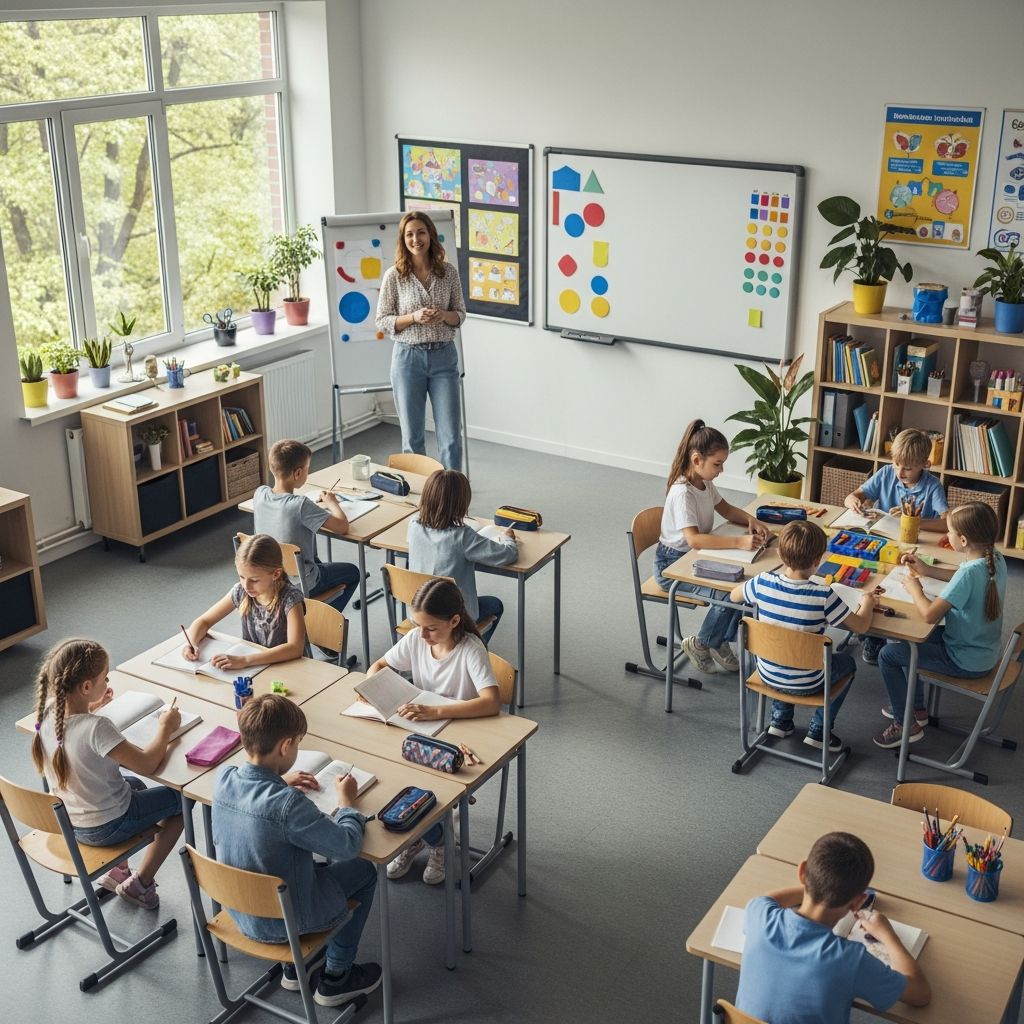
Establishing clear and purposeful guidelines in the classroom is fundamental to creating an environment where students can thrive academically, socially, and emotionally. These guidelines serve as the backbone of classroom management, helping to minimize disruptions while maximizing engagement and mutual respect among learners and educators alike.
Why Classroom Guidelines Matter in Modern Education
Well-defined guidelines contribute significantly to quality education by providing structure that supports character development, effective communication, and overall classroom harmony. Teachers report that such guidelines are essential for managing diverse groups of students, particularly in basic education settings where foundational behaviors are shaped. Research indicates that students in structured, positive environments show improved performance in core subjects like math and reading, underscoring the link between behavioral standards and academic outcomes.
Beyond academics, these guidelines promote emotional well-being by setting healthy boundaries that prevent chaos without suppressing creativity. They encourage responsibility, empathy, and collaboration—skills vital for lifelong success. Without them, classrooms risk becoming spaces of confusion, where learning is hindered by inconsistent expectations.
Core Principles for Developing Strong Guidelines
Crafting effective guidelines requires intentionality. Begin with positivity: frame expectations in terms of what students should do, such as “Listen actively to peers,” rather than prohibitions like “Don’t talk over others.” This approach fosters a proactive mindset. Visual aids, like posters displaying these guidelines, reinforce their importance and provide quick references during lessons.
Another key principle is brevity and clarity. Guidelines should be behavioral, specific, and consistently enforced to avoid ambiguity. Overly vague rules, such as “Be nice,” fail to guide actions effectively, while rigid ones may stifle enthusiasm. Aim for a handful of guidelines that cover essential areas without overwhelming students.
Involving Students in the Guideline Creation Process
One of the most powerful strategies is co-creating guidelines with students. This participatory method builds ownership, making learners more committed to upholding them. Start with small group discussions where students brainstorm ideas on topics like technology use, group dynamics, and interpersonal respect.
Prompt them with targeted questions: “How can we ensure everyone contributes fairly in group activities?” or “What does a distraction-free tech policy look like?” Synthesize their input into a unified set, then use tools like the ‘fist to five’ check-in—where students raise fingers from zero (fist) to five to indicate agreement—to refine them. This democratic process mirrors real-world community building and enhances investment.
Teachers who model desired behaviors during this phase set a strong example. Through consistent demonstration of respect and warmth, educators cultivate a culture where guidelines are not just rules but shared values.
Essential Categories of Classroom Guidelines
To ensure comprehensive coverage, organize guidelines into critical categories. These provide a framework that addresses health, safety, learning, and social needs holistically. Here’s a breakdown:
- Health and Self-Care: Prioritize hygiene, nutrition, and personal well-being, such as washing hands regularly and choosing healthy snacks.
- Safety Measures: Focus on avoiding hazards, respecting personal space, and not endangering peers.
- Cleanliness Standards: Emphasize tidying workspaces, proper waste disposal, and maintaining shared resources.
- Learning Environment: Cover communication, material use, participation, and physical setup for optimal focus.
- Social Interactions: Promote listening, empathy, sharing, tolerance, and collaborative play.
These categories ensure guidelines are balanced and relevant to daily classroom life.
Practical Examples of Guidelines Across Grade Levels
Tailor guidelines to developmental stages while keeping core principles consistent. For elementary students, simplify to actionable phrases; for secondary, add nuance for complex interactions.
| Grade Level | Example Guidelines | Rationale |
|---|---|---|
| Elementary (K-5) | 1. Use kind words always. 2. Keep hands and feet to yourself. 3. Clean up after activities. | Builds basic respect and responsibility. |
| Middle (6-8) | 1. Listen without interrupting. 2. Contribute positively in groups. 3. Use devices only for learning tasks. | Encourages emerging independence. |
| High School (9-12) | 1. Communicate respectfully online and off. 2. Own your choices and learn from mistakes. 3. Collaborate to achieve shared goals. | Prepares for adult responsibilities. |
These examples can be adapted to school culture, with student input ensuring relevance.
Implementation Strategies for Lasting Impact
Introduce guidelines early in the year through engaging activities like role-playing scenarios or dramatic skits, which teachers identify as top teaching methods. Regular class meetings allow reflection on guideline adherence, celebrating successes and addressing challenges collaboratively.
Reinforce with positive language and modeling. Instead of punishment-heavy enforcement, use guidelines to guide teachable moments. For instance, if a student interrupts, reference the “listen actively” guideline and discuss its value. Track progress via simple charts or student self-assessments to build accountability.
Visuals play a crucial role—display signed posters or digital boards where students commit to the guidelines, creating a shared visual covenant. Periodically review and tweak them based on class feedback to keep them dynamic.
Common Challenges and Solutions
Educators often face hurdles like inconsistent enforcement or resistance. Solution: Be transparent about consequences while emphasizing restoration over punishment. If guidelines feel too restrictive, balance with flexibility for creative tasks.
For diverse classrooms, incorporate cultural sensitivities during co-creation to ensure inclusivity. Address technology distractions by co-developing device protocols that align with learning goals.
Measuring the Effectiveness of Your Guidelines
Assess success through observable metrics: reduced disruptions, higher participation rates, and improved academic scores. Student surveys and teacher observations provide qualitative insights. Adjust based on data—what works evolves with the group.
Frequently Asked Questions (FAQs)
What if students don’t follow the guidelines?
Address infractions calmly by referencing the specific guideline, discussing impact, and guiding toward better choices. Consistency builds trust.
How many guidelines should a classroom have?
Aim for 5-10 concise ones covering key categories to avoid overload while ensuring coverage.
Can a single guideline like ‘Respect’ suffice?
It can serve as an umbrella, but specific examples clarify expectations and prevent misinterpretation.
Should guidelines differ by subject?
Core guidelines provide consistency across classes, with subject-specific tweaks for labs or arts.
How often should guidelines be reviewed?
Quarterly class meetings allow updates, keeping them relevant to evolving dynamics.
This approach to classroom guidelines transforms potential chaos into collaborative harmony, empowering students for success.
References
- Teachers’ Views on Classroom Rules in Basic Education — ERIC. 2023. https://eric.ed.gov/?id=EJ1364301
- 15 Classroom Rules and Expectations — Panorama Education. 2023. https://www.panoramaed.com/blog/classroom-rules-and-expectations
- Eight Things to Consider When Creating Classroom Rules (Opinion) — Education Week. 2015-08-01. https://www.edweek.org/teaching-learning/opinion-eight-things-to-consider-when-creating-classroom-rules/2015/08
- Co-Creating Classroom Expectations – Classroom Rules That Work! — Novak Education. 2023. https://www.novakeducation.com/blog/classroom-rules
- The 5 Critical Categories of Rules — Edutopia. 2023. https://www.edutopia.org/blog/5-critical-categories-of-rules-richard-curwin
- The One Rule Classroom: Just a little RESPECT! — Teaching With a Mountain View. 2023. https://teachingwithamountainview.com/the-one-rule-classroom-just-little/

Medha Deb is an editor with a master's degree in Applied Linguistics from the University of Hyderabad. She believes that her qualification has helped her develop a deep understanding of language and its application in various contexts. Medha specializes in the areas of beauty, health, sports, and wellness and is committed to ensuring that the content on the website is…