
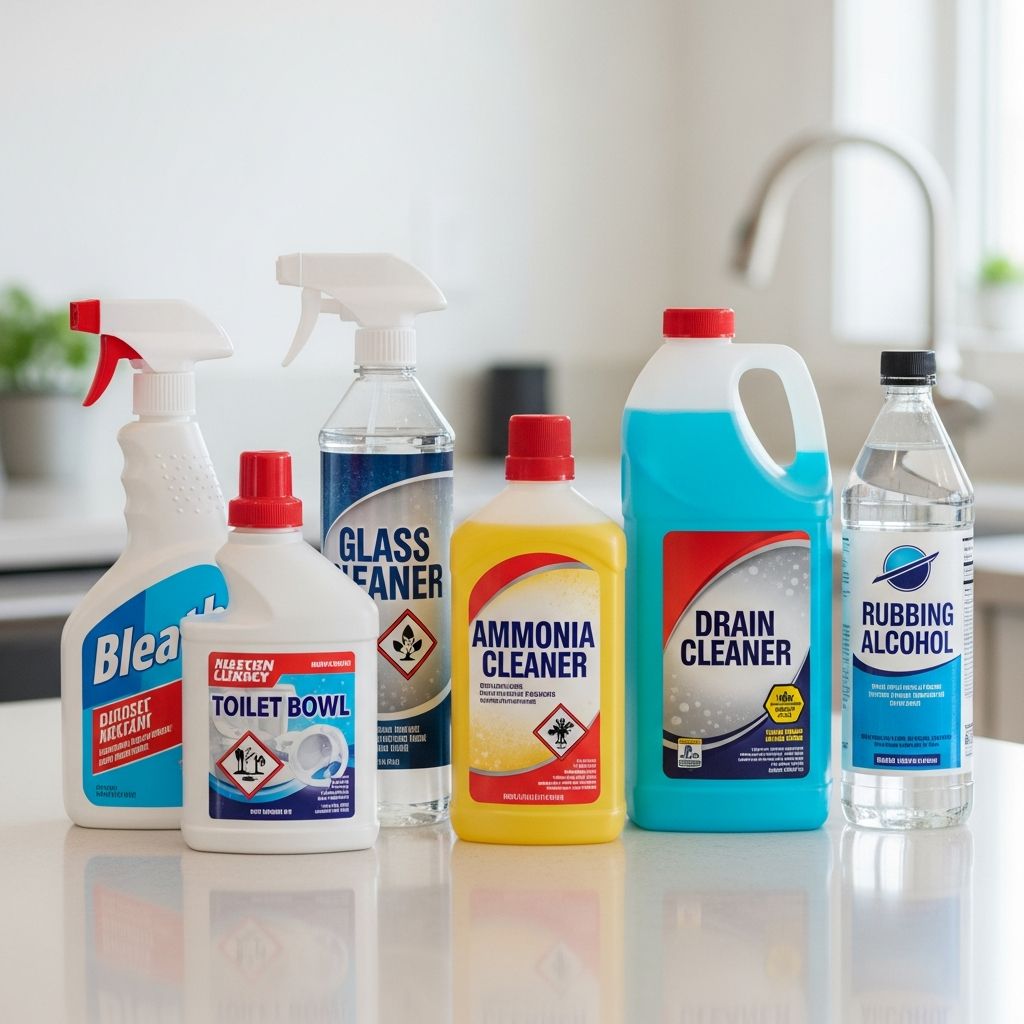
Household cleaning is a routine task for maintaining a healthy living environment, but combining certain products can lead to catastrophic consequences. Many everyday items like bleach, vinegar, and ammonia seem harmless alone, yet their mixtures generate toxic gases, corrosive acids, or even flammable substances that endanger health and property. This guide details perilous combinations, explains the science behind the dangers, and offers practical prevention strategies to keep your home safe.
Why Chemical Reactions in Cleaners Are a Hidden Threat
Cleaning agents often contain oxidizers, acids, or bases that react vigorously when mixed. For instance, bleach (sodium hypochlorite) acts as a powerful oxidizer, releasing chlorine gas when encountering acids. These reactions produce invisible, odorless fumes that irritate lungs, eyes, and skin, potentially causing long-term damage or immediate medical emergencies. Government health agencies and fire departments universally warn against such practices, emphasizing that even small-scale mixing in a bathroom or kitchen can fill a room with hazardous vapors.
Understanding the chemistry helps: redox reactions between oxidizers and reducers accelerate, forming unstable compounds. In confined spaces, concentrations build rapidly, amplifying risks. Statistics from poison control centers show thousands of annual calls related to cleaner misuse, underscoring the need for awareness.
Bleach-Based Hazards: The Most Common Culprits
Bleach is a staple disinfectant, but it’s involved in nearly every major household chemical mishap. Its reactions are predictable yet deadly due to chlorine’s reactivity.
Bleach and Acids Like Vinegar
Mixing bleach with vinegar or other acids (e.g., lemon juice) liberates chlorine gas, a chemical warfare agent infamous for World War I casualties. Symptoms include coughing, chest tightness, eye burning, and pulmonary edema in severe cases. Even low exposure irritates mucous membranes, while higher levels cause respiratory failure.
- Reaction: NaOCl + CH3COOH → Cl2 + H2O + byproducts
- Real-world risk: Common in DIY mold remedies.
- Prevention: Use one product at a time, ventilate well.
Bleach and Ammonia: Chloramine Nightmare
Ammonia, found in glass cleaners and urine, combines with bleach to form chloramine vapors (NH2Cl, NHCl2). These gases provoke shortness of breath, chest pain, and fluid buildup in lungs, mimicking pneumonia. Window cleaners often hide ammonia, tricking users into accidental mixing.
| Combination | Toxic Product | Primary Symptoms |
|---|---|---|
| Bleach + Ammonia | Chloramine | Chest pain, dyspnea |
| Bleach + Vinegar | Chlorine Gas | Coughing, eye irritation |
Bleach with Rubbing Alcohol
Rubbing alcohol (isopropyl) and bleach yield chloroform (CHCl3), a sedative infamous for its anesthetic past but toxic today. Inhalation causes dizziness, nausea, liver damage, and unconsciousness. This combo lurks in hasty disinfection attempts.
Peroxide and Vinegar: Corrosive Peracetic Acid
Hydrogen peroxide and vinegar form peracetic acid (CH3COOOH), a potent disinfectant but hazardous in uncontrolled mixes. It corrodes skin, eyes, and respiratory tracts, causing burns and breathing difficulties. Safe in sequence with rinsing, but never combined in one container.
Key Advice: Spray separately, wipe between applications to avoid residue reactions.
Specialty Cleaners: Oven, Bathroom, and Rust Removers
Oven Cleaners with Bleach
Lye-based oven cleaners (sodium hydroxide) plus bleach evolve chlorine gas, exacerbating eye, nose, and lung irritation. Their high pH amplifies bleach’s volatility—avoid entirely.
Bathroom Cleaners and Bleach
Acid-laden toilet bowl cleaners (hydrochloric or phosphoric acid) react with bleach to release chlorine, worsening mold-fighting efforts into health crises.
Rust Removers Beware
These often contain acids or oxalic acid, mirroring vinegar’s dangers with bleach. Phosphoric acid variants heighten corrosion risks.
Beyond Basics: Brake Fluid, Fertilizers, and Lab-Like Dangers
Less obvious threats include brake fluid (glycols) with bleach, which self-ignites after delay, burning fiercely like rocket fuel. Ammonium nitrate fertilizers mixed with metals or salts explode with water addition. Though rarer at home, garages and sheds pose risks.
- Potassium permanganate + glycerin: Spontaneous fire.
- Chromium trioxide + alcohol: Violent boiling, toxic splatter (lab context).
Health Impacts: From Irritation to Catastrophe
Toxicity varies by compound:
- Chlorine/Chloramine: Acute: Coughing, edema; Chronic: Asthma-like conditions.
- Chloroform: CNS depression, organ failure.
- Peracetic Acid: Severe burns, respiratory corrosion.
Vulnerable groups—children, elderly, asthmatics—face amplified dangers. Immediate actions: Evacuate, fresh air, seek medical help. No home remedies suffice for gas exposure.
Safe Cleaning Protocols and Alternatives
Adopt these habits:
- Read labels meticulously—heed “Do not mix” warnings.
- One product per session; rinse surfaces thoroughly.
- Ventilate: Open windows, use fans.
- Store separately in cool, dark places.
- Opt for eco-friendly singles like baking soda, castile soap.
| Hazardous Mix | Safe Alternative |
|---|---|
| Bleach + Vinegar | Diluted bleach alone or vinegar solo |
| Peroxide + Vinegar | Sequential use with rinse |
| Bleach + Ammonia | Commercial all-purpose cleaner |
Frequently Asked Questions (FAQs)
Can I mix bleach with dish soap?
No. Many dish soaps contain ammonia or acids, risking chloramine or chlorine release. Stick to one.
Is it safe to use bleach in a well-ventilated area with vinegar later?
Yes, if rinsed completely between uses to eliminate residues.
What if I accidentally mix chemicals?
Leave immediately, ventilate, call poison control (1-800-222-1222 in US). Do not induce vomiting.
Are natural cleaners always safe to mix?
No—vinegar (acid) + peroxide still forms peracetic acid. Caution applies universally.
How do I dispose of mixed chemicals safely?
Do not mix; neutralize separately per local hazardous waste guidelines.
Workplace and Industrial Amplification
Concentrated commercial cleaners heighten risks exponentially. Training mandates, like those from OSHA, prohibit mixing, with SDS sheets detailing incompatibilities. Incidents in janitorial or manufacturing settings have caused evacuations and injuries, reinforcing household vigilance.
In summary, knowledge empowers safe cleaning. By recognizing these incompatibilities, you prevent tragedies, ensuring a truly clean and secure home.
References
- 11 Common Cleaning Products You Should Never, Ever Mix — Good Housekeeping. 2024-10-01. https://www.goodhousekeeping.com/home/cleaning/a70773362/cleaning-products-to-never-mix/
- Chemicals You Should Never Mix (it’s dangerous!) — YouTube (Thoisoi2). 2023-01-15. https://www.youtube.com/watch?v=3Uc2c0_l5NQ
- Dangers of Mixing Household Chemical Cleaners — Village of Skokie, IL (Government). 2024-05-20. https://www.skokie.org/1023/Dangers-of-Mixing-Household-Chemical-Cleaners
- Do Not Mix These Cleaning Products — University of Rochester Medical Center (URMC), Environmental Health Sciences Center (.edu). 2023-11-10. https://www.urmc.rochester.edu/MediaLibraries/URMCMedia/environmental-health-sciences-center/COEC/documents/bad-chemical-combos.pdf
- Bad Chemistry: Mixing Cleaning Products — Bluefield Process Safety. 2025-08-15. https://bluefieldsafety.com/2025/08/bad-chemistry-mixing-cleaning-products/

- Integrated M.A. in Applied Linguistics, University of Hyderabad
- 5+ years in editorial, instructional, SEO, and research-based writing
Sneha is a relationships and lifestyle writer with a strong foundation in applied linguistics and certified training in relationship coaching. She brings over five years of writing experience to theskillvault, crafting thoughtful, research-driven content that empowers readers to build healthier relationships, boost emotional well-being, and embrace holistic living. Her writing and insights reflect the belief that beauty, happiness, and wellness…