
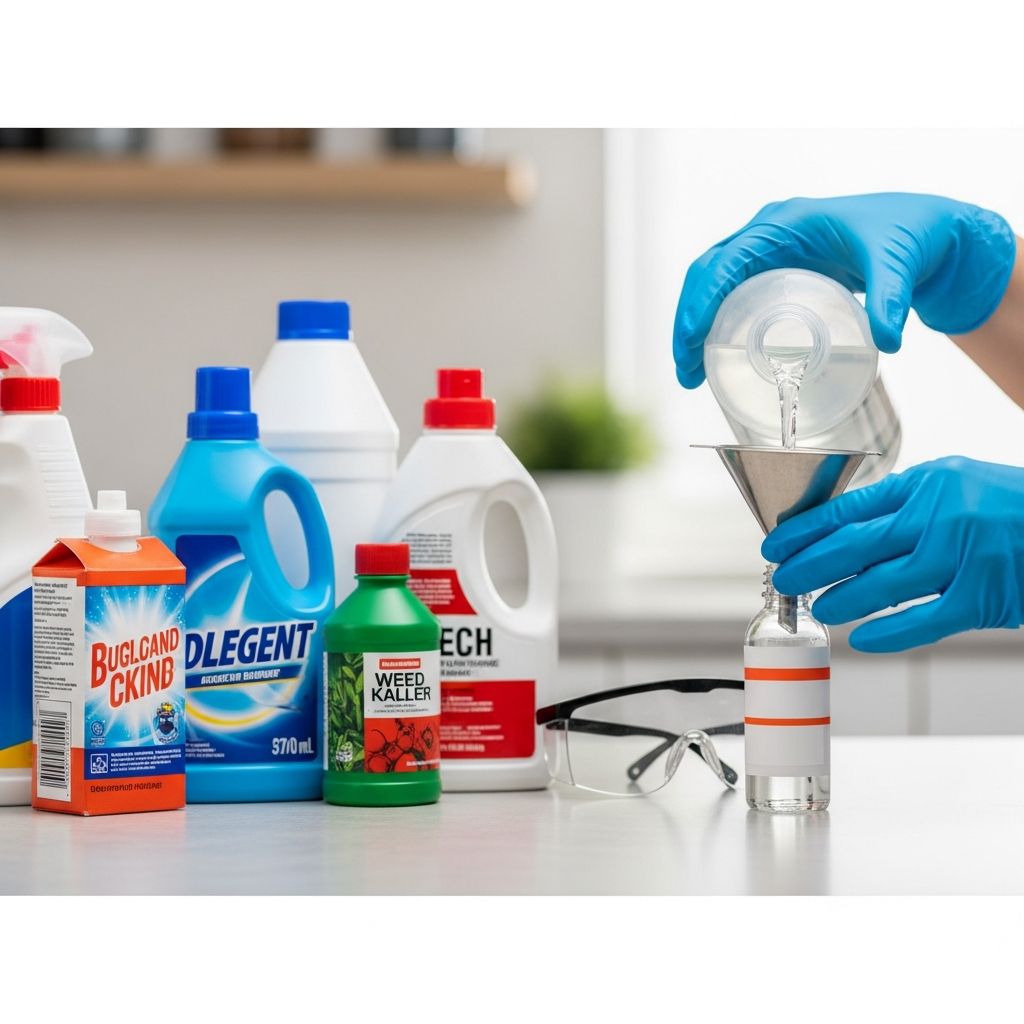
Our homes are filled with chemicals that power cleaning, cooking, personal care, and maintenance tasks. These substances, ranging from benign salts to potent acids, are integral to modern living but require careful handling to prevent accidents. This article examines key household chemicals, their typical locations, functions, and precautions, empowering you to use them effectively and securely.
Foundational Chemicals in the Kitchen
The kitchen serves as a primary hub for basic chemicals used in cooking and preservation. These compounds often appear in pure or concentrated forms, making them accessible for simple experiments or practical applications.
- Sodium Chloride (Table Salt, NaCl): Universally available in grocery stores, this ionic compound seasons food and acts as a preservative by drawing moisture from microbes. Beyond culinary uses, it’s employed in water softening and de-icing.
- Sucrose (Table Sugar, C12H22O11): Found in baking aisles, sucrose provides sweetness and energy. It’s a disaccharide derived from cane or beets, crucial for fermentation in baking and brewing.
- Sodium Bicarbonate (Baking Soda, NaHCO3): Stocked in baking sections, it leavens dough by releasing carbon dioxide when heated or mixed with acids. It’s also a mild abrasive for cleaning surfaces.
These kitchen staples demonstrate how everyday items embody pure chemical forms, bridging nutrition and chemistry seamlessly.
Cleaning Agents: Powerhouses Under the Sink
Cleaning products harbor some of the most reactive household chemicals, designed to dissolve grime, kill germs, and deodorize. Proper storage in cool, ventilated areas is vital to avoid volatile reactions.
| Chemical | Common Product | Source | Primary Use |
|---|---|---|---|
| Sodium Hypochlorite (NaOCl) | Bleach | Supermarket cleaning aisle | Disinfects surfaces, whitens fabrics |
| Hydrochloric Acid (HCl) | Toilet bowl cleaners | Hardware stores | Removes mineral deposits |
| Sodium Hydroxide (NaOH, Caustic Soda) | Drain cleaners | Plumbing sections | Unclogs pipes by dissolving grease |
These agents excel at breaking down organic matter but can irritate skin or release fumes if mishandled. Always dilute and ventilate.
Personal Care and Hygiene Essentials
Bathroom cabinets and medicine kits contain chemicals tailored for health and grooming. Their formulations balance efficacy with safety for repeated use.
- Sodium Fluoride (NaF): Integrated into toothpastes, available at pharmacies, it strengthens enamel by remineralizing teeth and inhibiting bacterial acid production.
- Hydrogen Peroxide (H2O2): Sold as a 3% solution in first-aid aisles, it serves as an antiseptic for minor wounds and a mouthwash ingredient for oral hygiene.
- Isopropyl Alcohol (C3H8O): Found in hand sanitizers and rubbing alcohol at drugstores, it evaporates quickly to disinfect skin without residue.
- Calcium Carbonate (CaCO3): A key toothpaste abrasive and antacid component, sourced from pharmacies or as chalk in educational supplies.
These chemicals enhance daily hygiene but demand rinsing to prevent prolonged exposure.
Garage and Workshop Staples
Maintenance areas like garages stock industrial-grade chemicals for automotive, DIY, and gardening needs. They often come in larger quantities, heightening storage risks.
- Sulfuric Acid (H2SO4): Available as battery acid at auto parts stores, it’s used to recharge lead-acid batteries and in drain openers.
- Acetone ((CH3)2CO): Nail polish remover from beauty aisles or pure solvent at hardware stores; evaporates cleanly for degreasing.
- Phosphoric Acid (H3PO4): In rust removers and some sodas, purchased at hardware or grocery stores for metal prep.
- Ethanol (C2H5OH): Denatured alcohol in paint sections thins paints and cleans tools.
Label containers clearly and use protective gear to mitigate corrosiveness.
Food Additives and Preservatives
Beyond basics, processed foods introduce functional chemicals that extend shelf life and enhance flavor. These are regulated for safety in minute doses.
- Acetic Acid (CH3COOH, Vinegar): Distilled white vinegar from grocery shelves preserves pickles and cleans glass.
- Monosodium Glutamate (MSG, C5H8NO4Na): Flavor enhancer in spice aisles, amplifies umami without adding salt.
- Magnesium Sulfate (MgSO4, Epsom Salt): Bath salts at pharmacies soothe muscles via transdermal absorption.
These additives underscore chemistry’s role in food science, ensuring safety and taste.
Safety Protocols for Household Chemical Management
Handling chemicals responsibly prevents mishaps. Key practices include reading labels, wearing gloves and goggles, and storing incompatibles separately—e.g., acids from bases to avoid exothermic reactions.
Emergency steps: Rinse exposures with water for 15 minutes, seek medical aid for ingestions, and neutralize spills with absorbents. Children and pets necessitate locked storage.
Environmental Considerations and Disposal
Household chemicals impact ecosystems if discarded improperly. Avoid drains; use hazardous waste facilities. Dilute and neutralize where possible, or repurpose safely.
Frequently Asked Questions (FAQs)
What are the most hazardous household chemicals?
Strong acids like sulfuric and hydrochloric, along with bleach and drain cleaners, pose risks due to corrosiveness and toxic fumes. Handle with ventilation and PPE.
Where can I source pure baking soda for experiments?
Grocery baking aisles offer pure sodium bicarbonate, ideal for reactions like volcano models.
Is it safe to mix cleaning chemicals?
No—never mix bleach with ammonia or acids, as it produces deadly chloramine or chlorine gas.
How do I dispose of old battery acid?
Take to auto shops or recycling centers; neutralize first if instructed locally.
Are food-grade chemicals interchangeable with industrial ones?
Not always—industrial versions may contain impurities. Verify purity for ingestion.
References
- The Chemistry Blog – 14 Common Chemicals Found In The Home — Chemicals.co.uk. 2023-05-15. https://www.chemicals.co.uk/blog/14-common-chemicals-found-in-the-home
- Common Sources of Chemicals — California State University, Northridge (CSUN). 2022-08-10. http://www.csun.edu/science/ref/equipment/acquisition/common.htm
- Hidden Chemistry in Everyday Products: Household Chemical Guide — Alliance Chemical. 2024-01-22. https://alliancechemical.com/blogs/articles/the-hidden-chemistry-in-everyday-products-understanding-household-chemical-ingredients
- 26 Chemicals Used In Daily Life — Pure Chemical. 2023-11-08. https://www.pure-chemical.com/blog/list-of-chemicals-in-daily-life/
- Chemicals Everywhere — Science Learning Hub (New Zealand Ministry of Education). 2023-03-17. https://www.sciencelearn.org.nz/resources/363-chemicals-everywhere

Medha Deb is an editor with a master's degree in Applied Linguistics from the University of Hyderabad. She believes that her qualification has helped her develop a deep understanding of language and its application in various contexts. Medha specializes in the areas of beauty, health, sports, and wellness and is committed to ensuring that the content on the website is…