
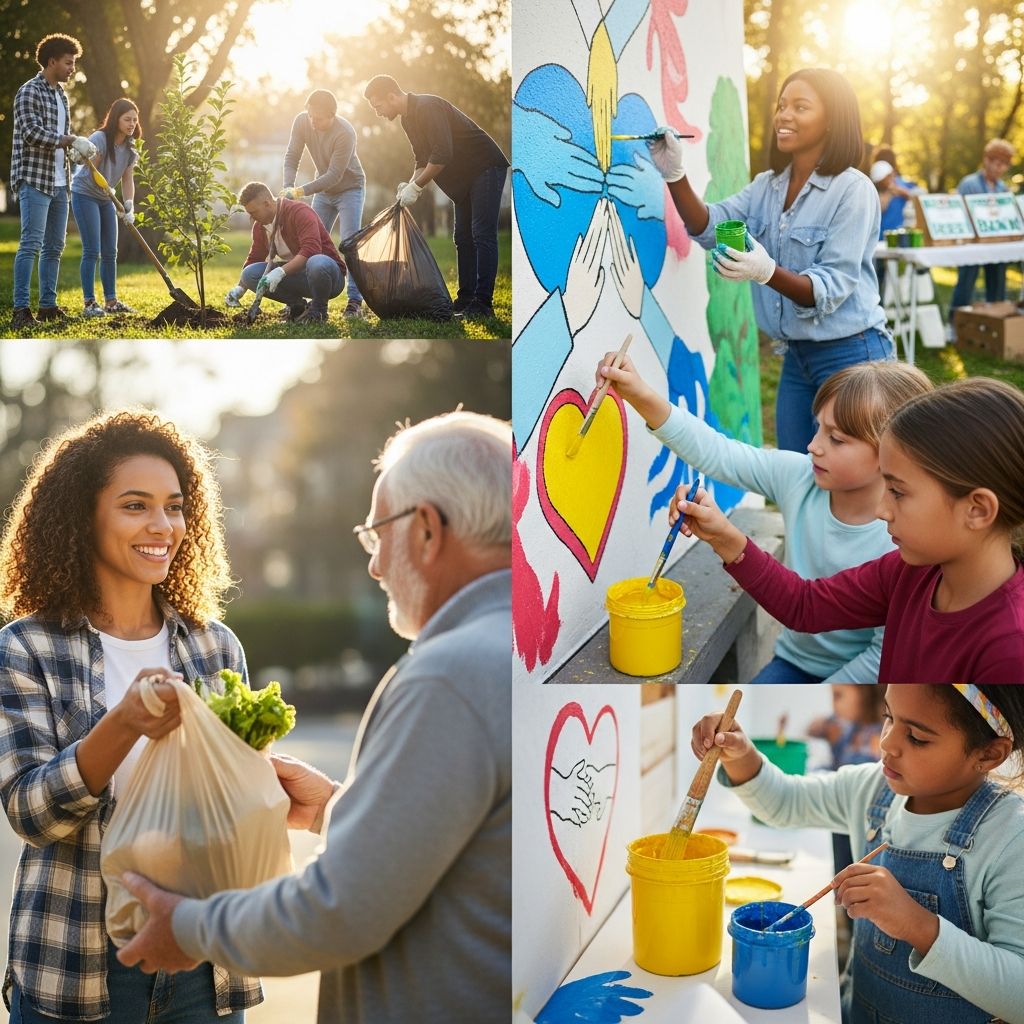
Community service involves voluntary actions that support local needs, fostering both individual development and collective well-being without expectation of payment. It empowers participants to contribute meaningfully while gaining invaluable experiences.
Defining Community Service in Modern Contexts
At its core, community service refers to unpaid efforts directed toward improving public spaces, aiding vulnerable populations, or addressing environmental concerns. These activities range from one-time events like park cleanups to ongoing commitments such as mentoring youth or staffing shelters. Unlike paid work, it emphasizes altruism and civic duty, often bridging gaps in public resources.
Historically rooted in traditions of mutual aid, today’s community service adapts to urban challenges like food insecurity and mental health support. Organizations coordinate these efforts, ensuring volunteers align with impactful roles. For young people, it serves as a rite of passage, instilling responsibility early.
Personal Advantages of Active Participation
Engaging in service yields transformative personal gains, enhancing mental, emotional, and physical health. Volunteers frequently report heightened self-esteem from accomplishing tangible goals, such as organizing a successful food drive.
- Mental Stimulation: Tackling diverse tasks sharpens problem-solving and critical thinking, particularly beneficial for older participants maintaining cognitive acuity.
- Emotional Fulfillment: The act of helping instills purpose, reducing feelings of isolation and boosting overall life satisfaction.
- Physical Health Boost: Activities like trail maintenance or event setup promote exercise, contributing to better fitness levels.
Beyond immediate rewards, long-term growth emerges through exposure to real-world applications of knowledge, making abstract concepts concrete.
Societal Contributions and Broader Impacts
Collective volunteering sustains essential services, from environmental conservation to crisis response. Nonprofits rely on unpaid labor to extend reach, saving funds for direct aid and amplifying community resilience.
For instance, volunteers at food banks prevent waste while nourishing families, directly countering hunger statistics. This grassroots support fills voids left by strained public budgets, promoting equity in access to basics like healthcare and education.
| Impact Area | Volunteer Role Example | Societal Outcome |
|---|---|---|
| Environment | Park Cleanup | Cleaner public spaces, biodiversity preservation |
| Health | Soup Kitchen Staffing | Reduced food insecurity, community health |
| Education | Homework Tutoring | Improved student performance, higher graduation rates |
| Economy | Local Business Support | Sustained small enterprises, job retention |
Such efforts cultivate informed citizens who advocate for policy changes, transitioning personal action into systemic improvement.
Skill Development for Future Success
Service opportunities double as practical training grounds. Participants hone communication through team coordination, leadership via project management, and adaptability in dynamic settings.
- Enhance public speaking by presenting at community events.
- Master teamwork in group initiatives like recycling drives.
- Develop technical skills, such as digital tools for virtual volunteering.
For career advancement, these experiences diversify resumes, signaling initiative to employers. Students leverage them for college applications, demonstrating commitment beyond academics.
Networking and Relationship Building
Volunteering connects individuals across demographics, forging bonds rooted in shared purpose. These networks expand professionally and socially, opening doors to mentorships and collaborations.
Regular involvement, like weekly sessions at centers, nurtures lasting friendships and support systems. Diverse interactions challenge biases, broadening worldviews and empathy.
Tailored Benefits for Teenagers
Teens gain uniquely from service, applying classroom learning to practical scenarios that boost academic engagement. Studies link volunteering to superior performance in core subjects and increased high school completion rates.
It fulfills requirements while building character, teaching resilience and social justice awareness. Family involvement amplifies joy, creating shared memories.
Practical Project Ideas to Launch Today
Abundant options suit varied interests and schedules. Start small to build momentum.
- Food Drives: Partner with pantries to collect non-perishables, addressing immediate hunger.
- Recycling Initiatives: Organize collection points to promote sustainability.
- Homework Help: Tutor peers in underserved areas, enhancing educational equity.
- Social Media Safety Workshops: Educate youth on online risks.
- Community Gardens: Plant and maintain plots for fresh produce access.
- Music Lessons: Offer free sessions to build confidence in kids.
- Small Business Boost: Promote local shops through events, fostering economic vitality.
These projects scale easily, from solo efforts to group endeavors, maximizing impact.
Steps to Find and Commit to Opportunities
Begin by assessing passions—environment, education, or health? Platforms like nonprofit directories list local needs. Contact schools or libraries for vetted programs.
- Research organizations via official sites.
- Attend orientation sessions.
- Commit to consistent time slots for deeper involvement.
- Track hours and reflections for personal records.
Teens should involve parents for safety and logistics, ensuring age-appropriate roles.
Overcoming Common Hurdles
Time constraints challenge busy schedules, but micro-volunteering—short, flexible tasks—offers entry points. Initial discomfort fades with persistence, replaced by confidence.
Lack of transportation? Virtual options like online tutoring abound. Start with familiar causes to sustain motivation.
Measuring Your Contribution’s Reach
Track metrics like pounds of food collected or hours logged to visualize impact. Feedback from beneficiaries reinforces value, encouraging continuance.
Frequently Asked Questions
What counts as community service?
Any unpaid help benefiting others, from cleanups to skill-sharing, qualifies.
Do I need experience to start?
No—training is provided, and enthusiasm suffices.
How does it help college applications?
It showcases leadership and commitment, setting applicants apart.
Can families volunteer together?
Yes, many events welcome groups for bonding.
Are there virtual options?
Absolutely, including remote mentoring and admin support.
Long-Term Commitment Rewards
Sustained involvement leads to advanced roles, like board positions, deepening influence. Lifelong habits form, perpetuating cycles of giving.
References
- Top 7 benefits of community service in society — Catchafire Blog. 2023. https://blog.catchafire.org/community-service-benefits
- What Is Community Service & What Are the Benefits? — Distress Centre. 2024-03-11. https://distresscentre.com/2024/03/11/what-is-community-service-what-are-the-benefits-how-can-i-contribute/
- Benefits of Community Service — Western Connecticut State University. N/A. https://www.wcsu.edu/community-engagement/benefits-of-volunteering/
- 30 Powerful Personal Benefits of Volunteering in Your Community — Conway Housing SC. N/A. https://www.conwayhousingsc.org/30-powerful-personal-benefits-of-volunteering-in-your-community
- Community Service Examples – Top 10 [2025 List] — Convoy of Hope. 2025. https://convoyofhope.org/articles/community-service-examples/
- The Importance of Community Service in a Teen’s Life — The Bridge Teen Center. N/A. https://thebridgeteencenter.org/news/the-importance-of-community-service-in-a-teens-life

- Integrated M.A. in Applied Linguistics, University of Hyderabad
- 5+ years in editorial, instructional, SEO, and research-based writing
Sneha is a relationships and lifestyle writer with a strong foundation in applied linguistics and certified training in relationship coaching. She brings over five years of writing experience to theskillvault, crafting thoughtful, research-driven content that empowers readers to build healthier relationships, boost emotional well-being, and embrace holistic living. Her writing and insights reflect the belief that beauty, happiness, and wellness…