
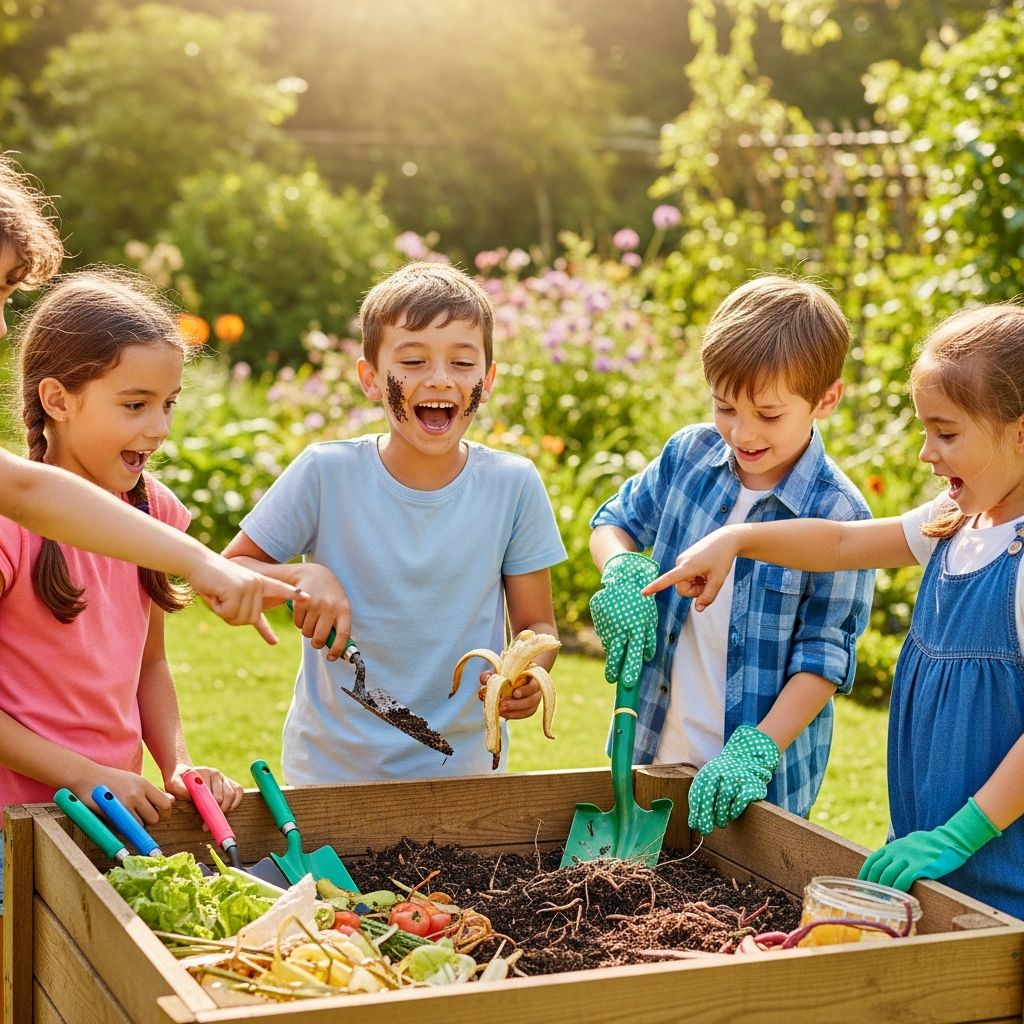
Composting represents a simple yet powerful way to introduce children to environmental responsibility. By transforming kitchen scraps and yard waste into nutrient-rich soil, kids gain hands-on experience with natural cycles, reducing waste while enriching gardens. This guide offers original activities, experiments, and tips tailored for young learners, drawing from proven educational approaches to make sustainability exciting.
Why Composting Matters for Young Minds
Composting teaches children that waste isn’t useless—it’s a resource. The process breaks down organic materials through microbial action, producing humus that improves soil structure, retains water, and supplies essential nutrients like nitrogen, phosphorus, and potassium. For kids, this builds appreciation for ecosystems, encourages patience as they observe decomposition, and instills habits that combat landfill overuse. Studies from educational programs show participants develop stronger connections to nature and proactive attitudes toward conservation.
During Earth Month, these activities align perfectly with global efforts to promote recycling and biodiversity. Families and teachers can adapt them for home or classroom, requiring minimal supplies like jars, scraps, and soil.
Building a Kid-Friendly Compost System
Start with a basic setup to demystify composting. Children can assemble a simple bin using a plastic container or wooden frame, layering “greens” (nitrogen-rich items like vegetable peels) and “browns” (carbon-rich materials like leaves or paper). The ideal ratio is two parts browns to one part greens, ensuring balanced decomposition without odors.
- Gather greens: Fruit rinds, coffee grounds, grass clippings.
- Collect browns: Dry leaves, shredded newspaper, cardboard.
- Avoid: Meat, dairy, or oily foods to prevent pests.
Have kids moisten layers like a wrung-out sponge and turn the pile weekly with a stick for aeration. In 2-6 months, they’ll harvest dark, crumbly compost ready for planting.
Hands-On Experiments to Spark Curiosity
Experiments make abstract concepts tangible. Set up side-by-side tests to compare decomposition rates, helping kids hypothesize and observe scientific principles.
Jar Decomposition Race
Using clear jars, kids create mini compost piles: one with only greens, one balanced, and a control with soil alone. Add water, seal with poked lids, and place in sunlight. Weekly checks reveal how balance accelerates breakdown—perfect for journals or photos.
Soil Growth Challenge
| Pot Mix | Expected Growth | Why It Works |
|---|---|---|
| 25% compost + 75% soil | Strong, healthy | Optimal nutrients without overload |
| 50% compost + 50% soil | Very good | Balanced moisture retention |
| 75% compost + 25% soil | Stunted | Excess can burn roots |
| 100% soil (control) | Poor | Lacks fertility boost |
Plant seeds like beans or cucumbers in each. Results in weeks demonstrate compost’s benefits and limits.
Vermicomposting: Worms as Tiny Heroes
Vermicomposting uses red wiggler worms to process scraps faster. Kids adore watching worms tunnel through bedding of shredded paper and food bits, producing nutrient-packed castings (worm poop).
- Prepare a bin with moist newspaper bedding.
- Add 1 lb worms per lb daily scraps.
- Feed buried scraps; harvest castings after 3 months by pushing contents to one side.
This method suits indoor spaces and teaches symbiosis—worms aerate while microbes aid digestion.
Games and Role-Play for Active Learning
Turn lessons into play. Role-playing microbes as characters (bacteria as decomposers, fungi as shredders) uses props like yarn for filaments. Read age-appropriate books on tiny organisms, then act out their “adventures” in the pile.
- Name That Scrap: As kids stir, guess origins of decomposed bits (e.g., banana peel?). Tracks breakdown speeds.
- Rot Thing Relay: Teams sort edibles into compostable piles, racing to build balanced layers.
- Edible Model: Layer cornflakes (browns), fruit bits (greens), and gummy worms in a cup to mimic piles—then eat it!
Monitoring and Maintenance Tips
Success hinges on observation. Teach kids to check temperature (warm = active microbes), moisture (damp, not soggy), and smell (earthy, not foul). Tools like thermometers add science flair.
- Poke daily for air flow.
- Cover food with browns to deter flies.
- Temperature peaks at 130-160°F internally.
Applying Compost in Gardens
Once ready, spread 1-2 inches around plants, mixing into topsoil. Kids can plant seedlings directly into amended beds, tracking growth diaries. This closes the loop, showing real-world impact on veggies or flowers.
Earth Month Integration Ideas
Host a compost fair with demos, quizzes, and pledges. Partner with schools for bin builds or community drops. Extend learning via apps simulating microbial action or videos on global waste reduction.
Frequently Asked Questions
What age is best for composting activities?
Ages 4+ thrive with supervision; older kids handle experiments independently.
How long until compost is ready?
2-6 months with turning; worms speed it to weeks.
Can I compost indoors?
Yes, vermicomposting bins work year-round.
What if it smells bad?
Add browns, turn more, check moisture.
Does compost attract pests?
Not if balanced and covered properly.
Advanced Projects for Budding Ecologists
Challenge older kids with pH tests on finished compost or carbon footprint calculators comparing composting to landfilling. Build tumblers from recycled drums for efficient turning. Track seasonal inputs to optimize recipes.
These projects scale with skill, promoting critical thinking and innovation in sustainability.
References
- Activities to Teach Composting for Kids — Tom’s of Maine. 2023. https://www.tomsofmaine.com/blogs/thinking-sustainably/activities-to-teach-composting-for-kids
- How to compost with kids: nourish your garden with food waste — National Geographic Kids. 2023-07-01. https://www.natgeokids.com/uk/parents/how-to-compost-with-kids/
- DO THE ROT THING — Chittenden Solid Waste Management District (.gov equivalent regional authority). 2010 (authoritative educational PDF, still relevant for core principles). https://www.cvswmd.org/uploads/6/1/2/6/6126179/do_the_rot_thing_cvswmd1.pdf
- ICAW for Teachers — Compost Foundation. 2024. https://compostfoundation.org/icaw-for-teachers/
- Composting Experiments, Tips, and Resources for the Classroom — Project Learning Tree. 2023. https://www.plt.org/educator-tips/composting-tips-experiments-resources-classroom-home/
- Edible Compost Activity — University of Kentucky (.edu). 2022. https://water.mgcafe.uky.edu/files/edible_compost.pdf

- Integrated M.A. in Applied Linguistics, University of Hyderabad
- 5+ years in editorial, instructional, SEO, and research-based writing
Sneha is a relationships and lifestyle writer with a strong foundation in applied linguistics and certified training in relationship coaching. She brings over five years of writing experience to theskillvault, crafting thoughtful, research-driven content that empowers readers to build healthier relationships, boost emotional well-being, and embrace holistic living. Her writing and insights reflect the belief that beauty, happiness, and wellness…