
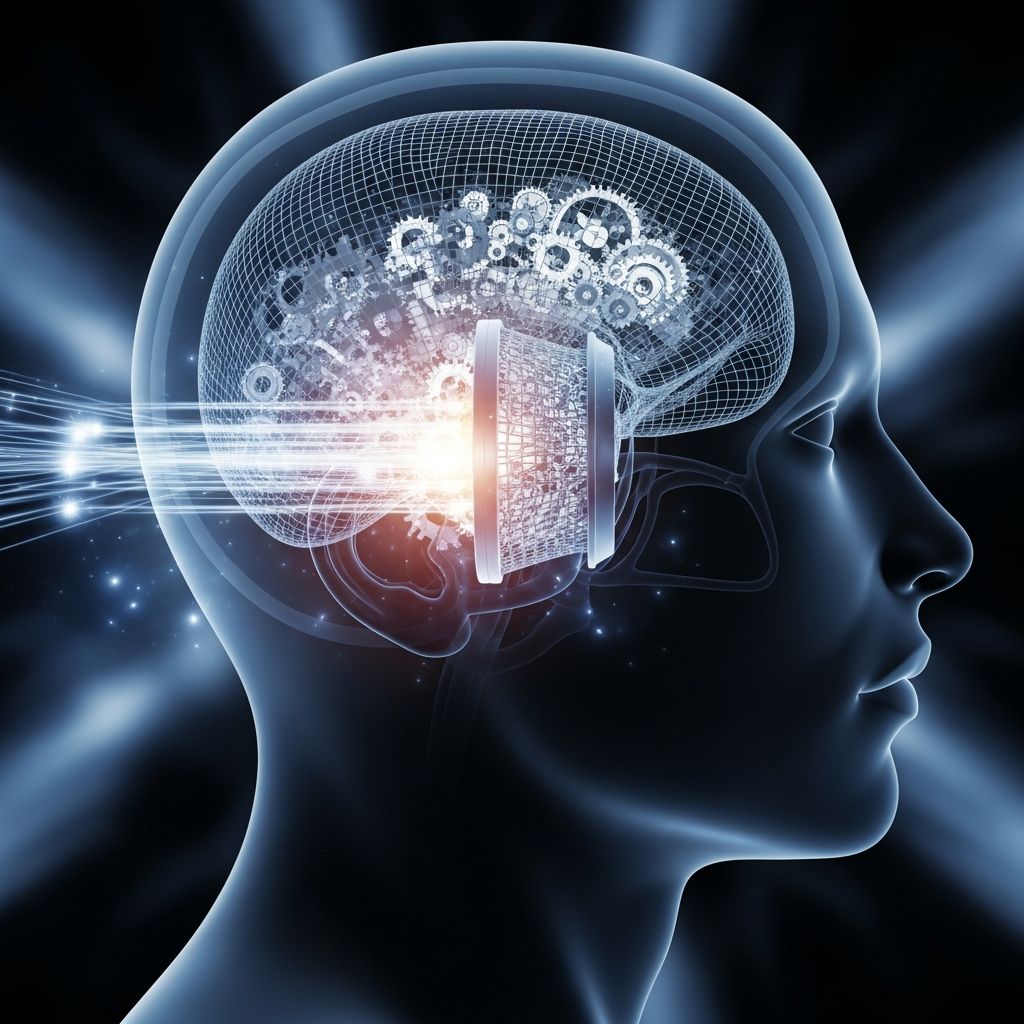
Confirmation bias represents a fundamental cognitive shortcut that influences how people process information daily. It drives individuals to prioritize data aligning with their existing views while sidelining contradictory evidence, often without conscious awareness. This phenomenon permeates personal choices, professional judgments, and societal debates, underscoring its pervasive role in human cognition.
Defining the Core Concept
At its essence, **confirmation bias** describes the innate human tendency to seek, interpret, favor, and recall information in ways that reinforce preexisting beliefs, values, or hypotheses. Rather than approaching new data objectively, the mind acts as a selective filter, amplifying supportive facts and diminishing challenges to the status quo. This bias emerges unintentionally, rooted in automatic mental processes rather than deliberate manipulation, making it particularly insidious.
Psychologists trace its formal identification to researcher Peter Wason in the 1960s, who demonstrated through experiments how people preferentially test hypotheses in confirmatory rather than disconfirmatory ways. For instance, participants in rule-discovery tasks consistently sought examples matching their guesses instead of falsifying them. Today, this bias is recognized across disciplines, from cognitive science to behavioral economics, as a key driver of flawed reasoning.
How Confirmation Bias Operates in the Brain
Confirmation bias manifests through three interconnected mechanisms: biased search, biased interpretation, and biased recall. Each stage warps the information pipeline, creating a self-reinforcing loop.
- Biased Search (Selective Exposure): People actively choose sources likely to affirm their views. Someone skeptical of climate change might follow outlets emphasizing natural weather cycles over scientific consensus reports.
- Biased Interpretation: Ambiguous evidence gets twisted to fit preconceptions. A vague political statement could be hailed as genius by supporters and decried as nonsense by opponents, depending on prior leanings.
- Biased Recall: Memory selectively retrieves confirming details. During arguments, individuals vividly remember supportive anecdotes while forgetting counterexamples.
These processes intensify under emotional stress, self-relevance, or when stakes feel high, as the brain conserves energy by sticking to familiar narratives. Neuroimaging studies reveal heightened activity in reward centers when encountering agreeable information, akin to a dopamine hit from validation.
Everyday Manifestations Across Life Domains
Confirmation bias infiltrates diverse scenarios, often with subtle yet profound effects. Consider these common arenas:
| Domain | Example | Impact |
|---|---|---|
| Politics | Voters consume news from like-minded channels, reinforcing partisan divides. | Polarization and echo chambers. |
| Health | Patients ignore side-effect warnings for favored treatments. | Poor medical adherence. |
| Investing | Traders hold losing stocks, fixating on past gains. | Financial losses. |
| Relationships | Partners spotlight flaws confirming ‘unreliable’ stereotypes. | Strained bonds. |
In professional settings, it fuels hiring prejudices: managers recalling standout performances from similar candidates while overlooking diverse talent. Even educators fall prey, as seen in studies where teachers favored ‘gifted’ students (randomly labeled) with more attention, creating self-fulfilling prophecies.
Historical and Experimental Evidence
Classic experiments illuminate confirmation bias’s power. Wason’s 2-4-6 task showed participants generating confirming triples (e.g., 8-10-12 after hypothesizing even numbers ascending by 2) over falsifiers like 1-2-3. Another: medical students diagnosing pregnancies from vague symptoms, interpreting them to match hunches despite identical data.
Real-world cases abound. During the 2003 Space Shuttle Columbia disaster, engineers’ warnings were downplayed as they clashed with NASA’s ‘safe launch’ mindset. In business, Blockbuster dismissed Netflix’s model, blinded by faith in physical rentals. These underscore how unchecked bias cascades into catastrophe.
Consequences for Individuals and Society
The fallout from confirmation bias extends beyond errors. Personally, it fosters overconfidence: people amass ‘evidence’ for beliefs, ignoring refutations, leading to rigid worldviews and regretful decisions. Socially, it amplifies misinformation spread, as seen in vaccine hesitancy where anecdotal ‘horrors’ outweigh epidemiological data.
In groups, it breeds groupthink, where teams suppress dissent to affirm shared assumptions, stifling innovation. Legally, juries convict based on preconceived guilt, skewing justice. Economically, markets bubble when investors chase confirming trends, ignoring risks. Collectively, these dynamics erode trust, polarize communities, and hinder progress toward truth.
Strategies to Counteract and Mitigate Effects
Overcoming confirmation bias demands deliberate effort. Key tactics include:
- Seek Disconfirming Evidence: Actively hunt contradictions; ask, ‘What would prove me wrong?’
- Diversify Sources: Consult opposing viewpoints from credible outlets to balance exposure.
- Employ Critical Tools: Use checklists, devil’s advocacy, or pre-mortems imagining failure causes.
- Practice Mindfulness: Pause to question interpretations; journal biases noticed.
- Leverage Accountability: Discuss with diverse peers for external checks.
Organizations can institutionalize safeguards: randomized trials, blind reviews, and statistical audits reduce subjective filters. Training in metacognition—thinking about thinking—builds resilience, as longitudinal studies show debiasing improves judgment accuracy by up to 30%.
Confirmation Bias in the Digital Era
Social media algorithms exacerbate the bias by curating confirmatory content, trapping users in filter bubbles. Platforms prioritize engagement, surfacing agreeable posts, which deepens divides. A 2023 study found users 65% more likely to share bias-aligned misinformation. Countering requires algorithmic transparency and user controls for viewpoint diversity.
Frequently Asked Questions (FAQs)
What exactly causes confirmation bias?
It’s driven by cognitive efficiency, emotional comfort, and desire for consistency; the brain favors low-effort affirmation over challenging reevaluation.
Is confirmation bias the same as stubbornness?
No—it’s an unconscious process, not willful refusal; even open-minded people exhibit it under pressure.
Can confirmation bias be completely eliminated?
Not entirely, as it’s hardwired, but awareness and structured methods significantly reduce its influence.
How does it affect scientific research?
Researchers may cherry-pick data supporting hypotheses, underscoring needs for preregistration and replication.
What role does it play in fake news spread?
It prompts sharing of aligning falsehoods while dismissing fact-checks, fueling disinformation cycles.
Mastering awareness of confirmation bias unlocks clearer perception and superior decisions. By challenging assumptions routinely, individuals and societies advance toward more rational, evidence-based realities.
References
- Confirmation bias – Definition and Explanation — The Oxford Review. 2023. https://oxford-review.com/the-oxford-review-dei-diversity-equity-and-inclusion-dictionary/confirmation-bias-definition-and-explanation/
- Confirmation bias — Wikipedia. 2026-04-01. https://en.wikipedia.org/wiki/Confirmation_bias
- What Is Confirmation Bias? | Definition & Examples — Scribbr. 2024-10-15. https://www.scribbr.com/research-bias/confirmation-bias/
- Confirmation bias — Britannica. 2025-03-20. https://www.britannica.com/science/confirmation-bias
- Confirmation Bias | Ethics Defined — McCombs School of Business, University of Texas. 2022-06-10. https://www.youtube.com/watch?v=7zoWTb3KP-k
- Confirmation Bias — Ethics Unwrapped, University of Texas. 2024. https://ethicsunwrapped.utexas.edu/glossary/confirmation-bias
- Confirmation Bias — The Decision Lab. 2025-01-12. https://thedecisionlab.com/biases/confirmation-bias
- Stop Fooling Yourself! (Diagnosing and Treating Confirmation Bias) — PMC (PubMed Central), National Library of Medicine. 2024-09-05. https://pmc.ncbi.nlm.nih.gov/articles/PMC11495861/

- Integrated M.A. in Applied Linguistics, University of Hyderabad
- 5+ years in editorial, instructional, SEO, and research-based writing
Sneha is a relationships and lifestyle writer with a strong foundation in applied linguistics and certified training in relationship coaching. She brings over five years of writing experience to theskillvault, crafting thoughtful, research-driven content that empowers readers to build healthier relationships, boost emotional well-being, and embrace holistic living. Her writing and insights reflect the belief that beauty, happiness, and wellness…