
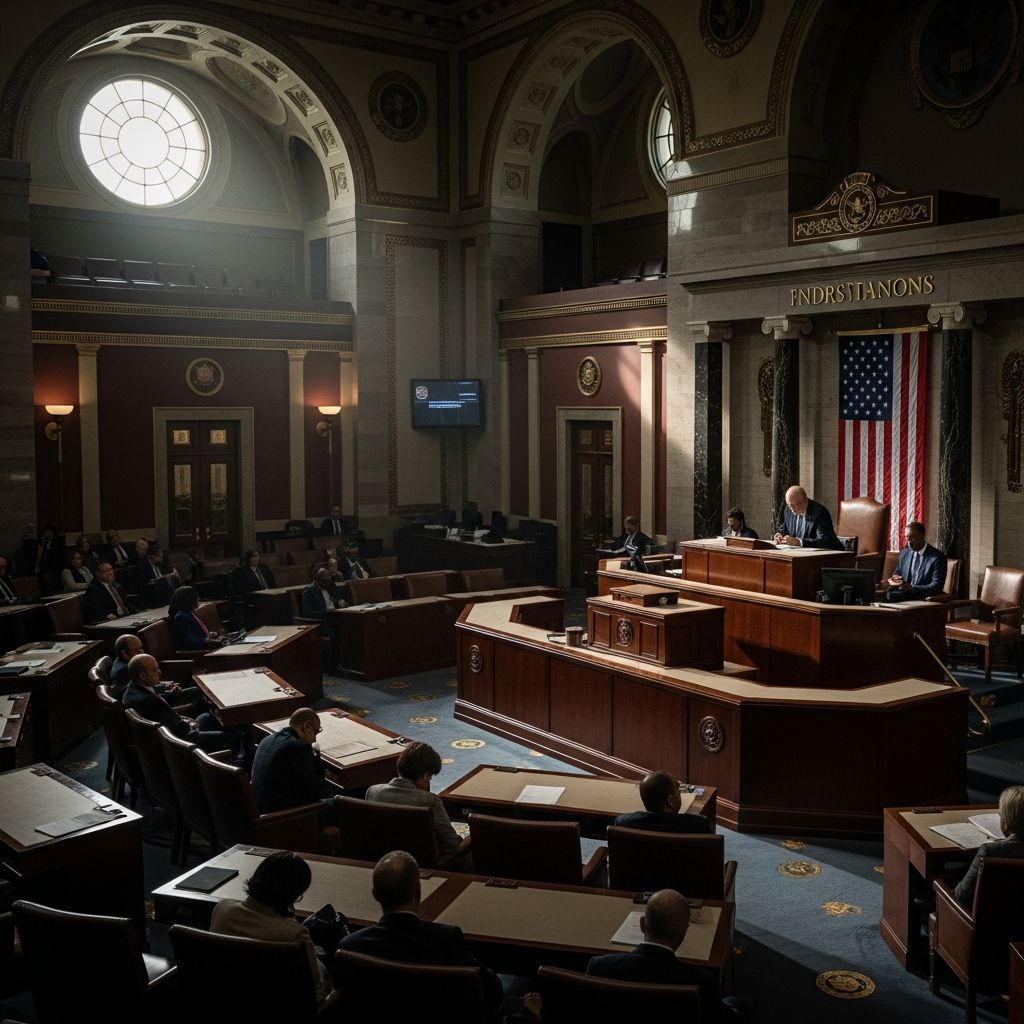
The United States Congress operates on a structured calendar that divides its work into distinct **sessions**, ensuring organized legislative activity over two-year terms. Each Congress, comprising the House of Representatives and the Senate, typically holds two annual sessions, punctuated by recesses for member travel and constituent engagement.
The Two-Year Cycle of Congress
A single Congress spans two years, aligning with even-numbered years for elections. This period begins at noon on January 3 of odd-numbered years, as mandated by the 20th Amendment to the U.S. Constitution, ratified in 1933. Prior to this change, sessions started on March 4, but the amendment streamlined the process to reduce lame-duck periods.
Within this cycle, lawmakers address national priorities through bills, debates, and votes. The division into sessions allows for focused work while accommodating breaks. For instance, the 118th Congress (2023-2025) featured Session 1 from January 3, 2023, to January 3, 2024, and Session 2 from January 3, 2024, to January 3, 2025.
Annual Sessions: Structure and Timing
Each year of a Congress constitutes one session, generally running from early January to late December, though actual in-session days are fewer. The House averages about 147 days in session annually, while the Senate logs around 165 days, leaving substantial time for recesses.
- First Session: Begins January 3, focuses on organizing committees, passing budgets, and advancing the president’s agenda.
- Second Session: Starts the following January 3, often more intense with election-year pressures and unfinished business from year one.
These sessions aren’t continuous; they include targeted work periods interrupted by breaks. Congress adjourns sine die—without a set return date—at the end of the second session, marking the close of that Congress.
Recesses and Work Periods Explained
**Recesses** are formal breaks when Congress is out of session, allowing members to return to their districts or states. These differ from adjournments, which are shorter pauses. The longest recess typically occurs in August, enabling constituent meetings and campaign activities.
During recesses:
- Members engage in district work periods (House) or state work periods (Senate), meeting voters and addressing local issues.
- No votes or floor debates occur, but committees may hold hearings.
- Recesses provide breathing room amid demanding schedules, preventing burnout.
Historical data shows sessions lengthening over time. The 1963 Senate session ran nearly year-round due to complex issues like the Cold War and civil rights. Modern calendars, like the 2025 House overview, balance session days with strategic breaks.
Historical Evolution of Session Dates
Congressional timing has evolved significantly. From 1789 to 1934, sessions began March 4, reflecting travel challenges of the era. The 20th Amendment shifted this to January 3 for efficiency.
Early Congresses often held special or third sessions for emergencies, a practice now rare. Here’s a table of recent Congresses’ session dates:
| Congress | Session 1 Begin/End | Session 2 Begin/End |
|---|---|---|
| 119th (2025-2027) | Jan 3, 2025 / TBD | Jan 3, 2026 / Jan 3, 2027 |
| 118th (2023-2025) | Jan 3, 2023 / Jan 3, 2024 | Jan 3, 2024 / Jan 3, 2025 |
| 117th (2021-2023) | Jan 3, 2021 / Jan 3, 2022 | Jan 3, 2022 / Jan 3, 2023 |
| 116th (2019-2021) | Jan 3, 2019 / Jan 3, 2020 | Jan 3, 2020 / Jan 3, 2021 |
This table illustrates the predictable January-to-January rhythm, with variations for holidays or crises.
Key Differences Between House and Senate Schedules
While both chambers follow the same Congress cycle, their calendars diverge:
| Aspect | House of Representatives | Senate |
|---|---|---|
| Average Session Days/Year | 147 | 165 |
| Primary Recess Focus | District work | State work |
| Calendar Flexibility | More rigid, election-driven | Slightly more variable |
| Longest Historical Session | Shorter due to rules | 1963 (Jan-Dec) |
The House, with all 435 members up for election every two years, prioritizes district time. The Senate’s six-year terms allow longer sessions.
Impact of Sessions on Legislation
Sessions dictate legislative pace. Bills introduced in one session expire at the end of a Congress unless passed. This creates urgency, especially in second sessions.
Examples:
- Major laws like the Affordable Care Act advanced during extended sessions.
- Budget reconciliation often targets lame-duck periods before adjournment.
Recesses influence outcomes too—members gauge public opinion, refining bills upon return.
Special Sessions and Emergencies
Though uncommon today, presidents can call special sessions under Article II, Section 3. The last was in 1948 by Truman. During crises like COVID-19, virtual sessions and pro forma meetings maintained minimal activity without full recesses.
Modern Calendars and Future Projections
The House releases annual calendars, like the 2025 overview, marking session weeks in green and recesses in other colors. These ensure transparency.
Looking ahead, the 119th Congress begins January 3, 2025, promising debates on economy, security, and tech amid global shifts.
Frequently Asked Questions (FAQs)
What is a congressional session?
A session is one of the two annual meetings of Congress within a two-year term, typically from January 3 to the next January.
How many days is Congress actually in session?
The House averages 147 days yearly; the Senate, 165 days, with the rest in recesses.
What happens during congressional recess?
Members work in districts/states, meet constituents, and handle committee tasks—no floor votes.
Can Congress have more than two sessions?
Historically yes, via special sessions; modern practice sticks to two per Congress.
When does a new Congress start?
Noon on January 3 of odd-numbered years, per the 20th Amendment.
Do bills carry over between sessions?
Yes, within the same Congress, but all expire at sine die adjournment.
Why Session Structure Matters for Democracy
This framework balances Washington work with grassroots engagement, fostering responsive governance. Understanding it empowers citizens to track lawmakers’ calendars, advocate during recesses, and hold them accountable. As Congress evolves, its sessions remain central to America’s legislative engine.
References
- Politics and Elected Officials: Years and Sessions of Congress — University of North Texas Libraries. 2023. https://guides.library.unt.edu/gic-politics-elected-officials/years-sessions-congress
- Dates of Sessions of the Congress — U.S. Senate. Accessed 2026. https://www.senate.gov/legislative/DatesofSessionsofCongress.htm
- House of Representatives Schedule — U.S. House of Representatives. Accessed 2026. https://www.house.gov/legislative-activity
- Congressional Recess: An Explainer — Rock the Vote. 2023. https://www.rockthevote.org/explainers/congressional-recess/
- List of United States Congresses — Wikipedia (informational, primary sources referenced). 2026. https://en.wikipedia.org/wiki/List_of_United_States_Congresses
- Overview – 2025 House Calendar — Office of the Majority Leader, U.S. House. 2024. https://www.majorityleader.gov/uploadedfiles/overview_-_2025_house_calendar.pdf

- Integrated M.A. in Applied Linguistics, University of Hyderabad
- 5+ years in editorial, instructional, SEO, and research-based writing
Sneha is a relationships and lifestyle writer with a strong foundation in applied linguistics and certified training in relationship coaching. She brings over five years of writing experience to theskillvault, crafting thoughtful, research-driven content that empowers readers to build healthier relationships, boost emotional well-being, and embrace holistic living. Her writing and insights reflect the belief that beauty, happiness, and wellness…