
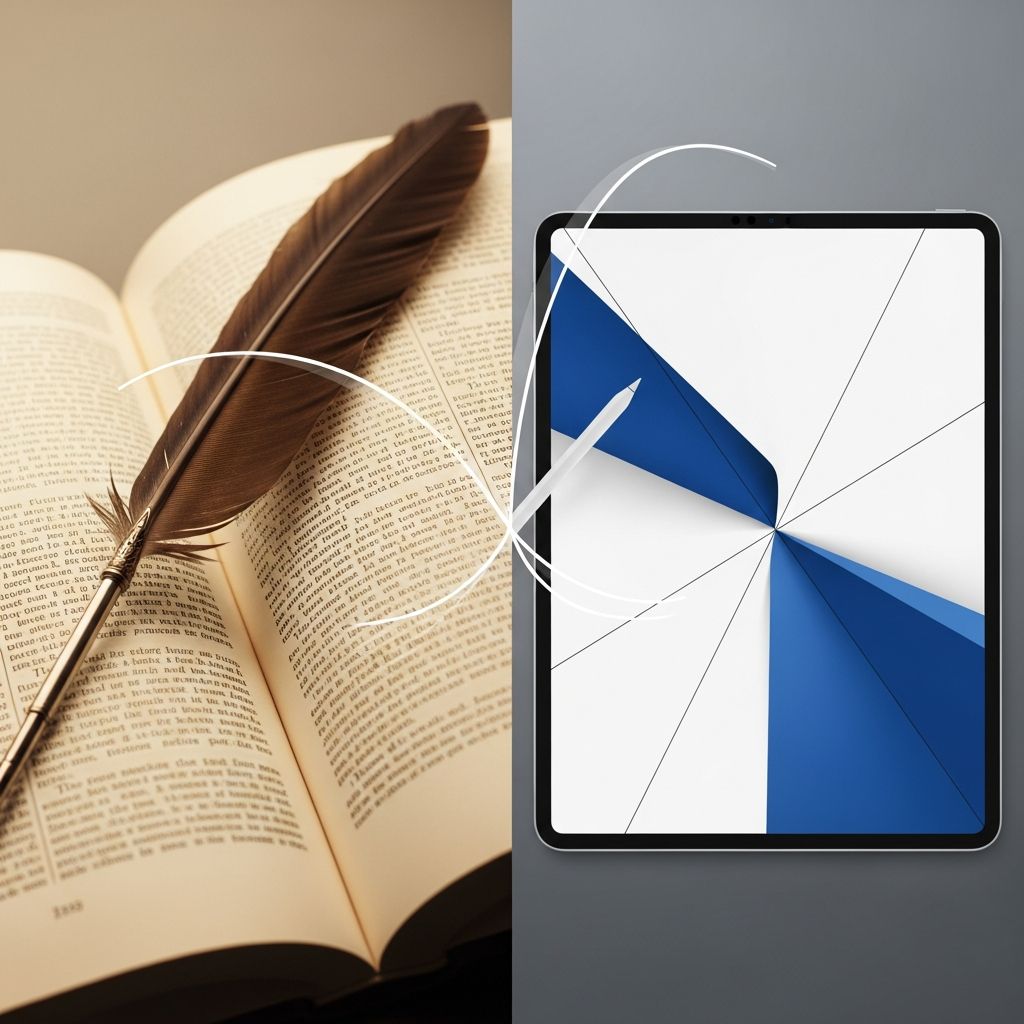
Contrast serves as a fundamental tool in both writing and rhetoric, enabling creators to highlight differences between ideas, characters, or elements to sharpen messages and engage audiences effectively. By placing opposing or distinct features side by side, writers and speakers draw attention to key distinctions, making arguments more compelling and narratives more vivid.
Defining Contrast: Core Concepts and Distinctions
At its essence, contrast involves positioning two or more elements that differ significantly to emphasize their disparities. This technique spans literature, essays, and speeches, where it accentuates qualities like bravery against cowardice or light against darkness. Unlike mere description, contrast actively compares to reveal deeper insights, often transforming ordinary observations into profound revelations.
In rhetorical contexts, contrast clarifies positions by juxtaposing beliefs, persuading audiences through evident gaps in perspectives. For instance, it underscores why one approach outperforms another by detailing specific divergences rather than superficial traits.
- Key Elements of Contrast: Objects, events, characters, atmospheres, or abstract ideas placed in opposition.
- Primary Goal: Accentuate differences to evoke emotion, support theses, or drive home themes.
- Common Pitfalls: Imbalanced comparisons that favor one side unfairly, reducing persuasive impact.
Contrast vs. Comparison: Understanding the Spectrum
While comparison focuses on similarities to draw parallels, contrast zeroes in on differences to illuminate unique aspects. A balanced approach often blends both in essays, starting with shared ground before diving into divergences for nuanced analysis.
| Aspect | Comparison | Contrast |
|---|---|---|
| Focus | Similarities (e.g., both fruits share sweetness) | Differences (e.g., apple’s crunch vs. orange’s juiciness) |
| Purpose | Highlight commonalities for unity | Reveal distinctions for clarity or persuasion |
| Example Phrase | Likewise, similarly | In contrast, whereas |
| Rhetorical Use | Build rapport | Challenge assumptions |
This table illustrates how integrating both elevates writing, preventing one-dimensional analysis.
Types of Contrast Techniques in Creative and Academic Writing
Writers employ varied contrast forms to suit purposes, from subtle juxtapositions to stark oppositions. Each type builds tension or clarity uniquely.
- Juxtaposition: Side-by-side placement of dissimilar elements, like a serene landscape against urban chaos, to heighten dramatic effect.
- Antithesis: Opposing ideas in balanced phrases, such as “It was the best of times, it was the worst of times,” creating rhythmic persuasion.
- Oxymoron: Contradictory terms together, like “deafening silence,” compressing complex emotions into vivid imagery.
- Paradox: Seemingly self-contradictory statements revealing truth, e.g., “Less is more,” challenging conventional logic.
- Character or Setting Contrast: Protagonist’s resolve versus a foil’s weakness, amplifying traits through opposition.
These techniques, when layered, create multifaceted narratives or arguments that resonate deeply.
Practical Applications in Essays and Compositions
In academic writing, contrast organizes essays to dissect subjects meaningfully, avoiding obvious pairings like apples and oranges. Instead, compare similar items—like two leadership styles—to uncover subtle variances, supporting theses with evidence.
Strategies include:
- Begin with audience-known elements, transitioning to novel ones for smooth engagement.
- Maintain balance: Equal depth on both sides prevents bias.
- Use transitional phrases: “Conversely,” “unlike,” to signal shifts seamlessly.
For example, contrasting remote versus in-person learning might highlight flexibility gains against social deficits, informing policy debates.
Harnessing Contrast in Speeches and Presentations
Public speaking thrives on contrast to captivate and convince. It leverages our brain’s affinity for differences, making messages memorable through sharp delineations.
- Opposites: “Not weakness, but strength defines us,” defining concepts via negation.
- Unexpected Pairings: Juxtaposing historical events with modern dilemmas for fresh insights.
- Category Differences: Within peers, like two policies’ outcomes, to spotlight superior choices.
Precision arises as contrasting terms refine ideas, e.g., “abundant scarcity” in resource discussions, aiding comprehension.
Analyzing Contrast in Famous Literary Works
Classic texts masterfully deploy contrast. Charles Dickens’ A Tale of Two Cities opens with antithetical contrasts of revolution-era extremes, immersing readers immediately. Similarly, poetic imagery shifts—from predatory bears to artistic plumes—underscore thematic evolutions.
In modern contexts, character contrasts reveal hypocrisies or growth, like a character’s internal paradox of love and loathing, fueling conflict.
Step-by-Step Guide to Incorporating Contrast Effectively
To wield contrast masterfully:
- Identify Core Differences: Pinpoint oppositional elements relevant to your theme.
- Select Structure: Block (discuss one fully, then the other) or point-by-point (alternate traits).
- Avoid Clichés: Opt for fresh pairings over “light vs. dark.”
- Analyze Impact: Link contrasts to broader messages or emotions.
- Revise for Balance: Ensure fairness to bolster credibility.
This process transforms routine writing into persuasive powerhouse.
Frequently Asked Questions (FAQs)
What is the main difference between contrast and comparison in rhetoric?
Comparison emphasizes similarities to connect ideas, while contrast highlights differences to distinguish them, often used together for comprehensive analysis.
How does contrast improve persuasive writing?
It clarifies arguments by exposing gaps in opposing views, making your position stand out through evident disparities.
Can contrast be overused in literature?
Yes, excessive or clichéd contrasts dilute impact; originality and balance are key to maintaining engagement.
What are some everyday examples of contrast in speeches?
Phrases like “Not just surviving, but thriving” use opposition to inspire action and define aspirations vividly.
Is contrast essential for all types of essays?
Not always, but it’s invaluable in analytical pieces to sharpen insights beyond surface-level observations.
Advanced Tips for Elevating Your Use of Contrast
Beyond basics, integrate sensory contrasts (visuals, sounds) for immersive effect, or cultural oppositions to critique societies. In rhetoric, pair with visuals—like slides showing before/after—for amplified retention.
Experiment with scale: Micro-level word pairs versus macro-plot arcs, ensuring alignment with audience needs.
References
- Literary Techniques: Contrast — Matrix Education. 2023. https://www.matrix.edu.au/literary-techniques-contrast/
- Rhetorical Patterns – Comparison/Contrast — Lincoln University. 2024-01-15. https://www.lincoln.edu/academics/academic-departments/languages-and-literature-department/rhetorical-patterns/rhetorical-patterns-1.html
- How To Use Contrast In Writing — Writers Write. 2023-05-10. https://www.writerswrite.co.za/how-to-use-contrast-in-writing/
- 8 Ways to Use Contrast in Your Speeches — Six Minutes. 2022-11-20. https://sixminutes.dlugan.com/contrast-speech/
- 13.4 Compare and Contrast — New Internet Catalogue Pressbooks (Northern Illinois University). 2024. https://nic.pressbooks.pub/delvingintowriting/chapter/compare-and-contrast/
- Writing for Success: Compare/Contrast — Lumen Learning (SUNY). 2023-08-05. https://courses.lumenlearning.com/suny-englishcomp1v2/chapter/writing-for-success-comparecontrast/

Medha Deb is an editor with a master's degree in Applied Linguistics from the University of Hyderabad. She believes that her qualification has helped her develop a deep understanding of language and its application in various contexts. Medha specializes in the areas of beauty, health, sports, and wellness and is committed to ensuring that the content on the website is…