
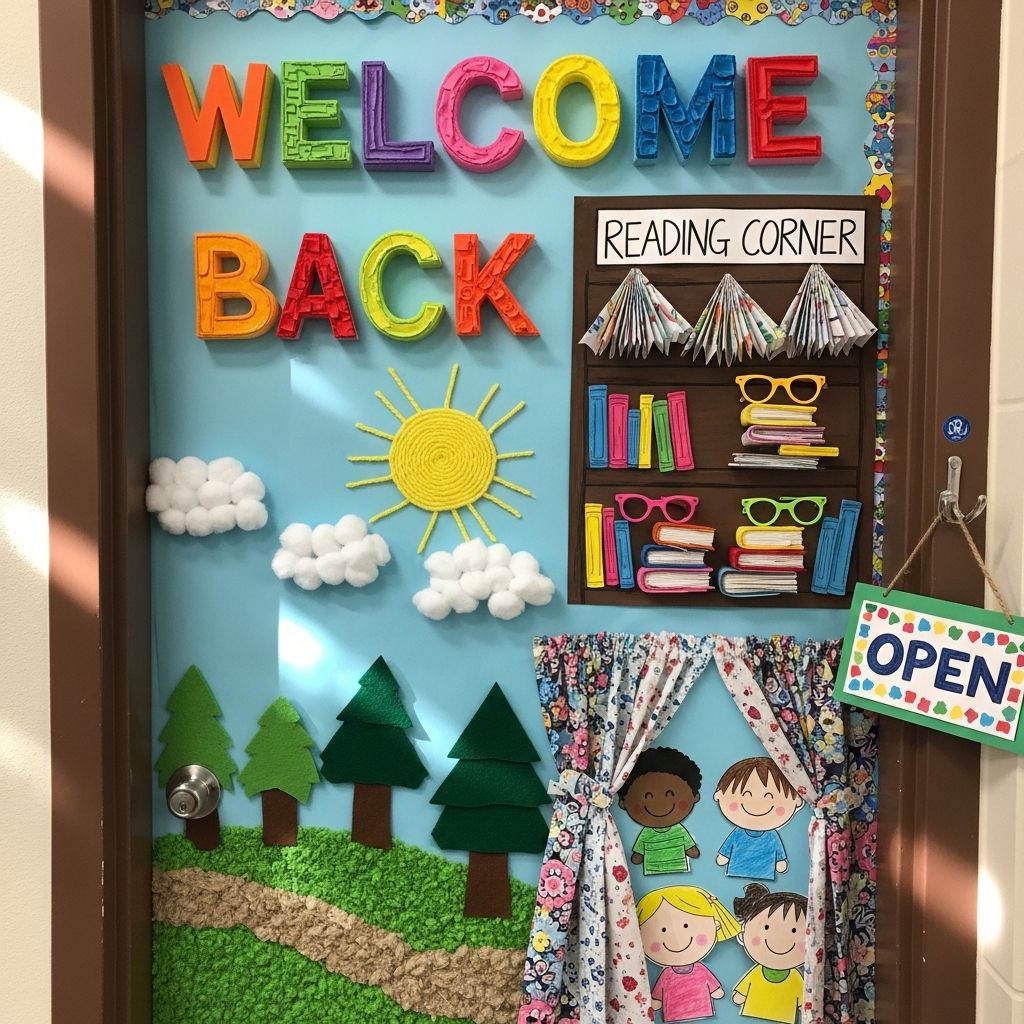
Classroom doors serve as the first impression for students returning from summer break. A thoughtfully decorated door not only welcomes learners but also signals the exciting journey ahead. These designs blend creativity, personalization, and educational value, drawing from popular motifs like nature, exploration, and growth to captivate young minds.
Why Invest Time in Door Decorations?
Decorating your classroom door goes beyond aesthetics. It builds anticipation, reinforces classroom identity, and promotes inclusivity. Research from the National Association for the Education of Young Children emphasizes that visually stimulating environments enhance student engagement and sense of belonging. Personalizing doors with student names fosters ownership from day one, while thematic elements tie into curriculum goals, such as science or literacy.
Teachers report that well-decorated entrances reduce first-day jitters. A simple, vibrant display can transform a plain door into a beacon of positivity, encouraging interactions and photo opportunities that strengthen community bonds.
Ocean Adventures: Dive into Learning
Ocean themes evoke wonder and exploration, ideal for early-year classrooms. Picture a door transformed into an underwater world with swirling blue waves crafted from crepe paper streamers. Add colorful fish cutouts, each labeled with a student’s name, swimming amid coral reefs made from construction paper.
- Use aqua poster board as the base for depth.
- Incorporate sea creatures like jellyfish from tissue paper for a 3D effect.
- Top with a banner reading “Diving into Discovery!” to set an adventurous tone.
This setup is low-cost and customizable. For younger grades, link it to marine biology lessons; older students can contribute by drawing their sea creatures, promoting artistic expression.
Space Exploration: Launch into a Stellar Year
Space themes ignite imaginations, perfect for STEM-focused classes. Cover the door in black paper dotted with glow-in-the-dark stars. Attach rocket silhouettes with student photos as astronauts, orbiting planets made from foam balls.
A catchy phrase like “Blast Off to Brilliance!” centers the design. Suspend metallic foil planets for shimmer, and add constellation lines connecting names. This not only personalizes the space but teaches basic astronomy.
| Materials Needed | Source Ideas | Customization Tips |
|---|---|---|
| Black butcher paper | Stars: sticker sheets | Add LED lights for evening glow |
| Foil & cardstock | Rockets: printable templates | Student-drawn planets |
| String & tape | Planets: foam craft balls | Grade-specific facts (e.g., Mars for 3rd grade) |
Nature and Growth Motifs: Watch Us Bloom
Embrace seasonal transitions with floral and plant designs symbolizing growth. A door bursting with oversized sunflowers, each petal bearing a name, conveys “Blooming into Greatness!” Use yellow tissue paper for petals and green pipe cleaners for stems against a sky-blue background.
Alternatives include cactus gardens for desert vibes or apple orchards nodding to autumn. These themes align with life cycle units, making decor educational. Students can color their own flowers, increasing investment in the classroom.
- Sunflowers: Layer tissue for dimension.
- Cacti: Potted bases with spiky accents from green paper.
- Apples: Red balloon shapes with leaf cutouts.
Adventure and Travel Themes: Journey Together
Inspire wanderlust with hot air balloons floating against cloudy skies. Each balloon basket holds a student’s photo, tethered by yarn, under “Soaring to New Heights!” This uplifts spirits and metaphorically represents collective progress.
Other variants: Retro vans “rolling” into grade levels or maze paths leading to knowledge. These encourage problem-solving discussions right at the door.
Superheroes and Empowerment: Unleash Inner Heroes
Empower students by turning them into caped crusaders. A city skyline backdrop with speech bubbles proclaiming “Heroes in Training!” features mask-wearing portraits. This boosts confidence and ties into social-emotional learning.
Custom capes from felt add flair. For inclusivity, include diverse hero representations.
Inclusive and Positive Vibes: Everyone Belongs
Promote unity with rainbows arching over welcoming signs. Clouds with names drizzle positive affirmations like “You Are Enough.” Sign language spellings of “Welcome” add accessibility layers.
Beehive designs with students as buzzing bees emphasize community: “Welcome to Our Hive!” These foster emotional safety, crucial per American Psychological Association guidelines on inclusive environments.
Playful Puns and Wordplay: Start with Smiles
Humor lightens the mood. “Let’s Roll into Learning!” with dice or donuts delights. “Fin-tastic Year Ahead!” pairs with shark fins. Puns like “Write On!” with pencils engage linguistically.
- Materials: Bulletin board letters, themed props.
- Benefit: Sparks conversations, eases transitions.
Practical Tips for Execution
Plan ahead: Sketch designs, inventory supplies. Involve students post-names reveal for buy-in. Use removable adhesives to protect doors. Budget-friendly sources include dollar stores and recyclables.
For durability, laminate elements. Refresh mid-year for sustained impact.
Frequently Asked Questions (FAQs)
What are the best themes for elementary doors?
Ocean, space, and growth themes work well, as they are visually engaging and tie into curriculum.
How can I personalize without photos?
Use names on cutouts, handprints, or artwork for privacy-conscious options.
Are there quick DIY ideas for busy teachers?
Yes, printables for balloons or robots assemble in under an hour.
How do doors impact student behavior?
They create positive first impressions, reducing anxiety and boosting participation.
Can I adapt for different grade levels?
Absolutely—simplify for preschool, add complexity like facts for upper grades.
Seasonal Variations and Long-Term Use
Extend appeal by rotating elements. Summer fruits transition to fall leaves. This keeps the door dynamic, maintaining engagement throughout the year. Track student feedback to refine future designs.
Incorporate tech: QR codes linking to class playlists or supply lists modernize displays.
References
- Developmentally Appropriate Practice in Early Childhood Programs — National Association for the Education of Young Children. 2020-04-15. https://www.naeyc.org/resources/position-statements/dap
- Classroom Environment and Student Engagement — American Psychological Association. 2023-09-01. https://www.apa.org/ed/schools/practicing-psychologist/classroom-environment
- Creating Positive School Climates — U.S. Department of Education. 2022-06-10. https://www.ed.gov/news/press-releases/new-resources-help-schools-create-positive-climates
- Visual Design in Learning Environments — Journal of Educational Psychology (APA). 2021-11-20. https://psycnet.apa.org/doi/10.1037/edu0000660
- School Environment Guidelines — Centers for Disease Control and Prevention. 2024-03-05. https://www.cdc.gov/healthyschools/environment.htm

- Integrated M.A. in Applied Linguistics, University of Hyderabad
- 5+ years in editorial, instructional, SEO, and research-based writing
Sneha is a relationships and lifestyle writer with a strong foundation in applied linguistics and certified training in relationship coaching. She brings over five years of writing experience to theskillvault, crafting thoughtful, research-driven content that empowers readers to build healthier relationships, boost emotional well-being, and embrace holistic living. Her writing and insights reflect the belief that beauty, happiness, and wellness…