
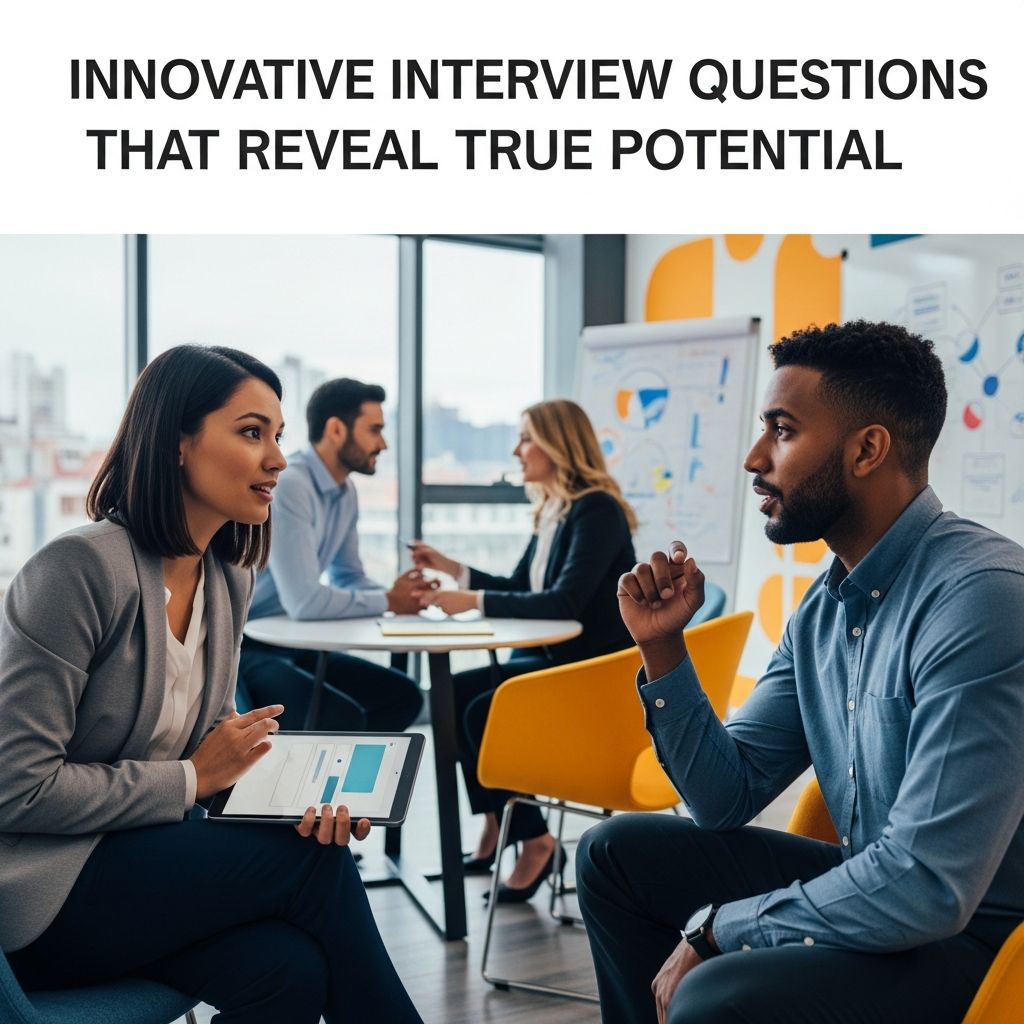
Moving Beyond Conventional Interview Formats
Traditional interview questions often produce predictable responses that fail to reveal how candidates genuinely think and approach challenges. When hiring managers rely solely on standard inquiries about strengths and weaknesses, they miss critical opportunities to assess problem-solving abilities, creative thinking, and genuine personality traits that determine long-term success in a role. The most effective recruitment strategies incorporate questions designed to move candidates outside their comfort zones, encouraging authentic responses that showcase their true capabilities.
By shifting away from rehearsed answers, organizations can develop a more comprehensive understanding of who candidates really are as professionals. This approach transforms interviews from one-directional interrogations into meaningful conversations that reveal how individuals navigate complexity, adapt to unexpected situations, and contribute unique perspectives to team dynamics.
Understanding the Purpose of Strategic Questioning
Thoughtfully constructed interview questions serve multiple functions beyond simple information gathering. They establish whether candidates possess the cognitive flexibility needed for evolving roles, demonstrate how individuals process information under pressure, and illuminate the depth of their professional curiosity and commitment to growth.
Strategic questioning accomplishes several key objectives:
- Reveals how candidates approach unfamiliar or ambiguous problems
- Exposes genuine personality traits that align or conflict with company culture
- Demonstrates the candidate’s ability to think on their feet and adapt quickly
- Uncovers evidence of continuous learning and professional development
- Provides insights into collaborative tendencies and interpersonal style
When interview questions are designed with clear intent, they transform the hiring process into a meaningful assessment tool that predicts job performance more accurately than conventional formats.
Evaluating Creative Problem-Solving Capabilities
Creativity in professional contexts extends far beyond artistic endeavors. It encompasses the ability to approach obstacles from unconventional angles, develop innovative solutions within resource constraints, and synthesize information from diverse sources to create novel outcomes. Candidates who demonstrate strong creative problem-solving abilities typically become valuable contributors who drive organizational improvement and competitive advantage.
Effective questions in this category present scenarios that don’t have predetermined correct answers. Instead, they assess how candidates frame challenges, what information they consider relevant, and how they justify their proposed solutions. For example, asking how someone would market a product in an unlikely market tests their ability to identify customer needs, overcome objections, and think strategically about positioning.
Questions exploring creative problem-solving might include:
- Describe a situation where you had to develop a solution with limited resources or budget constraints
- Tell me about a time when you had to persuade others to support an unconventional approach
- How would you tackle a challenge that your industry typically considers unsolvable
- Share an example of when you identified a problem that colleagues had overlooked
Assessing Adaptability and Quick Thinking
Modern workplaces rarely follow predictable paths. Projects pivot, priorities shift, and unexpected obstacles emerge regularly. Candidates who demonstrate strong adaptability can navigate ambiguity, adjust strategies as circumstances change, and maintain productivity despite disruption. Interview questions that test quick thinking reveal how candidates perform when they lack time for careful deliberation.
These questions often feel unconventional because that’s precisely their function. They create slight discomfort that forces genuine responses rather than polished talking points. A candidate asked how many windows exist in Manhattan cannot have prepared a scripted answer. Instead, they must demonstrate their reasoning process, willingness to make reasonable estimates, and ability to articulate their thinking clearly.
Questions designed to evaluate adaptability and quick thinking include:
- If you encountered a problem you’d never seen before, what would be your first three steps
- How would you prioritize your work if all your systems suddenly became unavailable for a full day
- Describe how you’d explain this position to someone with no background knowledge of your industry
- If given one constraint that made your typical approach impossible, what alternative would you pursue
Investigating Learning Orientation and Professional Growth
Candidates who actively pursue learning outside their required responsibilities typically demonstrate higher levels of engagement, adaptability, and long-term potential. Questions about recent learning experiences reveal whether individuals view professional development as essential rather than optional, and whether they take initiative to expand their capabilities.
Effective questions exploring this dimension focus on concrete evidence of growth rather than general statements about being a lifelong learner. Asking what specific skills someone recently acquired, what resources they used to develop new competencies, and how they applied this knowledge in their current role provides clear indicators of genuine commitment to continuous improvement.
This line of questioning helps identify candidates who will:
- Independently develop skills your organization requires
- Bring fresh perspectives from diverse learning sources
- Adapt more readily to technological and methodological changes
- Contribute to team knowledge sharing and skill development
- Demonstrate higher engagement and job satisfaction over time
Exploring Values, Motivations, and Cultural Alignment
Beyond technical abilities and problem-solving skills, successful hiring requires understanding whether candidates’ values and work motivations align with organizational culture and role expectations. Questions that explore what aspects of previous positions candidates valued, what environments energize them, and what they consider meaningful work reveal whether they’ll thrive in your specific context.
These questions help identify candidates who will feel genuinely motivated by the role rather than simply accepting a position that checks boxes on their resume. Misalignment in values or motivations frequently leads to high turnover, reduced engagement, and diminished performance even when technical capabilities match job requirements perfectly.
Consider exploring:
- What aspects of your previous role did you find most fulfilling
- Describe an environment where you performed at your best and explain why
- If you could redesign your ideal position, what elements would you prioritize
- What values do you consider non-negotiable in your work life
- How do you define success in a professional role
Comparing Approach: Creative Inquiry Versus Standard Questions
| Standard Interview Question | Information Revealed | Creative Alternative Question | Enhanced Insight Provided |
|---|---|---|---|
| What are your strengths? | Rehearsed, generic responses | Tell me about a recent accomplishment you’re proud of and what role you specifically played | Evidence of genuine achievement, self-awareness, and ability to take appropriate credit |
| How do you handle stress? | Canned responses about staying calm | Describe a time when everything went wrong at once and walk me through your response | Actual coping mechanisms, prioritization abilities, and how they communicate during crisis |
| What are your goals? | Safe, expected career progression statements | If resources and circumstances were unlimited, what would you work on for one year | Genuine interests, ambitions, and what truly motivates them professionally |
| Why do you want this job? | Rehearsed reasons aligned with job posting | What about this opportunity excites you, and what concerns do you have | Authentic interests balanced with realistic expectations and thoughtful evaluation |
Implementing Strategic Questions Effectively
Simply asking creative questions isn’t sufficient; how you use them matters significantly. Effective implementation requires allowing sufficient time for candidates to think before responding, listening carefully to understand their reasoning process rather than just their conclusions, and asking follow-up questions that probe deeper into their thinking.
Best practices for implementation include:
- Ask follow-up questions to understand the reasoning behind their answers, not just the conclusions
- Avoid interrupting while candidates are formulating responses; allow thinking time
- Take detailed notes on both what candidates say and how they approach the question
- Use consistent questions across candidates to enable fair comparison
- Create a rubric beforehand that defines what strong responses look like
- Avoid leading questions that suggest particular desired answers
The goal is creating interview conditions where candidates feel comfortable being authentic, where they understand that thinking out loud is valued, and where honest responses matter more than polished delivery.
Red Flags and Positive Indicators
When candidates respond to strategic questions, certain patterns emerge that provide valuable hiring signals. Candidates who ask clarifying questions about ambiguous scenarios demonstrate thoughtfulness and avoid making unfounded assumptions. Those who acknowledge multiple possible approaches show intellectual humility and recognize that complex problems rarely have single correct solutions.
Conversely, candidates who become defensive when questioned about unconventional situations, who dismiss alternative approaches without consideration, or who provide only surface-level thinking may indicate challenges with adaptability, collaboration, or genuine problem-solving depth.
Positive indicators include:
- Asking clarifying questions to better understand the scenario
- Acknowledging multiple valid approaches before settling on a recommendation
- Showing genuine curiosity about what the question reveals about the role or organization
- Connecting their response to evidence from their actual work experience
- Demonstrating comfort with ambiguity and willingness to work through complexity
Building Your Organization’s Question Bank
Rather than using generic questions from external sources, the most effective organizations develop interview questions specifically tailored to their roles, cultures, and strategic priorities. This customization ensures questions target the specific capabilities, values, and characteristics that actually predict success in your environment.
Developing your question bank requires involvement from multiple perspectives. Current high performers in the role being filled can help identify what capabilities actually matter most. Managers can articulate what frustrations they face with previous hires. HR leaders can ensure questions remain legally defensible and focused on job-related competencies.
Your strategic question portfolio should include:
- Questions assessing core technical or functional capabilities
- Questions exploring problem-solving approach and creativity
- Questions revealing values, work style, and cultural fit
- Scenario-based questions mimicking actual job challenges
- Follow-up probes that deepen understanding of responses
Measuring Interview Effectiveness
To ensure your interview questions actually improve hiring outcomes, track correlations between responses and on-the-job performance over time. Candidates who provided thoughtful responses to strategic questions should demonstrate stronger performance, faster time-to-productivity, higher engagement, and longer tenure than candidates selected through conventional interview approaches.
Metrics worth monitoring include:
- Job performance ratings of candidates six months and one year post-hire
- Time required for candidates to reach full productivity
- Employee engagement survey scores
- Retention rates for hired candidates
- Internal promotion rates from your hires
- Customer or team satisfaction with hired candidates
When you track these outcomes systematically, you can refine your interview approach continuously, moving toward increasingly accurate candidate assessment.
Frequently Asked Questions
Q: How can I ensure my creative questions don’t bias against certain candidates?
A: Use consistent questions across all candidates for the same role, establish clear evaluation criteria beforehand, document candidate responses objectively, and involve multiple interviewers to reduce individual bias. Avoid questions that depend on specific cultural references, life experiences, or educational backgrounds that aren’t genuinely job-related.
Q: What if a candidate asks me why I’m asking a particular question?
A: Embrace this as a positive sign of engagement and critical thinking. Explain genuinely what capabilities you’re assessing, such as “I want to understand how you approach problems when the solution isn’t immediately obvious” or “I’m interested in seeing how you prioritize when everything seems urgent.” This transparency often leads to richer responses.
Q: How many creative questions should I include in an interview?
A: Include enough to thoroughly assess critical capabilities without overwhelming either party. A typical hour-long interview might include two to three strategic questions alongside more conventional questions about background and experience. Balance creative inquiry with practical discussion of role requirements and organizational context.
Q: Can I use the same questions across different roles?
A: While some questions about adaptability and learning orientation can translate across roles, most effective strategic questions should be tailored to specific positions. Questions should reflect actual challenges people in that role face and capabilities they genuinely need to succeed.
Q: How do I handle candidates who seem uncomfortable with non-traditional questions?
A: Normalize the questions by explaining briefly what you’re assessing, allow extra thinking time, and emphasize that your interest is in their reasoning process rather than arriving at predetermined answers. If discomfort persists, you’ve learned something valuable about how the candidate responds to ambiguity—itself useful hiring information.
References
- 33 Unique Interview Questions To Shake Up Your Hiring — Hunt Club. 2024. https://www.huntclub.com/blog/unique-interview-questions
- Top 30 Most Common Creative Interview Questions You Should Prepare For — Verve Copilot. 2024. https://www.vervecopilot.com/interview-questions/top-30-most-common-creative-interview-questions-you-should-prepare-for
- 14 Best Creative Interview Questions — Aquent. 2024. https://aquent.com/blog/14-best-interview-questions-for-creatives
- Creativity Interview Questions & Answers — Clevry. 2024. https://www.clevry.com/en/resources/competency-based-interview-questions/creativity-interview-questions-answers/
- 34 Unique Interview Questions To Identify Top Talent — Vervoe. 2024. https://vervoe.com/34-unique-interview-questions-to-identify-top-talent/
- Behavioral Interview Questions for Creative Problem-Solving — Yardstick. 2024. https://yardstick.team/interview-questions/creative-problem-solving

Medha Deb is an editor with a master's degree in Applied Linguistics from the University of Hyderabad. She believes that her qualification has helped her develop a deep understanding of language and its application in various contexts. Medha specializes in the areas of beauty, health, sports, and wellness and is committed to ensuring that the content on the website is…