
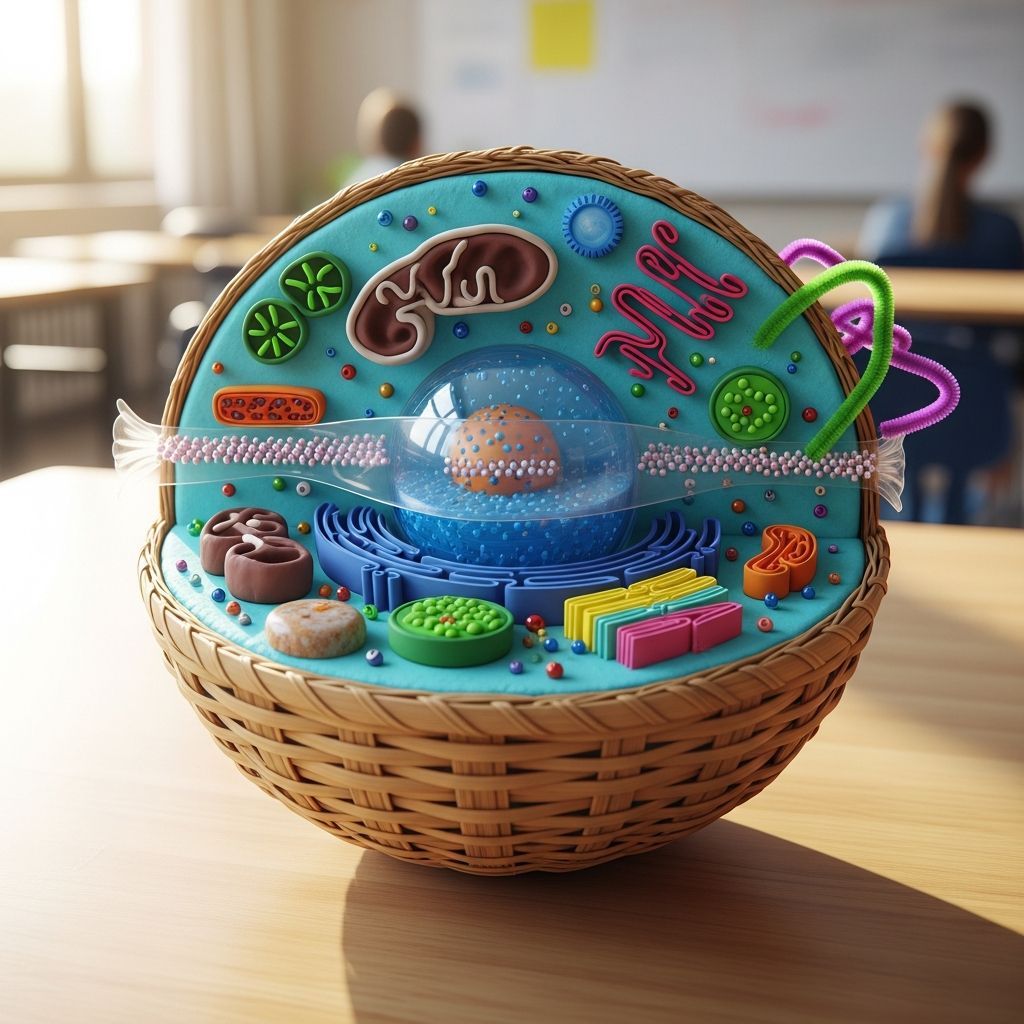
Building a plant cell model is an exciting way for students to explore the intricate world of biology. These projects transform abstract concepts like organelles and cell structures into tangible, memorable experiences. Using common household items, students can create vivid representations that highlight key components such as the cell wall, chloroplasts, and central vacuole. This guide offers fresh ideas to inspire educators, parents, and young scientists, promoting active learning and creativity in STEM education.
Understanding Plant Cell Anatomy
Before diving into projects, grasp the essentials of a plant cell. Unlike animal cells, plant cells feature a rigid **cell wall** for support, **chloroplasts** for photosynthesis, and a large **central vacuole** that maintains turgor pressure. Other vital parts include the **nucleus** (control center), **mitochondria** (energy producers), **ribosomes** (protein makers), **endoplasmic reticulum** (transport network), **Golgi apparatus** (packaging hub), and **cytoplasm** (jelly-like medium). These elements work together to sustain plant life.
Visualizing these structures helps students appreciate how plants convert sunlight into energy. Projects reinforce this by assigning materials to each part, making biology interactive and fun.
Edible Plant Cell Creations
Food-based models combine science with snacking, ideal for younger learners. They demonstrate cell parts while being deliciously destructible.
Gelatin-Based Cell Replica
Create a wobbly model using clear gelatin as cytoplasm. Prepare in a flat dish, let it set, then embed candies: green sprinkles for chloroplasts, a large marshmallow for the vacuole, a peanut for the nucleus. Invert onto a tray, label with toothpicks, and watch it jiggle to mimic fluidity.
Baked Goods Biology
Bake a rectangular cake or cookie sheet as the base. Frost with green icing for the cell wall. Use M&Ms for chloroplasts, a banana slice for the vacuole, chocolate chips for mitochondria, and licorice for endoplasmic reticulum. Pipe labels with icing. Compare plant and animal cells by shape—rectangular for plants.
Pizza Powerhouse Model
Spread dough into a square for the cell shape. Tomato sauce represents cytoplasm, pepperoni slices the nucleus, green peppers chloroplasts, olives mitochondria, and a cheese pool the vacuole. Bake, slice, and label. This savory option teaches while tantalizing taste buds.
Edible projects emphasize temporary models but excel in engagement. Supervise to avoid early consumption!
Clay and Dough Sculptures
For durable, artistic models, clay and dough offer moldable fun without perishability.
Modeling Clay Masterpiece
Form a clay block as cytoplasm. Sculpt organelles in distinct colors: green for chloroplasts, blue for vacuole, brown for nucleus. Embed them, add toothpick flags with labels. Air-dry for permanence.
Salt Dough Structure
Mix flour, salt, and water into dough. Shape a rectangular base, press in organelles using dough balls or nuts. Bake low and slow, then paint. This sturdy version lasts for displays.
Play Dough Panorama
Flatten play dough on plastic wrap into a cell outline. Add contrasting colors for parts: yellow beads for ribosomes, pipe cleaners for ER. Peel wrap to reveal, label neatly.
These tactile projects build fine motor skills alongside scientific knowledge.
Recycled and Natural Material Builds
Sustainable models use seeds, cardboard, and recyclables, teaching ecology too.
Seed Mosaic Cell
Glue craft sticks into a hexagon frame on cardboard. Outline organelles, fill with seeds: tiny poppy for ribosomes, lentils for mitochondria, pumpkin seeds for chloroplasts. Label with a key.
Cardboard Box Biome
Line a shoebox lid with paper. Cut cardstock shapes for organelles, glue in place: foam for cell wall, yarn for vacuole. Stand it up for 3D effect.
Plaster Bandage Build
Drape modroc over a box for shape, add scrunched bits for organelles. Dry, paint colors, label. Textured and robust.
These eco-friendly options spark discussions on sustainability in science.
Digital and Advanced Techniques
Tech-savvy students can go virtual or high-tech.
Software Simulation
Use Canva, PowerPoint, or Tinkercad to draw shapes, add animations for processes like photosynthesis. Export as interactive presentation.
3D Printing Prototype
Design in SketchUp, print multi-color or paint post-print. Digital display if no printer.
These prepare students for modern biotech tools.
Interactive Experiments to Complement Models
Pair models with demos for deeper insight.
- Osmosis with Celery: Place stalks in dyed water; color rise shows vacuole filling and turgor.
- Water Balloon Turgor: Sponge (wall) + balloon (vacuole) demonstrates firmness.
- Microscope Slides: View real cells from onion peels, compare to models.
Project Comparison Table
| Project Type | Materials Needed | Time Required | Skill Level | Durability |
|---|---|---|---|---|
| Gelatin Model | Gelatin, candies | 2-3 hours | Beginner | Low |
| Clay Sculpture | Clay, toothpicks | 1-2 hours | Beginner | High |
| Seed Mosaic | Seeds, glue, sticks | 3-4 hours | Intermediate | High |
| Cake Model | Cake mix, icing | 2 hours | Beginner | Low |
| Digital Design | Computer software | 1-2 hours | Intermediate | High |
Tips for Successful Plant Cell Projects
- Plan labels first: Use consistent colors and clear terms.
- Scale appropriately: Make organelles proportional.
- Research accuracy: Reference diagrams from reliable biology texts.
- Present confidently: Explain functions during show-and-tell.
- Adapt for ages: Simplify for elementary, add processes for advanced.
Frequently Asked Questions (FAQs)
What are the main differences between plant and animal cells?
Plant cells have a cell wall, chloroplasts, and large vacuole; animal cells lack these but have centrioles.
How long do edible models last?
Typically 1-2 days refrigerated; best consumed or discarded soon after.
Can these projects be done without adult help?
Younger kids (under 8) need supervision for cutting or baking; others can manage independently.
What if I lack specialty materials?
Substitute freely: Beans for seeds, foil for membrane—creativity counts!
Are these suitable for science fairs?
Yes, especially with experiments or digital elements for wow factor.
References
- 30 Creative Plant Cell Project Ideas To Try This Year — WeAreTeachers. 2023. https://www.weareteachers.com/plant-cell-projects/
- Plant Cell Project Ideas — Study.com (Academy). 2023. https://study.com/academy/popular/plant-cell-project-ideas.html
- 10+ Super Fun Ways to Make a Cell Model — Weird Unsocialized Homeschoolers. 2023. https://www.weirdunsocializedhomeschoolers.com/ways-to-make-a-cell-model/
- Easy Plant Cell Model Ideas — Science Sparks. 2023. https://www.science-sparks.com/plant-cell-model/
- Cardboard Plant Cell Model | DIY Project — YouTube (BioMedical Art). 2023. https://www.youtube.com/watch?v=4dGZSWXXxgM

- Integrated M.A. in Applied Linguistics, University of Hyderabad
- 5+ years in editorial, instructional, SEO, and research-based writing
Sneha is a relationships and lifestyle writer with a strong foundation in applied linguistics and certified training in relationship coaching. She brings over five years of writing experience to theskillvault, crafting thoughtful, research-driven content that empowers readers to build healthier relationships, boost emotional well-being, and embrace holistic living. Her writing and insights reflect the belief that beauty, happiness, and wellness…