
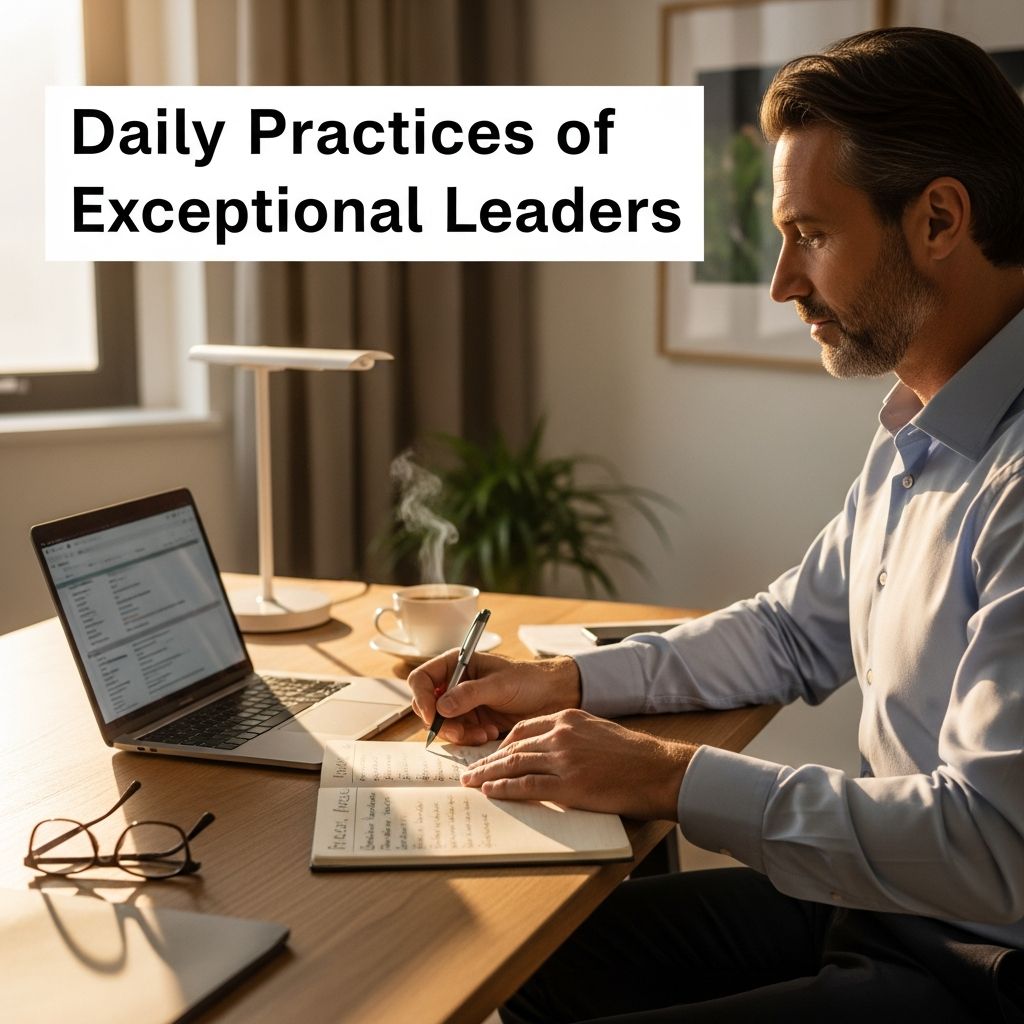
Leadership excellence is not a destination but a continuous journey shaped by deliberate daily choices. While many aspire to leadership positions, relatively few understand that sustained success emerges from the accumulation of small, purposeful actions performed consistently over time. Research into high-performing leaders reveals a striking pattern: those who achieve exceptional results share common daily practices that distinguish them from their peers. These practices transcend industry, organizational size, and cultural context, suggesting they represent fundamental principles of effective leadership.
The most impactful leaders recognize that their influence extends far beyond boardroom decisions or quarterly reviews. Instead, they understand that every interaction, every choice, and every moment of their day either reinforces or undermines their leadership effectiveness. By examining the specific practices that exceptional leaders employ, emerging managers and seasoned executives alike can unlock pathways to greater influence, deeper team engagement, and more meaningful organizational impact.
Establishing a Foundation Through Morning Reflection and Planning
The beginning of each day presents a critical juncture where leaders set the trajectory for their effectiveness. Exceptional leaders invest time each morning in structured reflection and intentional planning rather than immediately diving into reactive work. This practice involves stepping back before the momentum of the day takes over, allowing leaders to examine their priorities through a strategic lens.
Morning reflection serves multiple purposes in a leader’s toolkit. It creates mental clarity about organizational needs and personal priorities, ensuring alignment between daily actions and broader strategic objectives. Leaders who engage in this practice ask themselves critical questions:
- What does my organization require of me today, this week, and this month?
- Which projects or initiatives will have the greatest impact on our strategic goals?
- How can I ensure my time is allocated toward highest-value activities?
- Who requires my support, guidance, or collaboration to achieve our objectives?
- Where might I inadvertently become an obstacle to progress?
This reflective questioning moves beyond simple task management, transforming morning routines into strategic planning sessions. Leaders who implement this practice consistently report enhanced focus, reduced wasted effort, and greater alignment between their actions and organizational outcomes. The discipline of morning planning prevents leaders from being swept away by urgent but non-critical demands, a common trap that diminishes leadership effectiveness.
Information Acquisition as a Leadership Imperative
In today’s rapidly evolving business landscape, knowledge becomes outdated with alarming speed. Leaders who remain competitive and relevant invest deliberately in continuous learning through diverse information sources. This extends far beyond checking industry news alerts; it represents a commitment to intellectual breadth and depth.
Successful leaders build reading into their daily schedules as a non-negotiable commitment. Whether engaging with business literature, industry publications, historical works, or thought-leadership essays, this habit accomplishes several objectives simultaneously. Reading expands perspective by exposing leaders to diverse viewpoints and innovative approaches from across industries and disciplines. It enhances decision-making by providing access to tested frameworks and contemporary research. Additionally, consistent reading positions leaders as informed guides capable of steering their organizations through uncertainty.
The specific content leaders consume matters less than the consistency and intentionality behind the practice. Some leaders prioritize peer-reviewed research and academic publications, while others focus on business case studies, memoirs, or emerging technology reports. The critical element remains the regular engagement with quality information that challenges assumptions and expands thinking.
Self-Awareness Through Structured Reflection
Beyond morning planning, exceptional leaders dedicate time throughout their day to reflection and self-assessment. This practice, often supported by journaling, creates a feedback loop that accelerates personal and professional development. Regular reflection enhances self-awareness—a cornerstone of emotional intelligence and effective leadership.
Self-aware leaders understand their strengths, vulnerabilities, triggers, and blind spots. This understanding enables them to make more intentional decisions, respond to challenges with greater wisdom, and recognize when their own limitations might constrain team performance. The reflective process also clarifies alignment between personal values and organizational direction, ensuring leaders bring authenticity rather than performance to their roles.
Evening reflection complements morning planning by creating a complete learning cycle. Leaders review their day against their original intentions, identifying what progressed as planned, what diverged unexpectedly, and what insights emerged. This practice prevents the same challenges from repeating and builds a personal knowledge base that informs future decision-making.
Physical Well-Being as Performance Infrastructure
A striking correlation exists between physical health and leadership effectiveness that many managers underestimate. Exceptional leaders prioritize regular exercise not as optional wellness activity but as essential infrastructure for sustained performance. Physical activity provides multiple benefits directly relevant to leadership challenges:
- Mental Clarity: Exercise enhances cognitive function, enabling sharper decision-making and improved problem-solving.
- Stress Management: Regular physical activity reduces cortisol levels and builds resilience, critical for navigating organizational pressures.
- Energy Optimization: Consistent exercise increases baseline energy levels, allowing leaders to maintain presence and engagement throughout demanding days.
- Emotional Regulation: Physical activity supports emotional balance, enabling leaders to respond thoughtfully rather than react impulsively in challenging situations.
- Modeling Behavior: Leaders who visibly prioritize health demonstrate values around self-care and work-life integration, influencing organizational culture.
The relationship between physical well-being and leadership effectiveness extends beyond individual performance to team dynamics. Leaders who maintain their health demonstrate higher energy, greater patience, and improved emotional availability—qualities that strengthen team cohesion and psychological safety.
Strategic Organization and Systematic Planning
While organizational systems might seem mundane compared to visionary thinking, they represent the scaffolding upon which leadership effectiveness rests. Exceptional leaders maintain disciplined approaches to information management, scheduling, and task tracking. This organization prevents critical items from falling through cracks and ensures nothing requires the mental energy of remembering where something lives.
Strategic organization encompasses multiple dimensions. Calendar management ensures sufficient time blocks for strategic work rather than allowing every moment to fill with meetings. Document systems prevent repeated searching for information, freeing cognitive resources for higher-order thinking. Note-taking systems capture insights, decisions, and learning opportunities for future reference. This infrastructure allows leaders to operate with greater intentionality and focus, qualities that multiply across teams.
Exceptional leaders also structure their time to protect focus and thinking space. They recognize that back-to-back meetings fragment attention and prevent the deep work essential for strategic leadership. Many implement practices such as declining poorly prepared meetings or requesting that meetings conclude before the hour to allow transition time before subsequent commitments.
Cultivating Positivity and Mindfulness Practices
Leadership presence powerfully influences organizational culture and team morale. Leaders who cultivate positive mindsets and engage in mindfulness practices create work environments characterized by engagement, psychological safety, and sustained productivity. This does not require Pollyanna optimism but rather intentional cultivation of emotional resilience and perspective.
Meditation and mindfulness practices support leaders in multiple ways. These practices build capacity for non-reactive awareness, enabling leaders to pause before responding to provocative situations. They create mental space for insight and creativity, resources often crowded out by reactive busyness. Additionally, mindfulness practices directly reduce the negative health impacts of stress, supporting the physical well-being practices discussed earlier.
Gratitude practices complement mindfulness by shifting attention toward abundance and appreciation. Leaders who regularly acknowledge what is working, who express appreciation for their teams, and who maintain perspective about organizational progress create cultures of engagement rather than cultures of perpetual deficit. This emotional tone influences everything from retention to collaboration to creative risk-taking.
Proactive Engagement and Rapid Response to Challenges
Exceptional leaders distinguish themselves through their approach to challenges. Rather than waiting for problems to resolve themselves or hoping situations improve, they take immediate, intentional action. This proactivity manifests in multiple ways throughout their day.
Proactive leaders anticipate obstacles before they materialize, positioning their teams for success rather than scrambling in response to crises. They actively seek feedback about potential issues, creating early warning systems rather than reactive firefighting. When challenges do emerge, they address them directly and immediately, preventing small issues from metastasizing into major problems.
This proactive approach extends to people management. Exceptional leaders take initiative in conversations with team members, addressing concerns before they become resentments, recognizing contributions before talent walks out the door, and providing guidance before performance deteriorates. This proactivity builds trust and demonstrates care more powerfully than reactive responses.
Key Distinctions Between Exceptional and Ineffective Leaders
| Leadership Dimension | Exceptional Leaders | Less Effective Leaders |
|---|---|---|
| Planning Orientation | Dedicate time to intentional planning despite busy schedules | Focus primarily on present demands, neglecting future planning |
| Information Engagement | Consistently consume diverse information and learning resources | Rely on immediate, reactive information from urgent situations |
| Self-Reflection | Regular reflection on performance, values, and impact | Limited self-assessment, assuming current approaches are sufficient |
| Physical Well-Being | Prioritize exercise and health as essential leadership infrastructure | Treat health and wellness as optional or lower priority |
| Response to Challenges | Address issues immediately and directly | Delay action or hope situations resolve without intervention |
| Decision-Making | Align decisions with strategic objectives and values | Make popular decisions or avoid difficult choices |
Implementing Daily Practices for Sustained Leadership Development
Understanding the practices of exceptional leaders differs fundamentally from implementing them. The gap between knowledge and action represents where most leaders struggle. Effective implementation requires three elements: intentionality, consistency, and accountability.
Intentionality involves consciously choosing which practices align with your leadership challenges and aspirations. A leader struggling with team engagement might prioritize gratitude and mindfulness practices. A leader managing organizational transition might emphasize morning planning and information acquisition. Rather than attempting to implement all practices simultaneously, selective focus creates greater impact.
Consistency separates those who achieve results from those who try. The research on exceptional leaders reveals these are not occasional practices but systematic daily disciplines. Implementation requires treating these practices with the same non-negotiable commitment as critical business meetings. This typically means scheduling specific times for these activities, making them appointments with yourself rather than aspirational intentions.
Accountability provides the structural support that consistency requires. Many leaders benefit from sharing their commitments with peers, mentors, or coaches who provide gentle accountability. Journaling creates a written record that surfaces patterns and progress. Regular reflection on whether practices are generating intended results enables course correction.
Frequently Asked Questions About Leadership Practices
How much time should I dedicate to daily leadership practices?
Research indicates that exceptional leaders invest approximately 60-90 minutes daily in practices beyond routine operational work. This typically includes 20-30 minutes for morning planning and reflection, 20-30 minutes for reading and learning, 20-30 minutes for exercise, and informal reflection throughout the day. The exact allocation varies by individual circumstances but emphasizes that these are meaningful time investments, not peripheral activities.
Can these practices work in fast-paced, high-pressure environments?
Ironically, high-pressure environments benefit most from these practices. Planning and reflection prevent wasted effort on non-critical activities. Physical exercise and mindfulness build resilience for sustained pressure. Information acquisition ensures decisions reflect current realities rather than outdated assumptions. Leaders in intense environments report that these practices are not luxuries they cannot afford but essential infrastructure without which they would be overwhelmed.
What if I do not have a natural inclination toward reflection or meditation?
Effectiveness in leadership practices does not require natural preference or personality alignment. While extroverts and introverts might engage differently with these practices, the underlying benefits remain accessible. An action-oriented leader might approach reflection through problem-solving frameworks rather than traditional journaling. Someone uncomfortable with formal meditation might engage with movement-based mindfulness. The key is finding authentic expressions of these practices rather than adopting generic approaches that feel inauthentic.
How do I know if these practices are working?
Observable indicators emerge relatively quickly for leaders implementing these practices consistently. These include improved decision quality, fewer reactive crises, stronger team relationships, increased energy levels, and greater alignment between daily actions and strategic objectives. Additionally, 360-degree feedback or peer conversations often reveal noticeable improvements in leadership presence and effectiveness. The most direct measure remains results: are you achieving your leadership objectives more effectively?
Conclusion: Building Your Leadership Practice
Exceptional leadership emerges not from innate talent alone but from deliberate daily practices that compound over time. By incorporating morning planning, continuous learning, structured reflection, physical well-being, strategic organization, and positive mindfulness into daily routines, leaders multiply their effectiveness and influence. The practices discussed here are not theoretical ideals but evidence-based disciplines that ordinary leaders employ to achieve extraordinary results.
Your leadership journey begins with one intentional choice: which practice will you implement today? Start there, build consistency, and watch as small daily choices accumulate into the leadership presence and effectiveness that inspire organizations.
References
- Daily Habits of Exceptional Leaders — Leadership Circle. 2021. https://leadershipcircle.com/wp-content/uploads/2021/03/TLC-Daily-Habits-Whitepaper.pdf
- 16 Daily Habits for Effective People Management — Mads Singers. Accessed January 2026. https://madssingers.com/management/daily-habits/
- What Makes a Leader? — Daniel Goleman. Harvard Business Review, November 1998. (Referenced in peer-reviewed research on emotional intelligence and self-awareness in leadership)
- What Are the Habits of a Successful Leader? — Leadership Resources. Accessed January 2026. https://lrsuccess.com/habits-of-a-successful-leader/
- 25 Leadership Habits of Effective & Successful People & Leaders — High5 Test. Accessed January 2026. https://high5test.com/leadership-habits/
- 12 Essential Qualities of Effective Leadership — Center for Creative Leadership. Accessed January 2026. https://www.ccl.org/articles/leading-effectively-articles/characteristics-good-leader/

Medha Deb is an editor with a master's degree in Applied Linguistics from the University of Hyderabad. She believes that her qualification has helped her develop a deep understanding of language and its application in various contexts. Medha specializes in the areas of beauty, health, sports, and wellness and is committed to ensuring that the content on the website is…