
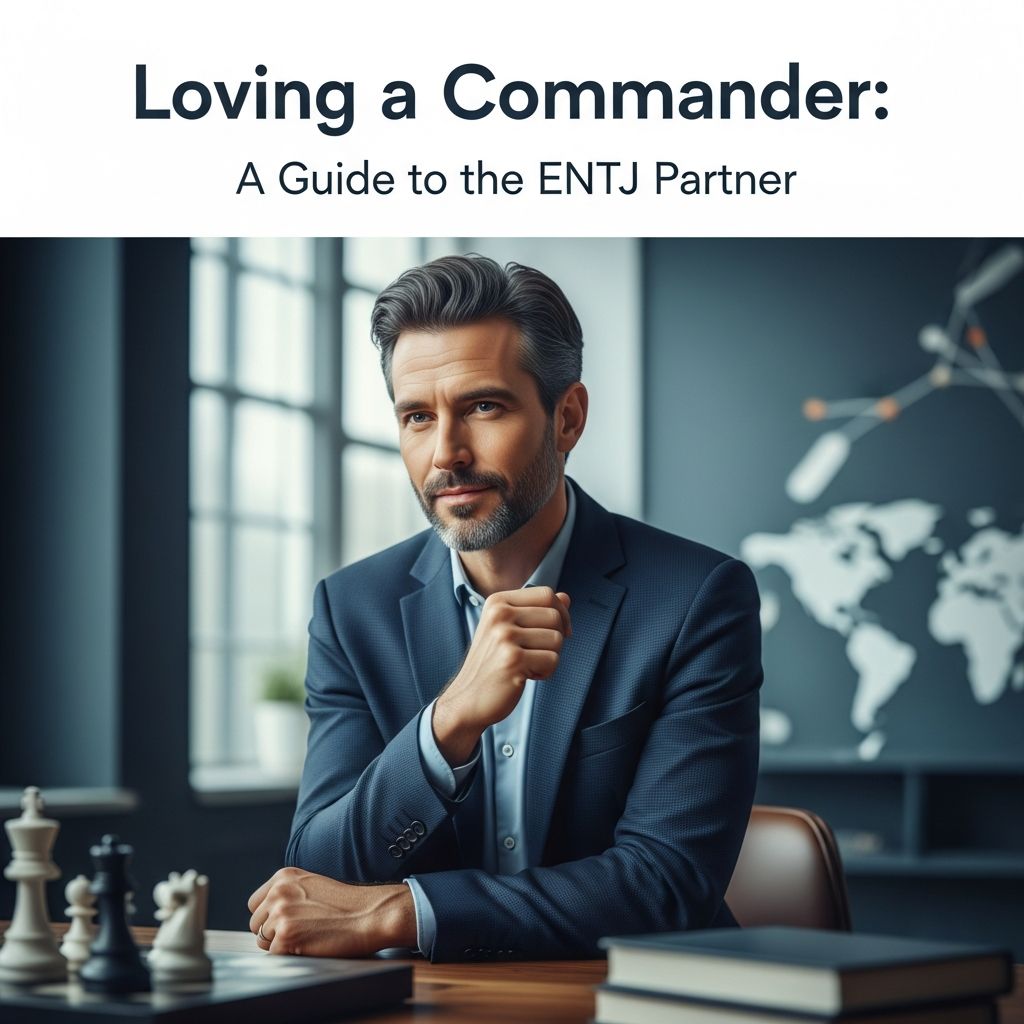
Sharing your life with an ENTJ – often called the Commander – can feel like strapping into a high-speed train: fast, focused, and headed somewhere very specific. ENTJs bring enormous drive, strategic thinking, and loyalty to their relationships, but they can also appear demanding, blunt, and emotionally reserved. Understanding what motivates them can transform clashes into cooperation and power struggles into partnership.
Who ENTJs Are Beneath the Armor
ENTJ is a personality type from the Myers–Briggs framework, characterized by Extraversion, Intuition, Thinking, and Judging. Personality models like the MBTI are widely used in organizational and counseling contexts as descriptive tools for preferences, not as diagnostic labels. ENTJs typically:
- Lead instinctively – They notice inefficiency quickly and feel compelled to organize, improve, and direct.
- Think in long-range plans – They focus on strategy, outcomes, and systems more than moment-to-moment emotions.
- Value competence and results – They respect people who are capable, honest, and decisive.
- Use direct, concise communication – They prefer truth over tact and can underestimate the emotional impact of their words.
Most importantly for relationships, ENTJs tend to see love as a shared mission: something you build, optimize, and protect together.
How ENTJs Show Love (Even When It Doesn’t Look Like It)
Many ENTJs express care through action more than sentiment. Research on personality and close relationships suggests that people high in traits associated with extraversion and goal orientation often emphasize problem-solving and practical support as forms of care, rather than emotional disclosure.
Typical ENTJ Love Languages
- Strategic support – Helping you clarify goals, plan your career, or solve complex problems.
- Taking charge of logistics – Organizing finances, trips, big moves, or long-term planning for the household.
- Investing time in improvement – Encouraging self-development, suggesting courses, books, or experiences that help you grow.
- Fierce loyalty – Defending you in public, standing by you in crises, and treating your problems as strategic priorities to solve.
They may not always remember the small sentimental gestures, but if your ENTJ partner is consistently trying to make your life more effective and secure, that is very often their version of saying, “I love you.”
The ENTJ Relationship Experience: Pros and Cons
Every personality preference brings predictable strengths and blind spots. The table below outlines common ENTJ dynamics in love.
| Aspect | ENTJ Strength | Potential Challenge |
|---|---|---|
| Commitment | Decisive once they choose; treat the relationship as a long-term project. | May take time to commit while they assess long-term viability. |
| Communication | Clear, direct, unambiguous; address problems head-on. | Can sound harsh, critical, or impatient with feelings they see as illogical. |
| Planning & stability | Excellent at planning finances, careers, and life milestones. | May become controlling or dismissive of more spontaneous or flexible approaches. |
| Conflict | Comfortable debating, good at finding structural solutions. | May push for “win–lose” debates instead of emotional repair, leading to partner burnout. |
| Emotional life | Deep but often private feelings; value loyalty intensely. | Difficulty expressing vulnerability; can underestimate their partner’s emotional needs. |
Dating a Commander: What to Expect Early On
In early stages of dating, ENTJs often treat romance like an exciting but serious project:
- They move with intention – If interested, they will usually be clear, consistent, and persistent rather than vague or passive.
- They interview as much as they flirt – Expect questions about your goals, values, and future plans; they are evaluating long-term compatibility.
- They respect independence – Many ENTJs are drawn to partners with their own ambitions and strong opinions, not someone who simply follows.
- They may skip small talk – They often prefer deep conversations about ideas, systems, and the future over casual chatter.
If they start integrating you into their plans – talking about shared investments, major life moves, or joint projects – that is a strong sign they see you as a long-term partner.
Living with an ENTJ: Daily Dynamics
Day-to-day life with a Commander can feel both efficient and intense. Many of the interpersonal patterns associated with assertive, organized personalities have been linked to clear role preferences, strong goal pursuit, and lower tolerance for ambiguity.
Patterns You Might Notice
- Structured routines – ENTJs often like clear schedules, fast decision-making, and defined responsibilities.
- Task-focused evenings – They may come home still mentally in “work mode,” discussing business, strategy, or to-do lists before relaxing.
- High standards – They can be perfectionistic about efficiency, cleanliness, or productivity, sometimes without noticing the pressure this puts on others.
- Intellectual companionship – They enjoy partners who can discuss big ideas, challenge their reasoning, or bring fresh perspectives.
Ways to Keep Everyday Life Balanced
- Set regular check-ins where emotions and needs are discussed, not just logistics.
- Negotiate clear divisions of labor at home so their desire for efficiency doesn’t become micromanagement.
- Agree on no-work zones or times (like meals or one evening a week) to protect connection from constant goal-talk.
- Offer data and reasoning when you disagree; they often respond better to structured arguments than to vague complaints.
Common Pain Points – And How to Handle Them
Many conflicts with ENTJ partners revolve around a few recurring themes. Recognizing them early can prevent resentment from building.
1. Bluntness and Criticism
ENTJs typically prioritize accuracy and efficiency over tact, especially under stress. What they experience as “being honest” can land as harsh criticism.
- Typical friction: Feeling evaluated, corrected, or “managed” instead of supported.
- Helpful responses:
- State your limits clearly: “I want your help, but I shut down when feedback comes that bluntly.”
- Ask for framing: “Can you share that as a suggestion, not a verdict?”
2. Emotional Mismatch
ENTJs may under-share their own vulnerable feelings while underestimating yours. Research in personality psychology suggests that people who score high on thinking-oriented traits often regulate emotions through problem-solving rather than open expression, which can create disconnects if the partner values emotional sharing.
- Typical friction: You feel unseen or dismissed when you need empathy more than solutions.
- Helpful responses:
- Label what you need: “I’m not asking for a fix yet; I just need you to listen and sit with me.”
- Appreciate small steps: reinforce whenever they do show emotional openness, even briefly.
3. Power Struggles and Control
Because ENTJs naturally move into leadership roles, partners can sometimes experience them as controlling, particularly if the partner also has strong preferences or a more flexible lifestyle.
- Typical friction: Decisions made too quickly, plans imposed rather than discussed, or little tolerance for your different methods.
- Helpful responses:
- Define shared decision rules (for example, both must agree on major financial choices).
- Offer alternatives that still respect their need for structure: “Can we try my way for a month, then review the results together?”
How to Love an ENTJ in Ways That Land
Because ENTJs often measure love in investment, effectiveness, and loyalty, certain approaches tend to be especially meaningful to them.
What ENTJs Often Need Most
- Respect for their competence – Notice their strengths, especially their ability to plan, lead, and protect.
- Trust in their vision – You do not have to agree with every idea, but showing genuine curiosity and willingness to engage their big-picture thinking is powerful.
- Honest, efficient communication – They dislike passive aggression, mind games, or prolonged ambiguity.
- Room to pursue goals – Support their drive rather than interpreting it as rejection when they focus intensely on work or projects.
Practical Ways to Show Up Well
- Be clear and direct about your needs rather than waiting for them to guess.
- Share your own plans and ambitions – they will often become your biggest strategist and champion.
- Negotiate shared metrics of success (for example, weekly dates, debt paid off, trips taken) so their goal-focus includes the relationship.
- Challenge them respectfully when needed; many ENTJs find intellectually passive relationships unfulfilling.
Helping Your ENTJ Develop Relationship Skills
ENTJs are often highly motivated to improve when they understand that a behavior is ineffective. Research on personality change suggests that people can nudge their typical patterns over time through deliberate practice and environmental support, even if core traits remain relatively stable. You can support your ENTJ partner’s growth without trying to change who they are.
Areas Where ENTJs Commonly Grow
- Emotional literacy – Learning to name feelings and check in on their partner’s inner world, not just outer progress.
- Softening delivery – Keeping their honesty but adjusting tone and timing.
- Shared leadership – Actively making space for the partner’s preferences, expertise, and authority.
- Rest and presence – Valuing moments of connection that have no obvious productivity payoff.
Constructive Ways to Encourage Growth
- Give specific feedback linked to outcomes: “When you paused to ask how I felt before offering solutions, I felt much closer to you.”
- Frame changes as efficiency upgrades for the relationship: “This communication tool might save us both time and stress.”
- Invite them into joint learning – couples workshops, books on communication, or personality resources you explore together.
Compatibility Snapshot: Who Often Clicks with ENTJs?
There is no single “perfect match” for any personality type, and long-term satisfaction depends more on skills like communication and commitment than on type alone. That said, certain traits often complement ENTJs particularly well:
- Independent partners – People who have their own goals and can manage themselves without constant reassurance.
- Emotionally attuned types – Partners who naturally track feelings can help bring emotional nuance into the relationship.
- Flexible but grounded personalities – Those who can adapt to the ENTJ’s pace yet gently slow things down when needed.
- People who value growth – ENTJs thrive with partners who see the relationship as an evolving project, not a static state.
Frequently Asked Questions (FAQs)
Q: Why does my ENTJ partner seem critical even when they say they love me?
Many ENTJs see identifying problems and offering fixes as a core way of caring. Their feedback is often aimed at improvement, not rejection, but can sound harsh if they haven’t learned to soften their delivery. Explaining how their tone affects you – and suggesting alternative phrasing – can help bridge this gap.
Q: Do ENTJs have feelings, or are they mainly logical?
ENTJs typically experience deep feelings but keep them private and controlled. Their default is to regulate emotions through analysis and action rather than open expression, which can make them appear detached. Given safety and trust, many ENTJs gradually share more of their inner world.
Q: How can I communicate effectively with an ENTJ during conflict?
Stay calm, be concise, and focus on specific behaviors and solutions. ENTJs respond well to clear, structured feedback and are more likely to shut down or go on the offensive if the conversation becomes vague or spirals into character attacks. It also helps to flag emotional needs explicitly, such as asking them to listen before problem-solving.
Q: Are ENTJs capable of long-term commitment?
Yes. Once an ENTJ decides that a relationship aligns with their values and long-term goals, they often become deeply loyal and invested. They may be selective and deliberate in choosing a partner, but when they commit, they tend to think in decades, not months.
Q: What is the best way to support an ENTJ who is very focused on work?
Acknowledge that their drive is part of how they feel secure and useful, while also setting clear boundaries for quality time. Collaboratively defining work-free times or shared rituals can protect the relationship without dismissing their ambition.
References
- MBTI® Basics — The Myers & Briggs Foundation. 2022-05-01. https://www.myersbriggs.org/my-mbti-personality-type/mbti-basics/
- ENTP Personality – Romantic Relationships — 16Personalities. 2023-06-10. https://www.16personalities.com/entp-relationships-dating
- ENTP Relationships – The Enterprising Explorer — MBTIonline. 2022-11-15. https://www.mbtionline.com/en-US/MBTI-Types/ENTP/Relationships
- Personality Traits and the Quality of Social Relationships — Roberts, B. W., et al., European Journal of Personality. 2007-09-01. https://doi.org/10.1002/per.613
- Personality and Close Relationships: Linking Basic Traits to Relationship Outcomes — Donnellan, M. B., et al., Journal of Personality. 2004-12-01. https://doi.org/10.1111/j.1467-6494.2004.00295.x
- Personality Change — Roberts, B. W., et al., Annual Review of Psychology. 2006-01-10. https://doi.org/10.1146/annurev.psych.57.102904.190024

- Integrated M.A. in Applied Linguistics, University of Hyderabad
- 5+ years in editorial, instructional, SEO, and research-based writing
Sneha is a relationships and lifestyle writer with a strong foundation in applied linguistics and certified training in relationship coaching. She brings over five years of writing experience to theskillvault, crafting thoughtful, research-driven content that empowers readers to build healthier relationships, boost emotional well-being, and embrace holistic living. Her writing and insights reflect the belief that beauty, happiness, and wellness…