
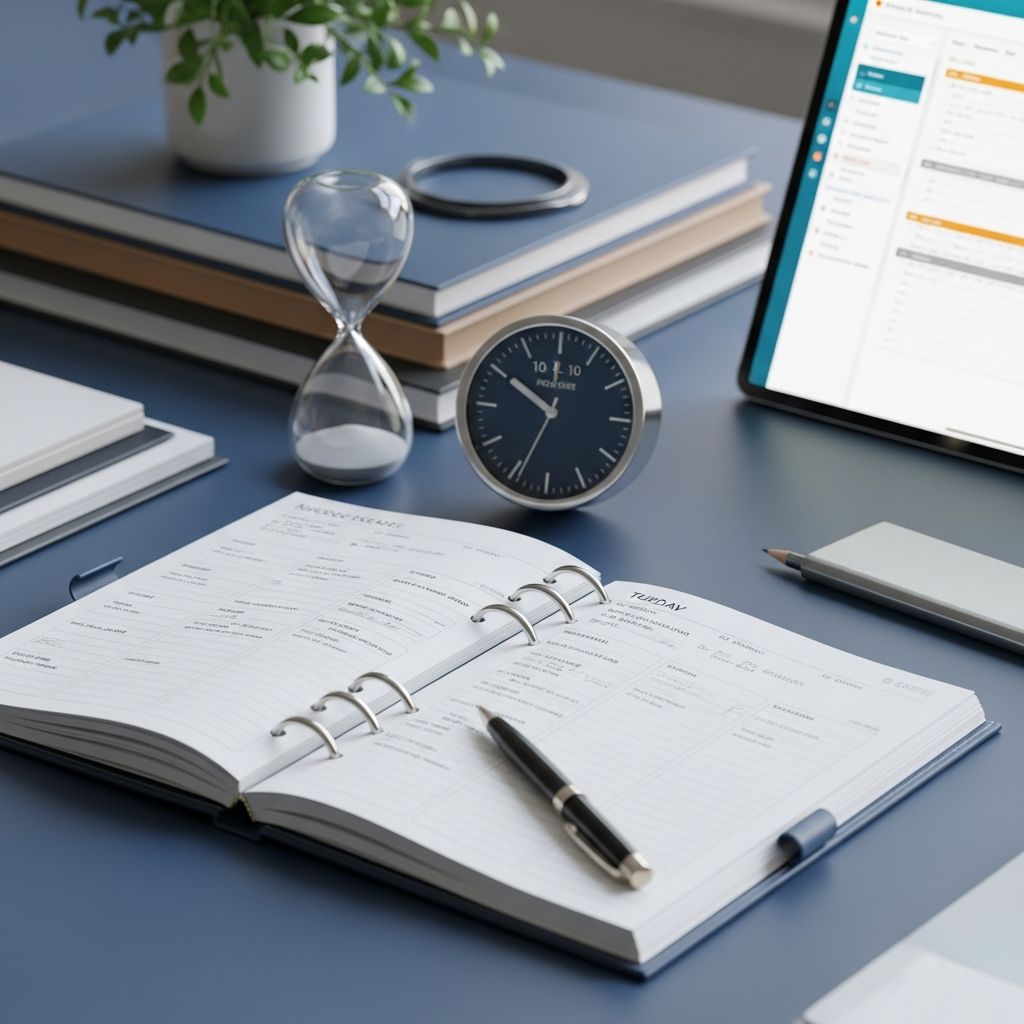
Building a Foundation for On-Time Delivery
Meeting deadlines consistently is one of the most valuable professional skills you can develop. Whether you work in a corporate environment, creative industry, or freelance capacity, the ability to deliver quality work within established timeframes directly impacts your reputation, career advancement, and team dynamics. Many professionals struggle with deadline management not because they lack capability, but because they haven’t developed structured systems to guide their efforts. The difference between those who consistently meet deadlines and those who struggle often comes down to planning, prioritization, and the deliberate use of time management techniques.
Effective deadline management begins long before the actual due date arrives. It requires an honest assessment of your current work habits, a clear understanding of project scope, and the development of realistic timelines. By implementing proven strategies and maintaining consistent discipline, you can transform how you approach work and dramatically improve your ability to meet commitments.
Understanding Your Starting Point
Before implementing any new deadline management strategy, take time to audit how you currently work. Document how long various tasks actually take, identify which activities consume disproportionate amounts of time, and recognize patterns in your work schedule. This self-awareness serves as your baseline for improvement.
Consider tracking your activities for one week using simple logging methods or dedicated time-tracking tools. Note which times of day you work most effectively, when distractions typically occur, and which tasks receive insufficient planning. Understanding these patterns allows you to design strategies specifically suited to your working style rather than adopting generic approaches that may not fit your circumstances.
The Foundation: Clear Project Decomposition
Large projects often feel overwhelming when viewed as single monolithic tasks. The solution lies in breaking complex work into smaller, manageable components with their own intermediate deadlines. This approach, sometimes called backward scheduling, involves analyzing the complete project scope and dividing it into logical phases.
Start by identifying every significant step or milestone required to complete your project. Then, work backward from your final deadline, assigning realistic timeframes to each component. This calculation reveals your true project start date and helps you identify potential bottlenecks before they become crises. For example, if a final presentation is due on Friday, and you need two days to compile materials, one day to review graphics, and three days to gather data, you now know that data collection must begin on Monday at the latest.
This structured approach accomplishes several goals simultaneously: it makes the project feel less daunting, establishes clear checkpoints for progress monitoring, and provides early warning signals if you begin falling behind schedule.
Strategic Task Sequencing and Momentum Building
Not all tasks should be tackled in random order. Strategic sequencing involves grouping related activities and arranging them to build momentum throughout your workday. When you work on interconnected tasks sequentially, you maintain context and reduce the mental friction that comes with task switching.
This momentum-building approach mirrors how an airplane generates lift by increasing speed gradually. As you progress through related tasks, your confidence grows, your familiarity with the subject matter deepens, and your overall productivity increases. You enter a state where your effectiveness peaks because your mind remains engaged with interconnected concepts rather than constantly reorienting to unrelated work.
Organize your task list to support this natural flow. Rather than jumping between different projects or unrelated responsibilities, batch similar work together. If you’re creating content, write multiple pieces in succession rather than scattering writing tasks throughout your week. If you’re conducting analysis, complete related research and calculations before moving to different work types.
Prioritization: Distinguishing Urgent from Important
The reality of most workplaces involves competing demands and multiple projects at various completion stages. Without a systematic prioritization approach, you risk investing disproportionate effort on tasks that appear urgent but may not be truly important, while neglecting work that has greater strategic value or deadline criticality.
Develop a framework for evaluating tasks based on two dimensions: urgency (how soon action is needed) and importance (how significantly it impacts goals or deadlines). This creates four categories:
- High urgency, high importance: These demand immediate attention and should be your primary focus.
- Low urgency, high importance: These require dedicated planning time and should be scheduled deliberately rather than handled reactively.
- High urgency, low importance: These feel pressing but may be delegable or deferrable if they don’t align with core objectives.
- Low urgency, low importance: These should receive minimal attention or be eliminated from your workload.
Review your task list daily through this prioritization lens. This prevents you from becoming trapped in reactive mode, constantly responding to whatever appears most immediately demanding rather than strategically advancing your most important work.
Time Blocking: Creating Structure Within Your Schedule
Unstructured time rarely translates to productive time. Time blocking is a technique where you divide your calendar into distinct blocks dedicated to specific types of work or particular projects. Each block represents a commitment to focus exclusively on its designated task without context switching or interruptions.
Implement time blocking by scheduling specific hours for different categories of work. You might dedicate Tuesday mornings to deep analytical work, Wednesday afternoons to client meetings, and Thursday mornings to creative tasks. By establishing these patterns, you create environmental consistency that supports focused work and allows your team to understand when you’re available for interruptions versus when you need uninterrupted concentration.
The effectiveness of time blocking increases dramatically when you actually honor your blocks. Treat scheduled focus time as non-negotiable commitments to your projects, comparable to how you’d treat external meetings. This discipline ensures that important work receives dedicated attention rather than being squeezed into leftover time.
The Pomodoro Approach: Structured Work Intervals
Some professionals benefit from even more granular time structure, particularly when facing procrastination or difficulty maintaining focus. The Pomodoro method breaks work into focused intervals (typically 25 minutes) separated by brief breaks. After completing four intervals, a longer break allows for recovery and perspective shifts.
This technique works effectively because it:
- Creates psychological urgency through time constraints, increasing focus intensity
- Makes large projects feel manageable through finite, achievable intervals
- Prevents burnout by mandating regular breaks that restore mental capacity
- Provides clear productivity metrics (intervals completed) for tracking progress
- Reduces decision fatigue by establishing predetermined work and rest periods
Experiment with interval lengths suited to your work style. Some tasks and personalities thrive with 25-minute intervals, while others benefit from 45-minute blocks. The key is establishing a rhythm that supports consistent, high-quality output without mental exhaustion.
Realistic Estimation and Buffer Integration
One of the most common causes of missed deadlines is underestimation of task duration. People typically forecast how long work will take under ideal circumstances, forgetting to account for interruptions, unexpected complications, and the reality that most tasks take somewhat longer than initial estimates suggest.
Use historical data to improve your estimation accuracy. If time tracking reveals that similar tasks consistently take 50% longer than your initial estimates, adjust your future projections accordingly. Build in buffer time explicitly rather than hoping you’ll work faster than past experience suggests is realistic.
A practical approach involves calculating your estimated task duration, then adding a contingency percentage based on project complexity and your familiarity with similar work. For routine tasks, a 10-15% buffer may suffice. For complex, unfamiliar work, a 25-50% buffer is more realistic. This approach respects reality while still maintaining accountability to deadlines.
Delegation and Resource Allocation
Attempting to handle all work personally is a significant source of missed deadlines, particularly for leaders and senior professionals. Strategic delegation accomplishes multiple objectives: it frees your time for high-value activities, develops team member capabilities, and often produces faster overall project completion by distributing work across multiple contributors.
Effective delegation requires matching task complexity and skill requirements to individual capabilities. Assign straightforward work to capable junior team members to develop their expertise while protecting your time for strategic thinking. Communicate deadlines clearly, establish checkpoints for progress monitoring, and provide support when people encounter obstacles. Done well, delegation reduces your personal deadline pressure while strengthening organizational capacity.
Communication and Accountability Structures
Missed deadlines frequently result from misaligned expectations rather than inability to complete work. Clear communication about project goals, deliverable specifications, and timeline expectations prevents the costly situations where significant work must be redone because it didn’t match stakeholder expectations.
Establish regular check-in practices with team members and stakeholders. Weekly progress updates, milestone reviews, and transparent status reporting create opportunities to catch problems early and adjust plans before deadlines become jeopardized. These conversations also ensure that all parties share the same understanding of what successful completion looks like and when it should occur.
Consider implementing project management tools that provide visibility into task status, dependencies, and progress metrics. When everyone can see the same information about project health and remaining work, it’s easier to identify resource constraints and make informed decisions about schedule adjustments or priority shifts.
Managing Workload Distribution
Team members frequently miss deadlines not because they lack capability but because their workload exceeds what any reasonable person could complete within available time. Conscientious team members often accept more work than they can realistically handle rather than voicing concerns about capacity.
As a manager or team lead, regularly assess whether individual workloads are realistic and fairly distributed. Create psychological safety where team members feel comfortable indicating when they’re approaching capacity. When overload is identified, make deliberate choices: redistribute work among available team members, extend timelines to realistic durations, reduce project scope, or engage additional resources. This proactive approach prevents the crisis situations that damage quality and team morale.
Minimizing Interruptions and Context Switching
Even well-planned schedules become compromised when constant interruptions fragment your focus. Modern work environments with instant messaging, email notifications, and open office layouts create perpetual distraction. Each interruption carries a hidden cost: research shows it takes significant time to mentally refocus after switching tasks.
Create boundaries that protect focused work time. This might involve silencing notifications during time blocks designated for deep work, setting expectations with colleagues about communication availability, or working in spaces conducive to concentration. Batch communication review into specific times rather than responding continuously to incoming messages throughout your day.
Communicate your availability boundaries to your team and stakeholders. Most colleagues will respect requests for focused work time if they understand your reasoning and know when you’ll be available for questions and collaboration. This structural approach to managing interruptions often yields dramatic improvements in productivity and deadline adherence.
Automation and Tool Leverage
Modern work increasingly involves repetitive, manual tasks that consume time without generating unique value. Automation tools can handle routine activities like follow-up communications, schedule reminders, data entry, and status updates. Identifying opportunities to automate these time-consuming tasks frees your capacity for work requiring human judgment, creativity, or complex problem-solving.
Evaluate your regular tasks to identify automation opportunities. Even small time savings across dozens of repetitive actions accumulate significantly over weeks and months. By systematically automating routine work, you reclaim hours that can be invested in deadline-critical activities or high-value strategic work.
Recovery and Flexibility Planning
Despite excellent planning, circumstances change. Team members become unavailable, unexpected problems emerge, or priorities shift. Build flexibility into your plans by maintaining realistic buffers and identifying which project components have adaptable deadlines versus which are truly fixed.
When deadline pressure increases, know in advance which scope items you could defer, which corners you could safely cut without compromising quality, and which deliverables absolutely cannot be compromised. This advance thinking allows quick decision-making when crisis situations arise, preventing panic-driven choices that damage long-term outcomes.
Frequently Asked Questions
Q: How can I improve deadline estimation accuracy?
A: Track actual time spent on completed tasks and compare it to your initial estimates. Use this historical data to calibrate future projections, and always add a realistic buffer (typically 10-50% depending on task complexity) to account for interruptions and complications.
Q: What should I do when multiple deadlines overlap?
A: Apply prioritization frameworks to determine which project demands immediate attention based on business impact and urgency. Communicate with stakeholders about timeline constraints, explore whether any deadlines can be extended, consider delegating or outsourcing components, and escalate resource constraints to management if necessary.
Q: How can I prevent procrastination from affecting my deadline performance?
A: Break projects into smaller milestones with intermediate deadlines that create urgency before the final deadline arrives. Use time-blocking or Pomodoro techniques to establish structured work periods. Address underlying reasons for procrastination, whether perfectionism, unclear expectations, or lack of interest, and adjust your approach accordingly.
Q: Is multitasking helpful for meeting multiple deadlines?
A: Research consistently shows that multitasking reduces focus quality and increases errors. Instead of juggling multiple projects simultaneously, use time-blocking to dedicate focused attention to one project at a time. This concentrated approach typically produces faster, higher-quality results than fragmented multitasking.
Q: What’s the best way to communicate with stakeholders about deadline risks?
A: Provide early warning when project progress suggests a deadline may be at risk. Present the situation honestly, explain contributing factors, outline mitigation options with realistic outcomes for each, and recommend a path forward. Transparent, timely communication allows stakeholders to make informed decisions rather than facing surprises at the deadline.
References
- Deadline Management: Strategies for Success 2026 — Bonsai. 2026. https://www.hellobonsai.com/blog/deadline-management
- Essential Strategies for Effective Deadline Management in Agencies — DashClicks. https://www.dashclicks.com/blog/agency-deadline-management
- Five Best Practices for Managing Deadlines — Baker Communications. https://www.bakercommunications.com/CBS/Five-Best-Practices-for-Managing-Deadlines.htm
- 10 Strategies for Meeting Project Deadlines — The Digital Project Manager. https://thedigitalprojectmanager.com/productivity/meeting-deadlines/
- Mastering Your Schedule: Effective Time Management Strategies for Success — University of Pennsylvania, Lauder Institute. https://lpsonline.sas.upenn.edu/features/mastering-your-schedule-effective-time-management-strategies-success

- Integrated M.A. in Applied Linguistics, University of Hyderabad
- 5+ years in editorial, instructional, SEO, and research-based writing
Sneha is a relationships and lifestyle writer with a strong foundation in applied linguistics and certified training in relationship coaching. She brings over five years of writing experience to theskillvault, crafting thoughtful, research-driven content that empowers readers to build healthier relationships, boost emotional well-being, and embrace holistic living. Her writing and insights reflect the belief that beauty, happiness, and wellness…