
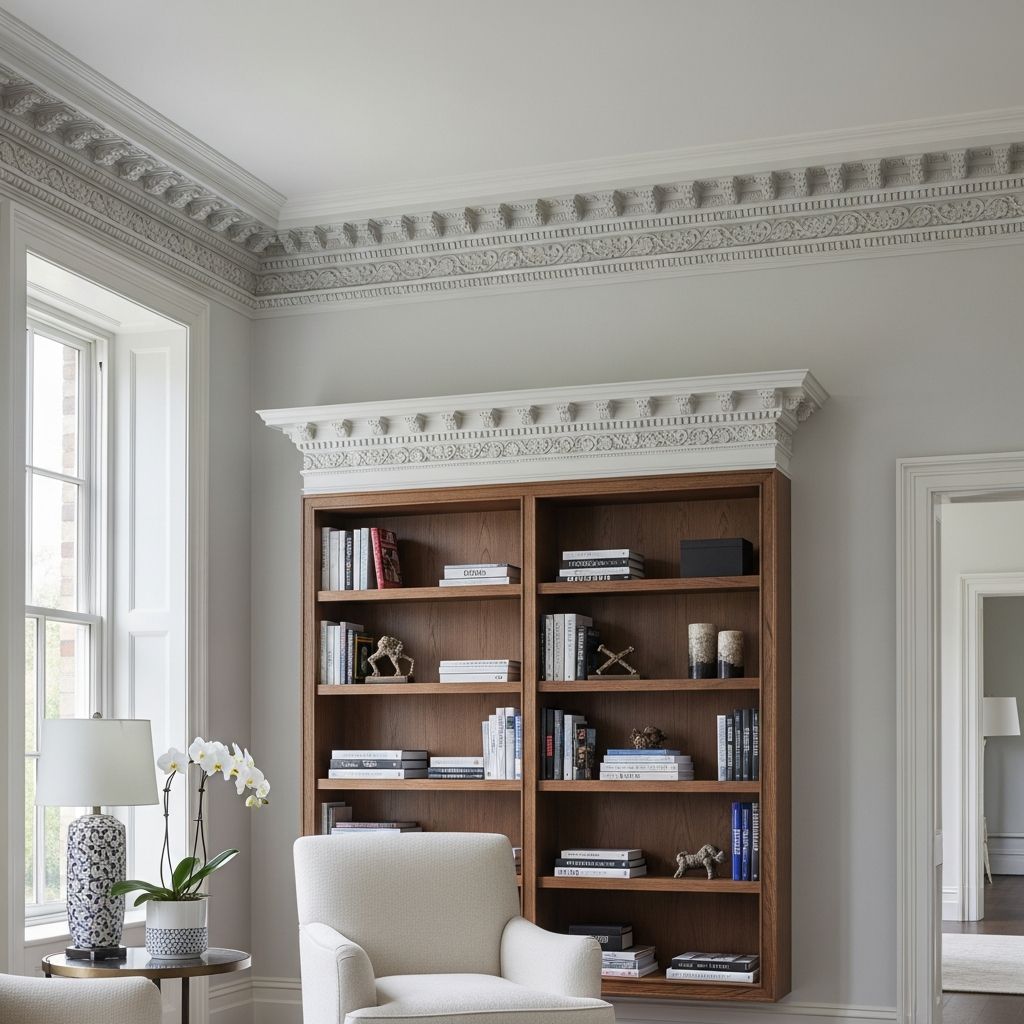
Decorative cornices serve as sophisticated horizontal moldings positioned at the junction of walls and ceilings, transforming ordinary spaces into refined environments. These elements blend functionality with artistry, offering homeowners a versatile way to enhance visual appeal and architectural character.
Historical Evolution of Cornices
Cornices trace their origins to ancient civilizations, where they first appeared in Egyptian, Greek, and Roman architecture as protective ledges crowning structures. The term derives from the Italian word for ‘ledge,’ reflecting their initial role in shielding buildings from rainwater while adding ornamental flair. Over centuries, these features evolved from simple protrusions to intricate designs, adorning temples, palaces, and later, residential interiors. In classical architecture, cornices formed the uppermost part of entablatures, often featuring dentils or modillions for added texture. Today, they persist as a staple in interior design, bridging historical grandeur with modern minimalism.
During the Renaissance, cornices gained prominence in European homes, symbolizing wealth and craftsmanship. By the Victorian era, ornate plaster versions became ubiquitous, embellishing high-ceilinged mansions. The 20th century introduced lighter materials like polyurethane, making them accessible for contemporary renovations without the weight of traditional plaster.
Defining Cornices in Modern Contexts
In interior design, a cornice is a horizontal molding that crowns the space where walls meet ceilings, creating a smooth, elegant transition. Unlike purely functional eaves, which direct water away from exteriors, interior cornices prioritize aesthetics while concealing construction irregularities. They differ from coving, which is a concave curve, by often incorporating projecting profiles for depth and shadow play.
- Key Characteristics: Horizontal orientation, decorative profiles, placement at wall-ceiling junctions.
- Distinctions from Eaves: Interior focus on decoration versus exterior weather protection.
Architecturally, cornices can crown doors, windows, or pedestals, but their primary indoor role enhances room perimeters, softening harsh angles and elevating perceived height.
Material Innovations for Today’s Homes
Contemporary cornices offer diverse materials tailored to budgets and styles. Traditional options include wood for warm, natural grains and plaster for detailed carvings, though these demand skilled installation due to weight and fragility.
| Material | Pros | Cons | Best For |
|---|---|---|---|
| Wood | Customizable, paintable, authentic look | Heavy, prone to warping, expensive | Traditional, high-end interiors |
| Plaster | Intricate details, seamless finish | Fragile, labor-intensive installation | Historical restorations |
| Polyurethane | Lightweight, durable, water-resistant | Less authentic texture | Modern renovations, humid areas |
| Polymer | Flexible, crack-resistant, affordable | Limited ornate designs | New builds, budget projects |
Modern alternatives like polyurethane and polymer dominate due to ease of handling and longevity, resisting cracks in settling homes. These innovations allow for precise cuts and flexible fitting around uneven surfaces.
Aesthetic Transformations with Cornices
Cornices dramatically enhance room aesthetics by introducing layered profiles that cast subtle shadows, adding depth and dimension. They soften stark wall-ceiling junctions, fostering a cohesive, polished ambiance. Available in profiles from minimalist coves to elaborate acanthus motifs, they adapt to any decor scheme.
- Elevate high ceilings, emphasizing verticality.
- In open-plan layouts, delineate zones like living from dining areas.
- Integrate recessed lighting, diffusing glow for warmth.
In minimalist spaces, slim cornices provide subtle refinement; in opulent settings, bold designs amplify grandeur. Their versatility ensures timeless integration, outlasting fleeting trends.
Practical Advantages Beyond Beauty
Beyond visuals, cornices excel at concealing flaws. They mask gaps, cracks from foundation settling, or misaligned seams, delivering a flawless finish without extensive repairs. This is invaluable in older homes or post-renovation spaces.
They also boost property value by infusing architectural distinction, turning bland rooms into character-rich havens. Flexible polymers handle minor undulations, covering wiring or paint inconsistencies seamlessly.
Design Styles Across Eras
Classic and Ornate Profiles
Victorian-inspired cornices feature deep egg-and-dart patterns, evoking heritage luxury. Ideal for period properties, these add narrative depth.
Contemporary Minimalism
Sleek, unadorned lines suit modern lofts, emphasizing clean geometry without overwhelming simplicity.
Eclectic Fusion
Mix bold motifs with neutral palettes for personalized vibrancy, blending old-world charm with fresh palettes.
Selecting profiles involves matching ceiling height—thicker for tall rooms, subtler for low ones—and harmonizing with baseboards or door casings.
Installation Insights for Homeowners
Installing cornices requires precision. Begin by measuring perimeters, accounting for corners with miter cuts at 45 degrees. Use adhesive for lightweight materials or secure plaster with nails and joint compound.
- Clean surfaces thoroughly.
- Mark guidelines with a laser level.
- Apply caulk for seamless joints.
- Sand and paint post-installation for uniformity.
DIY suits simple polyurethane; complex plaster benefits professionals. Costs range from $5–$20 per linear foot, plus labor.
Maintenance and Longevity Tips
Durable materials like polyurethane need minimal upkeep—dust lightly and touch up paint. Avoid excess moisture on wood to prevent rot. Regular inspections catch loose joints early, ensuring decades of elegance.
Case Studies: Real-World Impact
In a renovated Edwardian home, polyurethane cornices hid settling cracks, restoring period authenticity while lightening the load. An open-concept apartment used slim profiles with LED integration, zoning spaces subtly. These examples illustrate cornices’ transformative power across budgets.
Frequently Asked Questions (FAQs)
What rooms benefit most from cornices?
Living rooms, dining areas, and bedrooms gain elegance; kitchens suit moisture-resistant types.
Are cornices suitable for low ceilings?
Yes, shallow profiles (under 3 inches) maintain openness without compressing height.
How do cornices differ from crown molding?
Cornices encompass broader decorative ledges; crown molding is a specific projecting subtype.
Can cornices increase home resale value?
Absolutely, by adding perceived luxury and finishing touches that appeal to buyers.
What’s the easiest material for beginners?
Polyurethane—light, forgiving, and adhesive-friendly.
Choosing Your Perfect Cornice
Assess room scale, style coherence, and practical needs. Sample profiles in situ under your lighting. Consult architects for heritage compliance. Cornices remain a smart investment, merging utility with enduring style.
References
- Benefits for Homeowners – Cornice Information — DS4 Decor. 2023. https://ds4decor.com.au/cornice-information/benefits-for-homeowners/
- What Are Cornices and Should I Get Some? — Carmen’s CWT. 2023-10-19. https://carmenscwt.com/blog/2023/10/19/what-are-cornices-and-should-i-get-some
- Decorative Cornices: Adding Character To Your Space — AM Group Studio. 2023. https://www.amgroupstudio.com/decorative-cornice/
- 5 Reasons to Install Our Decoflair Cornices in Your Home — DecoFlair. 2023. https://www.decoflair.com/en/news/30_5-reasons-to-install-our-decoflair-cornices-in-your-home
- Cornice — Wikipedia (citing classical architecture references). 2026. https://en.wikipedia.org/wiki/Cornice

- Integrated M.A. in Applied Linguistics, University of Hyderabad
- 5+ years in editorial, instructional, SEO, and research-based writing
Sneha is a relationships and lifestyle writer with a strong foundation in applied linguistics and certified training in relationship coaching. She brings over five years of writing experience to theskillvault, crafting thoughtful, research-driven content that empowers readers to build healthier relationships, boost emotional well-being, and embrace holistic living. Her writing and insights reflect the belief that beauty, happiness, and wellness…