
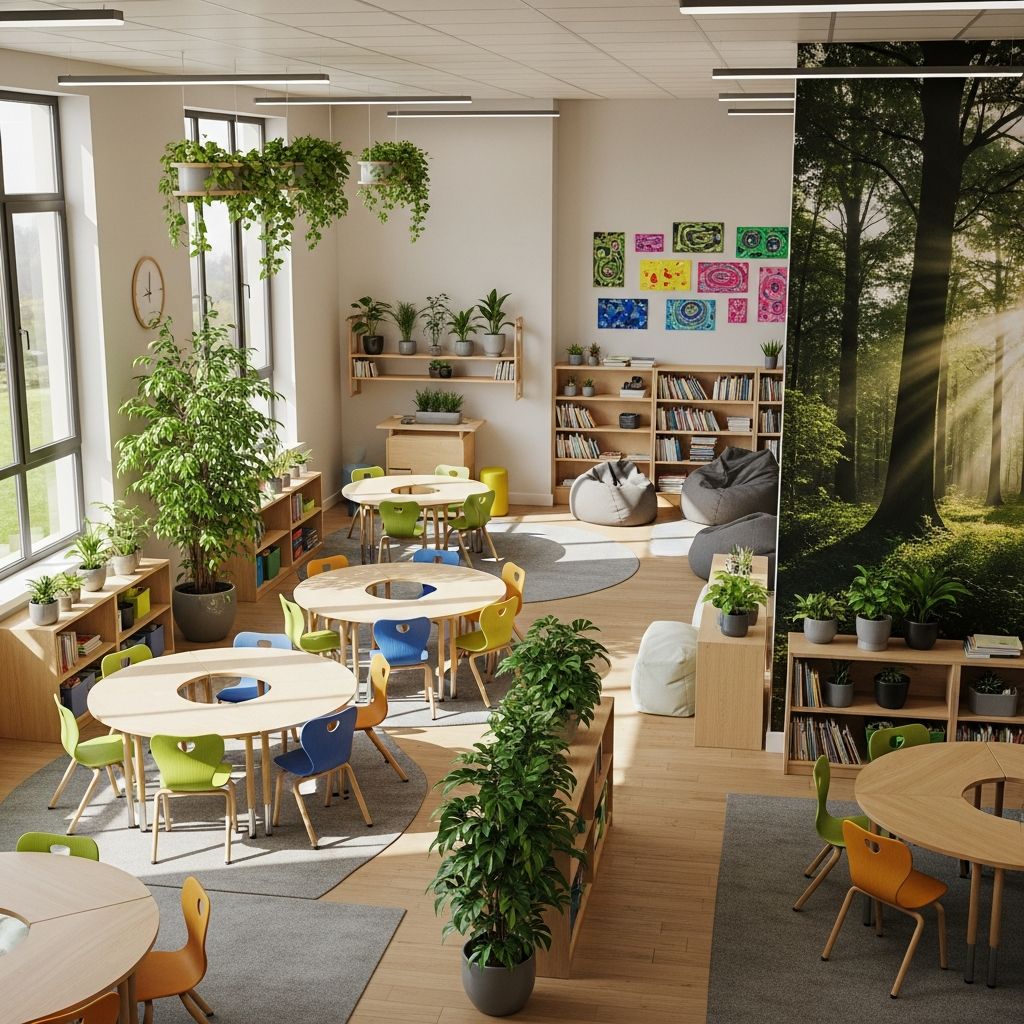
Designing Classrooms Where Students Flourish
The physical and psychological spaces where teaching and learning occur profoundly influence student outcomes. When educators deliberately structure classroom environments to support both academic and emotional needs, students demonstrate increased engagement, improved academic performance, and stronger social connections. The foundation of educational excellence rests not solely on curriculum or instructional methods, but on the intentional design of spaces where students feel safe, valued, and motivated to participate fully in their learning journeys.
Creating such environments requires systematic attention to multiple dimensions: the physical layout and sensory conditions, the relational dynamics between educators and learners, the behavioral expectations and support systems, and the opportunities for meaningful engagement. Each of these elements interacts to shape the overall climate in which education occurs.
The Architecture of Connection: Building Authentic Relationships
Relationships serve as the cornerstone upon which all other elements of a positive classroom environment rest. When students perceive that their teachers genuinely know them—their strengths, interests, challenges, and aspirations—they develop a sense of belonging that transforms their educational experience. This relational foundation begins before the first lesson is taught and continues to develop throughout the year.
Teachers establish meaningful connections through deliberate, consistent actions that communicate genuine interest in students as individuals rather than simply as learners of content. These might include greeting students personally each morning, inquiring about their interests and hobbies, incorporating students’ names and preferences into lesson examples, and demonstrating knowledge of their personal circumstances and challenges. When reluctant or disengaged learners observe themselves reflected in classroom materials and recognize that their teacher values them personally, motivation and participation often increase substantially.
Extending relationship-building to families proves equally important. Teachers who initiate regular, positive communication with families, recognize parents as experts on their children, and create welcoming opportunities for family involvement establish partnerships that reinforce classroom learning and demonstrate respect for the entire support system surrounding each student.
The Physical Dimension: Optimizing Sensory and Spatial Conditions
While relationships constitute the emotional architecture of effective learning spaces, the physical environment provides the foundational support for concentration, comfort, and engagement. Several interrelated factors contribute to creating spaces conducive to learning:
- Lighting and visibility: Adequate, well-distributed lighting enables students to see instructional materials, board work, and each other clearly, reducing eye strain and supporting sustained attention.
- Temperature and comfort: Appropriately regulated room temperature and ergonomic seating allow students to remain physically comfortable, preventing distraction from bodily discomfort and enabling focus on intellectual tasks.
- Organization and order: Strategically arranged materials, clearly labeled storage systems, and thoughtfully organized classroom layout communicate expectations for orderly behavior while making necessary resources immediately accessible.
- Technological infrastructure: Integration of current technology provides students with opportunities to develop digital literacy while engaging with content through multiple modalities that match diverse learning preferences.
- Visual messaging: Strategic placement of posters and displays featuring positive affirmations, behavioral expectations framed constructively, and inclusive messaging reinforces the classroom’s values and provides reference points for redirecting behavior or encouraging effort.
Behavioral Frameworks: Expectations, Consistency, and Positive Reinforcement
Clear behavioral expectations provide students with a sense of security and direction, reducing anxiety about navigating social and academic norms. However, the manner in which expectations are communicated significantly influences their effectiveness. Rather than emphasizing prohibitions and restrictions, effective behavioral frameworks articulate expectations as positive statements describing desired behaviors.
For example, rather than stating “Don’t disrespect other students,” a positively framed expectation would read “All members of our classroom community treat each other with respect at all times.” This subtle linguistic shift redirects attention from what students should avoid toward what they should actively do, providing a clearer behavioral target while establishing a more constructive classroom tone.
Establishing these expectations requires intentional communication with students and families. Rather than assuming that students understand classroom norms—particularly students new to a particular teacher’s style—effective educators explicitly teach behavioral expectations, practice them through modeling and rehearsal, and regularly revisit them throughout the year. This foundational work, though time-consuming initially, prevents confusion and establishes consistency that students need to feel secure.
Recognition of positive behavior must be consistent, specific, and meaningfully connected to the behaviors being reinforced. When teachers highlight achievements and appropriate choices, they direct classroom attention toward positive exemplars and create motivation for continued effort. Age-appropriate recognition might range from simple acknowledgment and praise to tangible rewards, as long as the connection between the behavior and recognition remains explicit and transparent.
Engagement Through Voice and Choice
Students invested in their learning environment demonstrate greater engagement and a stronger sense of belonging than those who experience the classroom as something imposed upon them. Providing students with meaningful opportunities to make decisions about classroom physical arrangements, project approaches, learning activities, and problem-solving increases their psychological investment in maintaining and respecting the space they have helped create.
This principle of student agency extends to communication approaches as well. Teachers who adjust their communication style to connect with students—employing humor, relevant examples, contemporary references, or technological tools—build rapport while modeling that education can be engaging rather than tedious. Starting instructional explanations from foundational concepts rather than assuming prior knowledge respects student experiences while preventing confusion and frustration.
Collaborative Learning and Community Building
Learning environments structured around collaboration and teamwork yield benefits beyond academic achievement. When students work together on meaningful projects, they develop crucial social skills, learn from diverse perspectives, and construct identity as members of a supportive community. Teachers who foster collaboration establish norms of mutual respect and shared responsibility, creating classroom cultures where students feel empowered to take academic risks and contribute their ideas.
These collaborative structures prove particularly valuable for students who might otherwise remain disconnected from classroom participation. Group work, peer teaching, and cooperative problem-solving provide alternative pathways for engagement and opportunities to experience competence in contexts that match their strengths.
Recognition and Celebration of Progress
Regular acknowledgment of student achievements—whether academic breakthroughs, behavioral improvements, or creative contributions—communicates that effort and progress matter. When teachers provide specific, timely feedback recognizing both accomplishments and the work behind them, students develop confidence in their capacity to learn and grow. This positive reinforcement creates what researchers describe as a culture of excellence, where students internalize the expectation that they can succeed and that their contributions have value.
Celebration extends beyond individual achievement to include recognition of collective progress, shared successes in behavioral expectations, and community contributions. Public recognition of positive behaviors and accomplishments provides models for peers while affirming the behaviors and values the classroom community prioritizes.
Preventive Environmental Design
Rather than focusing exclusively on responding to behavioral challenges after they arise, effective classroom managers attend carefully to environmental factors that make problematic behavior more or less likely. This preventive approach recognizes that behavior does not occur in isolation but emerges from interactions between individual characteristics and environmental conditions. Teachers who thoughtfully arrange classroom spaces to minimize unnecessary distractions, establish clear sight lines for supervision, and structure activities to match students’ developmental capacities create environments where positive behavior becomes the natural response.
Inclusivity and Belonging for All Students
Positive learning environments intentionally communicate that all students belong and will be accepted for who they are. This commitment to inclusion extends beyond surface-level diversity appreciation to encompass deliberate design choices ensuring that all students see themselves represented in classroom materials, that their cultures and identities are respected, and that they have pathways to participate and succeed regardless of their starting point or learning profile.
Comparison Table: Environmental Dimensions and Implementation Strategies
| Environmental Dimension | Key Focus Areas | Implementation Strategies |
|---|---|---|
| Relational Climate | Teacher-student connection; family partnership; sense of belonging | Regular personal greetings; personalized lesson examples; consistent family communication; welcoming family events |
| Physical Space | Lighting; temperature; organization; technology; visual messaging | Optimize lighting and HVAC; arrange materials for accessibility; integrate technology thoughtfully; display positive affirmations |
| Behavioral Framework | Clear expectations; positive framing; consistent reinforcement; family alignment | Articulate expectations positively; teach and rehearse expectations; recognize positive behaviors specifically; communicate expectations to families |
| Student Engagement | Voice; choice; collaboration; communication style | Invite student input on arrangements and activities; use engaging communication; structure collaborative learning; provide varied participation pathways |
| Recognition Systems | Acknowledgment of achievement; celebration of progress; modeling excellence | Provide specific, timely feedback; celebrate individual and collective successes; recognize behavioral improvements; highlight peer models |
Special Considerations for Diverse Learners
Students who struggle academically, those with social-emotional challenges, and learners whose home cultures differ from school norms benefit particularly from intentionally designed positive environments. These students often carry experiences of academic failure or social rejection that require additional reassurance of belonging and competence. Providing structured support for meeting behavioral expectations, offering multiple pathways to demonstrate learning, and celebrating effort alongside achievement help these students develop resilience and maintain engagement in school.
Technology as an Environmental Tool
Contemporary positive learning environments thoughtfully integrate technology to extend engagement beyond the physical classroom. Digital newsletters, social media updates, class blogs, and online tools enable teachers to maintain connection with students and families throughout the day, share student successes, and provide feedback and encouragement in real time. Technology becomes a bridge connecting home and school while providing students with ongoing evidence that teachers are invested in their learning and wellbeing.
Frequently Asked Questions
Q: How can I build positive relationships with students when I have large class sizes?
A: Focus on consistent, personal interactions even if brief. Greet each student daily, learn their names and interests early, and use personalized examples in lessons. Small gestures—remembering a student’s sport or hobby, acknowledging a family event—communicate genuine care. Additionally, structure collaborative and small-group activities that provide opportunities for more intimate connection.
Q: What if my classroom physical space has limitations?
A: Maximize available resources by ensuring optimal lighting where possible, maintaining organized and accessible materials, and strategically placing positive messaging. Even in constrained spaces, thoughtful arrangement of student seating and display areas can create order and send intentional messages about classroom values.
Q: How do I handle students who resist positive behavioral expectations?
A: Approach resistance with curiosity rather than punishment. Understand what underlying needs or challenges might be driving the behavior. Provide additional support and scaffolding for students who struggle to meet expectations, celebrate small improvements, and maintain consistency in your approach.
Q: How can I give students voice and choice without losing classroom structure?
A: Offer bounded choices within clear parameters. For example, students might select from 2-3 project approaches, choose the order in which to complete activities, or have input on classroom arrangement within established organizational principles. This provides agency while maintaining the structured environment necessary for effective learning.
Q: What evidence supports the effectiveness of positive learning environments?
A: Research consistently demonstrates that positive environments increase student engagement, improve academic outcomes, reduce behavioral problems, and strengthen social-emotional development. Students in such environments report higher self-esteem, develop stronger peer relationships, and express greater motivation for learning.
References
- Tips for Supporting a Positive Learning Environment — Augusta University. 2024. https://www.augusta.edu/online/blog/positive-learning-environment
- How to Create a Positive Learning Environment — Prodigy Education. 2024. https://www.prodigygame.com/main-en/blog/positive-learning-environment
- 32 Strategies for Building a Positive Learning Environment — Edutopia. 2024. https://www.edutopia.org/discussion/32-strategies-building-positive-learning-environment
- Creating Positive Learning Environments: Antecedent Strategies for Preventing Problematic Behavior — Scientific Research Publishing. 2014. https://www.scirp.org/journal/paperinformation?paperid=45397
- Classroom Management Series: Creating a Positive Learning Environment — University of Tennessee Knoxville College of Education, Health and Human Sciences. 2024. https://cehhs.utk.edu/klass/2024/07/30/classroom-management-series-creating-a-positive-learning-environment/
- Create a Positive Climate: Page 5 — Iris Peabody Vanderbilt. 2024. https://iris.peabody.vanderbilt.edu/module/beh1/cresource/q2/p05/

Medha Deb is an editor with a master's degree in Applied Linguistics from the University of Hyderabad. She believes that her qualification has helped her develop a deep understanding of language and its application in various contexts. Medha specializes in the areas of beauty, health, sports, and wellness and is committed to ensuring that the content on the website is…