
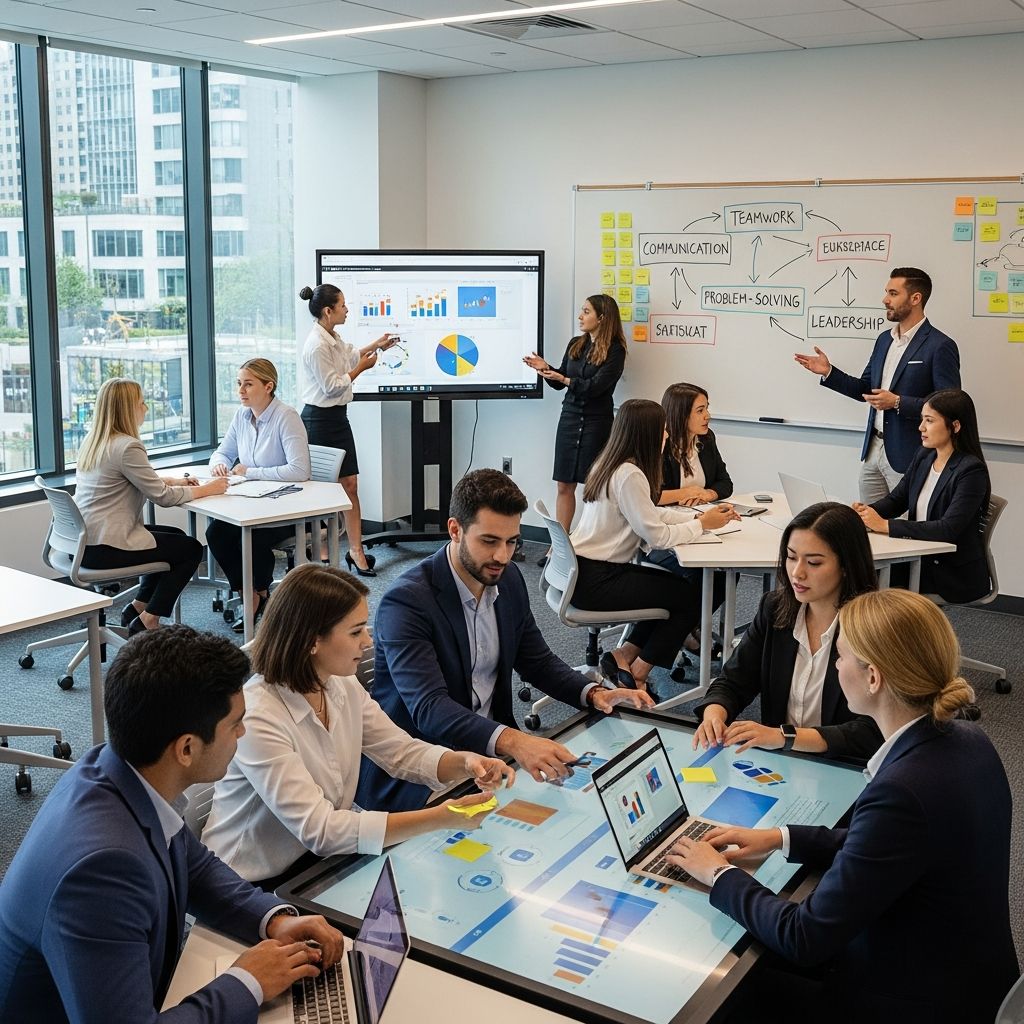
Developing Essential Workplace Competencies Through Experiential Learning
The transition from academic environments to professional settings requires more than subject matter expertise. Students entering the workforce must demonstrate a range of interpersonal and organizational abilities that extend beyond traditional curriculum content. Creating structured opportunities for students to practice and develop these competencies through classroom-based activities provides invaluable preparation for career success. Research consistently demonstrates that students who explicitly engage in job readiness skill development gain clearer insights into both their professional strengths and areas requiring improvement.
The Foundation: Understanding Soft Skills and Their Workplace Value
Job readiness skills encompass a broad spectrum of capabilities that employers consistently identify as critical for employee performance. These abilities—including communication, problem-solving, time management, and interpersonal effectiveness—form the foundation of professional success across virtually all industries. Unlike technical skills that may be industry-specific, soft skills transfer across career paths and organizational contexts. By incorporating deliberate practice opportunities into regular classroom routines, educators prepare students for the behavioral expectations and collaborative dynamics they will encounter in professional environments.
Communication Excellence: Speaking, Listening, and Expression
Clear, confident communication represents one of the most universally demanded workplace competencies. Students who have practiced articulating ideas in structured settings develop greater comfort and effectiveness when presenting to colleagues, clients, or supervisors.
Verbal Communication Under Pressure
Challenge students to develop spontaneity and composure in speaking situations by using prepared topic cards that prompt impromptu remarks. Students draw a card and deliver a brief presentation on an unfamiliar subject, building confidence in real-time communication. This mirrors common workplace scenarios where professionals must respond quickly to questions or present information with minimal preparation time. The repeated practice helps normalize the mild anxiety that accompanies speaking performance and demonstrates that competent communication can occur even without extensive preparation.
Active Listening Development
Many communication breakdowns stem from inadequate listening rather than poor speaking. Paired listening exercises where one partner speaks while the other listens without interrupting or planning responses cultivate genuine receptive skills. Following the speaking portion, the listener recaps what they heard, providing immediate feedback on comprehension. This activity makes visible the difference between hearing and actually processing information, reinforcing the discipline required for professional communication contexts where full understanding is essential.
Descriptive Language Precision
When students must verbally convey visual information to a partner who cannot see the original image, they develop specificity in language and learn to anticipate questions that might clarify ambiguity. This back-to-back drawing exercise develops the clarity and conciseness that workplace communication demands, particularly in remote or telephone-based professional contexts where visual cues are absent.
Collaborative Problem-Solving and Team Dynamics
Modern workplaces emphasize cross-functional teamwork and collective problem-solving. Creating classroom activities that require coordinated effort toward shared objectives develops both the interpersonal and cognitive dimensions of successful collaboration.
Structured Group Challenges
Construction-based activities using limited materials—such as building pyramid structures from paper cups using only strings and rubber bands—require students to coordinate efforts, communicate constraints, and adjust strategies based on collective feedback. These activities combine the physical tangibility that engages different learning modalities with the authentic problem-solving pressure of time limitations and specific success criteria. Teams experience both productive and unproductive communication patterns, learning through direct experience what enables versus inhibits group effectiveness.
Decision-Making Under Resource Constraints
Present students with scenarios where they must collectively prioritize tasks, allocate limited resources, or make strategic choices about sequencing activities. By comparing different groups’ decisions and discussing the reasoning behind various approaches, students recognize that multiple valid solutions often exist and that effective teams can defend their problem-solving logic. This mirrors workplace scenarios where teams must make decisions with incomplete information and resource limitations.
Creative Thinking and Innovation Development
Organizations increasingly value employees who can approach challenges from multiple angles and generate novel solutions. Classroom activities that deliberately cultivate creative thinking prepare students for innovation-oriented workplace cultures.
Open-Ended Design Challenges
Providing students with ordinary classroom supplies and abstract success criteria—such as building the tallest structure, creating something that moves, or protecting a fragile object—requires lateral thinking and experimentation. Unlike activities with predetermined correct answers, design challenges reward novel approaches and encourage risk-taking. Students learn that creative solutions often involve unexpected material combinations or unconventional applications of everyday objects, developing the innovative mindset valued in contemporary workplaces.
Entrepreneurial Pitch Development
Students who develop product or service concepts and present them to peer judges practice the persuasive communication and strategic thinking required in business contexts. Whether pitching to investors or advocating for workplace initiatives, professionals must articulate compelling value propositions and anticipate objections. This activity makes that high-stakes communication practice accessible in a low-stakes classroom environment.
Adaptability and Resilience in Dynamic Situations
Workplace environments constantly present unexpected changes, competing priorities, and evolving requirements. Building student capacity to respond flexibly to changing circumstances develops resilience that supports long-term career satisfaction and performance.
Improvisation and Spontaneous Response
Storytelling games where participants build narratives collaboratively, each adding elements to an evolving plot, develop comfort with ambiguity and acceptance of directions beyond individual control. Participants learn to work with circumstances as they unfold rather than rigidly adhering to preconceived plans. The inherently unpredictable nature of group storytelling mirrors workplace dynamics where external factors frequently shift project direction or organizational priorities.
Obstacle Navigation Activities
Physical activities where blindfolded students navigate obstacle courses under a partner’s verbal guidance require trust, clear instruction-following, and real-time problem-solving. When students discover that following existing instructions doesn’t always achieve desired results, they learn to communicate about adjustments and develop new approaches. This models the flexibility and collaborative problem-solving that characterizes effective workplace teams.
Time Management and Strategic Prioritization
Professionals consistently struggle with competing demands and limited time. Developing student skill in recognizing task urgency, estimating effort requirements, and creating balanced schedules creates foundation for career-long productivity.
Comprehensive Scheduling Activities
When students receive lists of mixed-priority tasks with varying time requirements and must create logical daily schedules, they practice the fundamental time management thinking that structures professional life. Comparing different groups’ scheduling decisions illuminates how reasonable professionals can prioritize differently based on their criteria and perspectives. This removes the false notion that perfect scheduling exists and develops appreciation for strategic thinking around temporal constraints.
Leadership and Responsibility Development
Professional advancement frequently involves taking responsibility for project outcomes and others’ performance. Creating classroom structures where students experience leadership roles in lower-stakes environments builds confidence and capability.
Rotating Responsibility Systems
Assigning students to classroom committees with genuine decision-making authority—such as managing supplies, organizing classroom resources, or coordinating activities—creates authentic leadership experience. When these roles rotate through the classroom population, all students experience both leading and following, developing empathy for different perspective and understanding that effective organizations require both. This mirrors professional settings where individuals occupy different hierarchical positions throughout their careers.
Professionalism and Behavioral Expectations
Workplace success requires understanding and responding to professional norms around communication, appearance, punctuality, and reliability. Explicit instruction combined with practice develops student internalization of these expectations.
Professional Interaction Simulations
Mock interviews, customer service role-plays, and business communication exercises create safe practice spaces for professional behavior before high-stakes workplace situations. Students discover through direct experience how communication style, body language, and responsiveness affect professional interactions. Recording these simulations and reviewing them provides powerful feedback that can be difficult to internalize through verbal instruction alone.
Maximizing Learning Through Reflection
The activities themselves provide valuable experience, but intentional reflection deepens learning and helps students explicitly connect classroom practice to future workplace application. Following activities, students should discuss what worked effectively, what they would modify, and how they felt during participation. This reflection transforms experiences into conscious understanding that students can subsequently apply in novel contexts.
Frequently Asked Questions
Q: How much class time should educators allocate to job readiness activities?
A: Educators can integrate job readiness practice into regular classroom routines through 15-30 minute activities several times monthly, or dedicate extended blocks for more comprehensive projects. Research indicates that regular, repeated practice proves more effective than occasional intensive experiences. Consider activities that support learning objectives across multiple subject areas to maximize instructional efficiency.
Q: Can these activities be adapted for diverse student populations?
A: Yes, most activities accommodate significant modification for different ability levels, learning preferences, and student interests. The underlying skill development transfers across contexts—the specific format can adjust to meet student needs while maintaining learning objectives.
Q: What makes experiential activities more effective than traditional instruction for soft skills development?
A: Direct experience engages multiple learning modalities simultaneously—visual, kinesthetic, and interpersonal—creating stronger neural pathways than passive instruction. Students can immediately observe consequences of their communication choices and problem-solving approaches, developing tacit knowledge that informs future behavior.
Q: How can educators assess student progress in soft skills development?
A: Observation during activities, peer feedback, self-reflection assignments, and performance in simulated workplace scenarios provide assessment data. Rubrics focusing on specific behaviors—such as listening without interrupting, contributing ideas, or adjusting approach based on feedback—create measurable standards for skill development.
Q: Should these activities be graded?
A: Some educators include participation grades to emphasize importance, while others focus on formative feedback without summative grades. The pedagogical choice depends on institutional context and student population. Importantly, the development of these skills matters more than grade performance, so assessment approaches should encourage genuine engagement rather than surface compliance.
Implementation Considerations for Maximum Impact
Successfully integrating job readiness activities requires intentional planning and classroom environment design. Establishing psychological safety where students feel comfortable taking interpersonal risks enables authentic skill practice. Clear activity explanations and success criteria help students understand learning objectives beyond entertainment value. Connecting activities explicitly to future professional contexts helps students recognize transferability. Celebrating incremental improvement encourages continued effort in skill areas where students lack initial confidence.
By strategically incorporating structured activities that develop communication, collaboration, creativity, adaptability, time management, leadership, and professionalism, educators equip students with the behavioral and cognitive tools required for workplace success. These experiential learning opportunities complement academic content, creating more comprehensive preparation for the complex demands of contemporary professional environments.
References
- College and Career Readiness Activities to Add to Your Classroom Routine — Everfi. 2024. https://everfi.com/blog/k-12/10-college-and-career-readiness-activities-to-add-to-your-classroom-routine/
- Awesome Classroom Activities That Teach Job-Readiness Skills — Council for Aid to Education. 2024. https://cae.org/resources/classroom-activities-that-teach-job-readiness/
- Awesome Career-Readiness Activities That Teach Soft Skills — K12 International Resource Center. 2024. https://k12irc.org/resources/35-awesome-career-readiness-activities-that-teach-soft-skills/
- Nine Fun Ways to Learn Workplace Skills — Indiana Secondary Transition Resource Center. 2024. https://instrc.iu.edu/tips-tools/_tips/nine-fun-ways-to-learn-workplace-skills.html
- Work-Based Learning Toolkit for Classrooms — South Dakota Department of Labor and Regulation. 2024. https://dlr.sd.gov/workforce_services/individuals/young_adults/wbl_toolkit.aspx
- Build Job Readiness Skills — Disability Hub Minnesota. 2024. https://disabilityhubmn.org/for-professionals/youth-in-transition/support-youth/employment/skills-for-success/build-job-readiness-skills/

- Integrated M.A. in Applied Linguistics, University of Hyderabad
- 5+ years in editorial, instructional, SEO, and research-based writing
Sneha is a relationships and lifestyle writer with a strong foundation in applied linguistics and certified training in relationship coaching. She brings over five years of writing experience to theskillvault, crafting thoughtful, research-driven content that empowers readers to build healthier relationships, boost emotional well-being, and embrace holistic living. Her writing and insights reflect the belief that beauty, happiness, and wellness…