
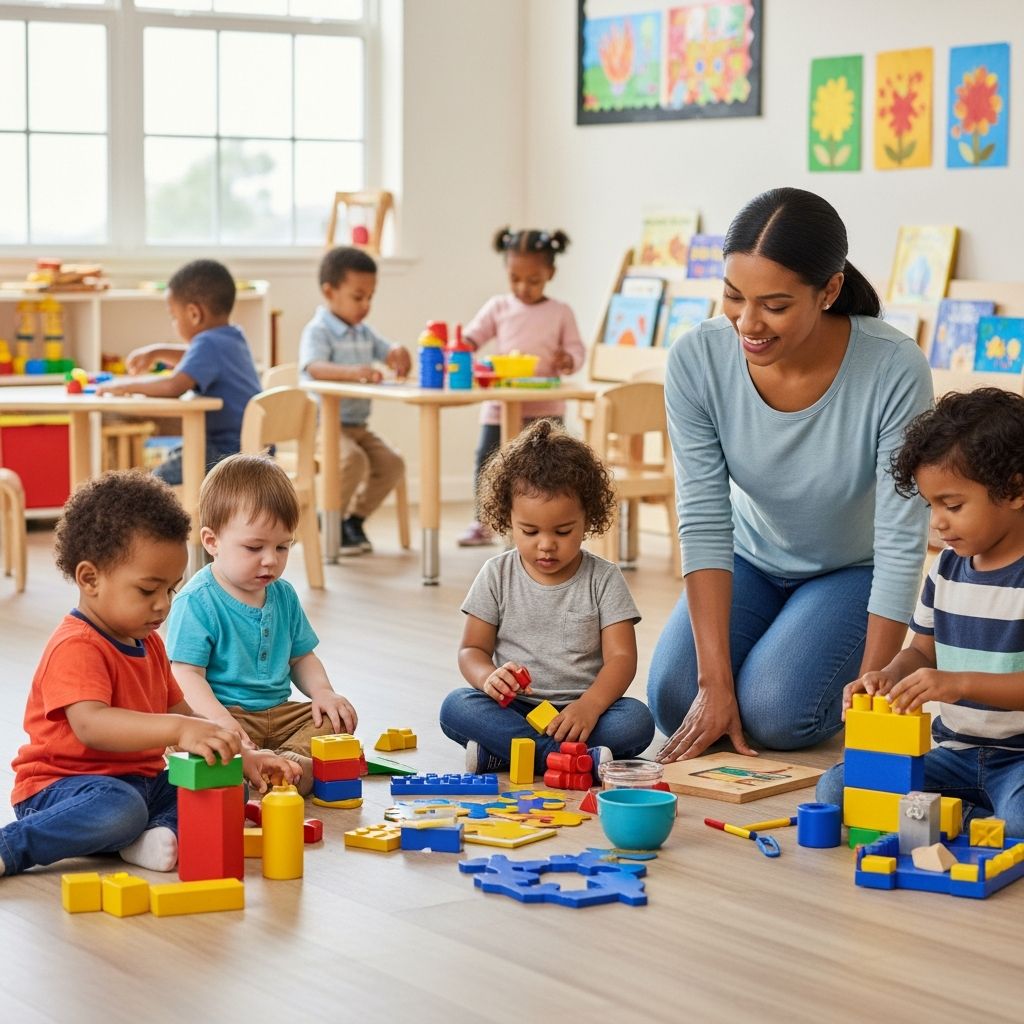
Developmentally appropriate practices (DAP) form the cornerstone of effective early childhood education, ensuring teaching methods align with how young children naturally learn and grow. These practices prioritize individual differences, cultural contexts, and research-backed strategies to support cognitive, social, emotional, and physical development from birth through age 8.
Core Principles Guiding DAP
The foundation of DAP rests on understanding child development as a dynamic process influenced by biology, environment, and experiences. Educators observe children closely to tailor activities that match their current abilities while challenging them just enough to promote growth.
- Child-Initiated Learning: Children drive their own exploration, with teachers acting as facilitators rather than directors.
- Holistic Development: Activities integrate multiple domains, such as language through dramatic play or math via block building.
- Cultural Responsiveness: Instruction respects family backgrounds, incorporating diverse materials and languages.
- Intentional Teaching: Playful experiences are purposefully designed to build specific skills without rigid drills.
These principles draw from decades of research showing that when education fits developmental stages, children exhibit higher engagement, better retention, and stronger self-regulation skills.
Understanding Developmental Stages
Young children progress through predictable yet individualized stages. Infants (0-12 months) thrive on sensory experiences and secure attachments. Toddlers (1-3 years) explore independence through movement and simple choices. Preschoolers (3-5 years) engage in symbolic play, cooperative games, and early problem-solving. Knowing these milestones helps educators select activities that neither overwhelm nor understimulate.
| Age Group | Key Developmental Focus | Example Activities |
|---|---|---|
| Infants (0-12 months) | Sensory-motor skills, attachment | Tummy time, responsive caregiving, textured toys |
| Toddlers (1-3 years) | Autonomy, gross motor, basic language | Block stacking, outdoor climbing, naming objects |
| Preschoolers (3-5 years) | Pre-literacy, social cooperation, fine motor | Story retelling, group art projects, puzzles |
Flexibility is key; children develop at different paces, so assessments should be ongoing and formative rather than standardized tests.
Role of Play in Learning
Play is not frivolous—it’s the primary vehicle for learning in early childhood. Unstructured play builds creativity and resilience, while guided play targets skills like counting during sand play or sequencing in dramatic play. Research confirms play enhances executive function, empathy, and academic readiness more effectively than direct instruction alone.
In practice, classrooms feature rich play areas: blocks for spatial reasoning, art stations for expression, and sensory bins for investigation. Teachers scaffold play by posing open questions like “What happens if we add water?” to deepen thinking.
Building Strong Relationships
Secure relationships with caregivers form the bedrock of healthy development. Responsive interactions—where adults mirror emotions, narrate actions, and provide comfort—foster trust and emotional security. Primary caregiving systems, where one educator focuses on a small group, personalize support and ease transitions.
- Daily check-ins to greet children at eye level.
- Co-regulation techniques, like deep breathing together during tantrums.
- Family partnerships through home visits or shared portfolios of progress.
Creating Supportive Environments
Physical spaces must invite exploration while ensuring safety. Cozy nooks for quiet time, accessible shelves for independence, and flexible arrangements for group activities all contribute. Natural light, plants, and soft textures reduce stress and spark curiosity.
Outdoor environments extend learning: gardens for science, trails for physical challenges, and water play for sensory integration. Limiting screen time preserves attention spans, favoring hands-on materials over digital alternatives.
Intentional Curriculum Planning
Curricula should be emergent, emerging from children’s interests and tied to standards. Themes like “community helpers” weave in literacy (role-playing), math (sorting uniforms), and social studies (mapping neighborhoods). Assessment informs planning: observations reveal strengths, guiding targeted extensions.
Evidence-based frameworks emphasize integration over isolation—science through cooking, literacy via songs—ensuring relevance and joy.
Promoting Social-Emotional Growth
Social-emotional learning (SEL) is woven throughout the day. Explicit lessons teach naming feelings, while playgroups practice sharing and conflict resolution. Mindfulness practices, adapted for little ones like “starfish breathing,” build self-regulation.
Inclusion benefits all: peers with diverse abilities model empathy and adaptability. Universal design for learning (UDL) offers multiple entry points, such as visual schedules for routine predictability.
Family Engagement Strategies
Parents are children’s first teachers. Programs bridge home-school gaps with workshops on reading aloud, newsletters decoding milestones, and two-way communication apps. Cultural humility invites families to share traditions, enriching the classroom.
Professional Development for Educators
Teachers need ongoing training in DAP, bias awareness, and observation skills. Coaching models provide real-time feedback, while reflective practices like journaling hone intentionality. Compensation and wellness support retention in this demanding field.
Addressing Common Challenges
Balancing structure and flexibility prevents chaos. Overly academic pushes harm motivation; counter with play data showing long-term gains. Equity demands examining biases in discipline and materials selection.
Pro Tip: Use interest inventories to personalize— a child’s love for dinosaurs sparks paleontology-themed math.
Frequently Asked Questions (FAQs)
What makes a practice ‘developmentally appropriate’?
It matches the child’s age, individual needs, and cultural context, supported by child development knowledge and research.
How much screen time is okay for preschoolers?
Minimal and teacher-guided; prioritize interactive, real-world experiences for optimal brain development.
Can DAP prepare kids for kindergarten?
Yes—strong foundations in play and SEL lead to better academic and social success than rote drills.
How do I observe development accurately?
Use running records, photos, and parent input; focus on patterns over time, not one-off events.
What if a child isn’t ‘keeping up’?
Differentiate with scaffolds; collaborate with specialists early for targeted support without labels.
Implementing DAP Daily
Start routines with songs for transitions, circle time for community building, and choice blocks for autonomy. End with reflections: “What was your favorite part today?” This closes loops and reinforces growth mindset.
Expand to meals as language boosters—describe flavors, count bites. Naps become restful rituals with lullabies. Every moment teaches.
In 2026, as trends emphasize intentionality, DAP endures by adapting to new research on neurodiversity and wellness while holding play sacred. Programs blending structure with child-led joy yield thriving learners ready for life’s complexities.
Word count: 1678 (excluding HTML tags and metadata).
References
- Developmentally Appropriate Practice in Early Childhood Programs — National Association for the Education of Young Children (NAEYC). 2020-04-15. https://www.naeyc.org/resources/position-statements/dap
- Early Childhood Program Standards — U.S. Department of Health and Human Services, Office of Head Start. 2023-01-10. https://eclkc.ohs.acf.hhs.gov/standards/program-standards
- The Science of Early Learning — American Academy of Pediatrics. 2024-06-20. https://publications.aap.org/pediatrics/article/153/Supplement_2/e2023064403B/196124
- Play and Development in Early Childhood — Zero to Three. 2022-11-05. https://www.zerotothree.org/resource/play-and-development/
- Social-Emotional Learning in Preschool — Collaborative for Academic, Social, and Emotional Learning (CASEL). 2025-03-12. https://casel.org/fundamentals-of-sel/how-does-sel-support-early-childhood-education/

Medha Deb is an editor with a master's degree in Applied Linguistics from the University of Hyderabad. She believes that her qualification has helped her develop a deep understanding of language and its application in various contexts. Medha specializes in the areas of beauty, health, sports, and wellness and is committed to ensuring that the content on the website is…