
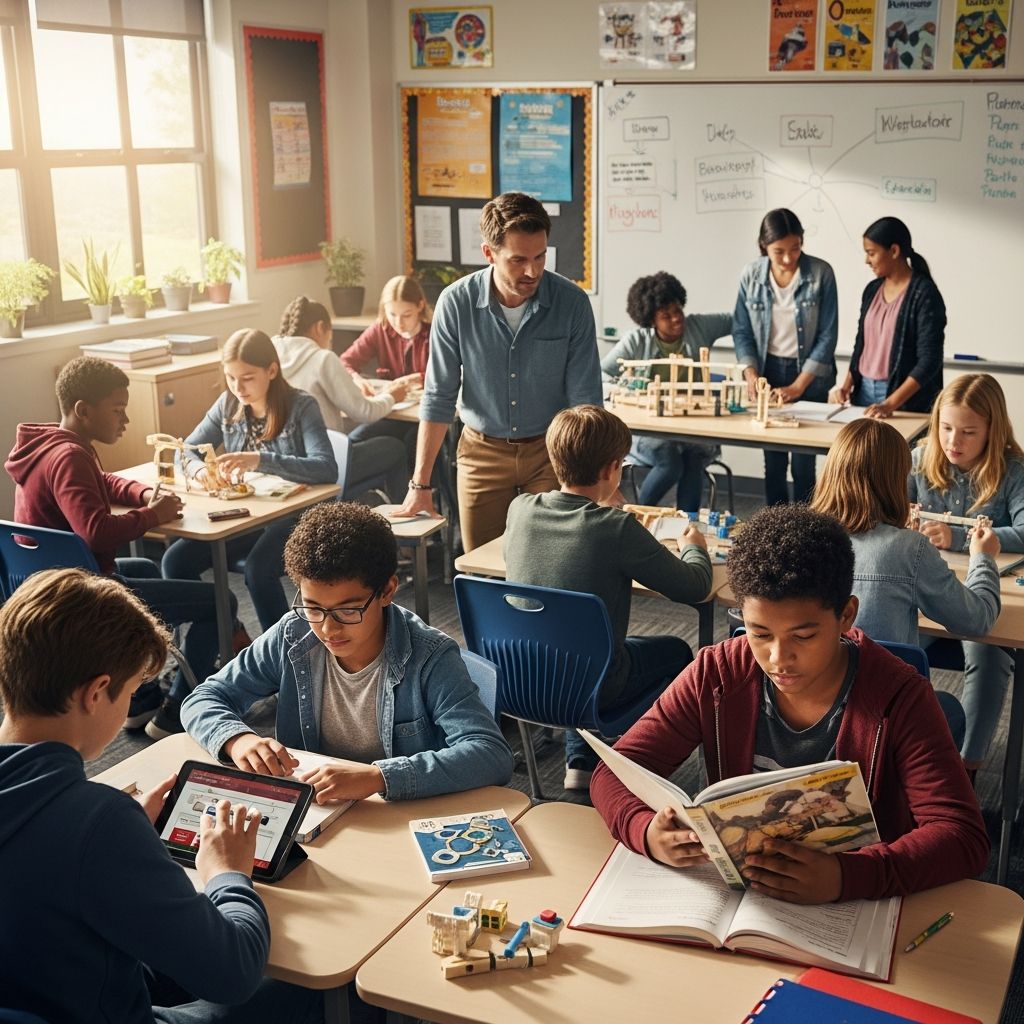
Differentiated instruction tailors teaching to individual student needs, maximizing learning potential through accessible content and equitable opportunities. This approach recognizes classroom diversity and responds dynamically to varied readiness levels, interests, and profiles.
Understanding the Core Principles of Adaptive Teaching
At its heart, differentiation is responsive instruction grounded in how learning happens. Educators assess students’ current skills, backgrounds, and attitudes to design experiences that build on strengths while addressing gaps. Unlike uniform methods, it avoids punishing high achievers with extra work or lowering standards for strugglers, instead providing targeted support.
Key student traits guide this process: readiness (skill and prior knowledge), interest (topics that motivate), learning profile (preferred styles like visual or kinesthetic), and affect (emotional factors influencing engagement). By addressing these, teachers create enduring, impactful learning.
Why Shift to a Learner-Focused Mindset?
Traditional one-size-fits-all models overlook unique combinations of abilities and interests in every class. Differentiation ensures no one is left behind, fostering equity by giving each student precisely what they need—be it scaffolds, flexible grouping, or engaging tasks.
A growth mindset is essential here: believing abilities develop through effort encourages risk-taking and resilience. Teachers model this by reflecting on biases and adapting methods iteratively, turning challenges into growth opportunities.
Practical Strategies for Differentiating Content
Differentiating content involves modifying materials to match strengths and needs. Offer tiered reading levels, visual aids, videos, or audio supports. Allow choices in individual, small-group, or whole-class formats to enhance accessibility.
- Visual learners: Infographics, diagrams, and videos clarify complex ideas.
- Auditory learners: Podcasts or discussions reinforce concepts.
- Kinesthetic learners: Hands-on activities or models build understanding.
This personalization ensures equitable access, bridging gaps without diluting rigor.
Adapting the Learning Process for Engagement
Process differentiation personalizes how students engage with material. Use scaffolding (graduated support), learning centers, varied time limits, and diverse tools. Flexible options like solo work, pairs, or groups—and even home/classroom hybrids—cater to profiles.
For example, in a science unit, stations might include experiments for hands-on learners, simulations for visual ones, and debates for verbal processors. Frequent assessments inform real-time adjustments, keeping all students progressing.
Building Inclusive Environments That Empower All
Inclusive teaching embraces diversity as an asset, rejecting deficit views. Integrate multimedia (videos, podcasts) with active strategies to boost participation. Value students’ cultural capital, creating belonging that mitigates barriers.
Flexible grouping—whole class for shared concepts, small groups for collaboration, independents for depth—promotes peer learning. Teachers plan with questions like: How does this meet varied needs? How can all express understanding?
The Role of Teacher Mindset in Digital Differentiation
A supportive mindset mediates successful implementation, especially with digital tools. Knowledge of digital differentiation and infrastructure availability influence adoption, but mindset determines commitment. Prioritizing teacher development fosters personalized digital learning.
Student-centered digital strategies include adaptive platforms matching readiness, interactive apps for interests, and analytics for profiles. This “for, of, and by the student” framework tailors to needs, incorporates backgrounds, and builds ownership.
Overcoming Common Challenges in Differentiation
Challenges include time constraints and planning overload. Start small: differentiate one lesson element weekly. Use data from quick checks to guide, not overwhelm. Collaborate with peers for shared resources.
| Challenge | Solution | Benefit |
|---|---|---|
| Time management | Pre-plan flexible templates | Efficient, reusable adaptations |
| Resource limits | Leverage free digital tools | Scalable personalization |
| Student resistance | Build choice gradually | Increased buy-in and agency |
| Assessment tracking | Digital portfolios | Clear progress visibility |
These steps make differentiation sustainable, yielding engaged, thriving classes.
Measuring Impact: Signs of Successful Differentiation
Success shows in universal growth: advanced students deepen thinking, strugglers build foundations, all gain confidence. Look for active participation, self-directed choices, and improved outcomes across metrics. Equity emerges as diverse groups achieve without lowering bars.
Equity planning asks: Does this allow full expression of understanding? Flexible access creates agency, making differentiation the norm for inclusive success.
Frequently Asked Questions (FAQs)
What is differentiated instruction?
Differentiated instruction tailors teaching to students’ readiness, interests, profiles, and emotions, ensuring accessible, equitable learning.
How does it differ from standard teaching?
Unlike uniform lessons, it adapts content, process, and environment to individual needs, avoiding one-size-fits-all pitfalls.
Can differentiation work in large classes?
Yes, through flexible grouping, stations, and digital tools, allowing scalable personalization without chaos.
What role does mindset play?
A growth mindset in teachers and students enables adaptation, reflection, and resilience for sustained implementation.
Are there digital tools for this?
Adaptive platforms, apps, and analytics support personalized digital differentiation effectively.
Implementing Differentiation: A Step-by-Step Guide
Begin with assessment: Gauge readiness via pre-tests or interest surveys. Design tiered activities: core for basics, extensions for depth. Introduce choices: menu options for products (essays, projects, presentations). Monitor with ongoing feedback loops. Reflect: Adjust based on what works.
Incorporate “for the student” (tailor to styles), “of the student” (use backgrounds), and “by the student” (promote ownership) for holistic impact.
Real-World Applications Across Subjects
In math, tier problems by complexity; literature offers varied texts with choice responses. Science uses labs at skill levels; history incorporates primary sources matching interests. Cross-subject growth mindset activities reinforce persistence.
Results? Higher engagement, reduced gaps, empowered learners ready for challenges.
Differentiation transforms classrooms into dynamic spaces where every student accesses success pathways. By prioritizing individual needs, educators cultivate equity, agency, and lifelong learning skills.
References
- Chapter 10: Principles of Differentiation — VIVA Pressbooks. 2023. https://viva.pressbooks.pub/k12instructionaldesignandassessment/chapter/chapter-10-principles-of-differentiation/
- Redefining learning: student-centered strategies for academic and … — Frontiers in Education. 2025. https://www.frontiersin.org/journals/education/articles/10.3389/feduc.2025.1518602/full
- What Does Successful Differentiated Instruction Look Like in the Classroom? — Education Week. 2023-11. https://www.edweek.org/teaching-learning/opinion-what-does-successful-differentiated-instruction-look-like-in-the-classroom/2023/11
- Inclusive Teaching — UCLA Teaching & Learning Center. 2021. https://teaching.ucla.edu/resources/teaching-guides/inclusive-teaching/
- Differentiated Instruction – a truly student centered approach — YouTube (VIVA Pressbooks channel). Accessed 2026. https://www.youtube.com/watch?v=OLECd-6d3p8
- Exploring the Mediating Role of Teacher Mindset on Embracing … — International Journal of Learning, Teaching and Educational Research. 2023. https://www.ijlter.org/index.php/ijlter/article/view/8854

- Integrated M.A. in Applied Linguistics, University of Hyderabad
- 5+ years in editorial, instructional, SEO, and research-based writing
Sneha is a relationships and lifestyle writer with a strong foundation in applied linguistics and certified training in relationship coaching. She brings over five years of writing experience to theskillvault, crafting thoughtful, research-driven content that empowers readers to build healthier relationships, boost emotional well-being, and embrace holistic living. Her writing and insights reflect the belief that beauty, happiness, and wellness…