
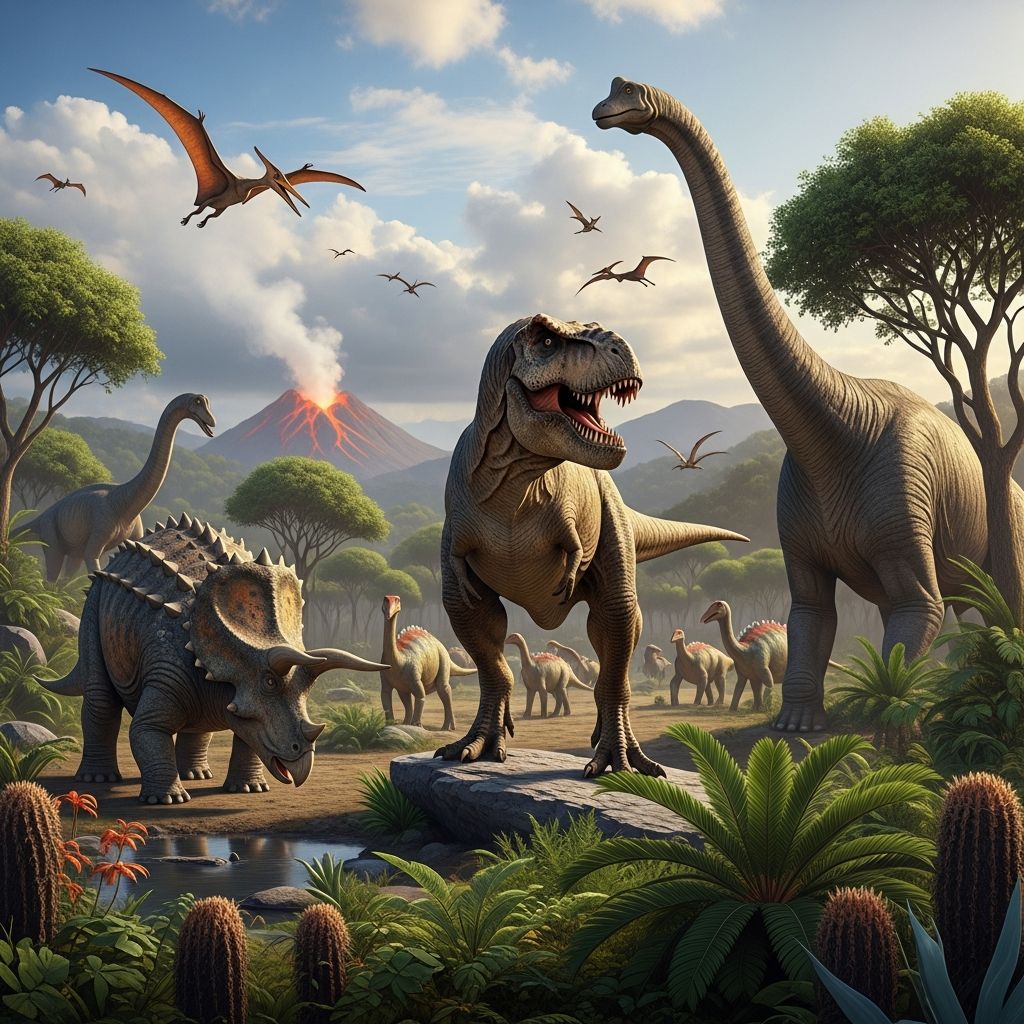
Dinosaurs dominated Earth for over 165 million years, evolving into diverse forms that ranged from massive herbivores to swift carnivores. Paleontologists classify them primarily into two major orders based on pelvic structure: Saurischia, or ‘lizard-hipped’ dinosaurs, and Ornithischia, or ‘bird-hipped’ dinosaurs. This division, established through fossil analysis, reveals how these ancient reptiles adapted to various ecological niches during the Mesozoic Era.
Understanding Dinosaur Classification Basics
The classification system hinges on hip bone orientation. Saurischians feature a three-pronged pelvis resembling modern lizards, while ornithischians have a backward-oriented pubis bone akin to birds—ironically, birds evolved from saurischians, not ornithischians. This framework organizes over 1,000 known species into manageable groups, aiding in reconstructing their behaviors, diets, and evolutionary paths.
Key factors like limb posture, dentition, and skeletal armor further subdivide these orders. Triassic fossils from 251-201 million years ago show early diversification, with Jurassic (201-145 Mya) and Cretaceous (145-66 Mya) periods witnessing peaks in size and complexity.
Saurischian Dinosaurs: Lizard-Hipped Behemoths and Hunters
Saurischians split into two suborders: Theropoda (beast-footed) and Sauropodomorpha (lizard-footed forms). These groups produced some of the most iconic dinosaurs, from apex predators to colossal plant-eaters.
Theropods: The Meat-Eating Bipeds
Theropods walked on two powerful hind legs, often with three-toed feet optimized for speed and grasping. Ranging from small, agile hunters to gigantic carnivores, they filled top predator roles across eras. Early examples like Coelophysis from the Late Triassic were swift insectivores and small vertebrate predators.
During the Jurassic, Allosaurus dominated as a large theropod with serrated teeth for tearing flesh. Cretaceous saw the rise of coelurosaurs, a diverse clade including:
- Tyrannosauroidea: Apex predators like Tyrannosaurus rex, with massive skulls and tiny arms.
- Deinonychosauria: ‘Killer claw’ dinosaurs such as Velociraptor and Deinonychus, featuring a hyperextensible second toe claw for slashing.
- Ornithomimosauria: Ostrich-like runners, likely omnivorous, with toothless beaks.
- Oviraptorosauria: Crested, toothless forms possibly feeding on eggs or plants.
- Therizinosauria: Herbivorous oddities with sloth-like claws and long necks.
- Avialae: Direct bird ancestors, bridging reptiles and modern avians.
Theropods’ hollow bones and wishbones foreshadowed avian evolution, with birds as their sole surviving lineage.
Sauropodomorphs: Towering Long-Necked Giants
Sauropodomorphs evolved into quadrupedal herbivores with elongated necks for high browsing. Early ‘prosauropods’ like Plateosaurus (25 feet long) were bipedal or facultatively quadrupedal Triassic forms.
Jurassic sauropods split into macronarians (e.g., Brachiosaurus, Camarasaurus with broader teeth) and diplodocoids (e.g., Diplodocus, Apatosaurus, Brontosaurus with pencil-like teeth and whip tails). Cretaceous titans like Argentinosaurus reached lengths over 100 feet, among the largest land animals ever.
These giants likely lived in herds, using columnar legs to support immense weights while consuming vast vegetation quantities daily.
Ornithischian Dinosaurs: Armored Plant-Eaters
Ornithischians, all herbivores, shared a predentary bone forming a beak for cropping plants. They diversified into five main groups: Stegosauria, Ankylosauria, Ceratopsia, Ornithopoda, and Pachycephalosauria.
Stegosaurs: Plated Defenders of the Jurassic
Stegosaurs featured paired plates along backs and spiked tails (thagomizers). Stegosaurus, from the Late Jurassic, measured 30 feet with a tiny brain relative to body size, possibly aided by a posterior ‘secondary brain’ for reflexes.
Plates may have served for display, thermoregulation, or defense. They were low browsers with weak jaws, relying on gastroliths for digestion.
Ankylosaurs: Living Tanks of the Cretaceous
Ankylosaurs were heavily armored quadrupeds. Nodosaurids like Sauropelta had bony plates but no tail club, while ankylosaurids like Ankylosaurus wielded massive tail clubs for smashing predators.
Leaf-shaped teeth and domed snouts suited low vegetation. They thrived until the end-Cretaceous extinction.
Ceratopsians: Horned Head-Butters
Ceratopsians evolved frills and horns for defense/display. Early Psittacosaurus (3 feet) lacked them, but advanced forms like Centrosaurus (20 feet) and Triceratops had massive brow/ nasal horns.
They lived in herds, using beaks and shearing teeth for tough plants. Frills likely amplified calls or deterred attacks.
Ornithopods: Duck-Billed Diversifiers
Ornithopods ranged from bipedal Iguanodon to crested hadrosaurs like Saurolophus. Advanced ‘duckbills’ had battery teeth for grinding and complex nasal crests for vocalization.
Semiarboreal or fully quadrupedal, they dominated Cretaceous floodplains.
Pachycephalosaurs: Bone-Domed Bashers
These bipedal herbivores had thick skull domes, possibly for intraspecific head-butting. They filled niches similar to modern rams.
Timeline of Dinosaur Dominance
| Period | Key Saurischian Examples | Key Ornithischian Examples | Notable Events |
|---|---|---|---|
| Triassic (251-201 Mya) | Coelophysis, Plateosaurus | Early ornithischians | Dinosaur rise post-Permian extinction |
| Jurassic (201-145 Mya) | Allosaurus, Diplodocus, Brachiosaurus | Stegosaurus | Giant sauropod peak |
| Cretaceous (145-66 Mya) | T. rex, Velociraptor | Triceratops, Ankylosaurus | Diversity max, asteroid extinction |
Evolutionary Insights and Extinction
Dinosaurs adapted via niche partitioning: saurischians as predators/grazers, ornithischians as fortified herbivores. Birds’ survival post-66 Mya extinction underscores theropod legacy.
Fossil sites like Dinosaur National Monument preserve group interactions, informing behavior.
Frequently Asked Questions (FAQs)
What distinguished saurischians from ornithischians?
Saurischians had lizard-like hips; ornithischians had bird-like hips with a beak bone, all herbivores.
Which group includes birds?
Birds evolved from saurischian theropods, specifically coelurosaurs.
What was the largest dinosaur group?
Sauropods like Argentinosaurus were the biggest, over 100 feet long.
Did all dinosaurs lay eggs?
Yes, fossil nests confirm egg-laying across groups.
Why did dinosaurs go extinct?
A Cretaceous asteroid impact, volcanism, and climate shifts ended non-avian dinosaurs 66 Mya.
References
- Major Groups of Dinosaurs – Fossils and Paleontology — U.S. National Park Service (nps.gov). Accessed 2026. https://www.nps.gov/subjects/fossils/major-groups-of-dinosaurs.htm
- The Major Types of Dinosaurs — Apologetics Press. Accessed 2026. https://apologeticspress.org/the-major-types-of-dinosaurs-4378/
- Types of Dinosaurs — American Museum of Natural History (amnh.org). Accessed 2026. https://www.amnh.org/dinosaurs/types-of-dinosaurs
- What are the Seven Groups of Dinosaurs? — Dinosaur World Live. Accessed 2026. https://dinosaurworldlive.com/blog/what-are-the-seven-groups-of-dinosaurs
- Dinosaur — Wikipedia. Accessed 2026. https://en.wikipedia.org/wiki/Dinosaur

- Integrated M.A. in Applied Linguistics, University of Hyderabad
- 5+ years in editorial, instructional, SEO, and research-based writing
Sneha is a relationships and lifestyle writer with a strong foundation in applied linguistics and certified training in relationship coaching. She brings over five years of writing experience to theskillvault, crafting thoughtful, research-driven content that empowers readers to build healthier relationships, boost emotional well-being, and embrace holistic living. Her writing and insights reflect the belief that beauty, happiness, and wellness…