
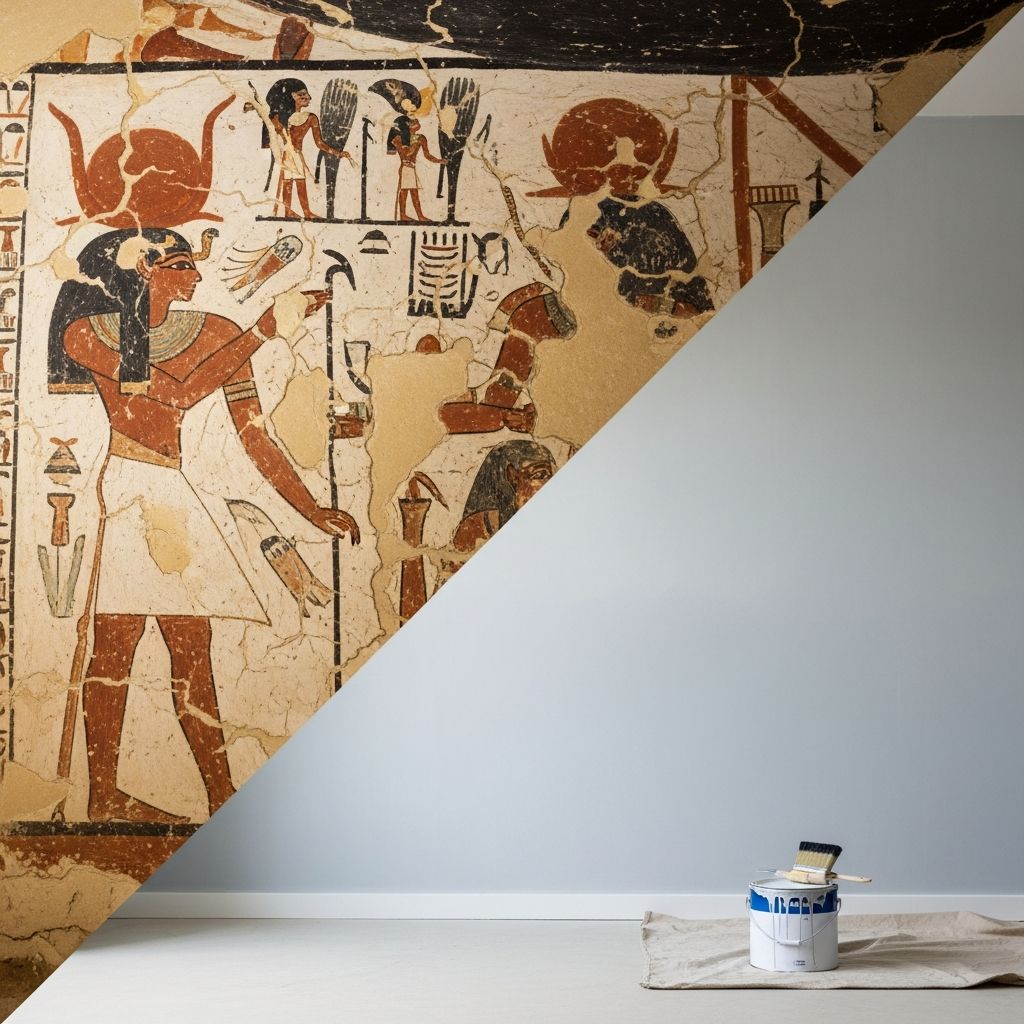
The Journey Through Time: Understanding Distemper Paint’s Historical Significance
Throughout human civilization, painters and decorators have sought materials that balance affordability, functionality, and aesthetic appeal. One such material that has stood the test of millennia is distemper paint, a water-based medium that has served cultures across the globe for thousands of years. This versatile coating has transitioned from being a staple of ancient architectural preservation to a cherished medium for fine artists, stage designers, and interior decorators. Understanding the origins and evolution of distemper paint provides insight into how practical necessities often become cornerstones of artistic tradition.
Ancient Foundations: The Dawn of Distemper in Civilization
The lineage of distemper paint traces back to the earliest recorded civilizations, with evidence suggesting its use among the ancient Egyptians as far back as the age of the Pharaohs. The Egyptians, faced with the challenge of protecting and beautifying their structures in a harsh desert climate, developed painting solutions using locally available materials. These early practitioners mixed simple compounds—primarily chalk or lime combined with water and natural adhesives derived from animal sources—to create a durable yet economical coating for walls and architectural surfaces.
The fundamental appeal of distemper lay in its simplicity and accessibility. Unlike more complex painting mediums that required specialized knowledge or exotic ingredients, distemper could be formulated from materials readily found in most communities. This democratic approach to paint-making meant that both grand temples and modest dwellings could benefit from protective and decorative coatings, democratizing what had previously been a luxury reserved for the wealthy elite.
Composition and Chemical Makeup: What Makes Distemper Distinctive
Distemper represents a fundamentally different approach to paint formulation compared to oil-based alternatives that would later dominate the market. At its core, distemper is an aqueous—or water-based—paint composed of pigments bound together by adhesive glues derived from vegetable or animal sources. This basic formula has remained relatively consistent throughout history, though craftspeople have continuously refined and adapted recipes based on local availability and specific application requirements.
The Two Primary Variants
Distemper paint exists in two main categories, each suited to different purposes and environments:
- Soft Distemper: The more traditional and economical variant, soft distemper consists of crushed chalk or ground whiting combined with animal-based glue and water. This formulation produces a water-soluble paint with a characteristically matte, chalky appearance. The binder—often called clairecolle from French terminology meaning “clear glue”—can be derived from animal hides, bones, or other organic sources. While this type offers excellent coverage and a pleasant aesthetic finish, it remains vulnerable to moisture, abrasion, and marking, making it best suited for interior applications in temperate environments.
- Hard Distemper: Engineered for greater durability and wear resistance, hard distemper incorporates casein derived from cow’s milk or incorporates linseed oil as binding agents. These additional components create a more robust surface capable of withstanding regular traffic, moisture exposure, and physical contact. Hard distemper represents an evolution in formulation designed to extend the practical lifespan of painted surfaces, particularly in demanding applications.
Medieval and Renaissance Flourishing: Distemper’s Artistic Golden Age
Following the fall of ancient civilizations, distemper continued to serve practical decorative purposes throughout medieval Europe. However, it was during the Renaissance that distemper achieved particular prominence as an artistic medium. Before the widespread adoption of oil painting techniques that would eventually dominate European fine art, distemper served as a crucial medium for both mural work and panel paintings.
The Renaissance appreciation for distemper extended beyond European borders. In Tibet and other Asian regions, distemper became the preferred medium for creating thankas—sacred deity paintings rendered on textile supports. These intricate spiritual artworks demonstrated that distemper’s matte finish and vibrant color capacity made it suitable for highly sophisticated artistic endeavors, not merely utilitarian wall coating.
The transition from distemper to oil painting during the Renaissance represented a significant shift in artistic practice rather than a complete abandonment of the earlier medium. While oil painting offered advantages in terms of luminosity and blending capabilities, distemper retained its utility and aesthetic value for specific applications and regional artistic traditions.
Industrial Era and Domestic Applications: Distemper in Everyday Homes
As European societies industrialized and urbanization accelerated, distemper paint became the standard coating for interior residential and commercial spaces. The eighteenth century witnessed particular enthusiasm for distemper in domestic contexts, as the medium’s thin application and soft sheen proved ideally suited to plaster surfaces that dominated period architecture. The pale, matte finish created by distemper complemented the refined aesthetic sensibilities of the era and provided a neutral backdrop for furnishings and artwork.
Throughout the nineteenth and twentieth centuries, distemper maintained its position as a primary interior decoration material, particularly in working-class housing. In Britain, local authorities continued utilizing distemper for painting council houses well into the 1970s, demonstrating the medium’s enduring practical value and cost-effectiveness. The consistency of distemper’s application across diverse economic and social contexts speaks to its fundamental utility as an economical yet aesthetically pleasing wall treatment.
Theatrical Innovation: Distemper’s Starring Role Behind the Scenes
Perhaps one of the most creatively sophisticated uses of distemper emerged in theatrical and scenic art applications. Throughout the nineteenth and twentieth centuries, scenic artists recognized that distemper’s unique properties made it exceptionally well-suited to stage design challenges. The medium’s matte finish proved particularly valuable under intense stage lighting, where glossier finishes would create distracting reflections and glare that disrupted visual storytelling.
Theatrical practitioners adapted traditional distemper formulations by experimenting with different binders, notably substituting animal glue derived from hoof and hide for the more traditional chalk-based systems. This innovation yielded paint that maintained distemper’s characteristic matte aesthetic while providing enhanced durability for the demanding conditions of stage environments. The practical advantages for theater extended beyond aesthetic considerations: distemper’s water-based composition facilitated rapid cleanup without requiring volatile solvents, and its compatibility with water-based thinning made it economical for the large surface areas typical of theatrical scenery.
Pigmentation and Coloring: Achieving Artistic Vibrancy
While distemper’s foundational chalky base provides its characteristic appearance, the color palette achieved through careful pigment selection demonstrates the medium’s artistic potential. Traditional distemper paintings incorporated pigments sourced from both earth minerals and more exotic materials. Common earth pigments included ochre, sienna, and umber, each derived from iron oxide-rich geological deposits. These natural pigments harmonized with traditional architecture and local landscape colors, creating cohesive visual environments.
More sophisticated artistic applications incorporated pigments from precious and semi-precious materials. Ultramarine, originally extracted from lapis lazuli mined in Afghanistan, provided vibrant blue hues sought after by artists across cultures. Orpiment, known as King’s Yellow, and Realgar, an orange-red compound, offered brighter chromatic possibilities for artists willing to work with substances containing heavy metals. The availability and cost of such pigments often determined their inclusion in distemper formulations, with wealthy patrons commissioning works featuring expensive imported pigments while more modest applications relied on locally available earth colors.
Architectural Applications: Protecting and Beautifying Structures
Beyond domestic interiors, distemper has proven valuable for architectural decoration on a monumental scale. In architectural contexts, distemper typically consists of glue binders combined with calcium carbonate as the foundational pigment, creating durable yet aesthetically refined surface treatments. The medium’s compatibility with diverse substrate materials, including stone and cob, made it valuable for protecting historic structures while maintaining visual authenticity.
One particular advantage of distemper in architectural conservation involves its removability compared to modern synthetic paints. When applied to intricate architectural details such as elaborate cornices or ornamental ceiling work, distemper can be carefully removed prior to repainting, preventing the gradual loss of fine details that occurs when multiple layers of modern latex or vinyl paints accumulate over decades. This property has made distemper increasingly valued by conservators and historic preservationists seeking to maintain architectural integrity while refreshing aging surfaces.
The Decline and Modern Resurgence: Distemper’s Evolving Relevance
Throughout the mid-twentieth century, distemper faced increasing competition from synthetic paint formulations, particularly latex and vinyl-based products. These modern alternatives offered enhanced durability, water resistance, and maintenance characteristics that appealed to both commercial and domestic consumers. By the 1950s, distemper had largely disappeared from mainstream painting practice, replaced by more technically advanced and marketable products.
However, contemporary interest in historic preservation, sustainability, and aesthetic authenticity has sparked renewed appreciation for traditional distemper formulations. Conservation professionals, heritage architects, and environmentally conscious homeowners increasingly recognize distemper’s advantages: its low environmental impact relative to petroleum-based synthetics, its compatibility with historic materials, and its distinct aesthetic qualities that synthetic paints struggle to replicate.
Technical Advantages and Limitations: Understanding Practical Considerations
| Characteristic | Advantages | Limitations |
|---|---|---|
| Cost | Extremely economical, made from simple local materials | Requires periodic reapplication due to durability constraints |
| Aesthetic Finish | Distinctive matte appearance with warm character | Cannot achieve high-gloss effects or reflective surfaces |
| Application Versatility | Works on porous surfaces including plaster and cob | Soft distemper vulnerable to moisture and abrasion |
| Environmental Impact | Natural, biodegradable ingredients with minimal toxicity | Heavy metal pigments in some historical formulations |
| Removability | Water-soluble and easily removed without harsh chemicals | Susceptibility to staining and marking from casual contact |
Contemporary Uses and Specialized Applications Today
While distemper has retreated from mainstream residential use, specialized applications continue to demonstrate its unique value proposition. Museums and cultural institutions employ distemper for creating historically accurate exhibition environments and restoration projects. Theater companies maintain distemper as a preferred scenic painting medium, with contemporary productions frequently selecting this traditional formulation over modern alternatives to achieve specific aesthetic and practical objectives.
Conservation professionals working with historic interiors value distemper for its reversibility and compatibility with aged plaster surfaces. Heritage organizations have established specialized suppliers providing traditionally formulated distemper products for restoration projects requiring authentic material composition. This niche market ensures that knowledge of distemper production and application continues to be transmitted to new generations of artists, conservators, and craftspeople.
Frequently Asked Questions About Distemper Paint
Q: What is the primary difference between distemper and tempera paint?
A: Distemper utilizes glue-based binders derived from animal or vegetable sources, while tempera traditionally employs egg as its binding medium. Both are water-based paints, but their different binders produce distinct drying characteristics and aesthetic properties.
Q: Can distemper be applied over modern latex paint?
A: Direct application of distemper over latex paint typically proves unsuccessful, as the water-based distemper may not adhere properly to the water-resistant synthetic surface. Surface preparation involving removal of existing paint or application of appropriate primers is generally necessary.
Q: Why do conservators prefer distemper for historic restoration projects?
A: Distemper’s water-solubility, reversibility, and compatibility with historic substrates make it ideal for restoration work. Unlike modern paints that create permanent barriers, distemper can be removed without damaging underlying original surfaces, essential for authentic conservation practice.
Q: Is distemper still commercially available for consumer use?
A: Yes, though availability is limited compared to mainstream paint products. Specialized suppliers, heritage organizations, and conservation suppliers stock traditional distemper formulations. Some contemporary manufacturers have also developed modern distemper products targeting restoration and specialty markets.
Q: What role does glue play in distemper paint formulation?
A: Glue serves as the binding agent that adheres pigment particles to painted surfaces while remaining water-soluble. Traditional formulations use animal hide glue or casein, creating a surface film through evaporation rather than chemical oxidation typical of oil paints.
References
- Distemper — Art History Project. 2024. https://www.arthistoryproject.com/mediums/distemper/
- Distemper (paint) — Museum of Fine Arts Boston Cameo Database. 2024. https://cameo.mfa.org/wiki/Distemper
- Paints and Their History — Mike Wye. 2014. https://www.mikewye.co.uk/wp-content/uploads/2014/09/PaintsArticle.pdf
- Distemper Size or Glue Paint — Earth Pigments. 2024. https://earthpigments.com/distemper-size-or-glue-paint/
- Tales from a Scenic Artist and Scholar: Temper, Tempera, Distemper Painting — Dry Pigment. 2020. https://drypigment.net/2020/07/26/tales-from-a-scenic-artist-and-scholar-part-1049-temper-tempera-distemper-painting/

Medha Deb is an editor with a master's degree in Applied Linguistics from the University of Hyderabad. She believes that her qualification has helped her develop a deep understanding of language and its application in various contexts. Medha specializes in the areas of beauty, health, sports, and wellness and is committed to ensuring that the content on the website is…