
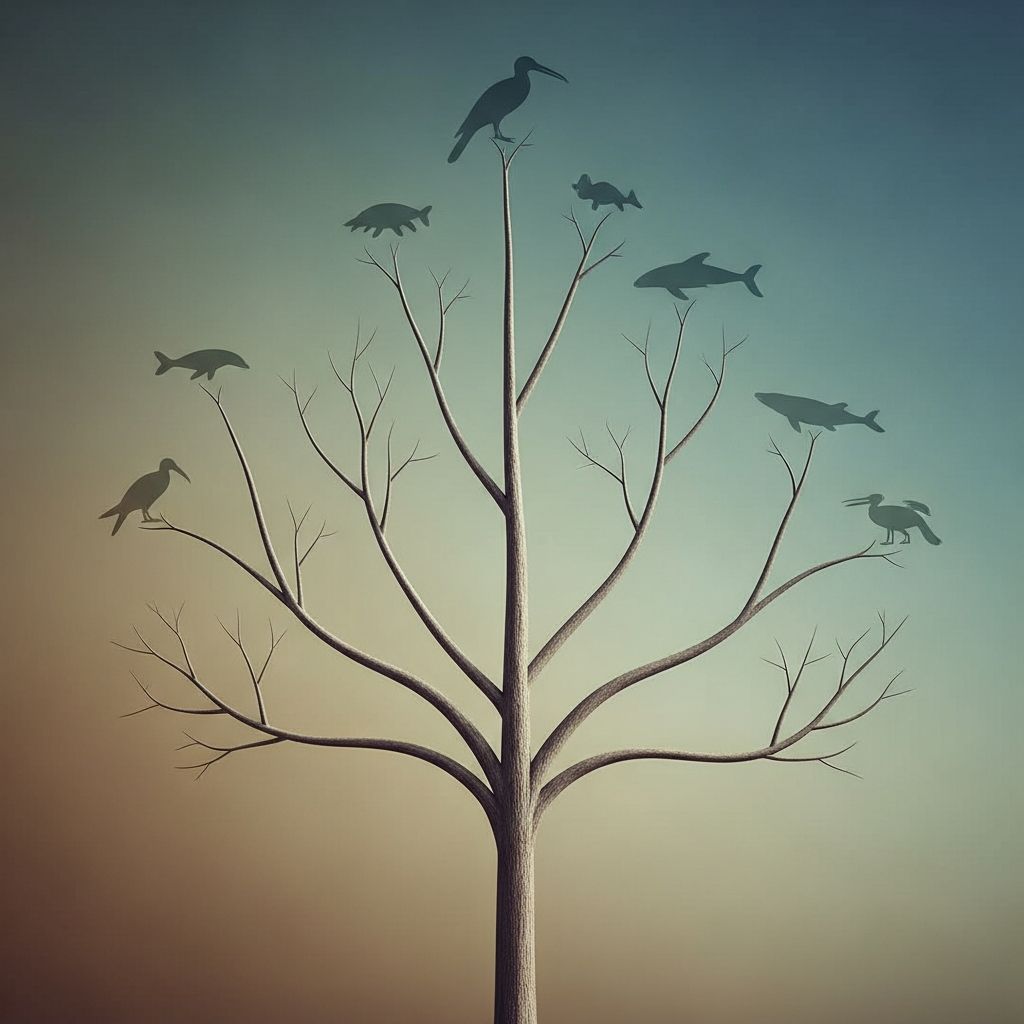
Divergent evolution represents a cornerstone of biological diversity, describing the process where populations from a common ancestor develop distinct traits over time, often leading to new species. This phenomenon occurs as groups face different environmental pressures, resulting in adaptations that widen the gap between them.
Understanding the Fundamentals of Divergent Evolution
At its core, divergent evolution involves closely related populations accumulating genetic differences that make them increasingly dissimilar. These changes typically arise when a single species splits into subgroups separated by barriers like geography or ecology, each encountering unique selective forces. Over generations, natural selection favors traits that enhance survival in specific niches, transforming shared ancestry into varied forms.
The process begins with a founding population sharing identical genetic material. As subgroups isolate, mutations introduce variations, and environmental factors amplify these differences. Eventually, the groups may no longer interbreed, marking speciation—the birth of new species. This gradual divergence underscores evolution’s role in generating Earth’s vast biodiversity.
Key Mechanisms Driving Divergence
Several forces propel divergent evolution. Natural selection is primary, where environmental conditions favor certain traits in one population but not another. For instance, differing food availability might select for varied feeding structures.
- Geographic Isolation: Physical barriers like mountains or oceans prevent gene flow, allowing independent evolution.
- Genetic Drift: Random changes in allele frequencies, especially in small populations, contribute to divergence.
- Mutation and Gene Flow Variation: New genetic variants arise, and reduced interbreeding accelerates trait fixation.
- Changes in Mating Behaviors: Altered courtship rituals or breeding times can reproductively isolate groups.
These mechanisms often interplay, with adaptive radiation—a rapid burst of divergence—exemplifying how one ancestor can spawn multiple species exploiting new niches.
Homologous Structures: Evidence of Shared Origins
A hallmark of divergent evolution is the emergence of homologous structures, organs with similar underlying anatomy but diverse functions due to adaptation. These structures trace back to a common ancestor, modified by selective pressures.
| Structure | Organisms | Function |
|---|---|---|
| Forelimbs | Humans, bats, whales | Manipulation, flight, swimming |
| Beaks | Galápagos finches | Seed cracking, insect probing |
| Wings | Birds, pterosaurs | Aerial locomotion (though not direct homologs) |
This table illustrates how a pentadactyl limb plan persists across vertebrates, repurposed for specific needs, confirming divergence from shared blueprints.
Classic Examples from Nature
Divergent evolution shines in real-world cases. Charles Darwin’s Galápagos finches exemplify adaptive radiation: a single ancestral species arrived on the islands, diversifying into 13+ species with beak shapes tailored to diets—from nut-cracking crushers to twig-probing tools. Genetic and morphological studies affirm their recent common origin.
Another striking case is mammalian carnivores. Wolves, dogs, foxes, and other canids diverged from a wolf-like ancestor, adapting to varied habitats: dogs to human symbiosis, foxes to stealthy predation. Similarly, elephants and woolly mammoths branched from a shared proboscidean forebear, one thriving in forests, the other in icy tundras.
Primate evolution offers insight too: humans, chimpanzees, and gorillas share a common ancestor ~6-7 million years ago, diverging into bipedal tool-users, arboreal knuckle-walkers, and massive herbivores.
Divergent Evolution Versus Other Patterns
To grasp divergence fully, contrast it with related processes:
| Evolutionary Type | Description | Example |
|---|---|---|
| Divergent | Related species develop different traits from common ancestor | Darwin’s finches |
| Convergent | Unrelated species develop similar traits independently | Wings in birds and insects |
| Parallel | Related species evolve similarly under akin pressures | Sabertooth cats in different lineages |
Divergence emphasizes branching diversity, while convergence shows analogous solutions to parallel problems. Parallel evolution bridges them, with similarities retained amid divergence.
The Role of Adaptive Radiation in Rapid Divergence
Adaptive radiation accelerates divergence when a lineage exploits vacant niches post-extinction or colonization. Hawaii’s honeycreepers radiated from one finch-like ancestor into nectar-feeders, seed-eaters, and even woodpeckers, their bills adapting dramatically. On Madagascar, lemurs filled primate voids, diversifying into over 100 species.
This pattern reveals evolution’s speed: cichlid fishes in African lakes speciated into hundreds of forms in mere millennia, driven by dietary and mating preferences.
Implications for Speciation and Biodiversity
Divergent evolution drives speciation, the engine of life’s tree. Allopatric speciation (geographic isolation) and sympatric (same area, different niches) both rely on it. It explains why islands host disproportionate endemics—isolated settings foster rapid branching.
Conservation-wise, understanding divergence aids protecting unique lineages. Human impacts like habitat fragmentation mimic natural barriers, potentially sparking anthropogenic divergence.
Modern Insights from Genomics
DNA sequencing illuminates divergence mechanisms. Galápagos finches’ genomes reveal beak-shaping genes under selection. Comparative genomics shows how regulatory changes tweak ancestral plans, yielding novelty without blueprint rewrites.
Climate change may intensify divergence, pushing populations to adapt or speciate amid shifting ranges.
Frequently Asked Questions (FAQs)
What is the main cause of divergent evolution?
Natural selection acting on isolated populations with different environmental pressures is the primary driver, leading to trait specialization.
How does divergent evolution differ from convergent evolution?
Divergent evolution creates differences from a common ancestor, while convergent produces similarities in unrelated lineages facing similar challenges.
Can divergent evolution happen quickly?
Yes, through adaptive radiation, as seen in cichlids or finches, where new species emerge in thousands of years.
What are homologous structures?
Structures with common origin but modified functions, like vertebrate limbs, evidencing divergence.
Why are islands hotspots for divergent evolution?
Isolation reduces competition and gene flow, enabling rapid adaptation to unique niches.
References
- Divergent evolution – Definition and Examples — Biology Online Dictionary. 2023. https://www.biologyonline.com/dictionary/divergent-evolution
- Convergent and divergent evolution — EBSCO Research Starters. 2023. https://www.ebsco.com/research-starters/biology/convergent-and-divergent-evolution
- Divergent Evolution- Definition, Causes, Examples — Microbe Notes. 2023-10-15. https://microbenotes.com/divergent-evolution/
- Convergent versus Divergent Evolution — Londolozi Blog. 2023-07-27. https://blog.londolozi.com/2023/07/27/convergent-versus-divergent-evolution/
- Divergent Evolution | Definition, Causes & Examples — Study.com Academy. 2023. https://study.com/academy/lesson/divergent-evolution-natural-selection-speciation-mating-behavior.html
- Divergent evolution — Wikipedia. 2026-04-01. https://en.wikipedia.org/wiki/Divergent_evolution

- Integrated M.A. in Applied Linguistics, University of Hyderabad
- 5+ years in editorial, instructional, SEO, and research-based writing
Sneha is a relationships and lifestyle writer with a strong foundation in applied linguistics and certified training in relationship coaching. She brings over five years of writing experience to theskillvault, crafting thoughtful, research-driven content that empowers readers to build healthier relationships, boost emotional well-being, and embrace holistic living. Her writing and insights reflect the belief that beauty, happiness, and wellness…