
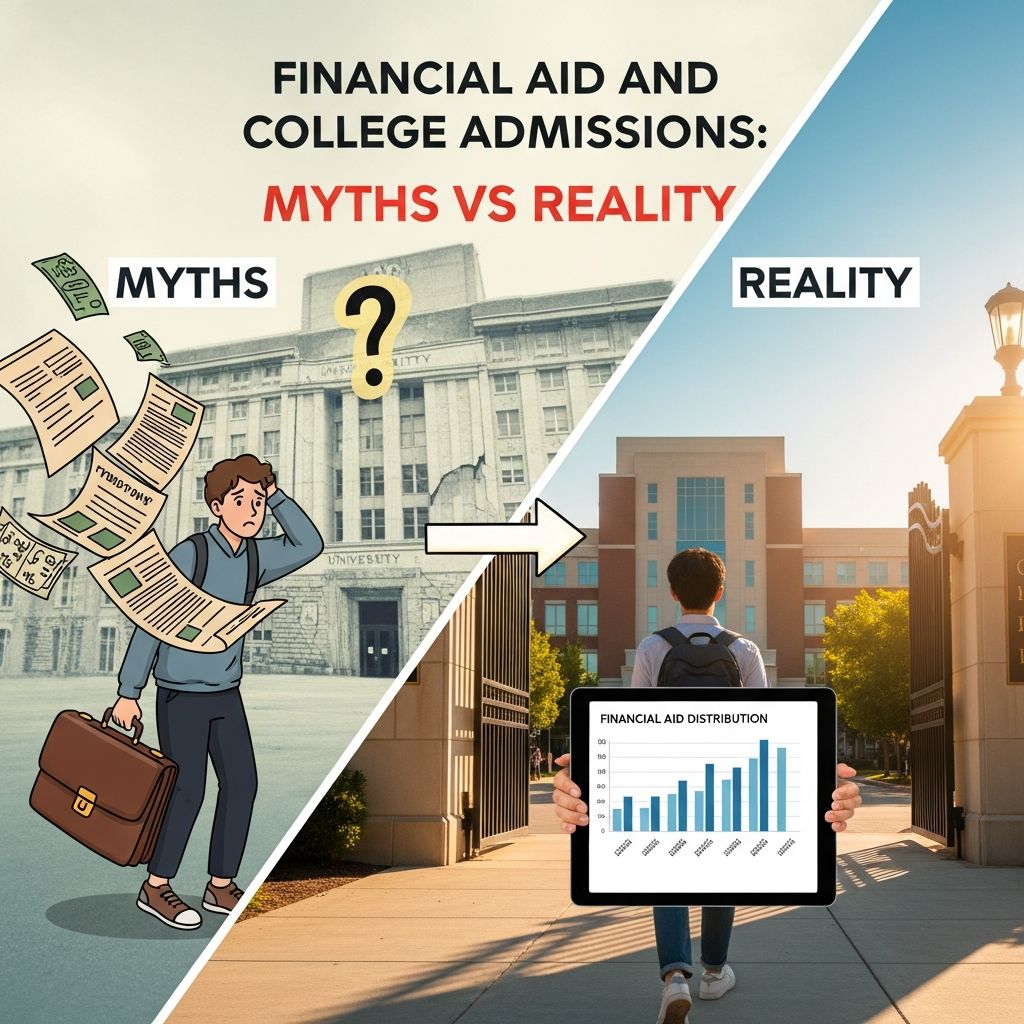
One of the most persistent concerns among college applicants is whether requesting financial assistance could jeopardize their acceptance. This fear often stems from misconceptions about how admissions offices evaluate candidates. In reality, for the vast majority of institutions, submitting a financial aid application has no negative impact on admission decisions. This comprehensive guide breaks down the key concepts, policy differences, and practical advice to help you make informed choices.
Understanding Need-Blind vs. Need-Aware Admissions Policies
Colleges categorize their admissions processes based on how they handle financial information. **Need-blind** policies mean that admissions officers make decisions without considering an applicant’s ability to pay. These schools possess substantial endowments, allowing them to meet 100% of demonstrated need for admitted students without factoring finances into the initial review. Prestigious institutions like Harvard exemplify this approach, explicitly stating that financial circumstances do not impede admission.
In contrast, **need-aware** (or need-based) policies incorporate financial need into the equation, particularly when resources are limited. Here, applicants requiring significant aid might face slightly lower odds if competing against equally qualified peers who can pay full tuition. However, this effect is typically minimal and reserved for borderline candidates. Most selective schools lean need-blind, while smaller or less-funded institutions may be need-aware.
| Policy Type | Description | Examples | Impact on Applicants |
|---|---|---|---|
| Need-Blind | Finances ignored in admissions | Harvard, most Ivies | No impact |
| Need-Aware | Finances considered | Many public universities, smaller privates | Possible minor impact for high-need cases |
Why Applying for Aid Rarely Hurts Strong Applicants
Admissions prioritize academic excellence, extracurricular involvement, essays, and recommendations over finances. Even at need-aware schools, top-tier candidates secure spots irrespective of need because their profiles stand out. For average or borderline applicants, need might tip the scales, but colleges prefer admitting high-achievers who contribute to campus diversity and yield rates.
Statistics reinforce this: at need-blind schools, aid applicants have identical acceptance rates to self-payers. Need-aware institutions allocate limited funds to the most competitive students, meaning weaker profiles suffer more than aid requests themselves. The key takeaway? Bolster your academic and extracurricular strengths first.
Special Considerations for High-Income Families
Families earning substantial incomes often hesitate, fearing aid applications signal weakness. Paradoxically, submitting forms can benefit these applicants. Demonstrating capacity to pay full freight makes you attractive—colleges rely on tuition revenue. A low Student Aid Index (SAI) from the FAFSA might even unlock merit scholarships or institutional grants.
Consider this scenario: Family income exceeds $200,000, yet after taxes and assets, SAI calculates to $30,000 against a $70,000 cost of attendance. Colleges view full-payers as revenue stabilizers, potentially boosting your odds. Experts unanimously advise all families to apply, as upside (possible aid) outweighs negligible downside.
Navigating the FAFSA and CSS Profile
The Free Application for Federal Student Aid (FAFSA) is the cornerstone, determining federal grants, loans, and work-study. Many privates require the CSS Profile for institutional funds. Filing early—October 1 for the upcoming cycle—maximizes aid pools.
- Calculate SAI accurately using tools from federal processors.
- Appeal awards if family circumstances change (e.g., job loss).
- Compare packages across acceptances; gaps may require loans or negotiation.
Even non-qualifiers gain data for private loans or 529 plan optimizations. Delaying or skipping means forfeiting potential thousands annually.
Merit Aid: A Separate Path Unaffected by Need
Unlike need-based aid, merit scholarships reward talent in academics, arts, or athletics. These are often automatic or via separate applications and do not hinge on FAFSA data. Combining merit with need-based can slash net costs dramatically. Public universities frequently offer generous merit to attract standouts, regardless of income.
International Students and Financial Aid Dynamics
Non-U.S. applicants face stricter scrutiny. Few schools extend need-blind to internationals; most are need-aware with capped funds. Harvard bucks this trend, treating foreign students identically to domestics. Research each institution’s policy—applying without aid intent may be wiser if need is high.
Strategic Tips for Maximizing Aid Without Risking Admission
- Research Policies: Use Common Data Set or admissions sites to confirm need-blind status.
- Apply Broadly: Target a mix of need-blind elites and generous publics.
- Strengthen Profile: High stats mitigate any need-aware risks.
- Negotiate Offers: Post-acceptance, leverage competing packages.
- Explore Alternatives: Scholarships, work-study, or community college transfers.
Common Pitfalls and How to Avoid Them
Avoid assuming all schools are need-blind—many are not. Don’t omit aid apps from dream schools if need-blind; skipping costs money. For need-aware reaches, prioritize safeties with strong aid reputations. Track deadlines rigorously to prevent disqualification.
FAQs: Addressing Top Concerns
Does checking ‘yes’ on the Common App for aid flag my application?
No, at need-blind schools, this box is irrelevant to decisions.
What if my family income is over $150K—worth applying?
Yes, potential merit or institutional aid makes it worthwhile.
Can aid requests lead to waitlists?
Rarely, and only at need-aware schools for high-need borderlines.
How does aid affect yield-conscious colleges?
They favor likely enrollees; full-payers boost yield.
Should I apply aid-free to increase chances?
Generally no—forego aid only if certain of self-funding and targeting need-aware reaches.
Real-World Case Studies
Case 1: Student A, strong profile, applied aid at need-blind Ivy—admitted with full need met. Case 2: Student B, borderline at need-aware state school, high need—waitlisted favoring self-payer. Case 3: Wealthy family at liberal arts college—FAFSA unlocked $10K merit aid. These illustrate policy-driven outcomes.
In summary, demystify the process: apply boldly, research diligently, and prioritize fit. Financial aid empowers access, rarely at admission’s expense.
References
- Does Applying for Financial Aid Lower Your College Acceptance Odds? — Great College Advice. 2023. https://greatcollegeadvice.com/blog/college-fees/does-applying-for-financial-aid-lower-your-college-acceptance-odds/
- Will Applying For Financial Aid Affect Your Chances Of Admission? — Ivy Link. 2024. https://www.myivylink.com/blog/will-applying-for-financial-aid-affect-your-chances-of-admission
- Does applying for financial aid impact admission? — Stiphany Consulting. 2023. https://www.stiphanyconsulting.com/flow-forward/does-applying-for-financial-aid-impact-admission
- Does Applying for Financial Aid Affect Admissions Decisions? — CollegeVine Blog. 2024. https://blog.collegevine.com/financial-aid-affect-on-admissions
- 5 Reasons Wealthy Students Should Apply for Financial Aid — Get Into College Blog. 2023. https://blog.getintocollege.com/5-reasons-wealthy-students-should-apply-for-financial-aid-college-coach
- Will Applying for Financial Aid Affect My Chances for Admission? — MEFA. 2024. https://www.mefa.org/article/will-applying-for-financial-aid-affect-my-chances-for-admission/
- Does applying for financial aid affect my chances for admission? — Harvard College. 2025. https://college.harvard.edu/resources/faq/does-applying-financial-aid-affect-my-chances-admission

Medha Deb is an editor with a master's degree in Applied Linguistics from the University of Hyderabad. She believes that her qualification has helped her develop a deep understanding of language and its application in various contexts. Medha specializes in the areas of beauty, health, sports, and wellness and is committed to ensuring that the content on the website is…