
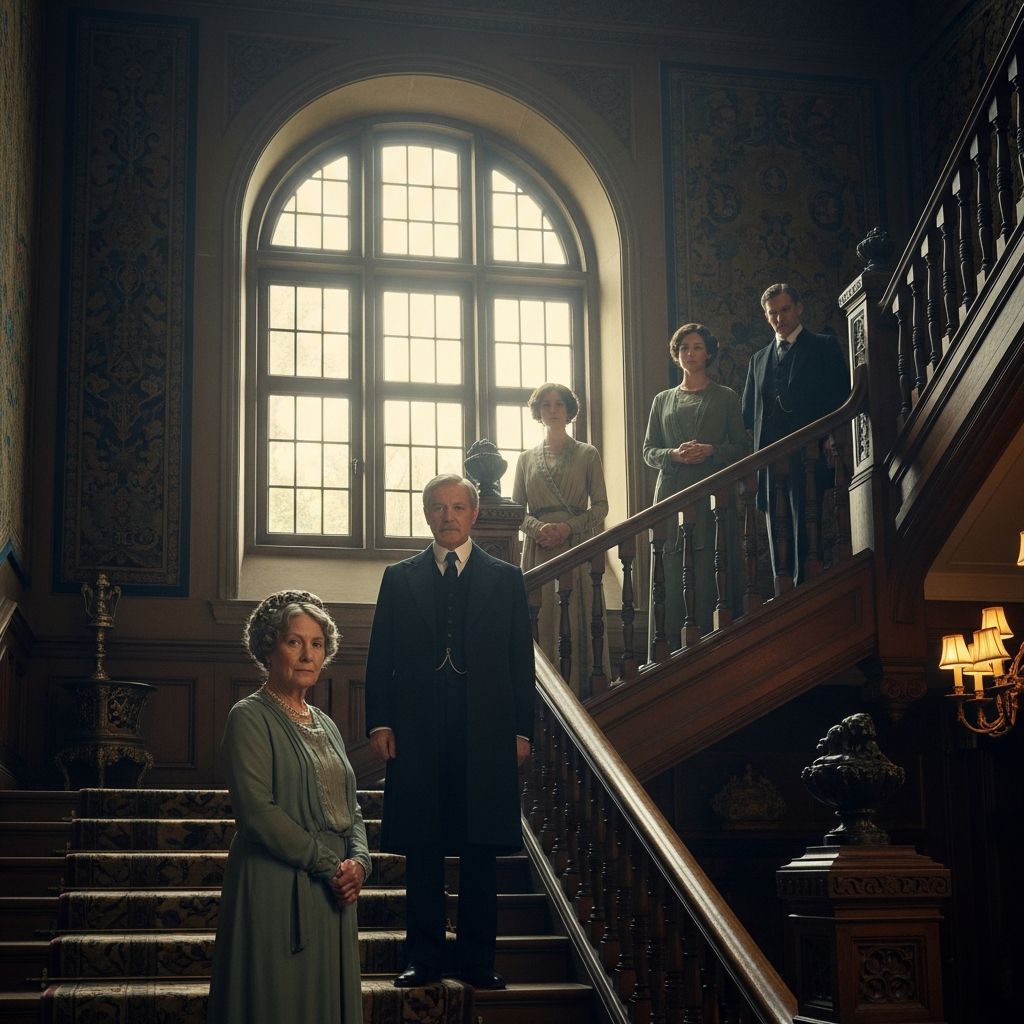
Downton Abbey is more than a lavish period drama; it is a vivid study of contrasting personality styles. Using the 16Personalities framework (a popular interpretation of the Myers–Briggs model), we can see how some characters project a clearly forceful presence, while others influence their world in quieter, more understated ways. The clash and cooperation between these different approaches to strength is part of what makes the series so enduring.
Understanding “Forceful” Through the 16Personalities Lens
In everyday language, a person is often called “forceful” when they are:
- Comfortable voicing strong opinions
- Decisive and willing to make tough calls
- Ready to confront conflict rather than avoid it
- Inclined to steer, organize, or lead others
Within the 16Personalities framework, these traits are more commonly associated with:
- Extraverted (E) types who gain energy from engagement and interaction
- Thinking (T) types who prioritize logic and objectivity in decision-making
- Judging (J) types who like structure, closure, and clear direction
However, research on personality traits indicates that dominance and assertiveness can appear in different forms, including more prosocial or cooperative versions of influence. Being forceful is not limited to loud or harsh behavior; it can also show up as unwavering conviction, quiet persistence, or moral leadership.
Mary Crawley: The Commanding Strategist
Lady Mary Crawley is often associated with the Commander (ENTJ) type: strategic, confident, and unafraid of confrontation. Her style highlights a classic, high-intensity version of forcefulness.
How Mary Embodies ENTJ Traits
- Goal-driven leadership: Mary focuses on the long-term survival and status of the estate, making difficult, often unpopular decisions to secure its future.
- Direct communication: She favors blunt honesty over tact, frequently using sharp remarks to cut through what she sees as emotional excess.
- Comfort with conflict: Disputes, especially with family members, rarely intimidate her; they are opportunities to assert a clearer plan.
Mary’s approach shows the upside of a forceful style—decisiveness, courage, resilience—as well as the cost: strained relationships, misunderstandings, and a reputation for coldness.
Violet and Isobel: Two Extraverts, Two Kinds of Force
Two of the most imposing Extraverts in Downton Abbey are Violet Crawley and Isobel Crawley. Although they often clash, they share a readiness to speak their minds and shape their environment, each in a distinct personality style.
Violet Crawley: The Executive Guardian of Tradition
Violet is frequently interpreted as an Executive (ESTJ) type. She stands as the embodiment of customs, hierarchy, and order within the household and the local community.
- Tradition first: As a Sentinel-style personality, Violet places heavy weight on stability, duty, and the continuity of the family name.
- Practical logic: Her Thinking preference comes through in her brisk, sometimes unsympathetic evaluation of others’ problems.
- Quiet but unmistakable dominance: Violet rarely raises her voice; instead, she relies on status, presence, and razor-sharp remarks to assert herself.
Her strength lies in structured responsibility and a conviction that rules, once tested by time, deserve deference. This reinforces what personality research calls socially dominant behavior rooted in norms and authority, rather than personal emotion.
Isobel Crawley: The Idealistic Protagonist
Isobel, often cast as a Protagonist (ENFJ), stands opposite Violet in many debates, yet rivals her in intensity. Where Violet appeals to tradition, Isobel leans on humanitarian ideals.
- Morally driven influence: Isobel’s decisions flow from what she believes is best for people’s welfare, especially the poor, injured, or marginalized.
- Persuasive warmth: Unlike more blunt types, she tends to influence by appealing to empathy and shared responsibility.
- Stubborn idealism: Once convinced she is right, she can become just as unyielding as Violet, revealing a more value-centered type of forcefulness.
Isobel illustrates how Feeling types can be every bit as forceful as their Thinking counterparts—only their pressure is rooted in ethics, compassion, and social reform rather than precedent or hierarchy.
Sybil and Edith: Quiet Strength in Introverted Feelers
In contrast to Mary, Violet, and Isobel, Lady Sybil and Lady Edith represent softer, more introspective personality styles. They are frequently typed as Mediator (INFP) and Adventurer (ISFP), respectively.
Sybil Crawley: The Idealist Who Refuses to Domineer
Sybil reflects many features of the Mediator (INFP) profile: gentle, creative, and deeply principled.
- Gentle conviction: She holds strong beliefs about justice and fairness but rarely imposes them aggressively on others.
- Empathic presence: Sybil often listens more than she speaks, influencing by support rather than command.
- Quiet rebellion: Instead of loud confrontations, she chooses radical life decisions that depart from her family’s expectations, showing a private, resolute will.
Survey findings from 16Personalities indicate that Mediators report lower rates of being seen as domineering compared with many other types, which matches Sybil’s on-screen demeanor.
Edith Crawley: The Sensitive Explorer Finding Her Voice
Edith, often linked to the Adventurer (ISFP) type, initially appears passive and uncertain, especially beside Mary.
- Emotional sensitivity: Edith takes criticism to heart, and negative comparisons deeply affect her sense of self-worth.
- Exploratory life path: Like many Explorer types, she experiments with different roles and projects before discovering what truly fits her.
- Growing agency: Over time, Edith becomes more decisive and self-directed, gradually transitioning from reactive to proactive in shaping her life.
Adventurer personalities are among the least likely to describe themselves as forceful, yet Edith demonstrates that even gentle types can develop a firmer stance as they gain clarity about their values and abilities.
Comparing Forceful and Gentle Styles in Downton Abbey
The contrast between these characters highlights several recurring patterns seen in personality research and in the 16Personalities model.
| Character | Likely 16Personalities Type | Style of Influence | Typical Strengths | Typical Risks |
|---|---|---|---|---|
| Mary Crawley | ENTJ (Commander) | Direct, strategic, confrontational | Decisive, resilient, future-focused | Harshness, emotional distance |
| Violet Crawley | ESTJ (Executive) | Status-based, tradition-anchored | Stable leadership, clear standards | Rigidity, low empathy |
| Isobel Crawley | ENFJ (Protagonist) | Persuasive, value-driven | Inspiring, socially aware | Over-involvement, moral pressure |
| Sybil Crawley | INFP (Mediator) | Quiet conviction, example-setting | Empathy, integrity, creativity | Avoidance of open conflict, idealism vs. reality |
| Edith Crawley | ISFP (Adventurer) | Sensitive, experiential, evolving | Practical compassion, adaptability | Indecision, impulsive choices |
Lessons on Leadership and Influence from Downton Abbey
Downton Abbey shows that influence is not one-size-fits-all. The series offers several practical insights for understanding your own style and those of people around you.
1. Forcefulness Can Protect or Harm Relationships
Research on dominance and assertiveness finds that strong-willed behavior can be beneficial when balanced with cooperation, but destructive when coupled with insensitivity. Mary and Violet often get results, yet their brusque communication damages trust. Sybil and Edith, by contrast, preserve bonds but sometimes struggle to be taken seriously.
- If you lean forceful, consider whether people feel heard as well as led.
- If you lean gentle, reflect on where you might step forward more boldly without betraying your values.
2. Both Thinking and Feeling Types Can Be Strong
It is easy to equate forcefulness with logical, no-nonsense behavior. Yet Isobel demonstrates that emotionally attuned, Feeling personalities can be equally uncompromising when championing a cause. Studies on personality and prosocial behavior suggest that those high in empathy often take firm stands on moral and humanitarian issues.
- Thinking-led strength: centers on efficiency, rational solutions, and clear rules.
- Feeling-led strength: centers on fairness, well-being, and human dignity.
3. Introverts Can Lead Without Being Loud
Personality research emphasizes that introversion is about energy source, not shyness or inability to lead. Sybil and Edith remind us that:
- Introverts often influence via one-on-one conversations and consistent actions.
- They may prefer depth over breadth, shaping a small circle profoundly rather than commanding a crowd.
Quiet strength tends to be underestimated—until a pivotal moment reveals just how firm an introverted character’s convictions really are.
4. Growth Often Means Borrowing From the Opposite Style
Over the course of the show, characters gradually integrate traits from their opposite style:
- Mary becomes more openly vulnerable, softening the harsh edges of her Commanding approach.
- Edith grows more assertive about her needs and ambitions, moving away from passive resignation.
- Violet learns, in select moments, to bend rather than break when the world changes around her.
This reflects a broader principle in personality theory: healthy development often involves expanding beyond our default preferences, rather than abandoning them.
Practical Takeaways: Applying Downton Abbey Insights to Real Life
Although Downton Abbey is fiction, the dynamics it portrays mirror many workplaces and families. A few guidelines emerge:
- Identify your baseline: Do you more closely resemble Mary’s sharp directness, Violet’s rule-based authority, Isobel’s moral persuasion, Sybil’s quiet idealism, or Edith’s experiential exploration?
- Notice your impact: Ask trusted friends or colleagues how your style affects them—do they feel energized, intimidated, overlooked, or supported?
- Adjust (not erase) your style: Forceful personalities can practice adding empathy and listening; gentler personalities can practice clearer boundaries and firmer language.
- Appreciate difference: A balanced team often includes both decisive strategists and sensitive mediators; tension between them can be productive when managed respectfully.
Frequently Asked Questions (FAQs)
Q: Are forceful personalities always Extraverts?
A: No. While Extraverts are more visible and often more comfortable taking charge in groups, Introverts can be equally strong-willed. Their forcefulness tends to show in private decisions, carefully chosen battles, and persistent follow-through rather than public confrontation.
Q: Can a Feeling type be as effective a leader as a Thinking type?
A: Yes. Feeling types like ENFJs often excel at motivating and uniting people around shared values, which research links to higher engagement and trust in leadership. Their challenge is to balance empathy with clear boundaries and realistic limits.
Q: Do gentle personalities need to become more forceful to succeed?
A: Not necessarily. Gentle personalities can succeed by doubling down on their strengths—deep listening, careful judgment, and consistent reliability—while learning just enough assertiveness to prevent burnout and exploitation.
Q: Is the 16Personalities model scientifically validated?
A: The 16Personalities framework is widely used and accessible, but it is not a clinical diagnostic tool. Many psychologists instead rely on trait-based models like the Big Five, which have strong empirical support. Still, type-based models can be useful for self-reflection and discussion when used cautiously.
Q: Can people change their personality type over time?
A: Core tendencies are relatively stable, but people can and do change in how they express those tendencies. Life experience, deliberate practice, and changing roles can make someone appear more or less forceful, structured, or people-focused over the years.
References
- DeYoung, C. G., et al., “Between facets and domains: 10 aspects of the Big Five.” — Journal of Personality and Social Psychology. 2007-04-01. https://doi.org/10.1037/0022-3514.93.5.880
- “The Forceful Personality Types of Downton Abbey” — 16Personalities. 2019-02-05. https://www.16personalities.com/articles/the-forceful-personality-types-of-downton-abbey
- Van Dijk, E., & De Cremer, D., “Self-interest and other-interest in social dilemmas.” — Annual Review of Psychology. 2006-01-10. https://doi.org/10.1146/annurev.psych.56.091103.070146
- McCrae, R. R., & John, O. P., “An introduction to the Five‐Factor Model and its applications.” — Journal of Personality. 1992-06-01. https://doi.org/10.1111/j.1467-6494.1992.tb00970.x
- “Our Theory” — 16Personalities. 2022-06-01. https://www.16personalities.com/our-theory

- Integrated M.A. in Applied Linguistics, University of Hyderabad
- 5+ years in editorial, instructional, SEO, and research-based writing
Sneha is a relationships and lifestyle writer with a strong foundation in applied linguistics and certified training in relationship coaching. She brings over five years of writing experience to theskillvault, crafting thoughtful, research-driven content that empowers readers to build healthier relationships, boost emotional well-being, and embrace holistic living. Her writing and insights reflect the belief that beauty, happiness, and wellness…