
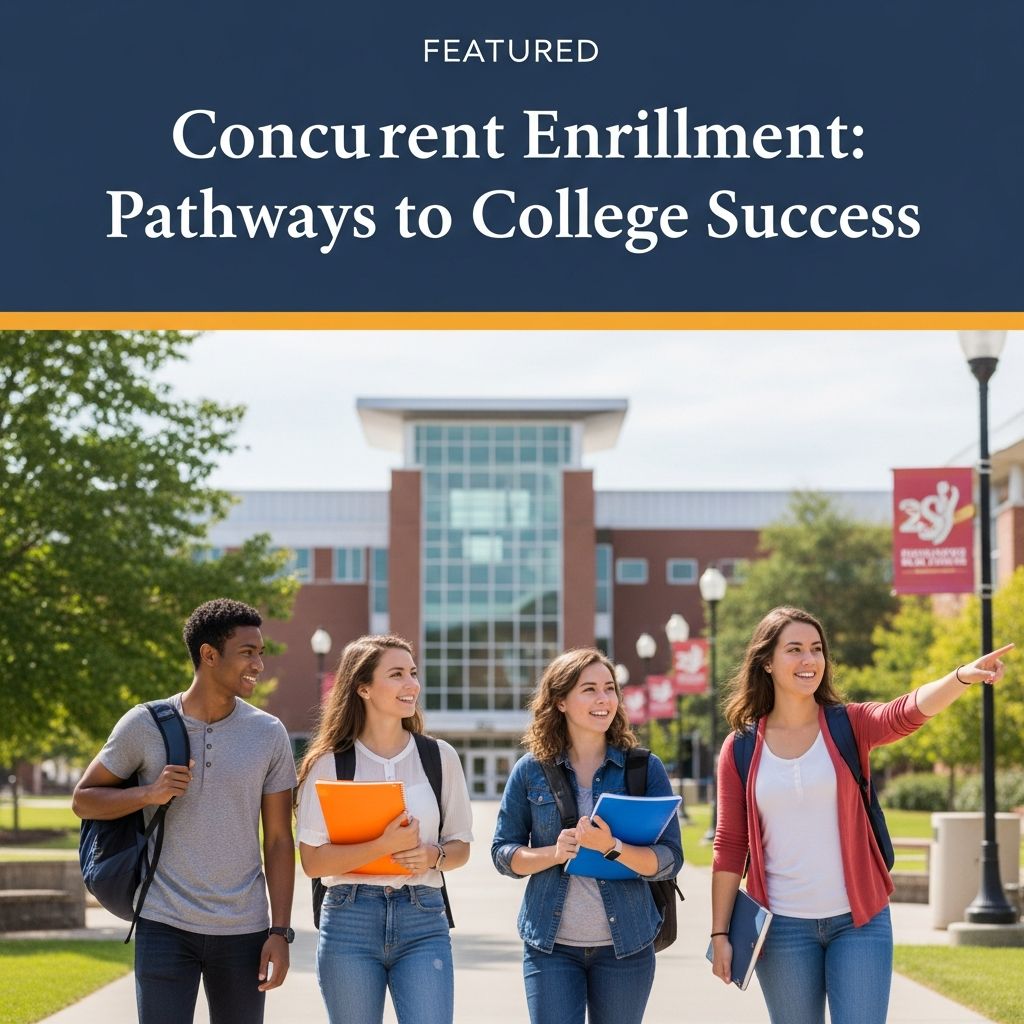
Dual enrollment, also known as concurrent enrollment, represents a transformative educational opportunity that bridges the gap between secondary and postsecondary education. This program structure allows high school students to simultaneously earn credits that count toward both their high school diplomas and college degrees. By taking college-level courses while still enrolled in high school, students gain a competitive advantage in their academic journeys and position themselves for greater success in higher education and beyond.
Understanding the Fundamentals of Concurrent Enrollment
Dual enrollment programs operate through partnerships between high schools and colleges or universities, most commonly community colleges. These collaborative frameworks enable qualified high school students to access college-level coursework without requiring them to leave their current educational institution. The model represents a practical solution to accelerating academic progress while maintaining the support systems and social connections high school students value.
The structure of dual enrollment programs typically involves students remaining enrolled in their high school while taking one or more college courses during the regular school year or summer sessions. Classes can be delivered in multiple formats: on college campuses, online, or directly at the high school campus itself, depending on the specific partnership arrangements and program design.
Eligibility and Enrollment Criteria
Access to dual enrollment programs is generally restricted to high school juniors and seniors, reflecting the academic maturity and foundational knowledge required to succeed in college-level work. However, exceptional students with strong academic records may qualify for participation earlier. Colleges and high schools establish specific enrollment criteria to ensure students are prepared for the rigor and expectations of college coursework.
Before enrolling in concurrent courses, students typically must meet minimum grade point average requirements and demonstrate readiness through placement tests or transcript review. Some programs require students to have completed prerequisite high school courses that establish foundational knowledge necessary for college-level study.
How Credits Transfer and Apply
Upon successful completion of dual enrollment courses, students earn credits that appear on both their high school and college transcripts. However, the extent to which these credits transfer to four-year universities and how they apply toward degree requirements varies significantly based on institutional policies and transfer agreements.
Transfer compatibility depends on several factors, including the specific college where students initially earned credits, the institution where they plan to complete their degree, and whether formal articulation agreements exist between these institutions. Students attending their eventual four-year college should research transfer policies beforehand, as highly selective institutions sometimes have stricter transfer requirements than community colleges.
| Credit Transfer Factor | Impact on Student |
|---|---|
| Institutional Transfer Agreements | Ensures credits transfer with full value toward degree requirements |
| Course Type and Level | General education courses transfer more readily than major-specific courses |
| Receiving Institution Policies | Four-year colleges may impose limits on transferable community college credits |
| Grade Performance | Some institutions require minimum grades for transfer credit acceptance |
Accelerating Academic Progress and Reducing Time to Degree
One of the most compelling advantages of dual enrollment involves the capacity to shorten the path to degree completion. By earning college credits during high school, students can potentially graduate from four-year institutions in fewer than the traditional four years. This acceleration opens opportunities for advanced coursework, specialized electives, internships, research experiences, and even double majors that might otherwise be unavailable within a standard timeline.
Students who strategically plan their dual enrollment participation during junior and senior years essentially gain a two-year head start compared to their peers who begin college coursework after high school graduation. This advantage compounds when students take multiple concurrent courses and successfully transfer their credits to their degree-granting institution.
Financial Benefits and Cost Reduction
Dual enrollment programs typically cost students significantly less than taking equivalent courses at four-year universities. Many community colleges offer concurrent enrollment courses at discounted rates, sometimes just a few hundred dollars per course. Additionally, numerous states and institutions reduce or completely waive tuition fees for dual enrollment students, making higher education more accessible regardless of family financial circumstances.
The financial advantages extend beyond tuition reduction. Many dual enrollment programs cover textbooks, course materials, and associated fees, reducing the overall out-of-pocket costs students must bear. When students transfer these credits to four-year institutions, they avoid paying full university tuition and fees for those specific courses, generating substantial long-term savings.
Colleges and universities increasingly offer scholarships specifically designated for dual enrollment participants, recognizing the demonstrated commitment to academic excellence these students exhibit. Some institutional scholarship programs provide additional funding to support dual enrollment students’ transition to full-time college enrollment.
Building College Readiness and Academic Confidence
Exposure to college-level coursework while still in high school fundamentally shapes students’ preparedness for higher education. Dual enrollment courses emphasize greater academic rigor, more demanding reading assignments, complex analytical thinking, and higher-stakes assessment methods than typical high school courses. By experiencing these expectations in a supported high school environment, students develop resilience, refined study skills, and the academic confidence necessary to thrive in college.
The transition from high school to college represents a significant adjustment across multiple dimensions. Dual enrollment reduces the shock of this transition by acclimating students to college-level expectations, teaching methods, and classroom dynamics before they become full-time college students. This preparation translates into higher college enrollment rates, better persistence through college programs, and improved degree completion outcomes.
Exploring Academic Interests and Career Pathways
Concurrent enrollment programs provide valuable opportunities for students to explore potential majors and academic interests before making binding commitments. By sampling college-level coursework in diverse fields, students gain authentic insight into whether particular disciplines align with their strengths, interests, and long-term career aspirations.
This exploration function proves particularly valuable for undecided students or those considering major changes to their educational direction. Taking introductory college courses in potential major fields allows students to assess their aptitude and interest with significantly lower risk than committing to a four-year degree path in that field.
Equity and Access Considerations
Research demonstrates that dual enrollment programs provide measurable benefits to students across all demographic groups, though these benefits are particularly pronounced for low-income students, first-generation college students, and students from underrepresented racial and ethnic backgrounds. The programs effectively reduce barriers to higher education access by providing support systems, guidance, and preliminary college experience that strengthen students’ confidence and readiness.
For families with limited financial resources, dual enrollment represents a pathway to reducing overall college costs while building academic skills and confidence. The combination of low or no tuition costs, earned college credits that reduce total degree costs, and improved college completion rates makes concurrent enrollment an especially valuable equity strategy for expanding higher education access.
Practical Course Selection Strategies
Dual enrollment courses typically focus on introductory-level content and general education requirements rather than advanced major-specific courses. Students benefit from careful strategic selection of courses that serve multiple purposes: fulfilling both high school requirements and college general education requirements, reducing college costs, and maintaining manageable course loads.
General education courses such as English composition, mathematics, history, natural sciences, and social sciences represent ideal dual enrollment selections because these courses transfer readily and apply toward degree requirements across virtually all four-year institutions. Students should avoid taking too many courses simultaneously, which could overwhelm them or compromise academic performance.
Challenges and Limitations to Consider
While dual enrollment offers substantial benefits, prospective participants should carefully consider potential drawbacks. Transfer complications sometimes arise when credits earned through one institution fail to transfer completely or count differently at the final degree-granting institution. Students planning to attend highly selective colleges should investigate whether those institutions accept dual enrollment credits with full value, as some prestigious universities limit the number of community college credits they accept.
Additionally, balancing high school requirements with college coursework demands significant time management skills and academic commitment. Not all students thrive under these conditions, and taking on too many advanced courses simultaneously could negatively impact academic performance or high school experiences like athletics or extracurricular activities.
Workforce Development and Economic Impact
Beyond individual student benefits, dual enrollment programs contribute to broader workforce development objectives. By enabling students to earn postsecondary credentials while still in high school, these programs accelerate the development of skilled workforces equipped with industry-valued certifications and degrees. Students who participate in dual enrollment can enter the job market earlier with college credits or partial degrees, meeting growing employer demand for workers with postsecondary training.
The economic impact extends to states and employers who benefit from a more educated, trained workforce capable of filling positions in expanding career fields. Dual enrollment creates more efficient transitions between secondary and postsecondary education systems, supporting states’ postsecondary attainment goals and economic competitiveness.
Planning Your Dual Enrollment Journey
Students considering dual enrollment should begin by researching partnerships between their high school and local colleges or universities. Key information to investigate includes eligibility requirements, course offerings, tuition and fee structures, transfer policies, and logistical details such as class scheduling and location.
Conversations with school counselors, academic advisors, and current dual enrollment students provide valuable insights into program experiences and outcomes. Students should also contact their intended four-year colleges to understand how they treat dual enrollment credits and whether formal articulation agreements with community college partners exist.
Frequently Asked Questions About Dual Enrollment
Q: When should students start dual enrollment?
Most programs accept junior and senior students, though exceptional sophomores may qualify. Starting during junior year provides maximum benefit, allowing participation across two years.
Q: Will dual enrollment credits transfer to any four-year university?
Transfer varies by institution. Research specific colleges’ transfer policies before enrolling. Some selective universities limit community college credit acceptance, while others grant full transfer credit.
Q: How many dual enrollment courses should students take?
Course load depends on individual capacity and high school requirements. Most successful students take one or two concurrent courses per term to maintain balance and academic performance.
Q: Does dual enrollment affect college admissions?
Dual enrollment demonstrates academic commitment and rigor on college applications. Colleges view concurrent enrollment favorably as evidence of college-level academic capability.
Q: What if a student fails a dual enrollment course?
Poor performance in dual enrollment courses appears on both high school and college transcripts. Students should confirm grade forgiveness policies and their impact on academic records before enrolling.
Long-Term Outcomes and Success Metrics
Research consistently demonstrates positive long-term outcomes for dual enrollment participants across multiple success metrics. Students who complete concurrent enrollment courses show higher college enrollment rates, improved persistence through college, faster degree completion, and higher earnings after graduation compared to peers who do not participate.
These benefits accumulate most significantly when students complete multiple dual enrollment courses and successfully transfer their credits to four-year institutions where credits count toward their degrees. The combination of reduced college costs, accelerated progression, and improved academic preparation creates compound advantages that extend throughout students’ educational and professional careers.
References
- Dual Enrollment Helps Students Save on College Costs — Savvas Learning Company. 2024. https://www.savvas.com/resource-center/blogs-and-podcasts/college-and-career-readiness/2024/what-is-dual-enrollment
- Dual Enrollment Programs: Pros, Cons & How it Works — Collegewise. https://collegewise.com/blog/dual-enrollment-programs
- What Is Dual Enrollment and What Are Its Benefits? — Azusa Pacific University. https://www.apu.edu/articles/what-is-dual-enrollment-and-what-are-its-benefits/
- The Benefits of Dual Enrollment 2025 Update — College in High School Alliance. 2025. https://collegeinhighschool.org/wp-content/uploads/2025/05/The-Benefits-of-Dual-Enrollment-2025-Update.pdf
- Dual Enrollment: What It Is And What the Benefits Are — Sallie Mae. https://www.sallie.com/resources/colleges/what-is-dual-enrollment
- Unpacking Dual Enrollment: Benefits, Barriers, and Opportunities for Expansion — New America Education Policy Center. https://newamerica.org/education-policy/edcentral/unpacking-dual-enrollment-benefits-barriers-and-opportunities-for-expansion/
- College Success: 5 Things You Need to Know About Dual Enrollment — United Way Los Angeles. https://unitedwayla.org/news/college-success-5-things-you-need-to-know-about-dual-enrollment/

- Integrated M.A. in Applied Linguistics, University of Hyderabad
- 5+ years in editorial, instructional, SEO, and research-based writing
Sneha is a relationships and lifestyle writer with a strong foundation in applied linguistics and certified training in relationship coaching. She brings over five years of writing experience to theskillvault, crafting thoughtful, research-driven content that empowers readers to build healthier relationships, boost emotional well-being, and embrace holistic living. Her writing and insights reflect the belief that beauty, happiness, and wellness…