
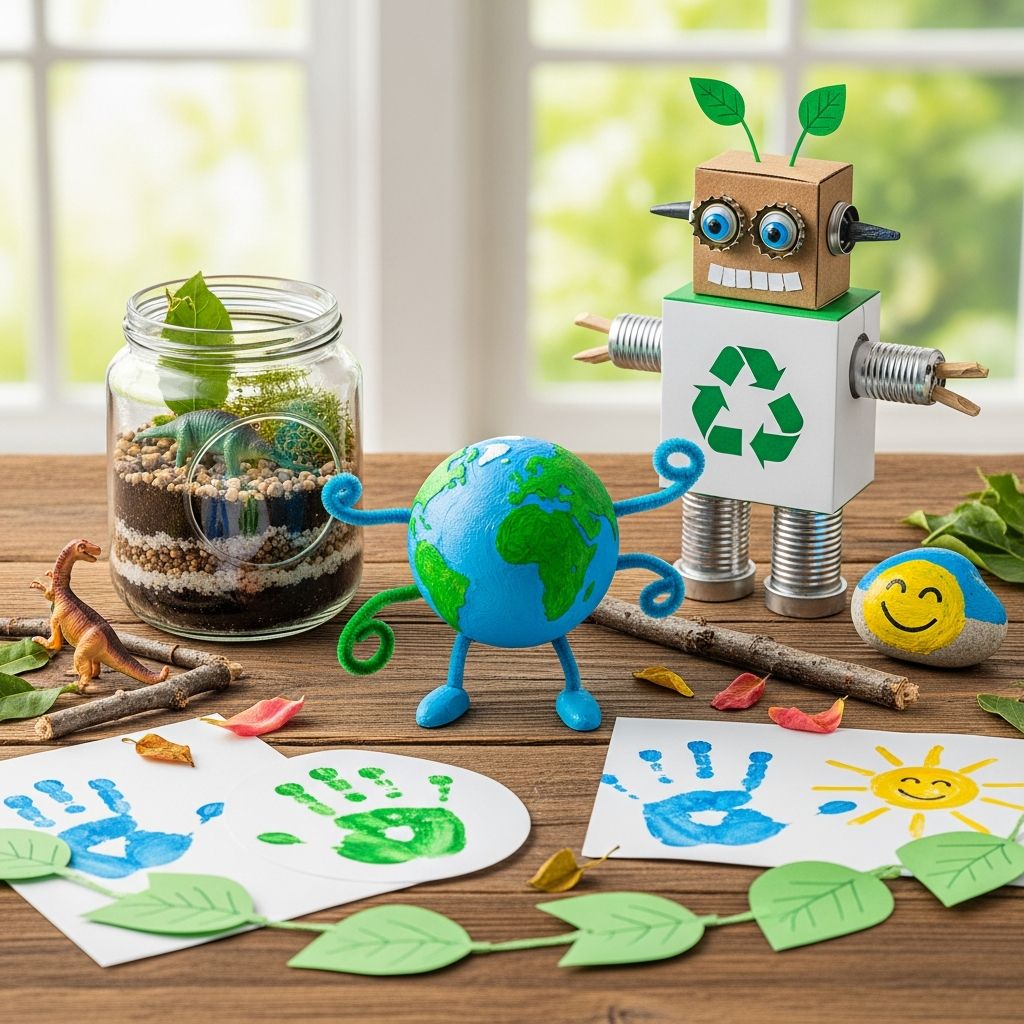
Earth Day offers a fantastic opportunity to introduce children to environmental stewardship through interactive and enjoyable experiences. These projects blend creativity, science, and outdoor exploration, helping kids grasp concepts like recycling, conservation, and ecosystems in age-appropriate ways. Designed for preschool through elementary ages, the activities encourage family or classroom participation while promoting positive planetary habits.
Understanding the Importance of Earth Day Education
Observing Earth Day goes beyond a single event; it builds foundational knowledge about our planet’s health. Children learn how everyday actions affect air, water, soil, and wildlife. Hands-on projects make abstract ideas tangible, sparking curiosity and responsibility. For instance, simple experiments reveal pollution’s effects, while crafts from waste materials highlight reduction and reuse principles.
Creative Recycled Material Crafts
Transforming trash into treasure captivates young minds and reinforces upcycling benefits. These crafts develop fine motor skills alongside environmental messages.
- Upcycled Mobile Sculptures: Gather plastic lids, straw segments, beads, and string. Children thread items onto lines suspended from sticks, creating hanging displays. This activity practices dexterity while showing how discarded plastics gain new life.
- Paper Earth Models: Cut circular bases from recycled paper. Kids layer blue and green scraps to mimic oceans and landmasses, referencing planet images or stories for accuracy. Pair with discussions on global features.
- Cardboard Tube Challenges: Use toilet paper rolls to engineer marble runs or towers. Tape connects pieces, teaching gravity and stability with zero-waste materials.
These projects not only entertain but also prompt conversations about landfill reduction. Encourage kids to source items from home recycling bins for authenticity.
Outdoor Nature Discovery Adventures
Stepping outside connects children directly to the environment, fostering appreciation through sensory engagement.
- Guided Nature Scavenger Hunts: Provide checklists for spotting birds, plants, insects, or litter. Use bags and gloves for safe cleanup, turning walks into service learning in parks or backyards.
- Rock Painting Sessions: Collect smooth stones and paint nature-inspired designs outdoors. This meditative task draws from surroundings, like leaf patterns, enhancing observation skills.
- Wildflower Threading Art: Draw oversized blooms on cardboard, punch centers, and thread real dandelions or spring flowers through. It celebrates local flora while honing threading abilities.
Such outings reveal ecosystems’ interconnectedness, from pollinators to soil health. Always prioritize safety and leave-no-trace principles.
Planting and Gardening Initiatives
Greening spaces teaches growth cycles, patience, and biodiversity’s role in sustainability.
| Project | Materials Needed | Learning Outcome |
|---|---|---|
| Seed Bomb Creation | Clay, seeds, compost, water | Wildflower propagation for pollinators |
| Grass Head Planters | Stockings, grass seeds, soil | Germination observation |
| Potted Herb Gardens | Containers, soil, herb seeds | Food production and care routines |
| Seed Jar Experiments | Jars, beans, paper towels | Sprouting visualization |
Start with seed bombs by mixing clay, seeds, and dirt into balls tossed in wild areas. Pots suit limited spaces, yielding edible results like basil. These foster long-term commitment as kids monitor progress.
Science Experiments on Environmental Impacts
Lab-style activities demystify pollution and conservation science, using household items for accessibility.
- Oil Spill Simulation: Float oil in water trays, add cocoa for shorelines, then test skimmers, sponges, or detergents. Discuss ocean cleanup challenges and wildlife effects.
- Acid Rain Test: Submerge flowers in vinegar solutions varying strengths. Observe wilting to link emissions with plant damage.
- Water Filtration Demo: Layer sand, gravel, charcoal in bottles to purify dirty water. Compare to unfiltered samples, explaining natural purification.
- Frozen Globe Painting: Freeze water trays, salt surfaces for cracks, then dropper-paint blues and greens. Add animals for climate zone sorting.
These reveal cause-effect relationships, empowering kids to advocate for cleaner habits.
Wildlife Support Structures
Building habitats aids local animals, teaching interdependence.
- Birdseed Ornaments: Mix gelatin, seeds, and water in cookie cutters. Hang from trees to attract birds, monitoring visitors.
- Plastic Bottle Feeders: Cut bottles, fill with seed, add perches. Upcycles while supporting avian nutrition.
- Insect Hotels: Stack tubes, bark, twigs in frames for bugs. Place in gardens to boost pollination.
Observation journals track usage, linking to food webs.
Artistic Expressions of Planetary Love
Visual arts evoke emotional bonds with Earth.
- Coffee Filter Planets: Drip watercolors for marble effects on filters shaped as globes.
- Salt Dough Medallions: Mold planet replicas, bake, paint for ornaments.
- Zentangle Globes: Fill templates with patterns, promoting mindfulness.
Display works to reinforce messages.
Daily Habits for Lasting Change
Integrate lessons via challenges: track water use, compost scraps, unplug devices. Weekly audits build accountability.
Frequently Asked Questions
What age groups suit these Earth Day projects?
Most adapt for ages 3-12; simplify for preschoolers, add complexity for older kids.
Can these work indoors?
Yes, crafts and experiments thrive inside; supplement with virtual nature videos.
How to extend learning post-Earth Day?
Journal progress, join cleanups, track personal eco-goals.
What if materials are unavailable?
Substitute household items; focus on concepts over perfection.
Do these align with school curricula?
They support STEM, science, and social studies standards on sustainability.
References
- EPA: Earth Day History and Resources — U.S. Environmental Protection Agency. 2024-04-22. https://www.epa.gov/history-earth-day
- Project Learning Tree: Earth Day Educator Tips — Project Learning Tree. 2023-04-01. https://www.plt.org/educator-tips/earth-day-activities/
- National Geographic Kids: Recycling Facts — National Geographic Society. 2025-03-15. https://kids.nationalgeographic.com/science/article/recycling
- USDA Forest Service: Nature Walk Activities — U.S. Department of Agriculture. 2024-04-10. https://www.fs.usda.gov/activity/earth-day-nature-walks
- Smithsonian: Ecosystems for Kids — Smithsonian Institution. 2024-05-01. https://www.si.edu/ecosystems-kids

Medha Deb is an editor with a master's degree in Applied Linguistics from the University of Hyderabad. She believes that her qualification has helped her develop a deep understanding of language and its application in various contexts. Medha specializes in the areas of beauty, health, sports, and wellness and is committed to ensuring that the content on the website is…