
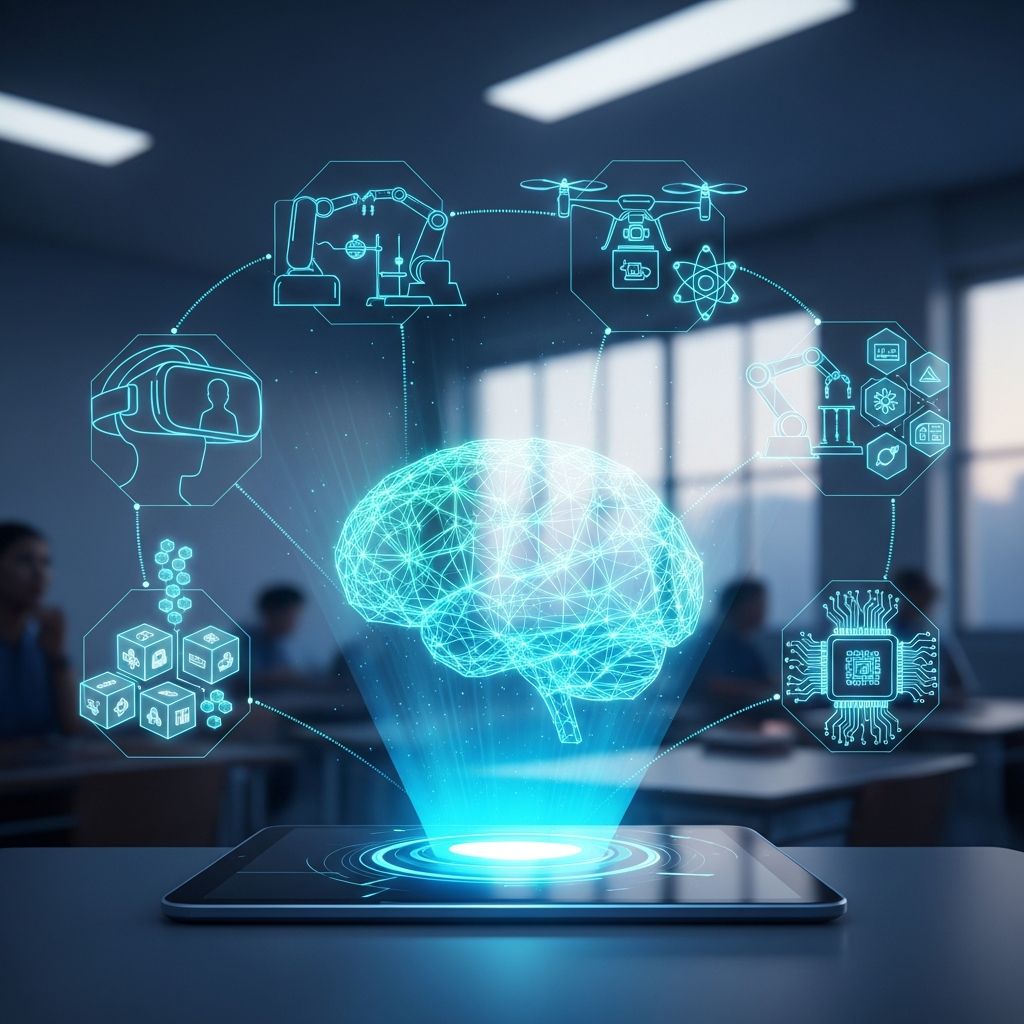
Education in 2026 stands at the intersection of rapid technological advancement and evolving pedagogical needs. Digital tools are no longer supplementary; they form the backbone of engaging, equitable, and effective learning experiences. From AI systems that tailor content to individual learners to immersive simulations that bring abstract concepts to life, these innovations address longstanding challenges like student engagement, teacher workload, and skill gaps. This article delves into the most impactful technologies, their applications, benefits, and practical considerations for schools worldwide.
AI-Driven Personalized Learning Platforms
Artificial intelligence has evolved from a novelty to a cornerstone of modern education, enabling platforms that adapt in real-time to each student’s pace and style. These systems analyze performance data to identify weaknesses, recommend resources, and even generate customized lessons, fostering deeper understanding and retention.
According to recent surveys, over 60% of educators now integrate AI daily in classrooms, shifting focus from generic instruction to individualized pathways. For instance, tools like adaptive math programs detect knowledge gaps and adjust difficulty levels dynamically, ensuring no student is left behind. This personalization extends to lesson planning, where AI assists teachers in creating materials aligned with curriculum standards while saving hours of preparation time.
- Real-time analytics: Tracks progress and predicts at-risk students for early intervention.
- Content generation: Produces interactive quizzes, videos, and summaries from core documents.
- Ethical integration: Emphasizes AI literacy to teach responsible use and mitigate cheating risks.
However, implementation demands robust data governance. Schools must invest in secure storage and low-latency networks to handle the surge in data traffic, as AI platforms generate volumes far exceeding traditional systems.
Immersive Realities: VR and AR in Classrooms
Virtual reality (VR) and augmented reality (AR) are transitioning from experimental pilots to everyday tools, projected to command $12.6 billion in educational spending by 2025—a sevenfold rise since 2018. These technologies create simulated environments where students conduct virtual experiments, explore historical sites, or practice vocational skills without physical constraints.
In science education, VR labs allow safe dissection of virtual specimens or simulation of chemical reactions. History lessons come alive through walkthroughs of ancient Rome, enhancing empathy and retention. Vocational training benefits immensely, with AR overlays providing real-time feedback on tasks like welding or surgery.
| Subject Area | VR/AR Application | Key Benefit |
|---|---|---|
| Science | Virtual labs | Cost-effective, safe experiments |
| History | 3D reconstructions | Immersive contextual learning |
| Vocational | Skill simulations | Risk-free practice |
| Language | AR cultural immersion | Interactive conversations |
Challenges include high bandwidth needs and device management. Schools are upgrading networks to support seamless streaming, ensuring equitable access across devices.
Cybersecurity: Safeguarding Digital Learning Ecosystems
As education goes digital, cybersecurity emerges as a student safety imperative, reframing networks as protective infrastructure. With rising threats like data breaches and ransomware, institutions prioritize threat detection, privacy compliance, and secure access protocols.
Key measures include multi-factor authentication, encrypted communications, and AI-powered anomaly detection. This trend aligns with broader data governance efforts, ensuring student information remains confidential amid growing analytics use. For IT teams, it’s about balancing openness for collaboration with ironclad defenses.
- Endpoint protection for devices.
- Regular vulnerability assessments.
- Student privacy training for staff.
Gamification and Microlearning for Engagement
Gamified platforms, grounded in cognitive science, boost motivation through rewards, levels, and narratives. Coupled with microlearning—short, mobile-optimized modules—they cater to shrinking attention spans and on-the-go access.
These tools deliver bite-sized content via apps, ideal for review or skill-building. Evidence shows improved retention when learning feels playful and relevant, with platforms incorporating leaderboards and badges to encourage persistence.
Wearables and Smart Devices in Education
Smart wearables extend beyond fitness, monitoring engagement, attendance, and health in real-time. Devices track focus levels during lessons or provide haptic feedback for special needs students, integrating with classroom systems for holistic insights.
Projections indicate widespread adoption in training, mirroring industrial digital twins for precise skill development.
Data Analytics and Learning Insights
Advanced analytics empower educators with predictive tools to spot trends, personalize interventions, and measure outcomes. Platforms aggregate data from multiple sources, offering dashboards for informed decision-making. This shift demands interoperable systems and ethical data use, strengthening institutional resilience.
Emerging Trends: Lifelong Learning and Power Skills
2026 emphasizes lifelong learning via microcredentials—stackable, industry-recognized certifications—and ‘power skills’ like critical thinking and emotional intelligence, vital in an AI era. Mental health tech, including wellness apps, addresses burnout, promoting sustainable education.
Implementation Strategies for Schools
To harness these technologies:
- Assess infrastructure: Audit networks for AI/VR demands.
- Train staff: Focus on AI ethics and tool proficiency.
- Budget wisely: Prioritize ROI amid tightening funds.
- Partner up: Collaborate with edtech providers for seamless integration.
Digital credentials are rising, offering verifiable skills portfolios for career readiness.
Frequently Asked Questions (FAQs)
What is the role of AI in 2026 education?
AI personalizes learning, automates admin tasks, and provides analytics, with 60% of educators using it daily for adaptive instruction.
How does VR enhance student engagement?
VR creates immersive experiences that make abstract concepts tangible, improving retention across subjects like science and history.
Why is cybersecurity critical now?
With digital expansion, it protects student data and ensures safe online learning environments.
Are microlearning modules effective?
Yes, their short format suits mobile users, boosting completion rates and knowledge retention.
What about equity in edtech access?
Schools address this through device loans, open-source tools, and infrastructure upgrades for all students.
References
- Top Education Technology Trends to Watch Through 2026 — Auvik. 2026. https://www.auvik.com/franklyit/blog/education-networking-trends/
- 5 Biggest K–12 Education Trends for 2026 — Discovery Education. 2026. https://www.discoveryeducation.com/blog/educational-leadership/2026-education-trends/
- Ten Educational Trends: Where Learning is Headed in 2026 — Observatory TEC. 2026. https://observatory.tec.mx/edu-news/ten-educational-trends-where-learning-is-headed-in-2026/
- 2026 Trends in K-12 Education — Hanover Research. 2026. https://www.hanoverresearch.com/reports-and-briefs/k-12-education/2026-trends-in-k-12-education/
- 2026 Education Trends Snapshot — HolonIQ. 2026. https://www.holoniq.com/notes/2026-education-trends-snapshot
- Three Trends We’re Watching in 2026 — 1EdTech. 2026. https://www.1edtech.org/blog/three-trends-were-watching-in-2026
- K–12 Edtech in 2026: Five Trends Shaping the Year Ahead — EdSurge. 2026-01-27. https://www.edsurge.com/news/2026-01-27-k-12-edtech-in-2026-five-trends-shaping-the-year-ahead

- Integrated M.A. in Applied Linguistics, University of Hyderabad
- 5+ years in editorial, instructional, SEO, and research-based writing
Sneha is a relationships and lifestyle writer with a strong foundation in applied linguistics and certified training in relationship coaching. She brings over five years of writing experience to theskillvault, crafting thoughtful, research-driven content that empowers readers to build healthier relationships, boost emotional well-being, and embrace holistic living. Her writing and insights reflect the belief that beauty, happiness, and wellness…