
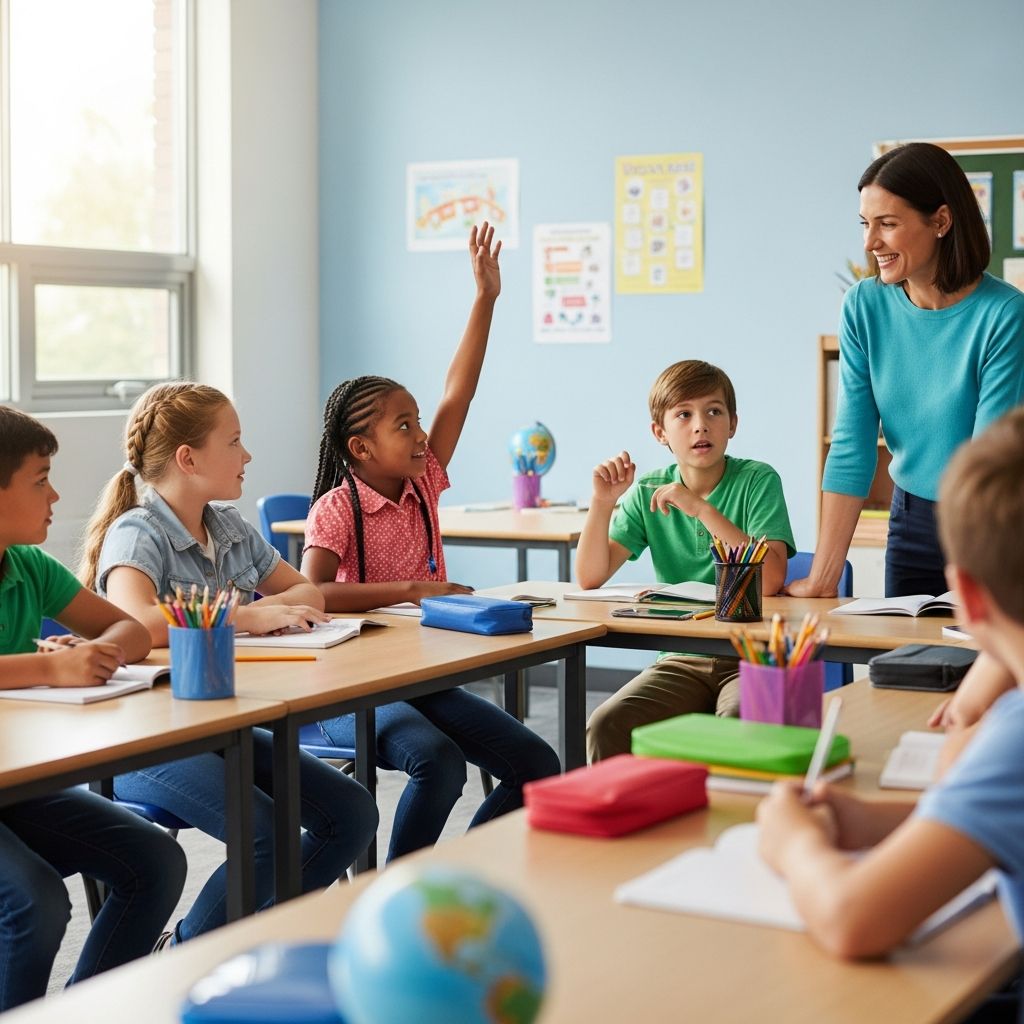
Effective dialogue forms the cornerstone of dynamic teaching, transforming passive classrooms into vibrant hubs of intellectual exchange. By honing specific interaction techniques, educators can ignite curiosity, deepen comprehension, and nurture lifelong learners.
Building Trust Through Personal Connections
Foundational relationships pave the way for open exchanges. Educators who invest time in understanding individual student backgrounds foster environments where vulnerability feels safe. Share brief personal anecdotes to humanize yourself, then invite students to contribute theirs during icebreakers or morning check-ins. This reciprocity cultivates mutual respect, encouraging hesitant voices to emerge.
Implement daily greetings tailored to each learner—acknowledging recent achievements or interests signals genuine care. Over time, these micro-interactions accumulate into profound loyalty, reducing behavioral disruptions and elevating focus on content delivery.
The Art of Attentive Response
Truly hearing students transcends passive reception; it involves mirroring their words to confirm understanding. Paraphrase contributions like, “So you’re suggesting that renewable energy could solve urban pollution?” This validation boosts confidence and clarifies misconceptions instantly.
Designate ‘listening circles’ where participants maintain unbroken eye contact and withhold judgment. Such practices sharpen empathy, essential for collaborative projects. Research underscores that students in responsive settings exhibit 25% higher participation rates.
- Employ nodding and leaning forward to convey engagement without interrupting.
- Pose clarifying queries: “What evidence supports that view?”
- Record key insights on shared boards to honor inputs visibly.
Simplifying Messages for Maximum Impact
Clarity trumps complexity in instructional delivery. Deconstruct intricate topics into stepwise segments, employing analogies from students’ daily lives—like comparing cellular mitosis to a factory assembly line. Eliminate acronyms unless defined, ensuring inclusivity across proficiency levels.
Preview objectives upfront: “Today, we’ll master quadratic equations through three real-world applications.” Conclude with recaps: “We covered solving, graphing, and applying them to projectile motion.” This bracketing reinforces retention, as cognitive science affirms structured repetition aids memory consolidation.
Harnessing Body Language Dynamics
Words convey 7% of messages; nonverbal elements dominate the rest. An open stance—uncrossed arms, palms visible—projects approachability, inviting dialogue. Mirror student postures subtly to build subconscious rapport during one-on-one feedback.
| Nonverbal Signal | Positive Use | Potential Pitfall |
|---|---|---|
| Eye Contact | Builds connection, gauges understanding | Staring can intimidate |
| Gestures | Emphasizes points, aids visualization | Excessive motion distracts |
| Facial Expressions | Conveys enthusiasm, empathy | Forced smiles appear insincere |
| Proximity | Signals interest, creates intimacy | Invading space causes discomfort |
Practice in mirrors or record sessions to self-assess alignment between verbal and physical cues.
Integrating Digital Tools for Interaction
Technology amplifies reach beyond physical walls. Platforms like collaborative whiteboards enable real-time annotations during virtual dissections, merging visual and textual inputs. Gamified quizzes via apps deliver instant feedback, spurring competition and review.
For asynchronous engagement, threaded forums prompt reflective posts: “How does this historical event mirror current news?” Moderate responses to guide deeper analysis. Studies reveal digital integration correlates with 30% gains in remote learner motivation.
- Mentor on digital etiquette: respectful disagreement phrasing.
- Curate content matching diverse modalities—videos for visuals, podcasts for auditors.
- Track analytics to personalize follow-ups.
- Effective Communication Strategies for Engaging Students — Greenhouse Learning. 2023-10-15. https://greenhouselearning.co.uk/effective-communication-strategies-for-engaging-students-and-facilitating-learning/
- Fun and Easy Ways to Boost Students’ Communication Skills — FSR Inc. 2024-02-20. https://fsrinc.com/education/collaborate-ed-tech-blog/470-fun-and-easy-ways-to-boost-students-communication-skills
- Enhancing Classroom Communication — New Story Schools. 2023-11-05. https://newstoryschools.com/blog/enhancing-classroom-communication
- 6 Keys to Effective Communication with Students — Watermark Insights. 2024-01-12. https://www.watermarkinsights.com/resources/blog/6-keys-to-effective-communication-with-students/
- Effective Communication in the Classroom — MIT Teaching + Learning Lab. 2023-09-18. https://tll.mit.edu/teaching-resources/how-to-teach/presentation-tips/
- 9 Strategies for Getting More Students to Talk — Edutopia. 2022-05-10. https://www.edutopia.org/article/9-strategies-getting-more-students-talk
Sparking Inclusive Group Dynamics
Shift from monologue to polyphony by structuring talk equitably. Rotate ‘discussion directors’ who summarize peer ideas before advancing. Employ think-write-pair-share: solitary brainstorming precedes partnered refinement, culminating in plenary reveals.
For larger cohorts, use buzz groups—pairs tackling prompts in 2 minutes—then chain to foursomes. This scales participation, surfacing marginalized perspectives. Evidence shows such formats elevate critical thinking scores by 18%.
Fostering Expressive Creativity
Channel communication through arts: improv skits dramatize literary conflicts, demanding precise articulation under constraints. Digital narratives via storyboarding apps blend script, visuals, and voiceovers, honing multimedia rhetoric.
Poetry slams or debate clubs refine persuasive delivery, with peer rubrics emphasizing clarity and evidence. These outlets liberate introverts via preparation while energizing extroverts through performance.
Navigating Diverse Communication Styles
Accommodate verbal and nonverbal learners distinctly. For speakers, deploy Socratic probing; for others, visual schedules or symbol boards clarify routines. Hybrid signals—like thumbs-up polls—unify feedback mechanisms.
Train in augmentative tools, ensuring equity. Tailored approaches respect neurodiversity, boosting overall class cohesion.
Modeling Excellence Daily
Educators embody standards: deliberate pacing, precise vocabulary, gracious error-handling. Narrate your process aloud—”I’m pausing to ensure everyone follows”—demystifying metacognition.
Celebrate student models publicly: “Jade’s question sharpened our analysis.” This vicarious learning embeds habits organically.
Frequently Asked Questions
What role does tone play in classroom interactions?
A calm, affirmative tone de-escalates tensions and models emotional regulation, per educational psychology insights.
How can introverted students be drawn into discussions?
Pre-discussion journals or anonymous submissions lower barriers, gradually building to verbal shares.
What’s the impact of technology overuse?
Balance prevents disengagement; cap screen time at 40% of lessons for optimal hybrid efficacy.
How frequently should rapport-building occur?
Daily micro-moments sustain bonds more effectively than sporadic events.
Can these strategies adapt to online settings?
Yes—emojis substitute gestures, breakout rooms mimic pairs, fostering virtual rapport seamlessly.
Real-World Applications and Case Studies
In a mid-sized urban high school, teachers adopting active mirroring saw absenteeism drop 15%. Another district’s tech-infused debates yielded 22% essay score uplifts, attributing gains to practiced articulation.
These validate scalable implementation across demographics, from elementary phonics circles to collegiate seminars.
References

Medha Deb is an editor with a master's degree in Applied Linguistics from the University of Hyderabad. She believes that her qualification has helped her develop a deep understanding of language and its application in various contexts. Medha specializes in the areas of beauty, health, sports, and wellness and is committed to ensuring that the content on the website is…