
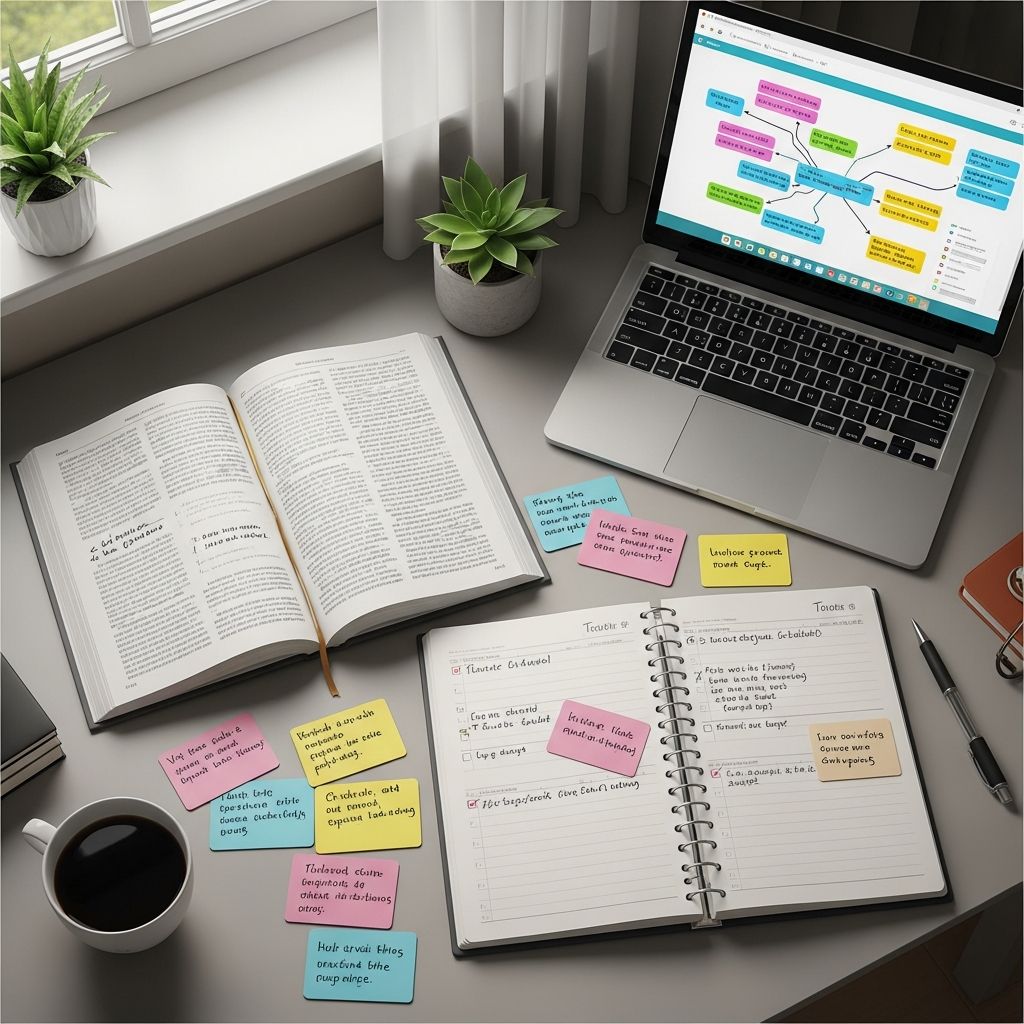
Academic success depends heavily on how you prepare for exams. Rather than relying on last-minute cramming or passive reading, research demonstrates that intentional, strategically-timed study approaches significantly enhance both knowledge retention and test performance. This guide explores practical, evidence-supported methods to transform your exam preparation process.
Understanding Why Traditional Study Methods Fail
Many students struggle with exams not because they lack intelligence, but because they employ inefficient study techniques. Passive review—simply reading notes or textbooks without engagement—ranks among the least effective approaches to learning. The brain requires active interaction with material to transfer information from short-term to long-term memory. When you passively consume information, your mind doesn’t encode it robustly enough for reliable recall during an exam.
Equally problematic is the tendency to study with the singular goal of passing rather than understanding. This surface-level approach creates fragile knowledge that crumbles under pressure or when questions require application beyond memorization. Successful exam preparation demands a deeper commitment to genuine comprehension.
The Power of Distributed Learning Over Time
One of the most transformative insights from cognitive science is the superiority of spaced practice over compressed study sessions. Research consistently shows that you will perform better on an exam if you spend one hour studying each day for twenty days than if you spend ten hours studying each day for two days before the test. This counterintuitive finding stems from how memory consolidation actually works in your brain.
When you space out your studying across an extended period, your brain must work harder to retrieve previously learned information. This retrieval effort strengthens neural pathways and creates more durable memories. Conversely, cramming compresses learning into such a brief window that your brain stores information superficially, making it vulnerable to rapid forgetting.
The optimal approach involves establishing a realistic study schedule well before your exam date. Create a timetable that prioritizes subjects based on difficulty and exam timing. Use digital calendars or study apps to establish reminders and block dedicated study periods. Include buffer days for unexpected delays or final-moment reviews.
Active Engagement: Transforming Passive Reading Into Dynamic Learning
Active learning techniques fundamentally restructure how your brain processes academic material. Rather than remaining a passive recipient of information, you become an active participant in knowledge construction.
Retrieval Practice Approaches
Retrieval practice—the act of pulling information from memory—represents one of the most powerful study techniques available. Each time you retrieve information, you strengthen the neural pathways supporting that knowledge. Multiple effective retrieval methods exist:
- Self-quizzing: Create questions on course material and answer them without consulting your notes. This forces your brain to retrieve information rather than simply recognize it when you see it.
- Practice exams: Full-length practice tests simulate authentic test conditions while providing comprehensive retrieval practice across all covered material.
- Flashcards: Traditional or digital flashcards (such as Anki) facilitate spaced repetition by automatically scheduling reviews when your memory begins to fade.
- Teaching others: Explaining concepts aloud to friends, family members, or even yourself forces you to clarify and solidify understanding. This technique reveals gaps in your knowledge that passive reading never exposes.
When using these retrieval methods, deliberately vary the sequence and format of questions. Changing the order prevents you from simply memorizing question sequences rather than truly learning material. Different question formats strengthen your ability to apply knowledge across contexts.
Visual and Conceptual Mapping
Beyond retrieval practice, visual engagement with material enhances both understanding and retention. Mind mapping involves drawing connections between key ideas, allowing you to visualize how concepts relate to one another. This visual organization helps your brain recognize patterns and hierarchies within complex topics.
Color-coded notes similarly provide visual structure that aids memory formation. By assigning colors to different concept categories or importance levels, you create visual anchors that your brain uses to organize and retrieve information.
Strategic Test Simulation and Practice Exams
Practice exams serve functions far beyond simple knowledge assessment. They function as cognitive dress rehearsals, preparing your brain and body for the demands of actual testing.
To maximize the effectiveness of practice tests, recreate authentic exam conditions as closely as possible. Find a quiet, distraction-free environment. Set a timer matching the actual exam’s time limit. Ideally, take the practice test in the same location where you’ll complete the real exam, as environmental familiarity can reduce test anxiety and improve performance.
After completing a practice test, resist the urge to simply check your score. Instead, conduct a thorough analysis:
- Categorize errors: For each incorrect answer, identify the source of your mistake. Did you lack foundational knowledge? Misunderstand the concept? Misinterpret the question? Experience a memory lapse despite understanding?
- Look for patterns: Examine your previous exams and quizzes to identify consistent patterns in both the style of questions your instructor favors and the types of mistakes you repeatedly make.
- Target weak areas: Use error analysis to guide subsequent study sessions toward your actual gaps rather than re-studying material you already understand.
Time Management and Cognitive Efficiency
Sustainable studying requires balancing focused work periods with adequate breaks. The Pomodoro Technique provides a research-backed framework: study intensively for 25 minutes, take a 5-minute break, and after four cycles, take a longer 15-30 minute break. This structure maintains cognitive sharpness by preventing mental fatigue while regularizing rest.
During breaks, physically move—stretch, walk, or engage in light activity rather than scrolling on your phone. Movement refreshes your mind and supports physical well-being. After longer breaks, return to studying with renewed focus and energy.
Dividing material into manageable chunks prevents cognitive overwhelm. Rather than attempting to master an entire course unit in one session, break it into smaller clusters of related concepts. Study one cluster thoroughly, then move to the next. This chunking approach makes learning feel more achievable and maintains motivation.
Physical and Mental Wellness as Academic Foundations
Exam performance depends substantially on factors extending beyond study techniques themselves. Your physical state directly influences cognitive function.
Sleep represents perhaps the most critical wellness factor for academic success. During sleep, your brain consolidates memories and transfers information from short-term to long-term storage. Sacrificing sleep through all-nighters undermines this consolidation process, leaving you exhausted and cognitively impaired on exam day. Prioritize consistent sleep schedules, aiming for seven to nine hours nightly during exam preparation periods.
Nutrition similarly impacts cognitive performance. The night before your exam, eat balanced meals incorporating foods that sustain energy: omega-3 rich sources like salmon, antioxidant-rich berries, and complex carbohydrates like whole grains. On exam morning, eat a substantial breakfast providing sustained energy release rather than blood-sugar-spiking simple sugars that create afternoon crashes.
Maintain hydration throughout your study sessions and on exam day. Dehydration impairs concentration and cognitive processing. Additionally, monitor caffeine intake carefully—strategic caffeine use can enhance focus, but excessive consumption can increase anxiety and disrupt sleep patterns necessary for memory consolidation.
Emotional wellness matters equally. Exam anxiety is normal, but chronic stress harms both cognitive function and physical health. Schedule study sessions realistically to prevent last-minute panic. If anxiety becomes overwhelming, speak with campus counseling services or academic support professionals who can provide coping strategies.
Organizing Your Physical and Digital Study Environment
Your study environment shapes your ability to focus and retain information. A well-organized space reduces distractions and signals to your brain that focused learning is about to occur. Remove clutter from your desk. Silence notifications on your phone and computer. Use website blockers if necessary to prevent digital distraction.
Organize your study materials logically. Create centralized folders for each course containing lecture notes, assigned readings, previous exams, and study guides. Digital organization prevents wasted time searching for materials and allows you to locate information quickly during study sessions.
Predicting Exam Content and Question Styles
Instructors tend toward consistent patterns in their exam construction. By analyzing previous tests and quizzes, you can predict likely questions and study formats. Review past exams to identify:
- Preferred question types (multiple choice, essay, short answer, problem-solving)
- Conceptual emphasis areas your instructor consistently highlights
- Depth of knowledge required (factual recall versus conceptual application)
- Topics from lectures versus textbooks that appear most frequently
Use this analysis to guide your preparation strategy. If your instructor favors application questions, practice applying concepts to new scenarios. If essays dominate, practice writing timed essays explaining key concepts.
When past exams are unavailable, create your own predicted questions or ask study partners to generate questions they’d include if designing the exam. The process of question creation itself deepens understanding while preparing you for likely exam content.
Customizing Your Approach to Your Learning Style
While these strategies prove effective broadly, the optimal techniques vary based on your individual learning preferences and the subject matter. Some students thrive with visual techniques like mind mapping, while others prefer auditory approaches like explaining concepts aloud.
Experiment systematically with different strategies during low-stakes preparation to identify your most effective methods before high-stakes exams arrive. Track which techniques produce the best results for different subject types. Develop a personalized exam preparation approach grounded in what actually works for your brain.
Final Thoughts on Sustainable Exam Success
Effective exam preparation isn’t about working harder—it’s about working smarter. By embracing spaced practice, active engagement, strategic simulation, and holistic wellness, you transform exam preparation from a stress-inducing scramble into a manageable, even enjoyable process. The key is beginning early, maintaining consistency, and continuously refining your approach based on what evidence shows actually enhances learning and retention.
Frequently Asked Questions
How far in advance should I begin exam preparation?
Begin reviewing material as soon as your course starts. For cumulative exams covering extensive content, early preparation proves especially crucial. A realistic timeline involves consistent daily review throughout the semester rather than intensive preparation only in final weeks.
Is cramming ever effective?
Cramming may help you pass an exam by temporarily holding information in short-term memory, but it produces minimal long-term retention. If you must cram, focus on critical concepts and practice problems rather than passive reading, but recognize this approach undermines both performance and genuine learning.
What should I do on the night before an exam?
Prepare materials the night before so you’re not searching frantically on exam morning. Review your study notes briefly, but prioritize sleep over last-minute studying. A well-rested brain outperforms an exhausted one consistently.
How can I reduce exam anxiety?
Thorough preparation reduces anxiety naturally—confidence built through knowing material substantially decreases test-day nervousness. Additionally, practice exams under authentic conditions familiarize your nervous system with testing situations, reducing the anxiety associated with unfamiliarity.
References
- Exam Study Strategies — The Institute for Learning and Teaching, Colorado State University. Accessed January 2026. https://tilt.colostate.edu/undergrad/exam-study-strategies/
- Exam preparation: Ten study tips — QS TopUniversities. Accessed January 2026. https://www.topuniversities.com/student-info/health-and-support/exam-preparation-ten-study-tips
- Exam Preparation Strategies — Tompkins Cortland Community College. Accessed January 2026. https://www.tompkinscortland.edu/exam-preparation-strategies
- Study Strategies: How to prepare for exams — Randolph-Macon College. Accessed January 2026. https://www.rmc.edu/news/how-to-prepare-for-exams/
- 10 Effective Study Tips and Techniques to Try This Year — University of Saint Augustine for Health Sciences. Accessed January 2026. https://www.usa.edu/blog/study-techniques/
- 14 Tips for Test Taking Success — Harvard Summer School. Accessed January 2026. https://summer.harvard.edu/blog/14-tips-for-test-taking-success/
- Five-Day Study Plan — Cornell University Learning Strategies Center. Accessed January 2026. https://lsc.cornell.edu/how-to-study/studying-for-and-taking-exams/the-five-day-study-plan/

Medha Deb is an editor with a master's degree in Applied Linguistics from the University of Hyderabad. She believes that her qualification has helped her develop a deep understanding of language and its application in various contexts. Medha specializes in the areas of beauty, health, sports, and wellness and is committed to ensuring that the content on the website is…