
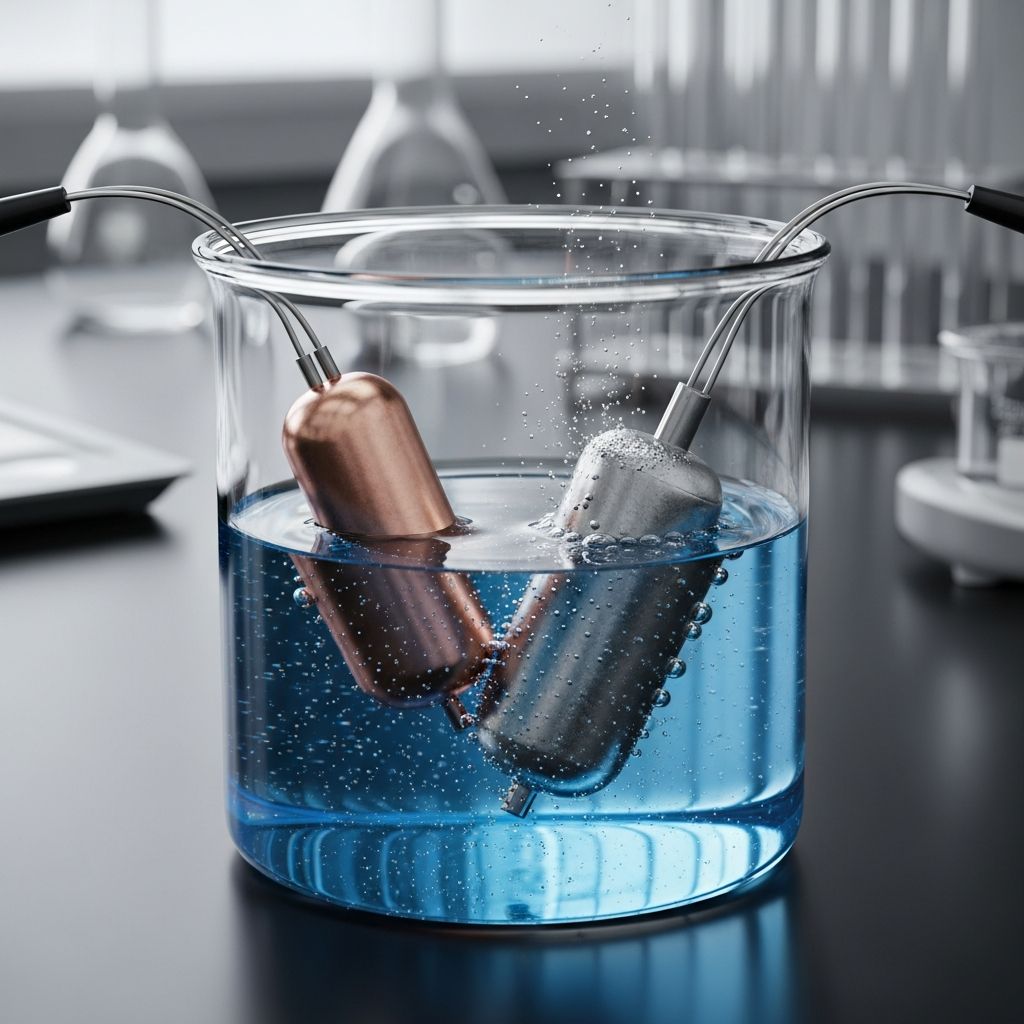
Electroplating stands as a cornerstone of modern manufacturing, enabling the deposition of thin metal layers onto substrates to dramatically improve their properties. This electrochemical technique leverages electricity to transfer metal ions from a solution onto a surface, creating coatings that resist corrosion, enhance appearance, and boost functionality. Widely applied in jewelry, automotive parts, electronics, and aerospace components, electroplating combines scientific precision with industrial scalability to meet diverse needs.
Core Principles Behind Electroplating
At its heart, electroplating relies on electrolysis, where an electric current drives the movement of charged particles in an electrolyte solution. The process transforms metal ions into a solid metallic layer on a conductive object. Key components include the cathode—the substrate receiving the coating—the anode made from the plating metal or an inert material, an electrolyte bath rich in metal salts, and a direct current power source.
When current flows, oxidation at the anode releases metal ions into the solution, while reduction at the cathode deposits these ions as a uniform layer. Factors like current density, bath temperature, pH levels, and agitation profoundly influence coating quality, thickness, and adhesion. Precise control ensures even deposition, preventing defects like pitting or burning.
- Cathode: Negatively charged substrate where plating occurs.
- Anode: Positively charged source of metal ions.
- Electrolyte: Conductive solution, often containing copper sulfate or nickel salts.
- Power Supply: Provides DC current, typically 1-10 volts.
Step-by-Step Electroplating Workflow
Successful electroplating demands meticulous preparation and execution. The workflow begins with substrate cleaning to remove oils, oxides, or contaminants via degreasing, acid pickling, or ultrasonic methods. This ensures strong adhesion and uniform coverage.
- Surface Preparation: Clean and activate the substrate.
- Bath Setup: Prepare electrolyte with precise chemical balance.
- Immersion: Submerge cathode and anode in the bath.
- Electrification: Apply DC current for 5-60 minutes, monitoring parameters.
- Rinsing and Finishing: Rinse, dry, and optionally polish or passivate.
Variations like barrel plating tumble small parts in rotating drums for efficiency, ideal for fasteners or screws. Continuous plating lines handle high-volume production in reel-to-reel formats for electronics.
Popular Metals and Their Unique Roles
Different metals serve specific purposes in electroplating, selected based on desired traits.
| Metal | Key Properties | Common Uses |
|---|---|---|
| Gold | Corrosion-resistant, conductive | Electronics, jewelry |
| Silver | High conductivity, reflectivity | Connectors, mirrors |
| Copper | Excellent conductivity, ductility | PCBs, undercoats |
| Nickel | Wear-resistant, magnetic | Automotive, tools |
| Chromium | Hardness, tarnish-proof shine | Bumpers, fixtures |
Chrome plating, for instance, often involves a nickel underlayer for adhesion, delivering the iconic bright finish on vehicles. Gold plating thicknesses range from flash (0.1-0.5 microns) for electronics to heavy (5-20 microns) for durable contacts.
Advantages Driving Industrial Adoption
Electroplating offers unmatched versatility and cost-effectiveness. It enhances base materials like steel or plastic with premium properties without full replacement. Corrosion protection extends part life in harsh environments, while improved lubricity reduces friction in engines.
Aesthetically, it provides lustrous finishes rivaling solid metal. Electrically, it ensures reliable conductivity in circuits. Economically, it allows cheap substrates like zinc die castings to mimic expensive ones. In electroforming, thick deposits create precise molds or bellows.
- Durability: Up to 1000+ hours salt spray resistance.
- Precision: Thickness control to microns.
- Sustainability: Reusable baths minimize waste.
Challenges and Modern Solutions
Despite benefits, electroplating faces hurdles like hydrogen embrittlement in high-strength steels, mitigated by baking post-plating. Environmental concerns from hexavalent chromium have spurred trivalent alternatives, safer and RoHS-compliant. Waste management involves ion exchange or electrowinning to recover metals.
Advancements include pulse plating for denser coatings and nanotechnology additives for self-healing properties. Automation with robotics ensures consistency in high-volume settings.
Electroplating in Key Industries
Electronics and Semiconductors
In PCBs, copper electroplating forms conductive traces, with nickel-gold caps preventing oxidation. Wafer-level plating enables micro-scale interconnects vital for chips.
Automotive and Aerospace
Chrome-nickel plating on pistons and gears withstands extreme wear. Aluminum parts receive cadmium or zinc-nickel for aviation corrosion resistance.
Jewelry and Decorative Arts
Rhodium over silver prevents tarnishing, while PVD hybrids blend vacuum deposition with electroplating for luxury watches.
Medical and Renewable Energy
Platinum-iridium coatings on implants ensure biocompatibility. Fuel cell components use gold-platinum for catalysis.
Future Directions in Electroplating Technology
Industry trends point to greener processes, like ionic liquids replacing aqueous baths for reduced water use. Alloy plating, such as Ni-P for self-lubrication, expands capabilities. Integration with 3D printing allows on-demand plating of complex geometries. Research into biotech-inspired electrolytes promises even finer control.
With global demand rising—projected market growth to $21 billion by 2028—electroplating evolves to meet sustainability and miniaturization challenges.
Frequently Asked Questions (FAQs)
What distinguishes electroplating from electroforming?
Electroplating deposits thin functional layers (microns), while electroforming builds thick, freestanding structures (millimeters) for molds or meshes.
Can non-metals be electroplated?
Yes, plastics like ABS are etched and seeded with conductive palladium before plating, common in automotive emblems.
How thick are typical electroplated coatings?
From 0.1 microns (flash gold) to 50+ microns (heavy nickel), tailored to application needs.
Is electroplating environmentally friendly?
Modern processes recover 95%+ of metals and use non-toxic chemistries, far greener than historical methods.
What safety precautions are essential?
Ventilation for fumes, PPE against acids, and grounding to prevent shocks.
References
- Electroplating — Wikipedia. 2023-10-15. https://en.wikipedia.org/wiki/Electroplating
- What Is Electroplating? — US Chrome Corporation. 2023-05-20. https://www.uschrome.com/what-is-electroplating/
- What is Electroplating & How Does it Work — Sharretts Plating. 2024-01-12. https://www.sharrettsplating.com/blog/what-electroplating/
- Electroplating Explained — Fractory. 2023-08-07. https://fractory.com/electroplating-explained/
- Electroplating 101: How Metal Plating Works — Formlabs. 2023-11-03. https://formlabs.com/blog/electroplating-metal-plating/
- Electroplating — Chemistry LibreTexts. 2024-02-28. https://chem.libretexts.org/Bookshelves/Analytical_Chemistry/Supplemental_Modules_(Analytical_Chemistry)/Electrochemistry/Electrolytic_Cells/Electroplating
- What is Electroplating? — AZoM. 2023-09-14. https://www.azom.com/article.aspx?ArticleID=24209

- Integrated M.A. in Applied Linguistics, University of Hyderabad
- 5+ years in editorial, instructional, SEO, and research-based writing
Sneha is a relationships and lifestyle writer with a strong foundation in applied linguistics and certified training in relationship coaching. She brings over five years of writing experience to theskillvault, crafting thoughtful, research-driven content that empowers readers to build healthier relationships, boost emotional well-being, and embrace holistic living. Her writing and insights reflect the belief that beauty, happiness, and wellness…