
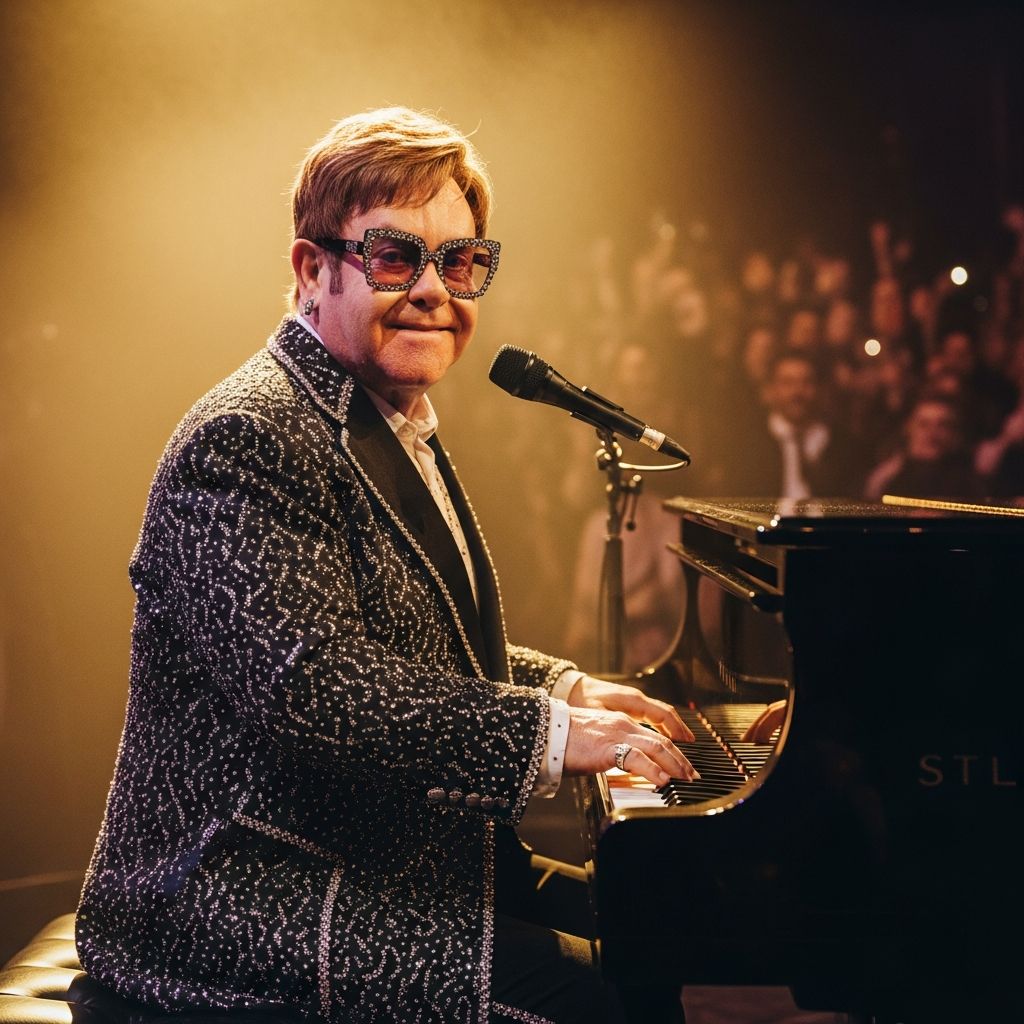
Elton John is known worldwide for his glittering outfits, unforgettable ballads, and powerful presence at the piano. Behind the feathers and sequins, however, lies a complex personality: intensely emotional, fiercely driven, and deeply committed to the people and causes he cares about. This article explores Elton John through a personality lens – how his temperament, values, and inner conflicts helped shape not just his career, but his lasting cultural legacy.
The Making of a Flamboyant yet Sensitive Star
Elton John – born Reginald Kenneth Dwight – did not simply appear as a fully formed superstar. His personality developed in tension between a reserved upbringing and an inner urge to express himself loudly, colorfully, and emotionally. Drawing on his biography, public interviews, and career milestones, we can see several key psychological forces at work:
- Early musical talent paired with a shy, introspective child who often felt misunderstood.
- Powerful emotional intensity that found its safest outlet in music and performance rather than conversation.
- A need to be seen and valued that helped drive his showmanship and tireless work ethic.
- Inner conflict between vulnerability and control, visible in both his lyrics and his public struggles with addiction.
These dynamics created the foundation for a performer who could command stadiums yet speak directly to private pain, often within the same song.
Showmanship as Self-Expression, Not Just Spectacle
Elton John’s stage image – outrageous glasses, elaborate costumes, theatrical gestures – is not just a marketing choice; it reflects how he channels personality into performance. In the 1970s, he fused rock, pop, and glam aesthetics into a unique persona that turned concerts into emotional theater.
Psychologically, this flamboyance serves several functions:
- Amplifying emotion: Bright colors and dramatic outfits visually match the intensity of his music.
- Creating distance: A carefully built persona can protect the private person behind the public figure.
- Signaling freedom: Defying norms of masculinity and dress became a statement about authenticity and self-acceptance.
- Building connection: Fans feel invited into a world where feeling deeply and dressing boldly are both allowed.
| Visible Trait | How It Appears on Stage | Underlying Psychological Role |
|---|---|---|
| Flamboyant costumes | Feathers, sequins, brightly colored suits, oversized glasses | Expresses individuality, reduces self-consciousness, invites playfulness |
| High-energy performance | Leaping from the piano bench, interacting with the audience | Channels emotional intensity, creates shared excitement |
| Emotional ballads | Slow, heartfelt delivery of songs like “Your Song” and “Candle in the Wind” | Offers controlled vulnerability, builds intimacy with listeners |
| Humor and banter | Self-deprecating jokes, playful remarks between songs | Relieves tension, balances heavy emotions, maintains approachability |
Emotion at the Piano: Sensitivity as a Superpower
Many of Elton John’s most loved songs are not the loudest or flashiest, but the most vulnerable. Ballads such as “Your Song,” “Rocket Man,” and “Candle in the Wind” reveal a songwriter deeply in tune with loneliness, longing, grief, and hope. He often writes music to Bernie Taupin’s lyrics in remarkably little time, suggesting strong intuitive musical processing and emotional responsiveness.
From a personality perspective, this points to:
- High emotional sensitivity: An ability to feel complex emotions quickly and intensely, then translate them into melody.
- Empathy: His songs frequently give voice to the marginalized or misunderstood, from astronauts to outcasts and grieving friends.
- Reflective awareness: Later works openly grapple with regret, recovery, and self-acceptance, showing growing psychological insight.
Rather than hiding this sensitivity, Elton John built his career on it. In doing so, he helped normalize emotional openness in male performers at a time when vulnerability in pop and rock could be seen as weakness.
Drive, Discipline, and the Work Ethic Behind the Legend
Beneath the free-spirited image lies a rigorous professional. Between 1970 and 1976, Elton John released an extraordinary run of hit albums, including Honky Château and Goodbye Yellow Brick Road, achieving seven consecutive number-one records in the United States. Across his career he has sold hundreds of millions of records worldwide, making him one of the best-selling music artists in history.
This level of achievement reflects traits often overlooked in discussions of creative personalities:
- Relentless productivity: Writing, recording, and touring at a pace few artists can sustain.
- Professionalism: Collaborating successfully with long-term partners such as Bernie Taupin, and later Tim Rice, across decades.
- Adaptability: Moving between rock, pop, film soundtracks, and musical theater, including work on Disney’s The Lion King and stage productions like Aida and Billy Elliot.
- Persistence through setbacks: Reviving his career multiple times after personal and commercial challenges, from the 1980s into the 1990s and beyond.
These qualities counter the stereotype that highly emotional or flamboyant people cannot be disciplined. Elton John demonstrates that strong feelings and strong focus can reinforce each other when directed toward meaningful goals.
Identity, Sexuality, and the Courage to Be Seen
Elton John’s personality is also defined by how publicly he has navigated identity and sexuality. In an era when many gay and bisexual performers stayed closeted, he became one of the first male pop stars to come out and later one of the most visible openly gay musicians in the world.
This process was not simple or linear, but it underscores several core character traits:
- Honesty: Moving toward a life that aligned his private reality with his public image, even when risky.
- Courage: Coming out in a hostile climate, knowing it might affect his career and personal safety.
- Advocacy: Using his visibility to support LGBTQ+ rights and normalize queer lives in mainstream culture.
The authenticity that shines through Elton John’s music is mirrored in his personal life. As his career evolved, his public presence shifted from guarded and sometimes volatile to more grounded and family-oriented, reflecting a growing sense of self-acceptance.
From Self-Destruction to Self-Leadership
Like many high-intensity, high-achieving performers, Elton John faced serious struggles with addiction and mental health. He has spoken openly about periods of heavy substance use and self-destructive behavior at the height of his fame, followed by his decision to seek help and commit to long-term recovery.
This transformation highlights several important psychological capacities:
- Self-awareness: Recognizing the cost of his behaviors on his health, creativity, and relationships.
- Capacity for change: Willingness to accept support, including treatment and new routines.
- Resilience: Returning from crisis to produce acclaimed albums, perform globally, and take on new creative ventures.
- Redirection of intensity: Turning the same drive that once fueled excess toward philanthropy and purposeful work.
His openness about these experiences has also helped reduce stigma around addiction and mental health struggles, especially among high-profile figures.
Compassion in Action: Philanthropy and Moral Commitment
Another defining layer of Elton John’s personality is his commitment to philanthropy. In 1992 he established the Elton John AIDS Foundation, which has become one of the leading independent AIDS charities in the world, funding prevention, treatment, and advocacy projects internationally. His charitable activities have focused particularly on HIV/AIDS and LGBTQ+ rights, reflecting both empathy for marginalized groups and a strong sense of justice.
His philanthropic profile includes:
- Founding a major charitable foundation dedicated to ending the AIDS epidemic and supporting affected communities.
- Leveraging fame for fundraising, through benefit concerts, events, and partnerships.
- Receiving honors such as a knighthood from Queen Elizabeth II for services to music and charitable work.
These efforts reveal a personality that does not see success as purely individual. Instead, Elton John routinely uses his influence to support others, turning personal values into concrete action.
Recognition, Legacy, and the Desire to Leave a Mark
Elton John’s awards and honors tell a clear story about his standing in entertainment history. He is one of the few performers to achieve EGOT status – winning an Emmy, Grammy, Oscar, and Tony – a marker of success across television, music recording, film, and theater. He has also been inducted into the Rock and Roll Hall of Fame and the Songwriters Hall of Fame, and honored with prizes such as the Polar Music Prize.
These recognitions suggest not only external validation but also internal motivations:
- Ambition: A sustained drive to push himself into new formats and challenges rather than resting on early success.
- Desire for lasting impact: Choosing projects – like film soundtracks and stage musicals – that will be experienced by generations.
- Pride in craft: A focus on songwriting and composition as serious artistic work, not just celebrity.
Across five decades, Elton John’s personality has shaped not only his own path but also expectations of what a pop star, songwriter, and public figure can be.
What Elton John Teaches Us About Personality and Creativity
Although Elton John’s life is extraordinary, the psychological themes it illustrates are universal. His story highlights how personality traits can become strengths when channeled with intention:
- High sensitivity can be a creative gift when paired with supportive outlets like art, performance, or writing.
- Flamboyance and humor can help people cope with pain while also inspiring others to be braver.
- Ambition and discipline can transform raw talent into a lasting body of work.
- Authenticity and advocacy can turn personal struggles into sources of hope and change for others.
Elton John’s journey from shy piano prodigy to global icon shows how embracing one’s full personality – the loud parts and the quiet parts, the polished and the imperfect – can lead not only to success but to a meaningful life.
Frequently Asked Questions (FAQs)
Q: How did Elton John’s personality influence his music style?
Elton John’s emotionally intense and highly expressive personality pushed him toward dramatic melodies, powerful ballads, and theatrical arrangements. His comfort with bold self-expression encouraged experiments with glam rock, elaborate stage shows, and collaborations across genres, from rock to film scores and Broadway musicals.
Q: Is Elton John more of a showman or a songwriter?
He is both. While his flamboyant stage presence made him instantly recognizable, his long-term legacy rests heavily on his songwriting partnership with Bernie Taupin and his ability to craft memorable melodies. Over his career he has released dozens of studio albums, earned multiple songwriting honors, and been inducted into the Songwriters Hall of Fame, underscoring the depth of his compositional work.
Q: What personality traits helped Elton John sustain such a long career?
Key traits include intense emotional sensitivity, strong intrinsic motivation, a disciplined work ethic, adaptability across musical styles, and resilience in the face of personal and professional challenges. His willingness to evolve – in sound, image, and subject matter – allowed him to remain relevant across changing musical eras.
Q: How has Elton John’s openness about his struggles and identity affected his public image?
His candid discussion of addiction, recovery, and sexuality has humanized him and deepened public respect. As one of the first major male pop stars to live openly as a gay man and as a prominent advocate for HIV/AIDS causes, he has shaped perceptions of LGBTQ+ people in mainstream culture and used his platform to support social change.
Q: What can creative people learn from Elton John’s approach to personality and career?
Elton John’s example suggests that creative individuals can benefit from embracing, rather than suppressing, their unique traits – whether sensitivity, flamboyance, or intensity. By pairing strong self-expression with discipline, collaboration, and a sense of purpose beyond personal fame, he demonstrates a model for a sustainable, impactful creative life.
References
- Elton John – Laureates — Polar Music Prize. 2010-06-01. https://www.polarmusicprize.org/laureates/elton-john/
- Elton John — Encyclopaedia Britannica. 2024-03-26. https://www.britannica.com/biography/Elton-John
- Elton John · The Rock and Roll Beat — William J. Clinton Presidential Library. 2014-01-01. https://clinton.presidentiallibraries.us/exhibits/show/rock/elton-john
- Elton John — Official biography summary, BBC Music / referencing discography and chart records. 2019-11-01. https://www.bbc.co.uk/music/artists/9c9f1380-2516-4fc9-a3e6-f9f61941d090
- Elton John — Songwriters Hall of Fame. 1992-06-01. https://www.songhall.org/profiles/elton_john
- Elton John’s Top 10 Career Highlights — Universal Music New Zealand. 2019-12-01. https://umusic.co.nz/originals/elton-johns-top-10-career-highlights/
- List of awards and nominations received by Elton John — Overview of major entertainment awards (EGOT status). 2023-10-15. https://www.emmys.com/bios/elton-john

- Integrated M.A. in Applied Linguistics, University of Hyderabad
- 5+ years in editorial, instructional, SEO, and research-based writing
Sneha is a relationships and lifestyle writer with a strong foundation in applied linguistics and certified training in relationship coaching. She brings over five years of writing experience to theskillvault, crafting thoughtful, research-driven content that empowers readers to build healthier relationships, boost emotional well-being, and embrace holistic living. Her writing and insights reflect the belief that beauty, happiness, and wellness…