
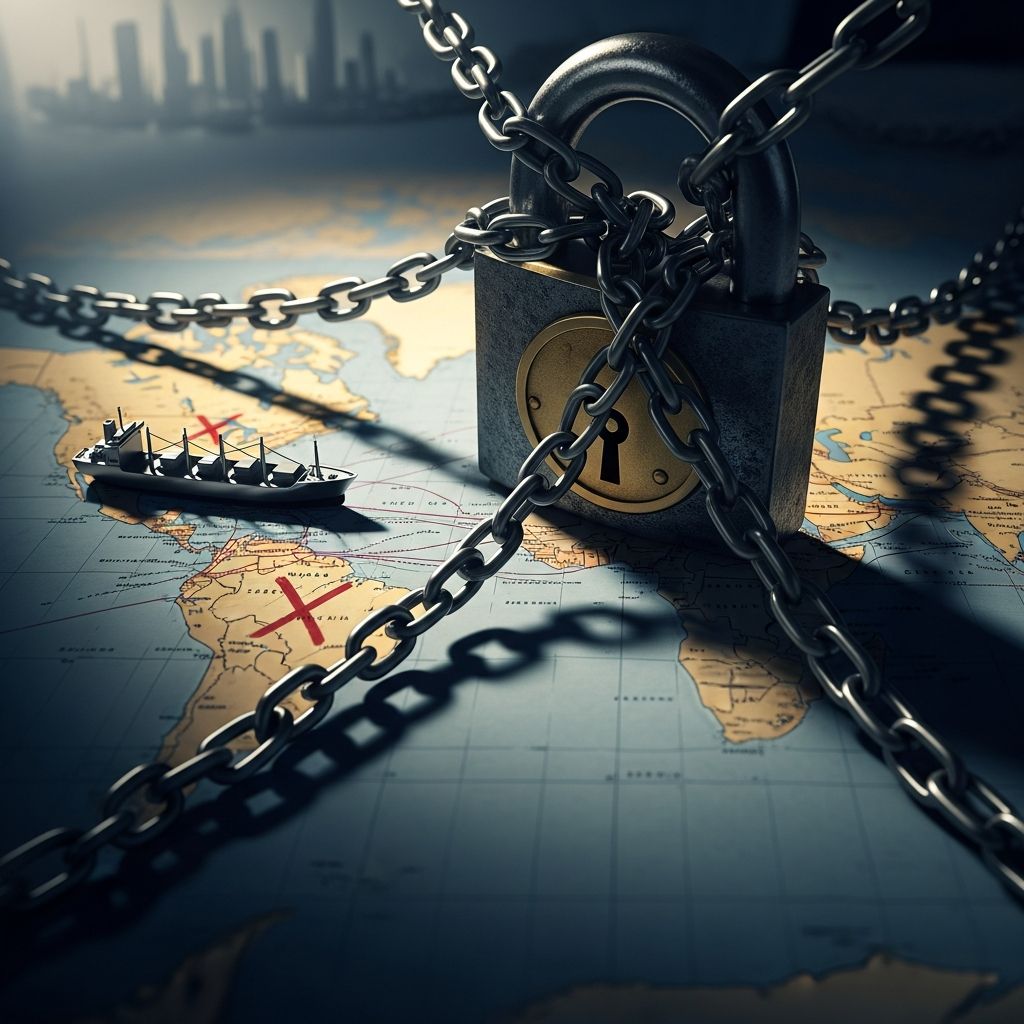
Embargoes represent a critical mechanism in international relations, where governments impose restrictions on trade to exert pressure on other nations. These measures disrupt the flow of goods, services, and sometimes even information, serving as non-military tools to influence foreign policy or domestic behavior.
Defining Embargoes in Economic and Legal Terms
At its core, an embargo is a formal prohibition issued by a government that halts or severely limits the import or export of specific commodities, services, or financial transactions with a targeted country. Unlike tariffs, which tax goods to generate revenue, embargoes outright ban trade activities, aiming to isolate the target economically. This definition extends beyond merchandise to include technology transfers, arms sales, and currency movements, making embargoes versatile instruments of coercion.
Legally, embargoes derive from a nation’s sovereign right to regulate commerce. They can be unilateral, enacted by a single country, or multilateral, coordinated through international bodies like the United Nations. The term originates from Spanish and Portuguese maritime law, referring to orders detaining ships in port, a practice that evolved into broader economic warfare tactics.
Historical Roots of Trade Embargoes
The concept of embargoes dates back over two millennia. One of the earliest recorded instances occurred in 432 BC when Athens, under leader Pericles, barred trade with neighboring Megara for desecrating sacred sites. This ancient embargo strained Megara’s economy, illustrating how trade denial could force compliance without direct conflict.
During the Age of Sail, European powers frequently used naval embargoes to detain merchant vessels, protecting domestic shipping or punishing adversaries. The 19th century saw embargoes evolve with industrialization; the U.S. imposed the Embargo Act of 1807 against Britain and France to counter naval impressment, though it backfired by harming American exporters more than intended. These precedents laid the groundwork for modern embargoes as strategic diplomacy tools.
Categories and Variations of Embargoes
Embargoes are not monolithic; they vary by scope, duration, and target. Here’s a breakdown:
- Total Embargoes: Complete cessation of all trade, rare due to humanitarian concerns. They aim for maximum isolation but often invite smuggling.
- Partial Embargoes: Target specific sectors like oil, arms, or luxury goods. For instance, arms embargoes prevent weapon sales to conflict zones.
- Export vs. Import Embargoes: Export bans stop domestic firms from selling to the target, while import bans block foreign goods from entering. Combined versions amplify pressure.
- Multilateral Embargoes: Backed by coalitions, such as UN resolutions, enhancing legitimacy and enforcement.
Table comparing embargo types:
| Type | Description | Example Impact |
|---|---|---|
| Total | All trade halted | Severe economic collapse |
| Partial | Sector-specific | Targeted pressure on key industries |
| Arms | Weapons only | Limits military capabilities |
| Financial | Currency/services | Disrupts banking and investment |
Mechanisms: How Governments Enforce Embargoes
Implementing an embargo requires robust legal frameworks, customs enforcement, and international cooperation. Governments issue executive orders or legislation, monitored by agencies like the U.S. Office of Foreign Assets Control (OFAC). Violations incur heavy fines, asset seizures, or criminal charges.
Multinational efforts often involve sanctions committees that grant exemptions for essentials like food and medicine. Despite this, enforcement challenges persist: black markets thrive, third-country transshipments evade controls, and diplomatic loopholes allow selective compliance. Technology, such as blockchain tracking for finance, is increasingly used to plug gaps.
Real-World Applications: Landmark Embargo Cases
The U.S. Embargo on Cuba
Since 1960, the United States has maintained a comprehensive embargo against Cuba following the communist revolution. Aimed at isolating Fidel Castro’s regime, it prohibits most trade, travel, and financial dealings. While weakening Cuba’s economy, it has fostered resilience through alliances with Russia and Venezuela, sparking debates on efficacy.
Oil Embargoes and Energy Crises
In 1973, OPEC nations, led by Arab states, imposed an oil embargo on supporters of Israel during the Yom Kippur War. This quadrupled prices, triggering global recessions and accelerating energy diversification in the West. It demonstrated how resource-dependent embargoes can boomerang on imposers if demand shifts.
Arms Embargoes in Conflict Zones
The UN’s arms embargo on North Korea since 2006 seeks to curb its nuclear program by banning weapons-related exports. Enforcement relies on naval interdictions, though evasion via proxies persists, highlighting limitations against determined actors.
Economic Ripples: Winners, Losers, and Unintended Fallout
Embargoes inflict asymmetric damage. Targeted nations face shortages, inflation, and GDP contraction—oil exporters suffer immensely without buyers. Imposing countries lose markets; U.S. firms missed Cuban tourism revenue for decades.
Unintended effects include:
- Humanitarian Costs: Civilians endure medicine and food scarcity.
- Black Market Boom: Smuggling inflates prices and funds illicit networks.
- Geopolitical Shifts: Targets pivot to rival powers, strengthening adversaries.
- Domestic Backlash: Industries lobby against prolonged measures.
Studies show embargoes succeed in only 30-40% of cases for policy change, often entrenching regimes.
Embargoes vs. Sanctions: Key Distinctions
Though related, embargoes differ from sanctions. Embargoes broadly prohibit trade; sanctions are narrower, targeting individuals, entities, or assets via asset freezes or travel bans. Both fall under ‘economic statecraft,’ but embargoes emphasize commerce halts.
| Aspect | Embargo | Sanction |
|---|---|---|
| Scope | Broad trade ban | Targeted penalties |
| Goal | Economic isolation | Behavioral change |
| Examples | Cuba trade halt | Iran bank freezes |
Modern Challenges and Future Directions
In today’s interconnected world, embargoes face hurdles from globalization. Cryptocurrencies bypass financial controls, and supply chains obscure origins. Digital embargoes on tech exports, like Huawei restrictions, signal a shift toward information warfare.
Future trends may involve ‘smart sanctions’ using AI for precise targeting, minimizing civilian harm while maximizing pressure. International law, via WTO disputes, increasingly scrutinizes embargoes for discrimination.
Frequently Asked Questions (FAQs)
What is the primary purpose of an embargo?
An embargo primarily aims to economically pressure a target country into altering its policies, without resorting to military action.
Can embargoes be lifted easily?
Lifting requires political will and often legislative approval; longstanding ones like Cuba’s persist due to domestic lobbies.
Do embargoes always work?
No, they fail when targets find alternatives or when costs rebound on imposers, as in the 1973 oil crisis.
Are embargoes legal under international law?
Yes, as sovereign acts, but UN Charter Article 41 authorizes multilateral ones for threats to peace.
How do businesses navigate embargoes?
Companies conduct compliance audits, use licensed exemptions, and monitor OFAC lists to avoid penalties.
References
- Embargo – Definition, How They Happen, Types, Effects — Corporate Finance Institute. 2023-05-15. https://corporatefinanceinstitute.com/resources/economics/embargo/
- Embargo: Let’s Not Trade — Academy 4SC Learning Hub. 2022-08-10. https://learn.academy4sc.org/video/embargo-lets-not-trade/
- Embargo – Definition, Meaning & Synonyms — Vocabulary.com. 2024-01-20. https://www.vocabulary.com/dictionary/embargo
- EMBARGO Definition & Meaning — Merriam-Webster. 2025-11-12. https://www.merriam-webster.com/dictionary/embargo
- United Nations Security Council Resolutions on DPRK — United Nations. 2024-03-28. https://www.un.org/securitycouncil/content/resolutions-concerning-dprk

- Integrated M.A. in Applied Linguistics, University of Hyderabad
- 5+ years in editorial, instructional, SEO, and research-based writing
Sneha is a relationships and lifestyle writer with a strong foundation in applied linguistics and certified training in relationship coaching. She brings over five years of writing experience to theskillvault, crafting thoughtful, research-driven content that empowers readers to build healthier relationships, boost emotional well-being, and embrace holistic living. Her writing and insights reflect the belief that beauty, happiness, and wellness…