
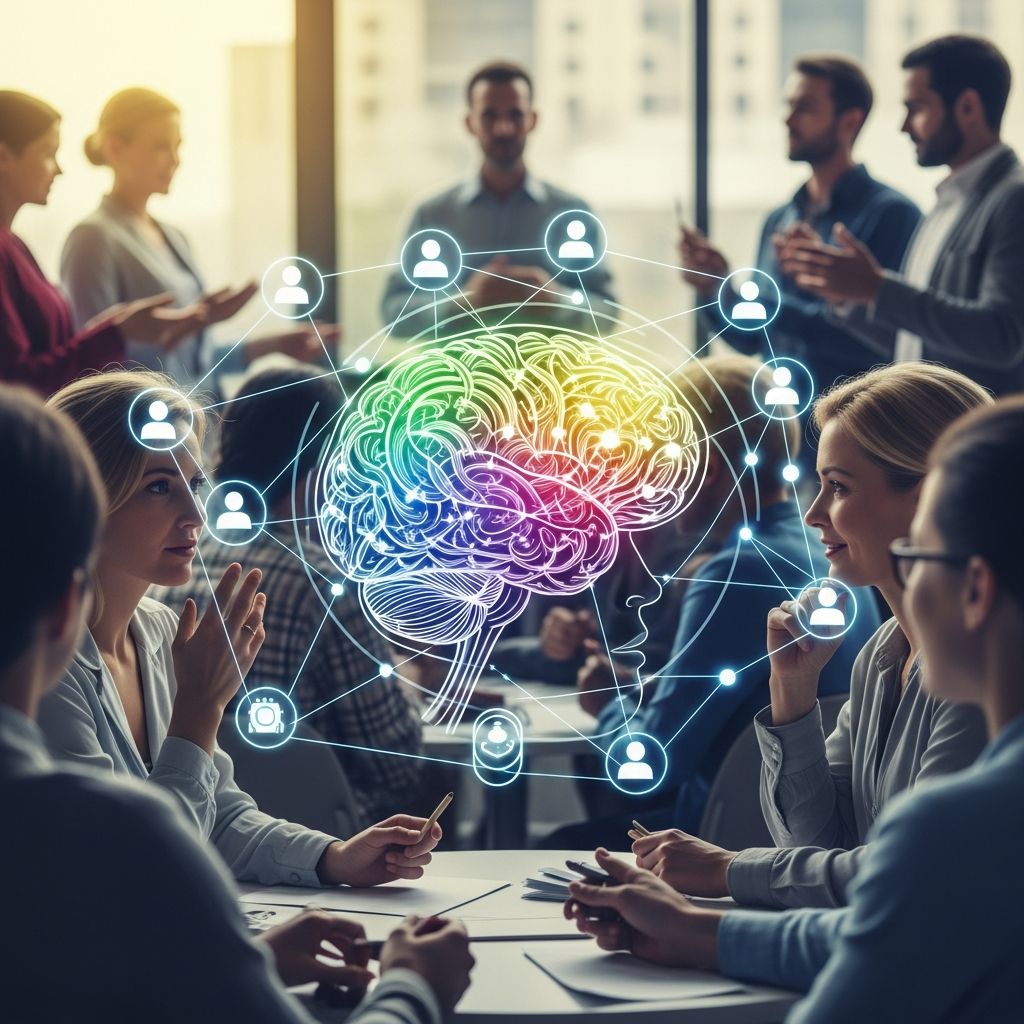
Emotional intelligence (EI) forms the foundation for effective social skills, enabling individuals to navigate interpersonal dynamics with confidence and empathy. By developing EI, people can better perceive emotions, regulate responses, and foster meaningful connections in diverse settings.
Understanding the Core of Emotional Intelligence
Emotional intelligence encompasses the ability to recognize, understand, and manage one’s own emotions while also discerning and influencing the emotions of others. This multifaceted competency includes self-awareness, self-regulation, motivation, empathy, and social adeptness.
- Self-Awareness: The starting point of EI, involving accurate recognition of personal emotions and their impact on thoughts and behavior.
- Self-Regulation: Controlling impulsive feelings and adapting to changing circumstances with discipline.
- Motivation: Harnessing emotions to pursue goals with persistence and optimism.
- Empathy: Understanding others’ emotional states and perspectives.
- Social Skills: Applying EI to manage relationships effectively.
Research demonstrates that higher EI correlates with superior social functioning, as individuals with strong emotional perception and regulation exhibit more adaptive peer interactions.
Defining Social Skills in the EI Framework
Social skills within EI refer to competencies that allow individuals to handle and positively influence others’ emotions. These skills complete the EI model, building on internal emotional mastery to external relational success.
Key social skills include persuasion, communication, conflict resolution, leadership, change catalysis, rapport-building, and teamwork. These abilities enable people to create harmony, resolve disputes, and collaborate productively.
| Skill Category | Description | Benefits |
|---|---|---|
| Communication | Clear expression and active listening | Reduces misunderstandings |
| Conflict Management | Addressing issues directly and empathetically | Prevents escalation |
| Teamwork | Valuing relationships alongside tasks | Enhances group productivity |
| Leadership | Inspiring and guiding others emotionally | Fosters trust and motivation |
Distinguishing Emotional from Social Intelligence
While emotional intelligence focuses on internal emotional processing—self-awareness and regulation—social intelligence emphasizes external navigation of social contexts. EI is inward-oriented, dealing with personal emotions, whereas social intelligence involves reading social cues, adapting behavior, and influencing group dynamics.
Social intelligence builds on EI by incorporating skills like social perception, active listening, and adaptability. Leaders with high social intelligence excel in complex environments by combining empathy with strategic interpersonal maneuvers.
- Emotional Intelligence: Manages self-emotions and perceives others’ feelings.
- Social Intelligence: Applies this to broader social navigation and relationship building.
Building Self-Awareness for Stronger Interactions
Self-awareness is crucial for social success, as it allows individuals to monitor their emotional states and adjust behaviors accordingly. Those skilled in self-awareness respond thoughtfully rather than reactively in social situations.
To cultivate this:
- Practice mindfulness to identify emotional triggers.
- Seek feedback from trusted peers.
- Journal daily emotions and their influences.
Studies show self-aware individuals form deeper connections, as they communicate authentically and avoid projecting unresolved feelings.
Harnessing Self-Regulation in Social Contexts
Self-regulation prevents emotional hijacking, enabling calm and constructive engagement. In social settings, it manifests as composure under pressure and flexibility in interactions.
Effective strategies include deep breathing, pausing before responding, and reframing negative thoughts. Regulated individuals handle criticism gracefully and maintain positivity, enhancing their social appeal.
The Role of Motivation in Social Engagement
Intrinsic motivation drives persistent effort in relationships, viewing challenges as growth opportunities. Motivated people inspire others through enthusiasm, strengthening social bonds.
Emotionally motivated individuals prioritize long-term relational goals over short-term discomforts, leading to sustained teamwork and loyalty.
Developing Empathy: The Bridge to Others
Empathy, the ability to feel and understand others’ emotions, is pivotal for social skills. It fosters trust and rapport, essential for collaboration.
High empathy correlates with better peer relationships, as empathetic people detect subtle emotional cues and respond supportively. Build empathy by:
- Practicing perspective-taking exercises.
- Engaging in active listening without judgment.
- Exposing yourself to diverse viewpoints.
Advanced Social Skills: Communication and Influence
Superior communication integrates verbal clarity with emotional attunement. Effective communicators read nonverbal signals, clarify ambiguities, and tailor messages.
Influence skills involve ethical persuasion, aligning others’ emotions with shared objectives. Leaders use this to motivate teams without coercion.
Managing Conflict with Emotional Acumen
Conflict management requires addressing issues promptly while validating emotions. Skilled managers de-escalate tensions through empathy and clear boundaries.
Approaches include focusing on behaviors not personalities, seeking win-win solutions, and following up to rebuild trust.
Leadership and Team Dynamics
Emotionally intelligent leaders excel by modeling self-regulation and empathy, creating inclusive environments. They navigate change by communicating vision emotionally.
Teamwork thrives when members value interpersonal bonds equally to tasks, promoting cooperation and innovation.
Practical Strategies to Enhance EI-Driven Social Skills
Improving these skills demands deliberate practice:
- Daily Reflection: Assess interactions for emotional insights.
- Role-Playing: Simulate social scenarios to build adaptability.
- Feedback Loops: Regularly solicit and act on input.
- Mentorship: Learn from socially adept role models.
- Mindfulness Training: Strengthen awareness and regulation.
Adolescents with high EI, for instance, better manage peer pressures, leading to positive socialization outcomes.
Applications in Professional and Personal Life
In workplaces, EI social skills boost leadership effectiveness and team performance. Personally, they deepen friendships and family ties.
Educational settings benefit from EI training, enhancing student behavior and academic success through improved social-emotional learning.
Measuring Progress in Social-Emotional Competencies
Track growth via self-assessments, 360-degree feedback, and observed behavioral changes. Tools based on Mayer and Salovey’s model evaluate perception, facilitation, and regulation.
FAQs
What is the difference between emotional and social intelligence?
Emotional intelligence centers on personal emotion management, while social intelligence focuses on interpersonal navigation and group dynamics.
How does empathy improve social skills?
Empathy builds trust and understanding, facilitating better relationships and conflict resolution.
Can social skills be learned?
Yes, through practice, feedback, and EI development, anyone can enhance these competencies.
Why is self-regulation key in leadership?
It enables calm decision-making and inspires team confidence during challenges.
How do I start building rapport?
Practice active listening, show genuine interest, and mirror positive emotional cues.
References
- Relationship between Emotional Intelligence, Social Skills and Peer Social Support in Adolescents — PMC (National Library of Medicine). 2020-07-01. https://pmc.ncbi.nlm.nih.gov/articles/PMC7345273/
- The Difference Between Emotional Intelligence and Social Intelligence — Iliyana Stareva. 2023-05-15. https://www.iliyanastareva.com/blog/the-difference-between-emotional-intelligence-and-social-intelligence
- Social Skills in Emotional Intelligence | SkillsYouNeed — SkillsYouNeed. 2024-01-10. https://www.skillsyouneed.com/ips/social-skills-emotional-intelligence.html
- The Power of Social Intelligence: Why Leaders Need to Master Social and Emotional Skills — Workplace Peace Institute. 2023-11-20. https://www.workplacepeaceinstitute.com/post/the-power-of-social-intelligence-why-leaders-need-to-master-social-and-emotional-skills
- Social & Emotional Intelligence – Conscious Change Study — Conscious Change Study. 2022-09-05. https://www.consciouschangestudy.org/social-emotional-intelligence-literature-review
- Emotional Intelligence by Daniel Goleman: Social Skills — Wind4Change. 2023-02-14. https://wind4change.com/emotional-intelligence-daniel-goleman-work-social-skills/
- Social and Emotional Intelligence: An Introductory Guide — Positive Action. 2024-03-12. https://www.positiveaction.net/blog/social-and-emotional-intelligence

- Integrated M.A. in Applied Linguistics, University of Hyderabad
- 5+ years in editorial, instructional, SEO, and research-based writing
Sneha is a relationships and lifestyle writer with a strong foundation in applied linguistics and certified training in relationship coaching. She brings over five years of writing experience to theskillvault, crafting thoughtful, research-driven content that empowers readers to build healthier relationships, boost emotional well-being, and embrace holistic living. Her writing and insights reflect the belief that beauty, happiness, and wellness…