
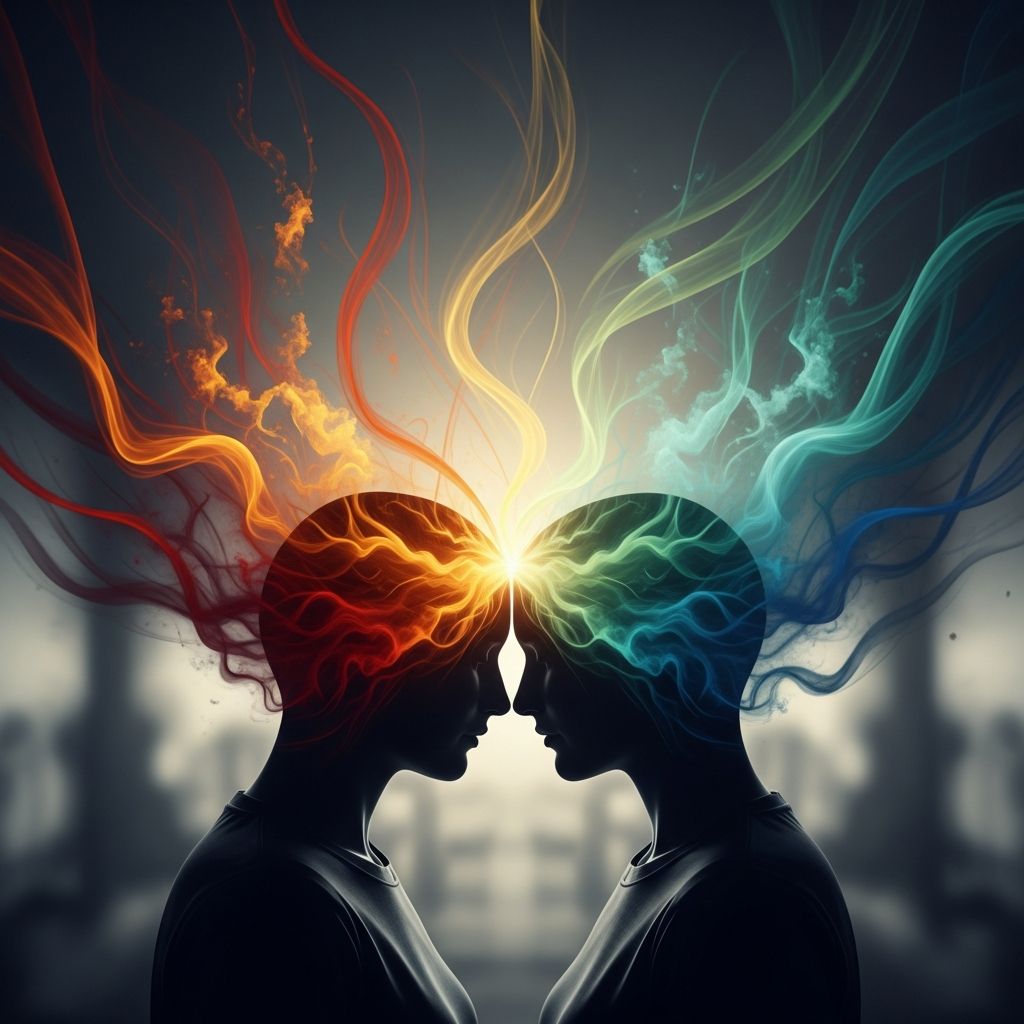
Empathy stands as a cornerstone of human interaction, enabling individuals to grasp and share the emotional experiences of others. Defined by the American Psychological Association as understanding a person from their frame of reference rather than one’s own, empathy bridges gaps in communication and fosters meaningful relationships.
Defining Empathy in Modern Psychology
At its core, empathy involves vicariously experiencing another’s feelings, perceptions, and thoughts. This psychological capacity goes beyond mere observation, requiring both emotional resonance and cognitive perspective-taking. Researchers distinguish it from sympathy, where sympathy involves feeling pity for someone’s misfortune without fully stepping into their viewpoint, whereas empathy motivates deeper understanding and potential action.
Emotion researchers further describe empathy as sensing others’ emotions while imagining their thoughts and feelings. This dual process—sensing and imagining—forms the foundation for pro-social behaviors that strengthen societal bonds.
Core Components of Empathy
Empathy manifests through interconnected neural networks that allow perception of emotions, emotional resonance, perspective-taking, and self-other distinction. This complexity enables compassionate responses, turning awareness into supportive action.
- Perception: Detecting subtle emotional cues in facial expressions, tone, and body language.
- Resonance: Internally mirroring those emotions to feel them authentically.
- Understanding: Analyzing the context behind the emotions.
- Response: Choosing appropriate actions to alleviate distress.
Types of Empathy: A Comprehensive Breakdown
Psychologists categorize empathy into three primary types: cognitive, emotional (or affective), and compassionate. Each plays a unique role in social dynamics, from intellectual comprehension to heartfelt connection and behavioral intervention.
| Type | Description | Example | Potential Pitfalls |
|---|---|---|---|
| Cognitive Empathy | Intellectually grasping another’s thoughts and perspectives without necessarily feeling their emotions. | A negotiator understanding a counterpart’s strategy to find common ground. | Can be used manipulatively if lacking genuine care. |
| Emotional Empathy | Sharing the actual feelings of another, often through emotional contagion via mirror neurons. | Feeling sadness when a friend shares a loss, mirroring their grief. | May lead to personal distress or burnout from over-absorption. |
| Compassionate Empathy | Combining understanding and feeling with motivation to help, prompting tangible support. | Volunteering time to aid someone in crisis after empathizing deeply. | Requires boundaries to avoid self-sacrifice. |
Cognitive empathy relies on rational analysis, drawing from personal knowledge of similar situations to project understanding. Emotional empathy taps into the mirror neuron system, involuntarily echoing others’ affective states. Compassionate empathy elevates these by driving prosocial action, reducing stress and boosting well-being for both giver and receiver.
Empathy vs. Sympathy: Clearing the Confusion
A common misconception equates empathy with sympathy. Sympathy acknowledges suffering from a distance, often as pity, without emotional immersion. Empathy, conversely, involves active perspective adoption, frequently spurring helpful behaviors. For instance, saying “That’s unfortunate” reflects sympathy, while “I can see how overwhelming that must feel for you” demonstrates empathy.
This distinction matters in therapeutic and relational contexts, where empathy builds trust more effectively than detached condolence.
The Science Behind Empathy
Neuroscientific studies reveal empathy’s roots in sophisticated brain interplay. Key regions like the insula and anterior cingulate cortex facilitate emotional resonance, while the prefrontal cortex handles perspective-taking. This neural symphony allows differentiation between self and other emotions, preventing confusion.
Empathy also correlates with emotional intelligence, aiding in guilt recognition, sarcasm detection, and relational bonding. Those with higher empathy levels excel in helping professions, navigating nuances of others’ experiences with precision.
Why Empathy Matters: Benefits Across Life Domains
Cultivating empathy yields multifaceted advantages. In personal relationships, it deepens intimacy by validating partners’ inner worlds. Professionally, empathetic leaders inspire teams, resolve conflicts, and boost morale—skills vital in customer service and management.
- Improved Communication: Accurate emotional reading reduces misunderstandings.
- Enhanced Leadership: Empathetic managers foster loyalty and productivity.
- Better Mental Health: Practicing empathy lowers personal stress and elevates self-worth.
- Societal Impact: Promotes altruism, reducing isolation in communities.
Studies show compassionate empathizers experience less stress and higher life satisfaction, underscoring empathy’s role in holistic well-being.
Developing Your Empathetic Abilities
While some possess innate empathy, it remains a trainable skill. Start with active listening: focus fully, paraphrase to confirm understanding, and withhold judgment. Practice perspective-taking by mentally inhabiting others’ circumstances daily.
Techniques include:
- Mirroring non-verbal cues subtly to build rapport.
- Journaling emotional responses to diverse scenarios.
- Engaging in role-playing exercises for cognitive growth.
- Reading fiction to simulate varied viewpoints.
Mindfulness meditation strengthens self-other boundaries, preventing emotional overload. Over time, these habits recalibrate neural pathways, enhancing empathetic precision.
Challenges and Pitfalls in Empathetic Practice
Excessive emotional empathy risks compassion fatigue, especially in high-stress roles like healthcare. Cognitive empathy without compassion can veer into manipulation. Balancing types ensures sustainable empathy.
Individuals with conditions like autism may struggle with cognitive aspects, yet compensatory strategies like explicit emotional education prove effective.
Empathy in Professional and Therapeutic Settings
In psychotherapy, empathy forms the therapeutic alliance’s bedrock, enabling clients to feel truly seen. Customer service thrives on cognitive empathy to anticipate needs, while educators use compassionate empathy to support struggling students.
Organizations training empathy see reduced turnover and heightened innovation, as diverse perspectives converge harmoniously.
Real-World Applications and Case Studies
Consider a manager using cognitive empathy during team conflicts: by articulating each side’s rationale, resolution accelerates. In healthcare, nurses employing compassionate empathy improve patient outcomes through attentive care.
Global initiatives, like empathy-focused conflict resolution programs, demonstrate scalability, mitigating societal divides.
Frequently Asked Questions (FAQs)
What is the main difference between empathy and sympathy?
Empathy involves understanding and sharing another’s feelings from their perspective, often leading to action, while sympathy is feeling pity without deep immersion.
Can empathy be learned?
Yes, through practices like active listening, perspective-taking, and mindfulness, anyone can enhance their empathetic skills.
Is too much empathy harmful?
Over-reliance on emotional empathy can cause burnout; balance with cognitive boundaries is essential.
How does empathy benefit leadership?
Empathetic leaders build trust, improve team dynamics, and drive better decision-making.
What role do mirror neurons play in empathy?
They enable emotional contagion, allowing us to instinctively mirror others’ affective states.
Conclusion: Embracing Empathy for a Connected World
Mastering empathy equips us to navigate human complexity with grace, turning awareness into action. By honing its types and overcoming barriers, individuals contribute to more compassionate societies.
References
- Understanding The Empathy Definition | BetterHelp — BetterHelp (Medically reviewed by Andrea Brant, LMHC and Dr. April Brewer, DBH, LPC). 2023. https://www.betterhelp.com/advice/general/understanding-empathy-definition-psychology-practice-and-application/
- Empathy Definition, Types & Examples – Lesson – Study.com — Study.com. 2023. https://study.com/academy/lesson/types-of-empathy.html
- Empathy Definition | What Is Empathy – Greater Good Science Center — Greater Good Science Center, UC Berkeley. 2023. https://greatergood.berkeley.edu/topic/empathy/definition
- The Science of Empathy – PMC — National Center for Biotechnology Information (PMC). 2017-06-30. https://pmc.ncbi.nlm.nih.gov/articles/PMC5513638/
- Empathy 101: 3+ Examples and Psychology Definitions — PositivePsychology.com. 2023. https://positivepsychology.com/empathy-psychology/
- Empathy – APA Dictionary of Psychology — American Psychological Association. 2023. https://dictionary.apa.org/empathy

Medha Deb is an editor with a master's degree in Applied Linguistics from the University of Hyderabad. She believes that her qualification has helped her develop a deep understanding of language and its application in various contexts. Medha specializes in the areas of beauty, health, sports, and wellness and is committed to ensuring that the content on the website is…