
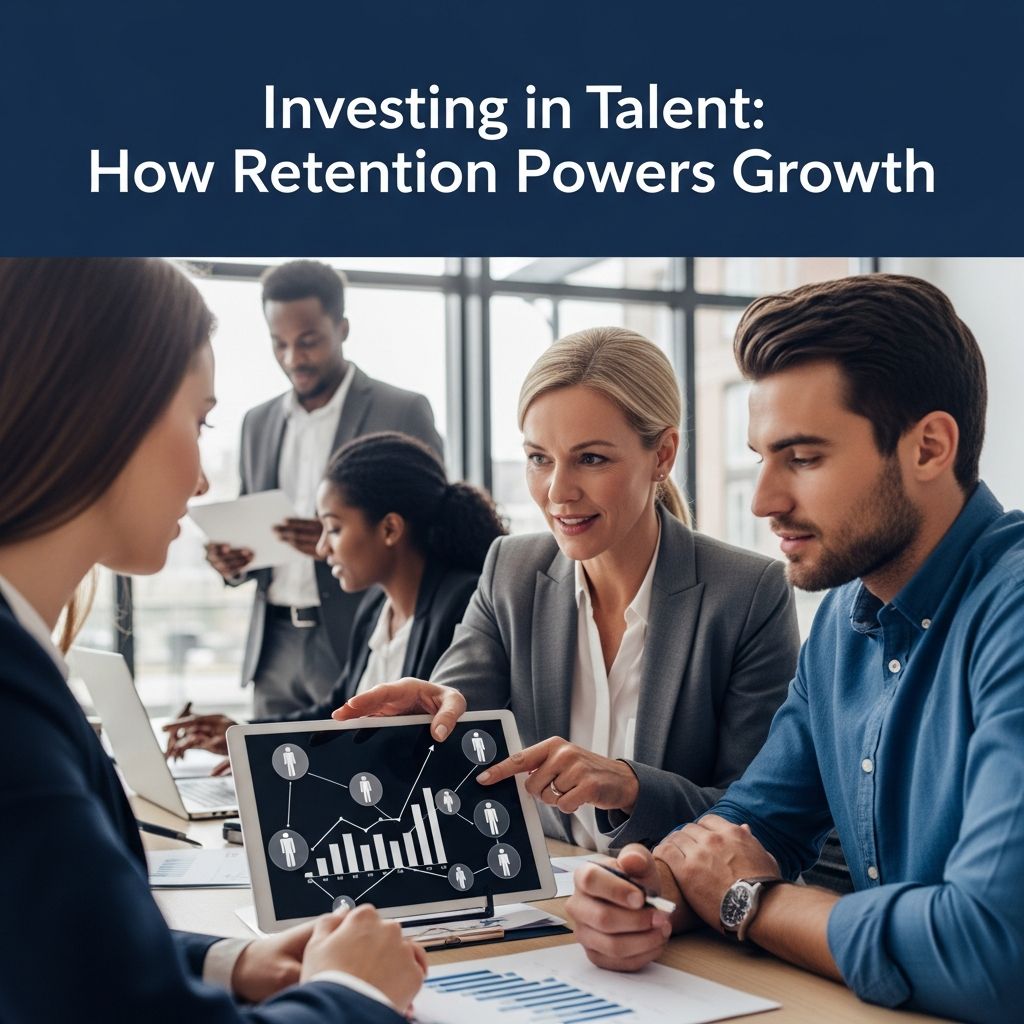
Organizations are operating in a talent market where skilled employees have more choice, higher expectations, and less patience for poor workplace experiences. In this environment, employee retention is no longer a nice-to-have metric—it is a core growth strategy that shapes profitability, innovation, and brand reputation.
This article explains how intentional retention programs transform people investment into measurable business value, and how leaders can design retention strategies that are both human-centered and performance-driven.
Why Retention Belongs at the Center of Business Strategy
Employee retention refers to a company’s ability to keep employees over time and reduce unnecessary turnover. High retention signals a healthy work environment and strong employee experience, while chronic turnover usually indicates deeper structural problems in culture, leadership, or rewards.
Industry research shows that retention has powerful business effects:
- Lower replacement costs: Replacing an employee can cost up to about 200% of that person’s annual salary when you factor in hiring, onboarding, and lost productivity.
- Stronger performance: Organizations with engaged, long-tenured employees report higher productivity and profitability than those with disengaged workforces.
- More stable operations: Retention preserves institutional knowledge, processes, and relationships that are difficult and time-consuming to rebuild.
In short, retention is not just about keeping people; it is about protecting the capability and experience that enable a company to execute its strategy at scale.
The True Cost of Turnover Versus the Value of Retention
Turnover is often underestimated because organizations focus on visible costs—recruitment fees or signing bonuses—while overlooking hidden impacts on productivity, quality, and morale.
| Aspect | When Turnover Is High | When Retention Is Strong |
|---|---|---|
| Direct costs | Frequent hiring, onboarding, and training expenses | Lower recruiting volume, focused development spending |
| Productivity | Knowledge loss, ramp-up time, workflow disruptions | Experienced teams, faster execution, fewer errors |
| Customer experience | Inconsistent service, fragmented relationships | Continuity, trust, and higher customer loyalty |
| Culture and morale | Instability, burnout, disengagement | Psychological safety, engagement, collaboration |
| Innovation | Short-term focus, limited cross-functional learning | Shared history supports experimentation and ideas |
Research from Bank of America and others highlights that stable staffing supports higher productivity, better morale, and more consistent customer experiences—three critical ingredients for sustainable small business growth as well as large-enterprise performance.
How Retention Programs Drive Company Growth
When companies treat retention as a strategic investment rather than a reactive HR activity, they unlock compounding advantages across the business.
1. Reduced Costs and Higher ROI on Talent
High retention allows companies to redirect funds away from constant hiring and toward developing existing talent.
- Recruitment and onboarding budgets can be partially reallocated to learning, coaching, and internal mobility.
- Leaders spend less time backfilling roles and more time on strategy, innovation, and customer impact.
- Longer tenures mean each dollar invested in training generates more value over time.
This shift—from transactional hiring to developmental investment—is a key mechanism by which retention supports long-term growth.
2. Stronger Engagement and Discretionary Effort
Employees who feel valued, supported, and fairly treated are more engaged and typically deliver higher discretionary effort. Engagement, in turn, is strongly linked to outcomes such as quality, safety, customer satisfaction, and profitability.
Retention programs that reinforce engagement often focus on:
- Meaningful work: Clear line-of-sight between individual roles and organizational mission.
- Voice and involvement: Real opportunities to propose ideas and influence decisions.
- Recognition: Timely, specific acknowledgment of contributions from peers and leaders.
3. Knowledge Continuity and Operational Excellence
When experienced employees leave, they take with them critical process knowledge, customer insights, and informal networks that support cross-functional collaboration.
High retention helps organizations:
- Maintain consistent standards in safety, quality, and compliance.
- Optimize operations based on lessons learned over time.
- Ensure smoother succession when leaders change roles or retire.
This continuity is especially valuable in complex industries such as healthcare, manufacturing, or financial services, where errors and delays can be costly.
4. Better Customer Relationships and Brand Reputation
Customers notice when teams are stable. Long-tenured employees build trust, anticipate needs, and provide a consistent experience that drives loyalty.
- Customers are more likely to stay with a provider when they see familiar faces who understand their history.
- Employees who feel well-treated often become brand advocates, improving external reputation and talent attraction.
Over time, a reputation as an employer that cares about people can differentiate a company in both product and talent markets.
5. A Culture That Enables Innovation
Innovation thrives in environments where employees feel safe to take calculated risks, share ideas, and challenge the status quo. Such cultures rarely exist in organizations plagued by constant churn.
Stable teams unlock innovation because:
- Trust grows over time, enabling candid debate and constructive conflict.
- Individuals feel a sense of ownership in improving processes they helped build.
- Cross-functional collaboration benefits from established relationships and shared history.
Core Building Blocks of Effective Retention Programs
There is no universal formula for retention, but research and practice point to several consistent levers that organizations can tailor to their context.
1. Competitive and Fair Total Rewards
Compensation and benefits remain foundational to retention. While pay alone will not secure loyalty, unfair or uncompetitive packages quickly erode trust.
High-impact approaches include:
- Benchmarking salaries and adjusting for market movements and inflation.
- Offering health coverage, retirement plans, and time-off policies that meet employee needs.
- Using performance-based bonuses or profit-sharing to connect rewards with company success.
According to U.S. Bureau of Labor Statistics data, benefits typically account for roughly 30% of total compensation, underlining the importance of designing benefits strategically rather than treating them as add-ons.
2. Growth, Learning, and Internal Mobility
Career stagnation is one of the most common reasons employees leave. In contrast, development and internal mobility are among the strongest predictors of retention.
- Clear career paths with transparent promotion criteria.
- Access to learning: formal courses, stretch assignments, mentoring, and coaching.
- Tuition reimbursement or professional development stipends that signal long-term investment.
Research cited by multiple HR bodies suggests that a large majority of employees are more likely to remain with employers who actively invest in their career development.
3. Manager Capability and Everyday Leadership
Employees often leave managers, not companies. Leadership behavior strongly shapes day-to-day experience, psychological safety, and perceptions of fairness.
Retention-focused organizations invest in:
- Training managers in coaching, feedback, and inclusive leadership.
- Setting expectations for regular one-on-ones and career conversations.
- Holding leaders accountable for engagement and retention metrics on their teams.
4. Flexibility and Wellbeing Support
Flexible work and wellbeing initiatives have moved from optional perks to core retention factors for many employees.
- Flexible scheduling or hybrid arrangements where roles allow.
- Mental health resources such as employee assistance programs, counseling, or resilience training.
- Policies that respect boundaries, including reasonable workload expectations and time-off norms.
5. Recognition, Inclusion, and Voice
Humans stay where they feel seen, respected, and able to contribute authentically.
- Regular, specific recognition from peers and leaders for both results and behaviors.
- Inclusive practices that ensure all employees can participate and grow, regardless of background.
- Feedback mechanisms—surveys, listening sessions, suggestion channels—with visible follow-through.
Designing a Data-Informed Retention Strategy
Effective retention programs are built on evidence, not assumptions. Leading organizations use both quantitative and qualitative data to understand where and why people leave.
Key Metrics to Track
- Overall retention and turnover rates: Tracked over time and segmented by function, level, and location.
- Regrettable versus non-regrettable turnover: Differentiating between departures of critical talent and lower-impact exits.
- Tenure patterns: Identifying typical departure points (e.g., after the first year) to target interventions.
- Engagement and experience scores: From regular, confidential employee surveys.
Listening to Employees
Numbers alone cannot explain the full story. Qualitative insights are essential:
- Stay interviews to understand what keeps people and what might drive them away.
- Exit interviews to surface patterns in reasons for leaving.
- Focus groups or listening circles to explore specific topics like workload, inclusion, or career growth.
Aligning Retention with Business Priorities
Not all roles or skills have equal strategic impact. A targeted retention strategy focuses on:
- Critical roles that directly affect revenue, customer impact, or regulatory risk.
- Scarce or high-demand skills that are expensive and time-consuming to replace.
- High-potential talent who could become future leaders or specialists.
By identifying where turnover is most damaging, organizations can prioritize investments that deliver the highest return.
Practical Steps to Start or Strengthen Retention Programs
Leaders who want to move from awareness to action can begin with a focused, staged approach rather than attempting to solve everything at once.
Step 1: Map Your Current State
- Compile retention, turnover, and engagement data for the last 12–24 months.
- Segment by team, role, tenure, and demographic groups to identify hotspots.
- Compare your metrics to relevant industry benchmarks where available.
Step 2: Listen and Prioritize
- Run short surveys or facilitated discussions to validate the root causes behind turnover hotspots.
- Classify findings into themes: rewards, workload, leadership, growth, flexibility, culture.
- Prioritize 2–3 focus areas with the highest impact and feasibility.
Step 3: Design Targeted Interventions
Examples of focused initiatives include:
- Launching a manager training series where leadership quality is a known issue.
- Creating structured career pathways for roles with high early-career turnover.
- Piloting flexible scheduling in units with burnout-related attrition.
Step 4: Measure, Iterate, and Communicate
- Set clear success metrics (e.g., reduction in turnover in a target group by a specific percentage).
- Review progress quarterly and adjust programs based on data and feedback.
- Communicate transparently about what you are learning and changing to build trust.
Frequently Asked Questions (FAQs)
What is the difference between retention and engagement?
Retention measures whether employees stay, while engagement reflects their emotional commitment and discretionary effort. High engagement usually supports retention, but it is possible to retain disengaged employees who stay only because they lack options. Effective strategies address both experience and outcomes.
How often should we review our retention strategy?
Most organizations benefit from reviewing retention metrics at least quarterly and conducting a deeper strategic review annually. Major changes in business model, leadership, or labor market conditions may warrant more frequent reviews.
Is increasing pay enough to improve retention?
Competitive pay is essential but seldom sufficient on its own. Research shows that factors such as growth opportunities, manager quality, flexibility, and culture are often equally or more important drivers of retention once basic financial needs are met.
Which roles should we prioritize in our retention efforts?
Focus first on roles that are critical to revenue, customer relationships, safety, or regulatory compliance, as well as positions requiring scarce skills that are hard to replace. Use workforce planning and risk analysis to identify these roles.
How can small businesses compete with larger companies on retention?
Smaller organizations may not match enterprise-level pay or benefits, but they can compete through flexibility, close-knit culture, leadership access, and meaningful work. Personalized development plans, transparent communication, and genuine appreciation often carry disproportionate weight in smaller environments.
References
- 8 Business Benefits of Employee Retention — Devsu. 2023-09-26. https://devsu.com/blog/8-business-benefits-of-employee-retention
- How to Use a Benefits Package as Your Most Powerful Employee Retention Tool — Alloy Employer Health. 2024-03-05. https://www.alloyemployer.com/blog/how-to-use-a-benefits-package-as-your-most-powerful-employee-retention-tool
- 14 Amazing Benefits of Employee Retention for Business Success — Vantage Circle. 2023-01-18. https://www.vantagecircle.com/en/blog/benefits-of-employee-retention/
- 8 Employee Retention Strategies for Small Business Owners — Bank of America Business. 2023-05-10. https://business.bankofamerica.com/en/resources/employee-retention
- Improve Employee Retention by Reevaluating Benefits Packages — Society for Human Resource Management (SHRM). 2022-11-15. https://www.shrm.org/topics-tools/tools/hr-answers/benefits-can-employers-offer-to-improve-employee-retention
- Employee Retention Strategies to Keep Top Talent — ADP. 2023-06-20. https://www.adp.com/resources/articles-and-insights/articles/e/employee-retention.aspx
- What Is Employee Retention? Importance, Benefits, and Calculation — Oracle. 2023-04-12. https://www.oracle.com/human-capital-management/employee-retention/

- Integrated M.A. in Applied Linguistics, University of Hyderabad
- 5+ years in editorial, instructional, SEO, and research-based writing
Sneha is a relationships and lifestyle writer with a strong foundation in applied linguistics and certified training in relationship coaching. She brings over five years of writing experience to theskillvault, crafting thoughtful, research-driven content that empowers readers to build healthier relationships, boost emotional well-being, and embrace holistic living. Her writing and insights reflect the belief that beauty, happiness, and wellness…