
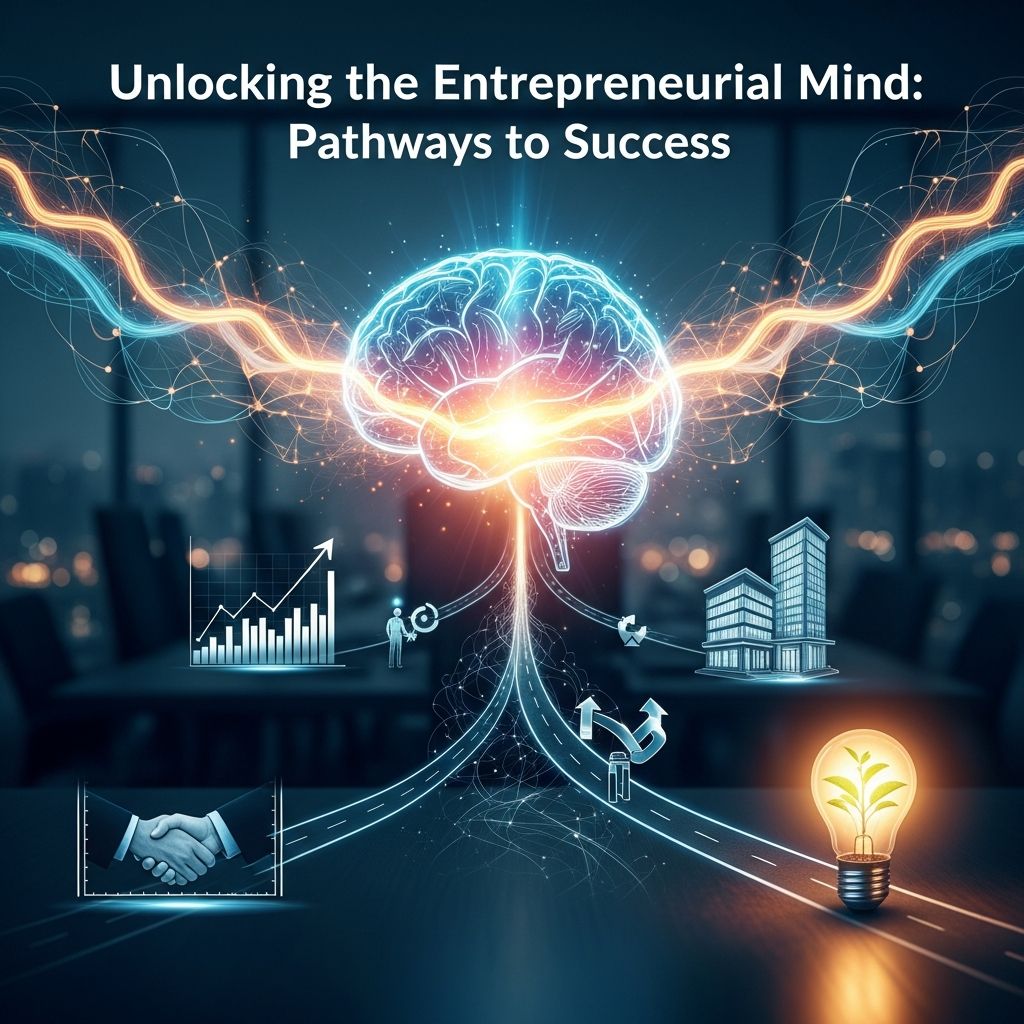
The entrepreneurial mindset represents a powerful framework for turning ideas into reality amid uncertainty. It combines vision, resilience, and action-oriented thinking to drive innovation and growth. This guide outlines critical mental pathways, drawing from academic and expert analyses, to help you cultivate the habits of high-achieving entrepreneurs.
Building a Foundation: The Visionary Core
At the heart of entrepreneurial thinking lies a clear vision paired with structured goal-setting. Entrepreneurs distinguish themselves by imagining futures others overlook and mapping precise steps to reach them. This forward-looking approach fuels motivation and aligns daily efforts with long-term ambitions.
- Define Your Horizon: Start by articulating a bold yet achievable vision. Break it into milestones, using tools like SMART goals (Specific, Measurable, Achievable, Relevant, Time-bound) to maintain momentum.
- Visualize Success: Regularly revisit your vision through journaling or mind mapping to reinforce commitment during challenges.
Research from MIT emphasizes that such visionaries remain solutions-oriented, viewing obstacles as stepping stones. Historical figures like Thomas Edison exemplify this, persisting through thousands of failures due to unwavering foresight.
Navigating Change: Embrace Adaptability
Business landscapes evolve rapidly, demanding flexibility from leaders. Adaptable entrepreneurs pivot swiftly, leveraging critical thinking to adjust strategies without losing sight of their mission.
| Challenge Type | Adaptive Response | Expected Outcome |
|---|---|---|
| Market Shifts | Pivot product features based on customer feedback | Increased relevance and sales |
| Unexpected Setbacks | Reallocate resources to core strengths | Sustained operations |
| Competitive Pressure | Innovate unique value propositions | Market differentiation |
This table illustrates practical adaptations. As noted by experts, anti-fragility—thriving in volatility—stems from confidence in one’s core purpose. Entrepreneurs who excel here treat change as an opportunity, not a threat.
Fueling Progress: Proactivity and Initiative
Proactive individuals create opportunities rather than awaiting them. They scan environments for gaps, initiating actions like partnerships or expansions ahead of competitors.
- Scan daily for trends using industry reports and networks.
- Act on insights immediately, prototyping solutions within weeks.
- Build habits like weekly brainstorming sessions to sustain momentum.
Full Focus highlights how this ownership mindset compels entrepreneurs to solve observed problems personally, fostering scrappiness and resourcefulness.
Innovation Engine: Creativity Unleashed
Creativity powers disruption. Entrepreneurs challenge norms, devising novel solutions to unmet needs. This trait involves grayscale thinking—seeing nuances and cross-industry connections others miss.
To cultivate it:
- Question Assumptions: Daily challenge one industry ‘truth’ to spark fresh ideas.
- Cross-Pollinate: Study adjacent fields for inspiration, e.g., applying tech from gaming to education.
- Prototype Rapidly: Test ideas with minimal viable products to iterate quickly.
HBS Online underscores curiosity and experimentation as hallmarks, enabling leaders to improvise and improve existing models.
Steadfast Resilience: Bouncing Back Stronger
Resilience defines endurance. Entrepreneurs view failures as data, maintaining optimism through perseverance. MIT’s framework describes this as ‘anti-fragile,’ where adversity builds strength.
- Practice post-failure reviews: What worked? What to adjust?
- Cultivate routines like exercise and meditation for mental fortitude.
- Seek networks for perspective during downturns.
UAGC notes determination as refusing to fear failure, instead seeking solutions. This mindset turns setbacks into accelerators for growth.
Risk Navigation: Calculated Boldness
Entrepreneurs tolerate risk but calculate it meticulously. They weigh probabilities, starting small to validate assumptions.
Key strategies include:
- Conduct SWOT analyses before major moves.
- Use pilot tests to minimize downside.
- Build financial buffers for 6-12 months of operations.
Comfort with risk, per NFTE, pairs with future orientation, ensuring decisions align with long-term viability.
Self-Mastery: Confidence and Drive
Inner belief sustains pursuits amid doubt. Self-confident entrepreneurs trust their vision, undeterred by rejection.
Harvard research lists self-awareness and decisiveness as critical, allowing quick, rational choices under pressure. Intrinsic motivation fuels this, as Wofford highlights—personal stakes drive relentless effort.
Leadership Amplifiers: Communication and Teams
Effective entrepreneurs communicate visions compellingly and build high-performing teams. They foster environments of trust and initiative.
- Master storytelling to pitch ideas.
- Delegate based on strengths, empowering others.
- Regular feedback loops enhance collaboration.
NFTE’s model includes communication and critical thinking as pillars for collective success.
Cultivating the Mindset: Daily Practices
Develop these traits through deliberate habits. Start with goal journaling, weekly adaptability drills, and monthly risk assessments. Surround yourself with mentors, as UCanWest advises, for accountability.
Track progress via a personal dashboard:
| Trait | Weekly Action | Metric |
|---|---|---|
| Vision | Review goals Sunday | Milestones hit |
| Resilience | Post-challenge debrief | Lessons learned |
| Innovation | Idea generation session | Prototypes tested |
Frequently Asked Questions (FAQs)
Can anyone develop an entrepreneurial mindset?
Yes, through consistent practice of traits like resilience and proactivity. Start small with daily habits, as supported by MIT and HBS frameworks.
How does resilience differ from mere persistence?
Resilience involves learning from failures and adapting, while persistence is unwavering effort. Anti-fragility makes one stronger post-adversity.
What role does failure play in entrepreneurial success?
Failure provides critical data for iteration. Entrepreneurs like Edison succeeded by reframing thousands of ‘failures’ as steps forward.
How can I build risk tolerance?
Begin with low-stakes experiments, analyze outcomes, and gradually scale. Decisiveness and self-awareness accelerate this.
Is formal education necessary for this mindset?
No, but a thirst for knowledge is. Self-directed learning and real-world application build traits effectively.
Real-World Applications: Case Studies
Steve Jobs embodied visionary innovation, pivoting Apple through adaptability. Modern examples include startup founders using scrappiness to bootstrap amid funding droughts. These stories reinforce that mindset trumps resources.
In summary, the entrepreneurial mind navigates via interconnected pathways: vision guides, adaptability steers, resilience endures. Cultivate them to transform challenges into triumphs.
References
- Entrepreneurial Mindset: Key Traits and Characteristics — University Canada West. 2023-10-12. https://www.ucanwest.ca/blog/business-management/entrepreneurial-mindset-key-traits-and-characteristics
- 3 Traits of an Entrepreneurial Mindset — MIT Sloan School of Management. 2023-05-15. https://mitsloan.mit.edu/ideas-made-to-matter/3-traits-entrepreneurial-mindset
- 8 Traits of the Entrepreneurial Mindset — Full Focus. 2022-11-08. https://fullfocus.co/8-traits-of-the-entrepreneurial-mindset/
- 9 Characteristics of the Entrepreneurial Mindset — University of Arizona Global Campus. 2023-02-20. https://www.uagc.edu/blog/9-characteristics-of-the-entrepreneurial-mindset
- Entrepreneurial Mindset: 5 Characteristics to Cultivate — Wofford College Career Center. 2023-03-22. https://careercenter.wofford.edu/blog/2023/03/22/entrepreneurial-mindset-5-characteristics-to-cultivate/
- 10 Characteristics of Successful Entrepreneurs — Harvard Business School Online. 2024-01-10. https://online.hbs.edu/blog/post/characteristics-of-successful-entrepreneurs

- Integrated M.A. in Applied Linguistics, University of Hyderabad
- 5+ years in editorial, instructional, SEO, and research-based writing
Sneha is a relationships and lifestyle writer with a strong foundation in applied linguistics and certified training in relationship coaching. She brings over five years of writing experience to theskillvault, crafting thoughtful, research-driven content that empowers readers to build healthier relationships, boost emotional well-being, and embrace holistic living. Her writing and insights reflect the belief that beauty, happiness, and wellness…