
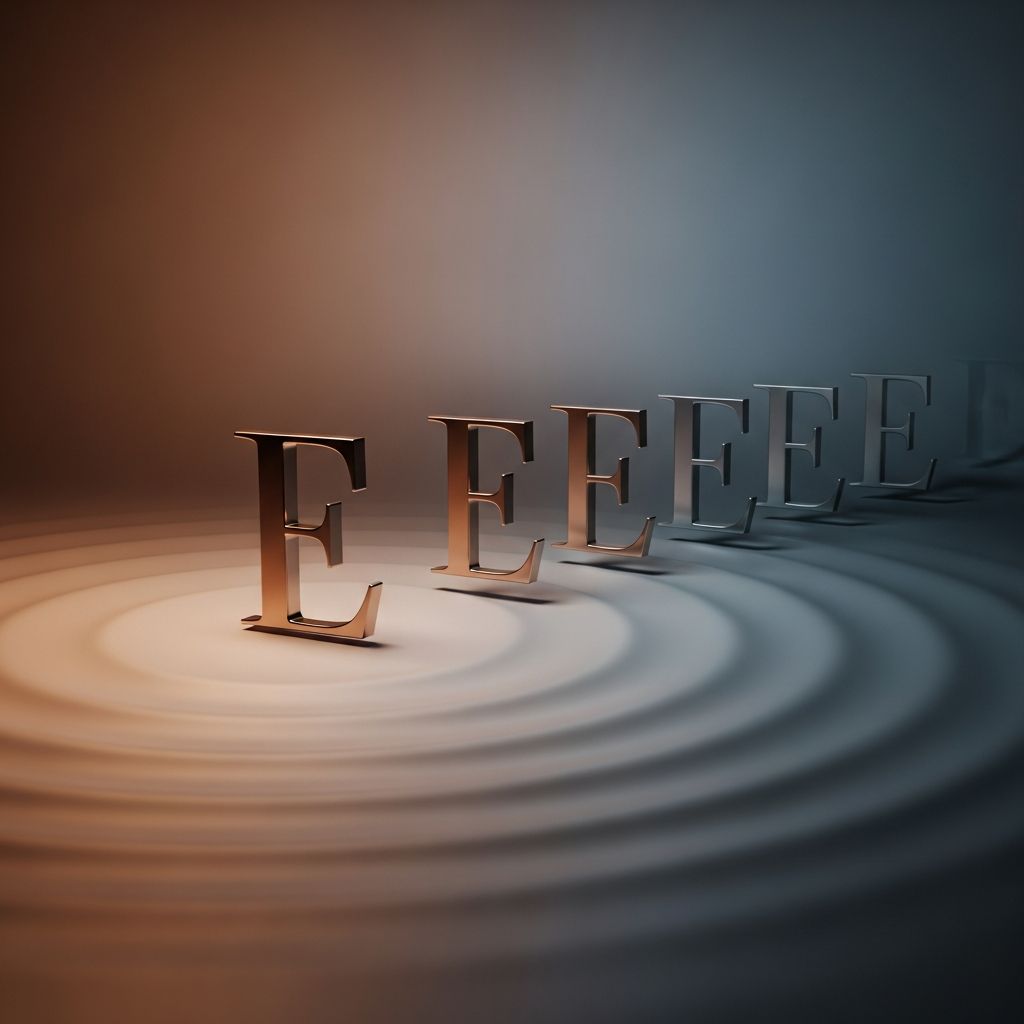
Epanalepsis stands as one of the most striking figures of speech in rhetoric, where a speaker or writer repeats the opening words of a clause or sentence at its conclusion, creating a resonant frame that captures attention and lodges ideas deeply in the mind. This technique leverages the natural human tendency to remember beginnings and endings, turning ordinary phrases into memorable declarations.
Defining the Essence of Epanalepsis
At its core, epanalepsis involves taking a word or short phrase from the start of a clause and echoing it at the end, with intervening material that builds tension or provides context. Unlike simple repetition, this device acts like bookends, enclosing the central idea and drawing focus to it through structural symmetry. The term derives from Greek roots meaning ‘taking up again,’ reflecting its resumptive quality.
This rhetorical figure thrives on psychological principles: the primacy effect makes initial words stick, while the recency effect ensures final words linger. Together, they create a powerful enclosure that amplifies the repeated element’s importance. Epanalepsis can span exact sentence boundaries or apply more loosely to nearby phrases, offering flexibility for poets, orators, and prose stylists.
Historical Foundations and Evolution
Epanalepsis traces back to ancient Greek and Roman rhetoric, where orators like Demosthenes and Cicero employed it to sway audiences in legal and political speeches. In classical texts, it served to underscore arguments, making complex points accessible and persuasive. Medieval scholars preserved these techniques in treatises, adapting them for sermons that needed rhythmic punch to engage congregations.
During the Renaissance, epanalepsis flourished in English literature as writers rediscovered classical forms. Shakespeare’s plays feature it subtly, enhancing dramatic tension. By the 19th century, it appeared in political oratory, with figures like Abraham Lincoln using repetition to rally support. Today, it persists in modern discourse, from TED Talks to viral social media posts, proving its timeless appeal.
Mechanisms: How Epanalepsis Works Its Magic
Epanalepsis creates impact through several linguistic mechanisms. First, repetition reinforces key terms, aiding memory retention. Second, it imposes rhythm and cadence, mimicking natural speech patterns and lending a musical quality. Third, the framing effect isolates the core message, making it stand out amid surrounding words.
- Psychological Reinforcement: Bookending exploits memory biases, ensuring the phrase dominates recall.
- Auditory Appeal: The echo-like structure produces a sonic symmetry pleasing to the ear.
- Emphatic Isolation: Intervening words gain contrast, heightening the repeated phrase’s drama.
Consider the classic: “The king is dead, long live the king!” Here, ‘king’ frames the transition of power, etching the idea indelibly.
Classic Literary Examples Across Genres
Literature brims with epanalepsis, showcasing its versatility. In poetry, John Donne’s “Death be not proud, though some have called thee mighty and dreadful, for thou art not so.” repeats ‘Death’ to challenge mortality directly.
Prose masters like Charles Dickens wield it for narrative punch: in speeches or descriptions, phrases like “It was the best of times, it was the worst of times” evolve into fuller epanaleptic forms, though purer instances abound in his dialogues. Biblical texts, influential in Western literature, use it extensively: “Bread is made of wheat, wheat of earth, earth of God, God of nothing.” This chain-like repetition builds theological weight.
| Author/Work | Example | Effect |
|---|---|---|
| Shakespeare, Macbeth | “Fair is foul, and foul is fair.” | Underscores moral inversion |
| F. Scott Fitzgerald, The Great Gatsby | Adaptations like “So we beat on, boats against the current.” | Evokes futile struggle |
| Modern Poetry (e.g., T.S. Eliot) | “Let us go then, you and I, when the evening is spread out against the sky.” | Creates intimate invitation |
Epanalepsis in Speeches and Public Address
Public speaking elevates epanalepsis for its immediate, auditory impact. Winston Churchill’s wartime addresses featured it: phrases repeating ‘freedom’ or ‘victory’ rallied the British spirit. Martin Luther King Jr.’s “I Have a Dream” speech subtly employs variations, though anadiplosis dominates; pure epanalepsis appears in calls like “Justice, justice shall you pursue.”
In contemporary settings, politicians and TED speakers use it for emphasis. Barack Obama’s rhetoric often frames ideas: “Yes we can, we can change, yes we can.” This builds momentum and memorability. The device suits briefings, presentations, and debates, where concise repetition cuts through noise.
Everyday Applications and Modern Media
Beyond literature, epanalepsis permeates advertising, journalism, and social media. Slogans like “Nike: Just do it, do it now” (stylized) echo the form for brand recall. News headlines frame stories: “War begins, war must end.” Podcasts and YouTube scripts leverage it for engagement.
In business communication, emails or pitches benefit: “Success demands action, action demands success.” Song lyrics, too, thrive on it—think hip-hop refrains or pop choruses that loop phrases for catchiness.
Related Figures: Distinctions and Comparisons
Epanalepsis neighbors other repetitions but differs keyly. Anadiplosis links end to next beginning (e.g., “Fear leads to anger, anger leads to hate”). Chiasmus inverts structure (“Ask not what your country can do for you…”). Epanadiplosis chains across clauses.
| Device | Pattern | Example |
|---|---|---|
| Epanalepsis | Start = End (same clause) | “Hope begins here, hope eternal.” |
| Anadiplosis | End1 = Start2 | “Dreams grow from seeds, seeds from dreams.” |
| Chiasmus | ABBA | “Men are deceived by women, women by men.” |
Practical Guide: Crafting Epanalepsis
To wield epanalepsis, select a potent word or phrase evoking emotion or centrality. Insert contrasting or expansive material between repetitions. Test aloud for rhythm. Avoid overuse to prevent predictability.
- Choose evocative anchors: Words like ‘love,’ ‘power,’ ‘time’ resonate.
- Build contrast: Juxtapose opposites (e.g., “Weakness yields strength, strength from weakness.”).
- Vary length: Short for punch, long for buildup.
- Contextual fit: Use in climaxes or transitions.
Practice transforms mundane text: Original: “Persistence leads to achievement.” Enhanced: “Persistence wins battles, persistence claims victory.”
Frequently Asked Questions (FAQs)
What distinguishes epanalepsis from other repetitions?
Epanalepsis uniquely repeats within the same clause or sentence, framing content, unlike chain-like anadiplosis or inverting chiasmus.
Is epanalepsis only for formal writing?
No, it excels in speeches, ads, songs, and casual posts for broad accessibility.
How does epanalepsis improve memory?
By leveraging primacy/recency effects, it bookends ideas for stronger retention.
Can epanalepsis be phrases, not single words?
Yes, short phrases work if symmetrically placed.
What’s a simple epanalepsis exercise?
Take a sentence, repeat its opener at end: “Time heals wounds, time reveals truths.”
Mastering Epanalepsis for Impactful Expression
Epanalepsis endures because it distills complexity into resonant simplicity, turning words into echoes that reverberate. Whether crafting a novel, delivering a keynote, or posting online, this device elevates communication. Experiment with it to discover its transformative potential in your voice.
References
- Epanalepsis – Definition and Examples — LitCharts. 2023. https://www.litcharts.com/literary-devices-and-terms/epanalepsis
- EPANALEPSIS Definition & Meaning — Dictionary.com. 2024. https://www.dictionary.com/browse/epanalepsis
- Epanalepsis – Be More Memorable, Have More Impact — The Chief Storyteller. 2014-08-20. https://www.thechiefstoryteller.com/2014/08/20/epanalepsis-figure-of-speech-repetition/
- Epanalepsis: A good rhetorical device for public speakers — Manner of Speaking. 2012-03-19. https://mannerofspeaking.org/2012/03/19/rhetorical-devices-epanalepsis/
- Epanalepsis? A Literary Term — Seton Hill University Blogs. 2009-02. https://blogs.setonhill.edu/GretaCarroll/2009/02/epanalepsis_a_literary_term_th.html
- Epanadiplosis — Wikipedia. 2024. https://en.wikipedia.org/wiki/Epanadiplosis
- What is epanalepsis? — Novlr.org. 2024. https://www.novlr.org/glossary/epanalepsis
- epanalepsis – Silva Rhetoricae — Brigham Young University. 2024. https://rhetoric.byu.edu/Figures/E/epanalepsis.htm

- Integrated M.A. in Applied Linguistics, University of Hyderabad
- 5+ years in editorial, instructional, SEO, and research-based writing
Sneha is a relationships and lifestyle writer with a strong foundation in applied linguistics and certified training in relationship coaching. She brings over five years of writing experience to theskillvault, crafting thoughtful, research-driven content that empowers readers to build healthier relationships, boost emotional well-being, and embrace holistic living. Her writing and insights reflect the belief that beauty, happiness, and wellness…