
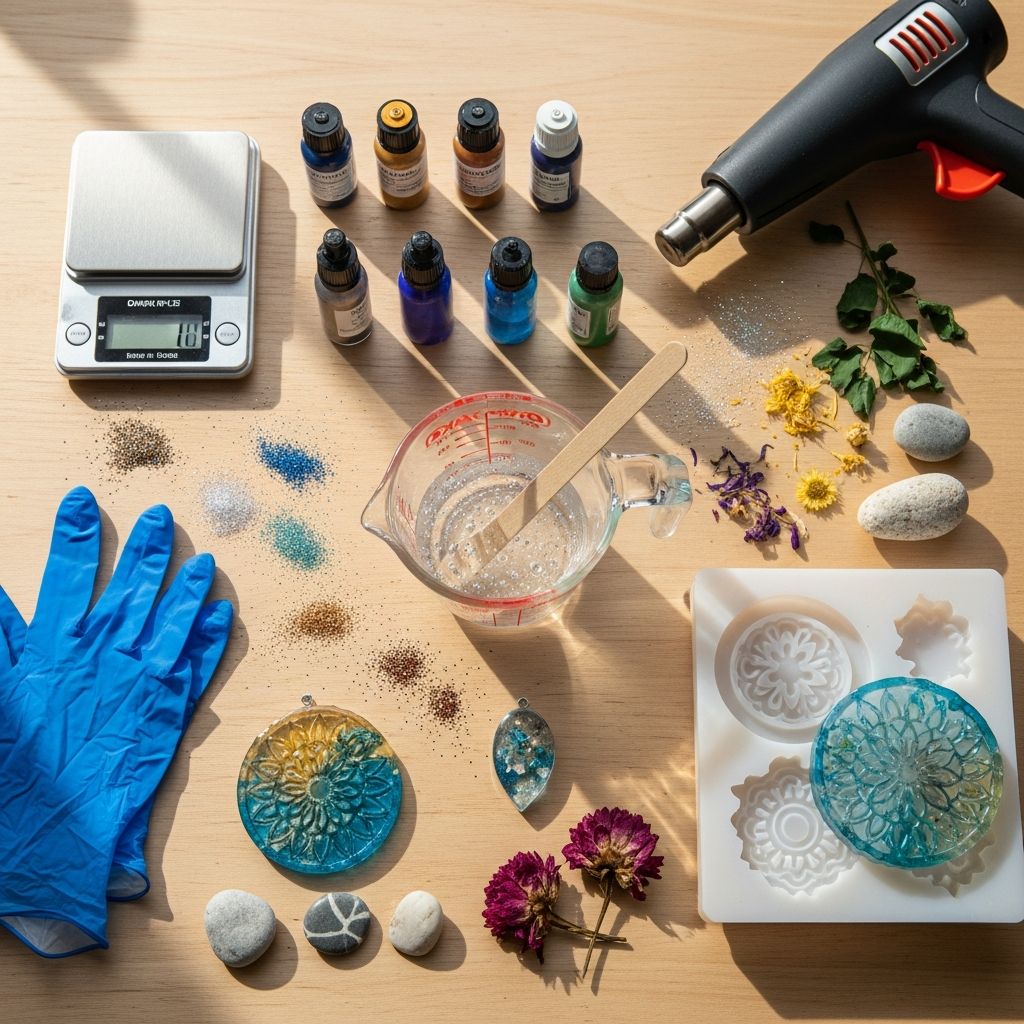
Epoxy resin has transformed crafting, art, and DIY projects with its versatile, durable finish. This two-part system combines resin and hardener to create a strong, clear material ideal for coatings, embeddings, and sculptures. Understanding its chemistry and handling ensures professional outcomes every time.
Understanding the Core Chemistry of Epoxy Resin
Epoxy resin consists of a viscous liquid resin and a hardener that trigger a polymerization reaction when combined. This exothermic process generates heat, turning the mixture from liquid to a solid state over hours. The result is a material with exceptional adhesion, chemical resistance, and clarity, distinguishing it from UV resins that cure via light exposure.
Common ratios include 1:1 or 2:1 (resin to hardener by volume), varying by brand—always consult product instructions for precision. Curing time ranges from 5-24 hours initially, with full hardness in 72 hours or more for deep pours. Factors like temperature (ideal 70-80°F) influence viscosity and cure speed.
Essential Tools and Materials for Success
Preparation is key to flawless results. Assemble these items before starting:
- Epoxy resin kit (resin + hardener)
- Calibrated measuring cups or digital scale
- Mixing containers (silicone or disposable plastic)
- Stir sticks (wooden, silicone, or stainless steel)
- Heat gun or torch for bubble removal
- Silicone molds, gloves, and protective coverings
- Pigments, dyes, glitter, or embeds (flowers, crystals)
- Rubbing alcohol (91%) for cleaning
Work on a level, covered surface at stable temperatures to prevent issues.
Precise Mixing Techniques for Flawless Results
Mixing is the foundation of successful epoxy projects. Follow these steps:
- Measure Accurately: Use manufacturer ratios, e.g., 1:1 for many kits. Fill cups no more than 3/4 full.
- Combine Gently: Pour resin first, then hardener. Stir slowly for 3-5 minutes, scraping sides and bottom to eliminate streaks.
- Double Mix: Transfer to a second container and mix 1-2 more minutes for uniformity.
- Rest and Degass: Let sit 1-2 minutes for bubbles to rise, then use within pot life (minutes to 90).
| Ratio | Example Products | Mix Time | Pot Life |
|---|---|---|---|
| 1:1 | Bar Top Epoxy | 3-4 min | 30-45 min |
| 2:1 | Deep Pour Epoxy | 3-5 min | 60-90 min |
Avoid rushing—undermixing causes sticky cures.
Step-by-Step Pouring and Application Methods
Once mixed, apply promptly. For molds, pour slowly from the center outward. Deep projects require layering: pour thin bases, cure partially (2-4 hours), add embeds, then top layers.
Bubble Removal: Pass a heat gun 6-8 inches above the surface in sweeping motions. Repeat as needed for thick pours.
Coatings: For tumblers or tabletops, apply thin layers, rotating items to avoid drips. Cure between coats.
Temperature control prevents yellowing or cracking—maintain 75°F ideally.
Creative Project Ideas to Spark Inspiration
Epoxy resin enables endless creativity:
- Coasters and Trays: Embed dried flowers or pigments for custom designs.
- Jewelry: Use small molds with mica powders for vibrant pieces.
- Tabletops: Pour deep for river effects with wood inlays.
- Keychains: Add photos or miniatures for personalized gifts.
- Wall Art: Layer colors for abstract ocean or galaxy effects.
Start small to master techniques before scaling up.
Coloring and Embedding for Stunning Effects
Enhance with pigments: mix base resin first, divide, then add 1g colorant per ounce. Stir until opaque. For embeds, pour a tacky base layer, position items (e.g., shells), and overpour.
Use mica, alcohol inks, or glow powders sparingly to avoid weakening the cure. Test small batches for compatibility.
Safety Protocols and Best Practices
Prioritize safety:
- Wear nitrile gloves, respirator, and safety glasses—fumes irritate.
- Ventilate workspace; avoid open flames during curing (exothermic heat).
- Clean tools immediately with alcohol; dispose cured scraps responsibly.
- Keep away from pets/children during mixing and curing.
Store in cool, dark places to extend shelf life.
Troubleshooting Common Challenges
| Issue | Cause | Solution |
|---|---|---|
| Sticky Surface | Undermixing | Scrape and remix fully next time |
| Bubbles | Poor degassing | Use heat gun, pour thin |
| Yellowing | UV exposure | Add UV stabilizer, cover curing |
| Cracking | Too thick pour | Layer in 1/8″ increments |
Monitor ambient conditions to preempt problems.
Advanced Tips for Professional Finishes
Sand cured pieces with wet/dry paper (400-2000 grit) for polishing. Buff with a compound for mirror shine. For large pours, use slow-cure formulas to manage heat.
Experiment with resins for specific needs: deep pour for sculptures, fast-set for jewelry.
Frequently Asked Questions (FAQs)
What is the ideal temperature for working with epoxy resin?
70-80°F (21-27°C), ideally 75°F, ensures proper flow and curing without rushing or slowing.
How long does epoxy resin take to fully cure?
72 hours for usability in thin layers; 7 days for full hardness in deep pours.
Can I use epoxy resin outdoors?
Yes, with UV-resistant formulas to prevent yellowing; seal finished pieces.
Is epoxy resin food-safe?
Some FDA-approved types are; check labels for bar top or coating epoxies.
What if my resin didn’t cure properly?
Commonly due to incorrect ratios or incomplete mixing—discard and remix accurately.
References
- How to Use Epoxy Resin: The Complete Guide for Crafters — MakerFlo. 2023. https://makerflo.com/blogs/craft-library/how-to-use-epoxy-resin-complete-guide-crafters
- Epoxy Resin for Beginners: Essential Starter Guide — Resiners. 2023. https://resiners.com/blogs/resiners-guide/epoxy-resin-for-beginners
- The Ultimate Guide for Mixing Epoxy Resin — Masepoxies. 2023. https://masepoxies.com/blogs/mas-blog/the-ultimate-guide-for-mixing-epoxy-resin
- A Complete Guide to Epoxy Resin — RS Components. 2024. https://nz.rs-online.com/web/content/discovery/ideas-and-advice/epoxy-resin-guide
- A Full Step-by-Step Guide to Mixing and Pouring Epoxy Resin — Best Bar Top Epoxy. 2023. https://www.bestbartopepoxy.com/blogs/ultraclear/a-full-step-by-step-guide-to-mixing-and-pouring-epoxy-resin
- Epoxy Resin Guide: The Dos and Don’ts — Resin Obsession. 2023. https://resinobsession.com/resin-resin-resin/epoxy-resin-guide/

Medha Deb is an editor with a master's degree in Applied Linguistics from the University of Hyderabad. She believes that her qualification has helped her develop a deep understanding of language and its application in various contexts. Medha specializes in the areas of beauty, health, sports, and wellness and is committed to ensuring that the content on the website is…