
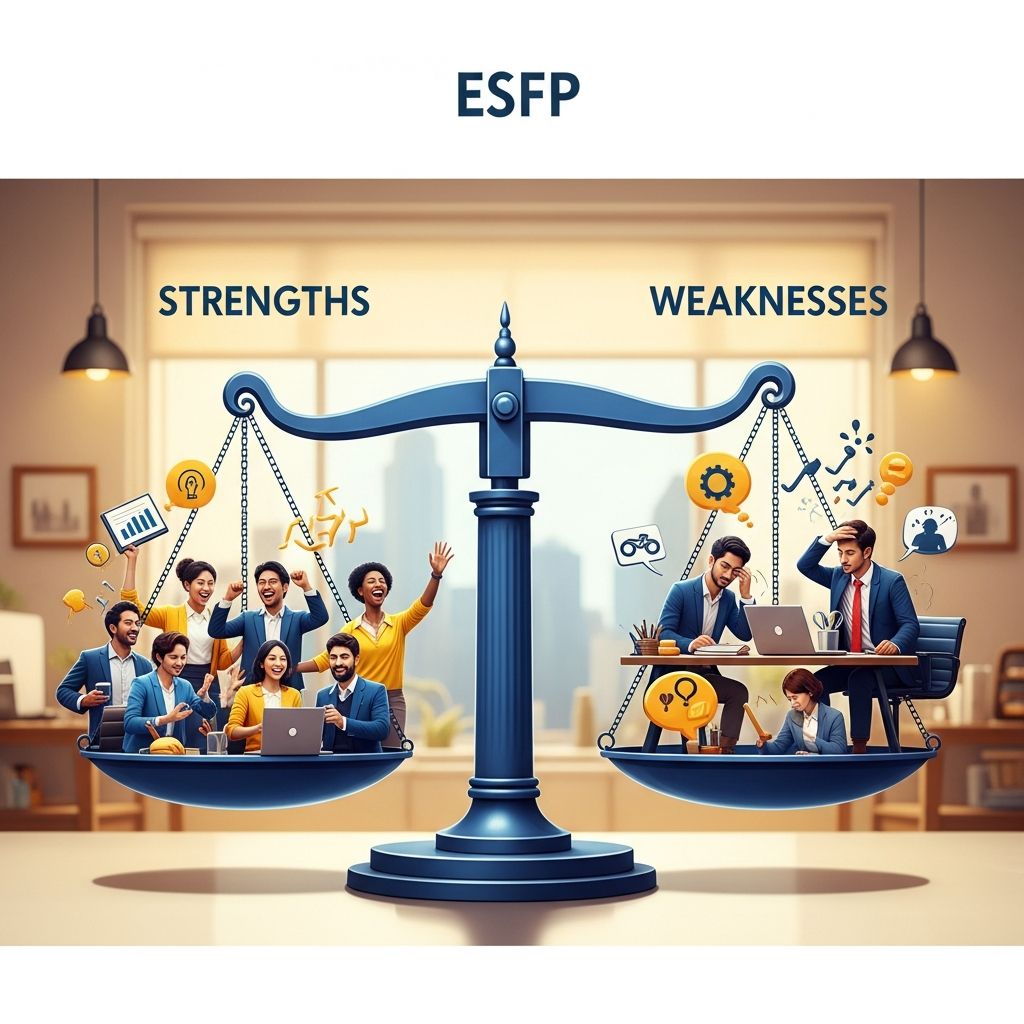
The ESFP personality type, often called the Entertainer, is known for warmth, spontaneity, and a contagious love of life. Yet the very traits that make ESFPs so engaging can also create challenges in planning, conflict, and follow-through.
This guide explores the main strengths and weaknesses of ESFPs, why they show up, and how Entertainers can grow without losing their natural spark.
Understanding the ESFP at a Glance
ESFP stands for Extraverted, Sensing, Feeling, Perceiving, a combination that produces people who are highly social, grounded in real-world experience, emotionally attuned, and flexible in how they live and work.
| Aspect | How ESFPs Tend to Show It |
|---|---|
| Extraverted | Recharge around people; enjoy lively conversations and shared activities. |
| Sensing | Focus on concrete details, immediate experiences, and what can be observed right now. |
| Feeling | Make decisions with personal values and impact on others in mind; prioritize harmony. |
| Perceiving | Prefer flexibility over rigid plans; adapt quickly to changing situations. |
Core Strengths of ESFPs
Entertainers bring a distinct set of abilities that can brighten teams, relationships, and communities when used intentionally.
1. Natural Social Connectors
ESFPs usually form connections quickly and easily, helping others feel at ease.
- Warm presence: They often greet others with open body language, eye contact, and friendly conversation.
- Inclusive attitude: ESFPs tend to notice who is on the sidelines and invite them to join in.
- Relational focus: They place high value on shared experiences and emotional closeness.
This social agility can make ESFPs effective in roles that require customer interaction, teamwork, or public engagement.
2. Enthusiastic and Motivating
ESFPs often inject energy into a room, lifting morale when others feel drained.
- Optimistic outlook: They often look for what can be enjoyed or celebrated, even in ordinary situations.
- Action-oriented encouragement: Rather than just talk about possibilities, they are likely to propose an activity, experiment, or practical step.
- Contagious excitement: Their visible enthusiasm can nudge others to try new things and take part.
3. Highly Observant and Practical
Thanks to strong Sensing preferences, ESFPs notice small but important details in their environment.
- Attention to the present: They pick up on changes in tone, expressions, and surroundings that others miss.
- Hands-on learning: ESFPs typically understand concepts best when they can physically engage or see them in action.
- Real-world solutions: When problems arise, they often suggest immediate, concrete fixes instead of abstract discussion.
4. Emotionally Attuned and Empathetic
ESFPs tend to be quick to sense when someone is hurting or stressed, and they want to help.
- Emotional radar: They naturally track mood shifts in others and respond in real time.
- Supportive responses: ESFPs may offer comfort through companionship, humor, or small practical gestures.
- Value-driven choices: Their decisions frequently reflect a desire to protect relationships and avoid unnecessary hurt.
5. Flexible, Adaptive Problem-Solvers
Perceiving and Extraverted Sensing together make ESFPs quick on their feet.
- Comfort with uncertainty: They are often less rattled by last-minute changes than many other types.
- Responsive improvisation: ESFPs adjust plans on the fly, using what is available rather than waiting for ideal conditions.
- Calming presence in crises: In urgent situations, their focus on the here and now helps them act decisively.
Common ESFP Weaknesses
Every strength, taken too far or used without reflection, can become a liability. ESFPs benefit from understanding the patterns that trip them up.
1. Difficulty with Long-Term Planning
Because ESFPs are so tuned into the present moment, distant future concerns can feel vague or uninteresting.
- Short attention span for abstract goals: They may start with enthusiasm but lose interest when results take a long time.
- Inconsistent follow-through: Repetitive tasks or delayed rewards can lead to procrastination or dropped projects.
- Financial and career drift: Without conscious planning, ESFPs might struggle with savings, career progression, or major life decisions.
2. Sensitivity to Criticism
ESFPs generally care deeply about how others feel, so negative feedback can feel personal and overwhelming.
- Emotional defensiveness: They may react quickly, withdrawing, joking, or changing the subject to avoid discomfort.
- Difficulty separating self from behavior: Comments about performance can be experienced as attacks on their character.
- Avoidance of feedback: Over time, they might sidestep situations where their work is closely scrutinized.
3. Tendency to Avoid Conflict
Harmony matters to ESFPs, and open confrontation can feel exhausting or scary.
- Preference for quick relief: They might smooth things over superficially rather than address root problems.
- Suppressed resentment: When unspoken frustrations build up, they may eventually surface as sudden emotional outbursts.
- Indirect communication: ESFPs sometimes rely on hints or humor where direct statements would be more effective.
4. Impulsiveness and Risk-Taking
The same spontaneity that makes ESFPs fun companions can also lead to hasty decisions.
- Acting before analyzing: They may commit to plans, purchases, or relationships without fully checking consequences.
- Difficulty with restraint: When something feels exciting or emotionally compelling, saying no can be hard.
- Inconsistent routines: Sleep, health habits, and schedules may get disrupted by more appealing short-term opportunities.
5. Overextension in Helping Others
ESFPs often focus their energy on friends, family, and co-workers, sometimes at their own expense.
- Emotional overload: Constantly absorbing others’ feelings can lead to burnout or compassion fatigue.
- Blurred boundaries: They may struggle to say no to requests, even when they are exhausted.
- Neglect of personal priorities: Time, money, or energy meant for long-term goals may be spent on immediate social demands.
How ESFP Strengths and Weaknesses Play Out in Daily Life
At Work
ESFPs often thrive in people-centered, dynamic environments such as hospitality, healthcare, teaching, entertainment, sales, and community work.
- Workplace advantages:
- Engage clients and colleagues with warmth and humor.
- Respond quickly to on-the-ground challenges or customer needs.
- Bring positivity to teams under pressure.
- Workplace challenges:
- Lengthy paperwork and long-term planning can feel draining.
- They may push aside strategic thinking until a deadline is urgent.
- Feedback from managers can sting if not delivered sensitively.
In Relationships
As partners and friends, ESFPs tend to be affectionate, attentive, and eager to create shared memories.
- Relational strengths:
- Notice what makes loved ones feel special and act on it.
- Offer emotional support through presence, touch, and kind gestures.
- Keep relationships lively with new activities and adventures.
- Relational blind spots:
- May avoid difficult conversations about long-term issues.
- Can become overwhelmed if they sense distance or criticism.
- Might overcommit socially, leaving limited time for deeper, slower conversations.
Growth Strategies for ESFPs
ESFPs develop best when they learn to keep their spontaneity while adding a bit of structure and emotional resilience.
1. Build Simple Planning Habits
- Use short, visual tools (like a weekly calendar or phone reminders) instead of complex systems.
- Break long-term goals into small steps that can be completed in one sitting.
- Pair enjoyable activities with necessary but less exciting tasks (music while organizing, rewards after paperwork).
2. Practice Receiving Feedback Calmly
- Pause before responding; take a breath and ask one clarifying question.
- Separate identity from behavior by mentally labeling feedback as information, not a verdict.
- Ask trusted people to share both one strength and one growth area at the same time to keep perspective.
3. Strengthen Conflict Skills
- Use “I” statements (e.g., “I feel… when… because…”) to express needs without blame.
- Schedule serious talks at times when you are not exhausted or rushed.
- Remind yourself that honest conflict can protect relationships, not just harm them.
4. Channel Spontaneity Responsibly
- Before big decisions, create a simple checklist (cost, time, impact on others, long-term effects) and walk through it.
- Delay major commitments by 24 hours when possible, especially if emotions are running high.
- Keep a small emergency fund or time buffer so spontaneous choices don’t derail essentials.
5. Protect Your Energy
- Set limits on how many social events or favors you agree to per week.
- Plan quiet, sensory-friendly downtime (walks, music, creative hobbies) to decompress.
- Let close friends know when you need support rather than always being the supporter.
Frequently Asked Questions About ESFP Strengths and Weaknesses
Q: Are ESFPs always extroverted and outgoing?
A: Most ESFPs gain energy from being around people, but their social style varies. Some are bold performers, while others are laid-back, one-on-one connectors. The common thread is a preference for external stimulation and shared experiences, not constant spotlight.
Q: Why do ESFPs struggle with long-term planning?
A: ESFPs process information mainly through immediate sensory experience and present-focused thinking, which can make distant, abstract goals feel less real or motivating. With simple tools and external structure, they can still plan effectively while honoring their here-and-now orientation.
Q: Can ESFPs be good leaders?
A: Yes. ESFPs can lead by example, motivate teams, and navigate crises with calm practicality. They tend to excel in roles where direct interaction, adaptability, and quick responses matter more than heavy long-term analysis. Partnering with detail-oriented planners can help balance their style.
Q: How can loved ones support an ESFP’s growth?
A: Offer feedback gently and specifically, appreciate their efforts to bring joy, and help them think through future consequences without shaming their spontaneity. Inviting them into practical planning (like shared calendars or short check-ins) can support them without feeling restrictive.
Q: Do ESFPs ever enjoy serious or deep topics?
A: Many ESFPs appreciate depth, especially when it connects to real experiences or people they care about. What they often resist is abstract, theoretical talk that seems disconnected from everyday life. When depth is grounded in stories, emotions, and practical meaning, ESFPs can be fully engaged.
References
- ESFP Personality Type: Entertainer MBTI — Simply Psychology. 2023-02-21. https://www.simplypsychology.org/esfp-personality.html
- 10 Characteristics of the Entertainer Personality Type (ESFP) — Calm. 2023-08-03. https://www.calm.com/blog/esfp
- Personality and Occupational Outcomes — American Psychological Association / Journal of Vocational Behavior. 2017-04-01. https://doi.org/10.1016/j.jvb.2017.01.004
- MBTI® Personality Type: ESFP Profile — The Myers-Briggs Company. 2022-06-15. https://eu.themyersbriggs.com/en/tools/MBTI/MBTI-personality-Types/ESFP
- Personality, Emotional Intelligence, and Well-Being — Journal of Personality and Social Psychology. 2016-09-10. https://doi.org/10.1037/pspp0000087

- Integrated M.A. in Applied Linguistics, University of Hyderabad
- 5+ years in editorial, instructional, SEO, and research-based writing
Sneha is a relationships and lifestyle writer with a strong foundation in applied linguistics and certified training in relationship coaching. She brings over five years of writing experience to theskillvault, crafting thoughtful, research-driven content that empowers readers to build healthier relationships, boost emotional well-being, and embrace holistic living. Her writing and insights reflect the belief that beauty, happiness, and wellness…