
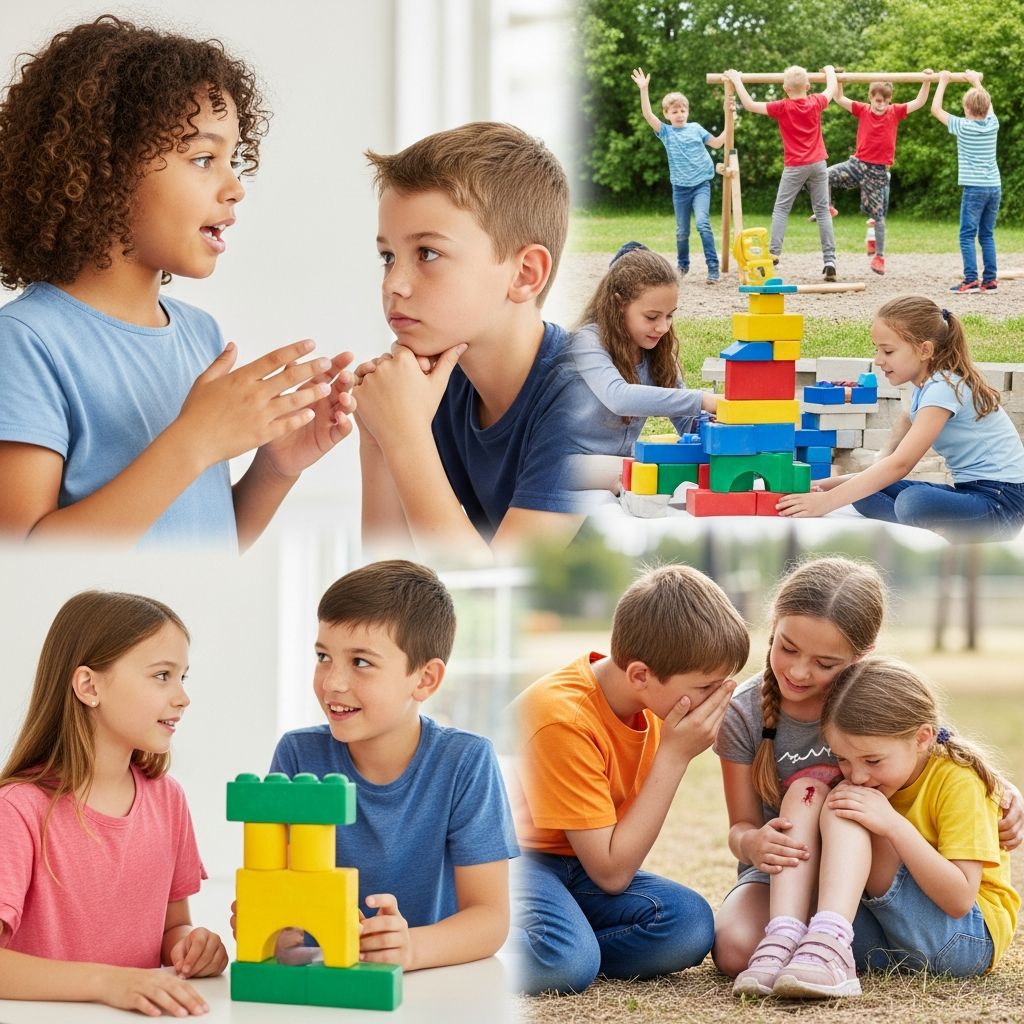
The landscape of education has undergone a profound transformation. While traditional academics—reading, writing, and mathematics—remain foundational, educators and employers increasingly recognize that children require a broader skill set to navigate the complexities of contemporary life. Beyond textbook knowledge, today’s young learners need practical competencies that enable them to adapt, collaborate, and think critically in diverse situations.
Modern workplaces and communities demand more from individuals than subject matter expertise alone. Children entering the workforce in the coming decades will encounter challenges that demand flexibility, interpersonal awareness, and innovative problem-solving abilities. These non-academic competencies form the backbone of what experts call “21st-century skills,” a framework that distinguishes between what children learn and what they can actually do with that knowledge.
The Foundation: Understanding Interpersonal Communication
At the heart of human success lies the ability to communicate effectively. This competency extends far beyond simply speaking or writing correctly—it encompasses the capacity to convey meaning clearly, listen actively, and adapt messages to different audiences and contexts.
Effective communication involves multiple dimensions. Children must develop written expression skills for academic and professional correspondence, verbal communication for daily interaction and presentation, and nonverbal awareness to interpret body language, facial expressions, and tone. When a child learns to read social cues and understand what others genuinely need from a conversation, they begin developing emotional awareness that serves them throughout life.
Parents and educators can nurture these abilities through everyday interactions. Role-playing scenarios, providing constructive feedback on how messages were received, and encouraging children to explain their thinking build communication confidence. When children practice articulating their needs, asking clarifying questions, and respectfully responding to different viewpoints, they develop communication patterns that translate directly into stronger friendships, better academic performance, and eventual workplace effectiveness.
Building Bridges: The Art of Collaborative Problem-Solving
In virtually every professional environment and social setting, success requires the ability to work effectively with others toward shared objectives. Collaboration transcends simple teamwork—it involves recognizing colleagues’ strengths, negotiating roles based on individual capabilities, and maintaining productivity even when interpersonal friction arises.
When children engage in collaborative activities, they encounter real-world challenges. They learn diplomacy when teammates suggest different approaches, self-regulation when frustration threatens to derail progress, and time management when group deadlines loom. These competencies don’t emerge naturally; they develop through repeated practice in environments where children feel safe enough to navigate disagreement and compromise.
Successful collaboration requires children to view peers as partners rather than competitors. This perspective shift fundamentally changes how young people approach group projects, sports teams, and social dynamics. When children learn to listen genuinely to others’ ideas, acknowledge different perspectives, and build on colleagues’ contributions, they develop the interpersonal foundation that makes them valuable team members throughout their lives.
Analytical Thinking and Evidence-Based Reasoning
Critical thinking represents perhaps the most versatile non-academic competency children can develop. In a world drowning in information—much of it contradictory or misleading—the ability to question claims, evaluate evidence, and reason through complex situations becomes invaluable.
Children who develop strong critical thinking abilities learn to identify credible information sources, understand the difference between correlation and causation, and recognize when their own biases might be influencing their judgments. These competencies protect young people from manipulation while enabling them to solve novel problems using systematic analysis rather than guesswork.
Parents and educators can strengthen critical thinking by asking thoughtful questions rather than providing immediate answers. When children disassemble objects to understand how they function, predict outcomes before conducting experiments, or analyze media messages for underlying assumptions, they build analytical habits. This developmental process teaches children that most important questions have multiple valid perspectives and that rigorous thinking yields better decisions than impulsive reactions.
Creative Expression and Imaginative Problem-Solving
Creativity represents the capacity to generate novel ideas and approaches to challenges. Unlike traditional academic subjects where correct answers often exist, creative thinking flourishes in ambiguity and values multiple possible solutions.
When children engage in creative pursuits—whether through artistic expression, inventive play, or experimental learning—they develop cognitive flexibility and confidence in their own ideas. They learn that original thinking, even when unconventional, holds value. This psychological foundation becomes crucial during adolescence and adulthood when social pressure often discourages deviation from established patterns.
Environments that foster creativity share common characteristics: they tolerate experimentation and occasional failure, they encourage questioning of conventional approaches, and they celebrate diverse thinking styles. Parents who make space for open-ended play, artistic exploration, and “what if” conversations nurture children’s creative potential. Schools that emphasize STEAM learning—blending science, technology, engineering, arts, and mathematics—leverage creativity’s natural connection to analytical thinking.
Emotional Regulation and Resilience Through Challenge
Emotional intelligence—the capacity to recognize, understand, and manage one’s own emotions while developing empathy for others—forms an underestimated foundation for virtually every life domain. Children with well-developed emotional regulation handle setbacks without despair, maintain focus despite distractions, and navigate social complexity with greater ease.
Developing emotional competencies involves helping children identify what they feel, understand what triggered those feelings, and select responses aligned with their values rather than impulses. This practice requires patience and repeated modeling from adults who demonstrate that all emotions are acceptable while some behavioral responses are more constructive than others.
Resilience—the capacity to bounce back from failure and disappointment—develops through graduated exposure to manageable challenges. When children encounter obstacles within their capability range and receive support while working through them, they internalize the understanding that difficulty doesn’t signal personal inadequacy. This reframing of failure as information rather than indictment becomes transformative, particularly for students who encounter academic struggle.
Practical Life Management and Decision-Making Capacity
Beyond abstract thinking and social skills, children require practical competencies for managing daily life. Decision-making abilities, problem-solving processes, and basic life skills form the operational foundation upon which other competencies rest.
Children develop decision-making capacity through making increasingly significant choices within safe boundaries. When parents involve children in selecting what to wear, what to eat, which chores to prioritize, and what activities to pursue, they provide low-stakes practice in evaluating options and living with consequences. This graduated exposure builds confidence and judgment.
Problem-solving competency involves breaking complex challenges into manageable components, generating multiple potential solutions, evaluating consequences, and implementing the chosen approach. Children who practice these steps develop greater independence and confidence when facing novel situations. Rather than becoming paralyzed by difficulty or immediately appealing to adults for rescue, they develop systematic approaches to obstacles.
Basic life skills—from personal hygiene to nutritional awareness to basic first aid knowledge—provide practical confidence. When children know how to call emergency services, recognize when situations require adult intervention, and handle minor injuries with composure, they develop genuine self-sufficiency that reduces anxiety and supports healthy independence.
Global Awareness and Ethical Consideration
Contemporary challenges—environmental sustainability, social justice, international cooperation—require citizens who understand global interconnection and feel responsible for ethical action. Children who develop global awareness recognize that their decisions affect distant communities and future generations.
This competency develops through exposure to diverse perspectives, intentional study of global issues, and opportunities to contribute to solutions. When children learn about different cultures, understand how privilege and disadvantage operate systematically, and recognize their own capacity to create positive change, they develop the ethical framework that guides responsible citizenship.
Cultivating ethical development involves explicit conversations about values, consistent modeling of ethical behavior, and creating space for children to recognize and correct their own mistakes without shame. When children learn to take responsibility, apologize sincerely, and commit to different behavior, they develop integrity—the alignment between stated values and actual conduct—that sustains them through complexity.
Digital Literacy and Information Navigation
Contemporary children inhabit digital environments that previous generations never navigated. Competency in this landscape requires understanding media literacy, evaluating online information, recognizing manipulation techniques, and using technology purposefully rather than passively consuming content.
Media literacy—the capacity to critically examine digital content rather than accepting information uncritically—protects children from misinformation while building healthy skepticism. When young people understand how algorithms work, recognize advertising techniques, and analyze media messages for underlying assumptions, they become less susceptible to manipulation.
Information literacy involves assessing what information sounds plausible versus exaggerated, understanding basic scientific methodology, and recognizing how statistics can be manipulated to support particular conclusions. These competencies matter increasingly as digital platforms amplify both accurate information and false claims simultaneously.
Practical Applications and Development Strategies
Developing these non-academic competencies requires intentional effort from families, schools, and communities. Rather than emerging automatically, these skills develop through structured practice, reflection, and gradual mastery.
- Create decision-making opportunities: Involve children in age-appropriate choices throughout their day, allowing them to experience consequences within safe parameters.
- Model the competencies you value: Children develop skills more effectively when they observe adults demonstrating communication, problem-solving, emotional regulation, and ethical behavior.
- Provide structured collaboration experiences: Group projects, team sports, and community service activities offer natural contexts for developing teamwork and communication.
- Ask thoughtful questions: Rather than providing answers, guide children to think through challenges systematically.
- Create space for creative expression: Unstructured play, artistic pursuits, and open-ended projects build creative confidence.
- Discuss current events and ethical dilemmas: Conversations about complex issues develop critical thinking and ethical reasoning.
- Teach information evaluation skills: Help children assess digital content critically and identify reliable sources.
Frequently Asked Questions
Can non-academic skills be assessed and measured?
While less straightforward than traditional academic assessment, non-academic competencies can be evaluated through observation, project-based assessment, self-reflection, and peer feedback. Rubrics focusing on collaboration, communication quality, problem-solving process, and creative thinking provide structured evaluation frameworks.
How much should parents emphasize non-academic skills if children are struggling academically?
Strong non-academic skills actually support academic performance. Communication and collaboration competencies help children work more effectively with peers and teachers. Critical thinking strengthens analytical abilities. Emotional regulation improves focus and homework completion. Rather than competing priorities, these skill sets reinforce each other.
What role should schools play in developing non-academic skills?
Schools are increasingly recognizing that their mission extends beyond content delivery. Project-based learning, collaborative assignments, and interdisciplinary approaches naturally develop non-academic competencies while building academic knowledge. Teachers who prioritize these skills report stronger engagement and improved learning outcomes.
How can parents support skill development without formal instruction?
Everyday family life provides rich opportunities for developing non-academic competencies. Dinner conversations, family problem-solving, cooperative chores, and respectful conflict resolution all build these skills naturally when parents approach interactions intentionally.
Looking Forward: Preparing for an Evolving Future
The specific careers children will pursue often cannot be predicted; many will work in fields that don’t yet exist. This uncertainty makes adaptability, creative thinking, and strong learning capabilities increasingly valuable. Non-academic competencies provide the flexible foundation upon which children build whatever specialized expertise their futures demand.
Children who develop strong communication, collaboration, critical thinking, creativity, emotional regulation, practical life management, ethical awareness, and digital literacy possess the versatile toolkit for navigating uncertainty. These competencies don’t become obsolete; they become more valuable as technological change accelerates and complex global challenges demand innovative thinking and coordinated action.
Education that develops only traditional academic content leaves children underprepared for their actual lives. Comprehensive development cultivates the full range of human capabilities—analytical and creative, individual and interpersonal, technical and ethical—that enable genuine success and meaningful contribution to community and world.
References
- 6 Life Skills Kids Need for the Future — Scholastic. Accessed January 2026. https://www.scholastic.com/parents/family-life/creativity-and-critical-thinking/learning-skills-for-kids/6-life-skills-kids-need-future.html
- The Must-Have 21st Century Skills For Kids — Robo Wunderkind. Accessed January 2026. https://www.robowunderkind.com/blog/21st-century-skills
- 10 Important Life Skills Kids Should Know — Caliday. Accessed January 2026. https://www.caliday.org/caliday-blog/10-important-life-skills-kids-should-know
- Why Are 21st-Century Skills Essential for Students? — Expanded Learning Academy. Accessed January 2026. https://www.expandedlearningacademy.com/post/why-are-21st-century-skills-essential-for-students

- Integrated M.A. in Applied Linguistics, University of Hyderabad
- 5+ years in editorial, instructional, SEO, and research-based writing
Sneha is a relationships and lifestyle writer with a strong foundation in applied linguistics and certified training in relationship coaching. She brings over five years of writing experience to theskillvault, crafting thoughtful, research-driven content that empowers readers to build healthier relationships, boost emotional well-being, and embrace holistic living. Her writing and insights reflect the belief that beauty, happiness, and wellness…