
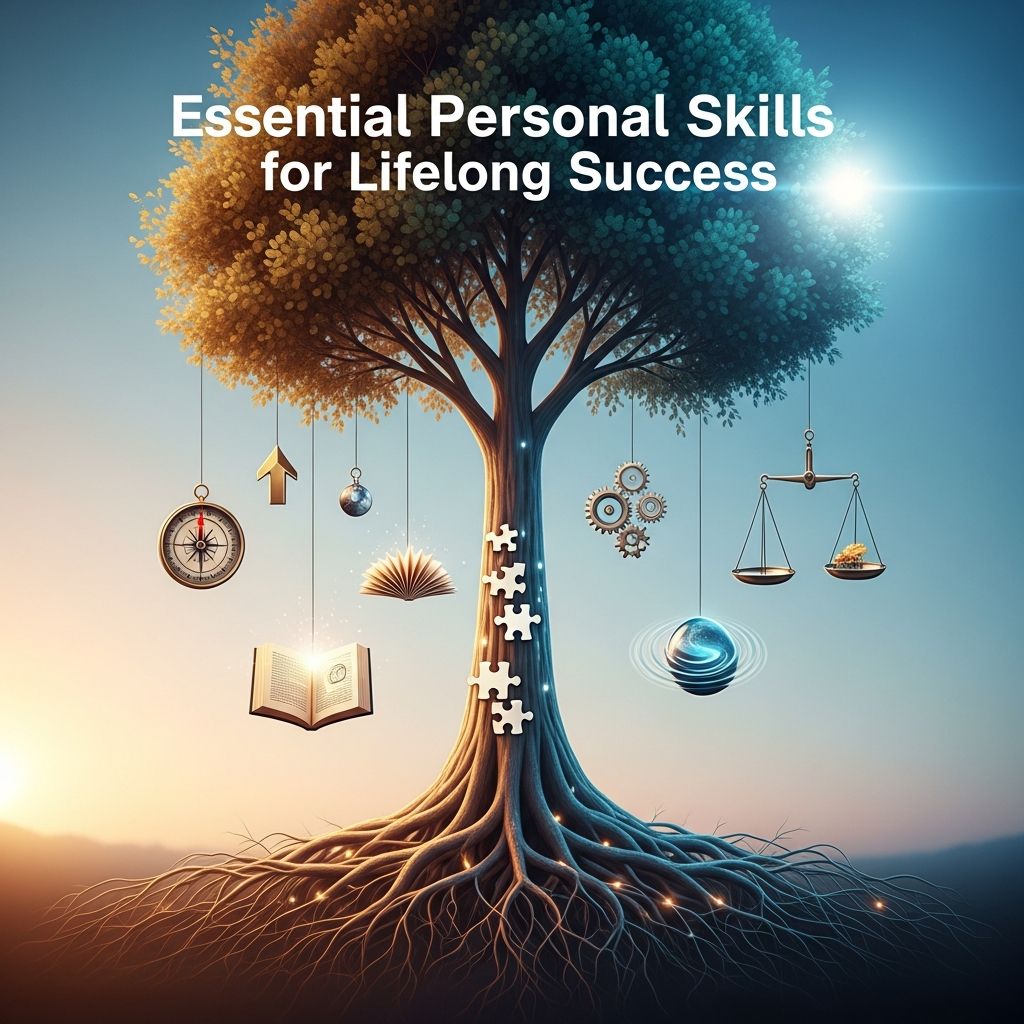
Success in life extends beyond academic achievements or professional titles; it hinges on cultivating a robust set of personal skills that enable individuals to navigate challenges, build meaningful connections, and pursue goals with confidence. These competencies form the foundation for thriving in diverse environments, from workplaces to personal relationships. By focusing on self-mastery, interpersonal dynamics, and adaptive thinking, anyone can enhance their potential for long-term prosperity.
Mastering Self-Management: The Core of Personal Growth
Self-management stands as the bedrock of personal success, encompassing the ability to regulate emotions, prioritize tasks, and maintain balance amid life’s demands. Effective self-managers exhibit discipline in time allocation and decision-making, ensuring consistent progress toward objectives. This skill involves recognizing personal limits and harnessing inner motivation to overcome obstacles.
- Building Resilience and Grit: Resilience allows individuals to rebound from setbacks, viewing failures as learning opportunities rather than defeats. Grit, defined as sustained passion and perseverance for long-term goals, propels people through prolonged challenges.
- Time and Priority Management: Prioritizing tasks through structured planning prevents overwhelm and boosts productivity. Techniques like goal-setting frameworks help align daily actions with broader aspirations.
- Emotional Regulation: Managing stress through mindfulness practices fosters clarity and prevents reactive behaviors, promoting sustained well-being.
Developing self-management requires deliberate practice. Start by tracking daily habits to identify patterns, then implement small changes like dedicated reflection periods to build awareness and control.
Cultivating Self-Awareness: Understanding Your Inner Landscape
Self-awareness is the profound recognition of one’s strengths, weaknesses, values, and emotional triggers. It empowers informed choices and authentic living, distinguishing high achievers who leverage their unique attributes effectively. Without it, efforts may scatter, leading to misaligned pursuits.
| Aspect | Benefits | Development Strategies |
|---|---|---|
| Strength Identification | Maximizes natural talents | Regular self-assessments and feedback loops |
| Weakness Acknowledgment | Targets growth areas | Journaling emotional responses |
| Value Alignment | Enhances motivation | Reflection on past decisions |
Professionals with high self-awareness report greater job satisfaction and career progression, as they pursue roles that match their profile. Tools like personality assessments can accelerate this process, providing objective insights into behavioral tendencies.
Enhancing Interpersonal Communication for Stronger Connections
Effective communication transcends mere words; it involves active listening, clear expression, and non-verbal cues that convey intent. In professional settings, those skilled in this area foster collaboration and resolve conflicts efficiently.
- Active Listening: Fully engaging with speakers without interruption builds trust and uncovers underlying needs.
- Assertive Expression: Conveying thoughts confidently yet respectfully ensures ideas are heard without alienating others.
- Non-Verbal Mastery: Body language accounts for a significant portion of message interpretation, making alignment crucial for credibility.
To refine these skills, practice paraphrasing others’ points in conversations and seek constructive feedback from trusted peers. Over time, this leads to deeper relationships and smoother team dynamics.
Harnessing Emotional Intelligence for Empathetic Leadership
Emotional intelligence (EI) comprises self-awareness, self-regulation, motivation, empathy, and social skills, enabling nuanced interactions. Leaders with strong EI navigate team emotions adeptly, boosting morale and performance. Research underscores EI’s role in career advancement, often outweighing technical prowess.
Key components include:
- Empathy: Perceiving others’ feelings to respond supportively, vital for conflict resolution.
- Motivation: Intrinsic drive that sustains effort during adversity.
- Social Proficiency: Building networks through genuine engagement.
Enhance EI by observing emotional cues in daily interactions and practicing perspective-taking exercises, such as role-reversal scenarios.
Embracing Adaptability in a Rapidly Changing World
Adaptability—the capacity to pivot amid uncertainty—has surged in importance with technological and economic shifts. Agile individuals view change as opportunity, quickly acquiring new skills and adjusting strategies.
Strategies for building adaptability:
- Continuous Learning: Pursue active learning to stay relevant, focusing on emerging trends.
- Flexibility Mindset: Challenge rigid thinking through diverse experiences.
- Resilience Training: Simulate disruptions to practice recovery.
Organizations prize adaptable talent, as evidenced by their prevalence in high-growth roles. Cultivate this by stepping outside comfort zones regularly.
Decision-Making and Problem-Solving: Strategic Thinking Essentials
Sound decision-making involves weighing options, forecasting outcomes, and acting decisively. Coupled with problem-solving, it drives innovation and efficiency.
- Analyze Situations: Gather data and assess risks objectively.
- Generate Solutions: Brainstorm creatively, drawing on critical thinking.
- Evaluate and Execute: Test feasibility and commit to the best path.
Critical thinking underpins these processes, encouraging evidence-based conclusions over assumptions. Practice through real-world puzzles or case studies to sharpen acumen.
Fostering Creativity and Innovation for Competitive Edge
Creativity fuels novel solutions, setting individuals apart in saturated markets. It involves divergent thinking to reframe problems innovatively.
Incorporate creativity by:
- Idea Incubation: Allocate unstructured time for brainstorming.
- Cross-Disciplinary Exposure: Blend insights from varied fields.
- Playful Experimentation: Prototype ideas without fear of failure.
Emerging skills like analytical innovation blend logic with imagination, essential for future-proof careers.
Leadership and Collaboration: Driving Collective Success
Leadership inspires action, while collaboration amplifies results. Effective leaders communicate vision, delegate wisely, and cultivate inclusivity.
Core traits:
- Reliability: Consistent delivery builds trust.
- Influence: Motivate through example, not authority.
- Team Synergy: Facilitate diverse input for superior outcomes.
Develop via mentorship roles and group projects, focusing on feedback integration.
Practical Strategies to Develop These Skills Daily
Skill acquisition demands consistency. Integrate habits like daily journaling for self-awareness, role-playing for communication, and reading diverse materials for creativity. Track progress with milestones to maintain momentum.
Set SMART goals (Specific, Measurable, Achievable, Relevant, Time-bound) to structure development. Accountability partners accelerate growth by providing external perspectives.
FAQs
What are the most critical personal skills for career success?
Key skills include emotional intelligence, adaptability, communication, and self-management, as they underpin performance across roles.
How can I improve my emotional intelligence quickly?
Practice mindfulness, seek feedback, and engage in empathy exercises daily to build EI components effectively.
Why is adaptability essential in modern workplaces?
Rapid changes demand quick adjustments; adaptable professionals thrive amid uncertainty.
Can personal skills outweigh technical expertise?
Yes, soft skills often determine promotions and leadership opportunities over pure technical ability.
How do I measure progress in skill development?
Use self-assessments, 360-degree feedback, and goal-tracking tools for objective evaluation.
References
- GUIDE For Life Manual — Arkansas Department of Education. 2020-12-29. https://dese.ade.arkansas.gov/Files/20201229124959_GUIDE%20For%20Life%20Manual%20Printed%20REVISED.pdf
- 52 Essential Skills For Success in Business and Life — Mind for Life. N/A. https://mindforlife.org/52-essential-skills-for-success/
- Developing Essential Skills for Career Growth — Conover Company. N/A. https://www.conovercompany.com/developing-essential-skills-for-career-growth/
- 16 Skills You Need To be Successful at Work — Indeed.com. N/A. https://www.indeed.com/career-advice/career-development/skills-to-be-successful-in-the-workplace
- 10 Emerging Skills for Professionals — Harvard Professional Development. N/A. https://professional.dce.harvard.edu/blog/10-emerging-skills-for-professionals/

- Integrated M.A. in Applied Linguistics, University of Hyderabad
- 5+ years in editorial, instructional, SEO, and research-based writing
Sneha is a relationships and lifestyle writer with a strong foundation in applied linguistics and certified training in relationship coaching. She brings over five years of writing experience to theskillvault, crafting thoughtful, research-driven content that empowers readers to build healthier relationships, boost emotional well-being, and embrace holistic living. Her writing and insights reflect the belief that beauty, happiness, and wellness…